


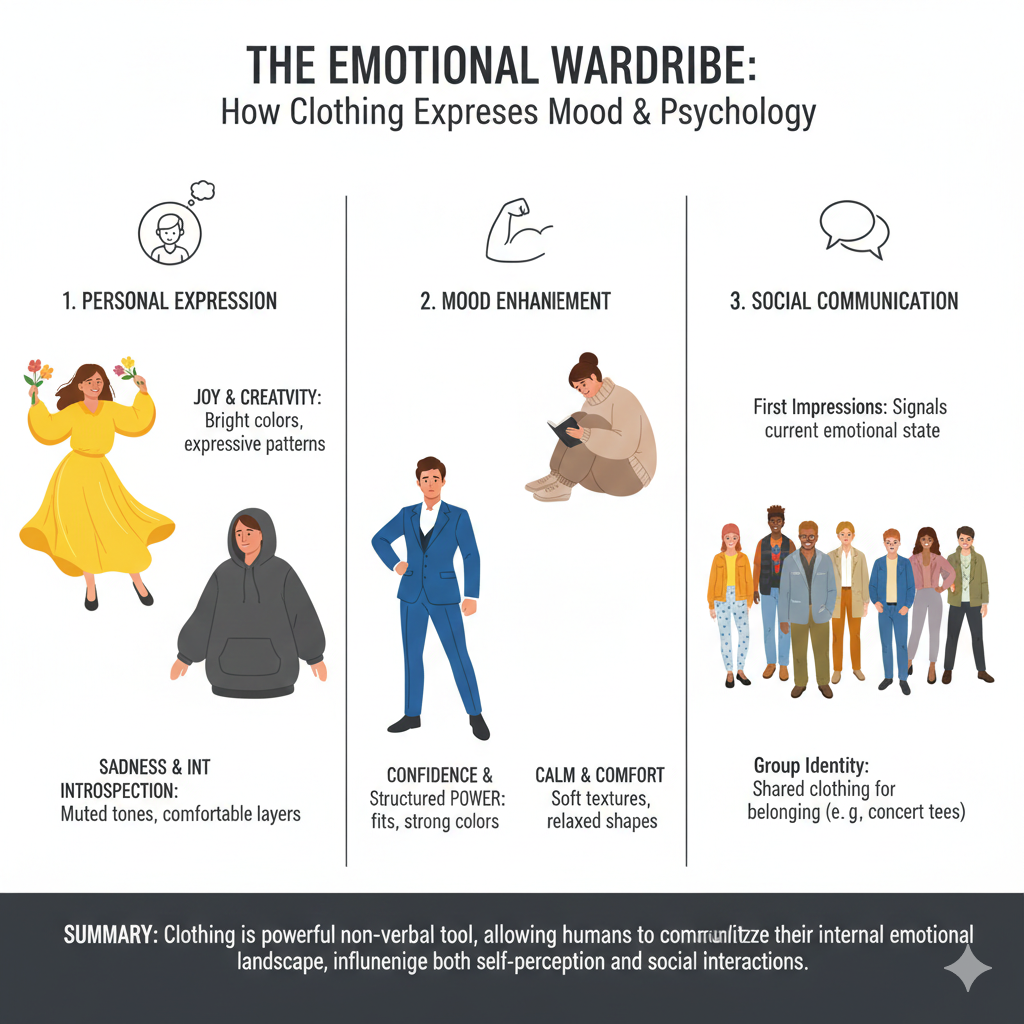
What you wear says more about you than you might think. A bold red dress, a baggy hoodie, or a perfectly tailored suit—each choice sends a message, not just to the world, but to yourself. Clothing functions as a silent language, translating internal emotions into visible statements. Whether we’re aware of it or not, we dress for how we feel and how we want to feel.
This phenomenon isn’t new. Throughout history, humans have adorned themselves in ways that reflect their emotional state, cultural identity, and personal beliefs. From the symbolic garments of early tribes to the mood-driven outfits we curate on Instagram, our relationship with clothing has always been deeply psychological.
But what drives this connection? Why do certain colors lift our spirits while others make us feel subdued? How do fabrics and silhouettes influence our confidence and behavior? And in an era of digital influence and smart technology, how is emotional dressing evolving?
This blog explores the intricate relationship between clothing, emotion, and mood. We’ll examine the psychology behind what we wear, the cultural forces that shape our choices, and the future of expressive fashion in a technology-driven world. By the end, you’ll understand how garments serve as more than mere coverings—they’re extensions of our identity, mood, and humanity itself.
The Psychology Behind Emotional Dressing
Clothing does more than protect us from the elements. It shapes how we think, feel, and behave. This psychological connection between what we wear and how we act is rooted in both individual experience and social conditioning.
Enclothed Cognition and Behavior
The concept of “enclothed cognition” describes how clothing influences cognitive processes. Research shows that wearing certain garments can alter our mental state and performance. A classic study found that participants wearing a white lab coat—associated with attentiveness and care—performed better on tasks requiring focus compared to those in casual clothing.
This isn’t just about perception. The physical act of wearing specific items triggers psychological shifts. A power suit can make you feel more authoritative. Comfortable loungewear might lower stress but also reduce productivity. These effects demonstrate how clothing affects confidence and human psychology, influencing everything from workplace performance to social interactions.
Emotional Connection to Style
Beyond cognitive effects, clothing carries emotional weight. A beloved vintage jacket might evoke nostalgia. A new outfit can spark excitement and anticipation. These associations build over time, connecting garments to memories, relationships, and milestones.
People often dress to match or shift their mood. Feeling down? You might reach for a favorite cozy sweater. Preparing for a big presentation? A sharp blazer helps you embody confidence. This practice reflects a deeper truth: we use clothing as a tool for emotional regulation.
The way we express ourselves through fashion also ties into broader patterns of what clothing says about identity in modern society. Style becomes a form of self-care, a method of asserting control over how we feel and how others perceive us. As modern human clothing styles explained have evolved, so too has our ability to use fashion as an emotional outlet.
How Colors, Fabrics, and Silhouettes Affect Mood
The emotional impact of clothing isn’t abstract—it’s grounded in tangible design elements. Colors, textures, and shapes all play roles in how garments influence mood and perception.
Color Psychology
Color is one of the most powerful emotional triggers in fashion. Red conveys passion, energy, and sometimes aggression. Blue suggests calm, trust, and stability. Black offers sophistication and mystery, while yellow radiates optimism and warmth.
These associations aren’t purely subjective. Studies in color psychology reveal consistent patterns across cultures, though individual experiences and cultural backgrounds can shift meanings. Wearing bright colors often boosts mood and energy, while darker tones might feel grounding or somber depending on context.
Fabric and Texture
Touch matters as much as appearance. Soft cashmere or cotton can provide comfort and security, reducing stress through tactile satisfaction. Stiffer materials like denim or leather project durability and edge. Lightweight linens feel liberating in warm weather, while heavy wools offer coziness and protection.
The sensory experience of clothing influences emotional states in subtle but meaningful ways. how fabric weight and texture affect clothing design extends beyond aesthetics—it shapes how we physically and emotionally inhabit our garments.
Silhouettes and Structure
The shape of clothing also affects mood. Flowing, loose garments can evoke freedom and relaxation. Structured, tailored pieces convey discipline and control. what is a clothing silhouette isn’t just a design term—it’s a framework for understanding how form impacts feeling.
A fitted dress might make someone feel elegant and put-together, while oversized streetwear offers comfort and ease. These choices reflect not just personal preference but emotional needs at any given moment.
Cultural Influence on Emotional Expression in Clothing
While psychology explains individual responses to clothing, culture shapes the broader context in which these expressions occur. What feels emotionally appropriate in one society might be entirely different in another.
Throughout history, clothing has served both functional vs symbolic clothing in early tribes purposes. Early humans used garments for protection, but quickly began incorporating symbolic elements that conveyed status, group identity, and emotional states. Mourning attire, celebratory dress, and ritualistic garments all demonstrate how cultures codify emotion through fashion.
major historical events that changed clothing forever often shifted these emotional codes. Wars, social movements, and technological advances redefined what people wore and why. The flapper dresses of the 1920s symbolized liberation and rebellion. The punk movement of the 1970s used torn fabrics and bold styling to express anger and defiance.
Cultural norms also dictate acceptable forms of emotional expression. In some societies, vibrant colors signal joy and celebration. In others, subdued tones reflect modesty and restraint. how clothing reflects culture and social identity reveals that emotional dressing isn’t universal—it’s deeply contextual.
Even within a single culture, subgroups develop their own emotional dress codes. Goths embrace dark aesthetics to express melancholy and individuality. Minimalists use simplicity to convey clarity and control. These variations show how clothing serves as a canvas for both collective and personal emotional narratives.
Social Media and Mood-Based Fashion Trends
Digital platforms have transformed how we express emotion through clothing. Social media doesn’t just showcase fashion—it amplifies and accelerates mood-based trends, creating feedback loops between individual expression and collective behavior.
The Rise of “Outfit of the Day” Culture
Platforms like Instagram and TikTok have popularized the “OOTD” (outfit of the day) trend, where users share daily looks tied to their mood, activities, or aesthetic goals. This practice turns clothing into a form of visual storytelling, with each outfit conveying a narrative about identity and emotion.
Hashtags like #comfyvibes, #powersuit, and #sadgirlstyle categorize these emotional expressions, making it easier for users to find and replicate moods through fashion. This democratization of style has made emotional dressing more visible and intentional.
Fast Fashion’s Role in Trend Cycles
The speed of social media has fueled the rise of fast fashion, enabling rapid production and consumption of trend-driven clothing. how fast fashion changed modern human clothing explains how this industry responds to—and shapes—emotional trends in real time.
While fast fashion allows people to experiment with mood-based styles affordably, it also raises questions about sustainability and authenticity. The constant churn of trends can make emotional expression feel performative rather than genuine.
Minimalism as an Emotional Counter-Movement
In contrast to fast fashion’s excess, minimalism has emerged as a popular aesthetic emphasizing simplicity, quality, and intentionality. how minimalism influenced modern clothing styles highlights how this movement resonates with those seeking calm and clarity in a chaotic world.
Minimalist fashion often reflects a desire to reduce decision fatigue and focus on what truly matters. Capsule wardrobes and neutral palettes offer emotional stability, countering the anxiety of constant trend chasing.
Social media has made both extremes—fast fashion abundance and minimalist restraint—more visible, giving people more options for expressing mood through style.
Future of Emotional Expression Through Smart Clothing
Technology is reshaping how we use clothing to express and regulate emotion. Smart garments and wearable tech represent the next frontier in mood-driven fashion, blending functionality with emotional responsiveness.
Adaptive and Responsive Fabrics
Innovations in textile technology are creating garments that respond to environmental conditions and physiological states. Fabrics that change color based on body temperature, heart rate, or stress levels could make emotional expression more dynamic and immediate.
Imagine a shirt that shifts from calm blue to energized red as your excitement builds. Or a jacket that adjusts its warmth based on your stress levels, providing physical comfort when you need it most. smart clothing and wearable technology explained explores how these advancements are moving from concept to reality.
Biometric Integration
Wearable devices already track health metrics like heart rate and sleep patterns. Integrating these sensors into everyday clothing could offer real-time feedback on emotional states, helping wearers make conscious choices about their mood and behavior.
This technology could also support mental health by alerting users to stress patterns or suggesting calming activities. While privacy concerns remain, the potential for emotionally intelligent clothing is significant.
Personalization Through AI
Artificial intelligence is enabling hyper-personalized fashion experiences. AI-driven apps can analyze your mood, schedule, and preferences to recommend outfits that align with your emotional needs. Over time, these systems could learn your patterns and proactively suggest clothing choices that enhance well-being.future of human clothing in a digital world examines how technology will continue to blur the lines between fashion, identity, and emotion. As garments become smarter, they may serve not just as expressions of mood but as tools for actively managing it.
Clothing as an Emotional Extension of Identity
Clothing has always been more than fabric stitched together. It’s a medium through which we communicate who we are, how we feel, and how we want to be perceived. From the earliest days of human history to the high-tech future on the horizon, garments have served as emotional extensions of identity.
why humans started wearing clothes reveals that our relationship with clothing began with practical needs but quickly evolved into something far more complex. Over millennia, the history of clothing evolution shows how garments became intertwined with emotion, culture, and self-expression.
Understanding this connection empowers us to dress more intentionally. When you recognize that clothing affects your confidence, mood, and behavior, you can make choices that support your emotional well-being. Whether that means investing in a power suit, curating a calming capsule wardrobe, or experimenting with bold colors, the key is awareness.
As technology advances and fashion becomes more personalized and responsive, the relationship between clothing and emotion will only deepen. But at its core, this connection remains fundamentally human—a testament to our need to express, communicate, and feel through what we wear.
Your wardrobe isn’t just a collection of garments. It’s a reflection of your inner world, a tool for navigating daily life, and a canvas for emotional expression. What you choose to wear today says something—about your mood, your identity, and your humanity.