


The shirt you’re wearing right now says more than you might think. It whispers details about your values, your tribe, your mood. Clothes shape how others perceive you and how you perceive yourself. This blog explores the intricate relationship between clothing and identity, unpacking the psychological, cultural, and digital forces that influence what we wear and why it matters.
Clothing as a Form of Human Expression
Clothing began as protection from the elements. Early humans draped themselves in animal skins to survive harsh climates. Over millennia, those functional coverings transformed into something far more complex: symbols of status, culture, and personal identity.
As societies grew more intricate, so did the language of dress. Monarchs wore crowns and robes to signal power. Warriors donned armor not just for defense but as emblems of courage. Religious leaders chose specific garments to mark spiritual authority. These choices weren’t arbitrary—they communicated belonging, hierarchy, and belief systems without a single word spoken.
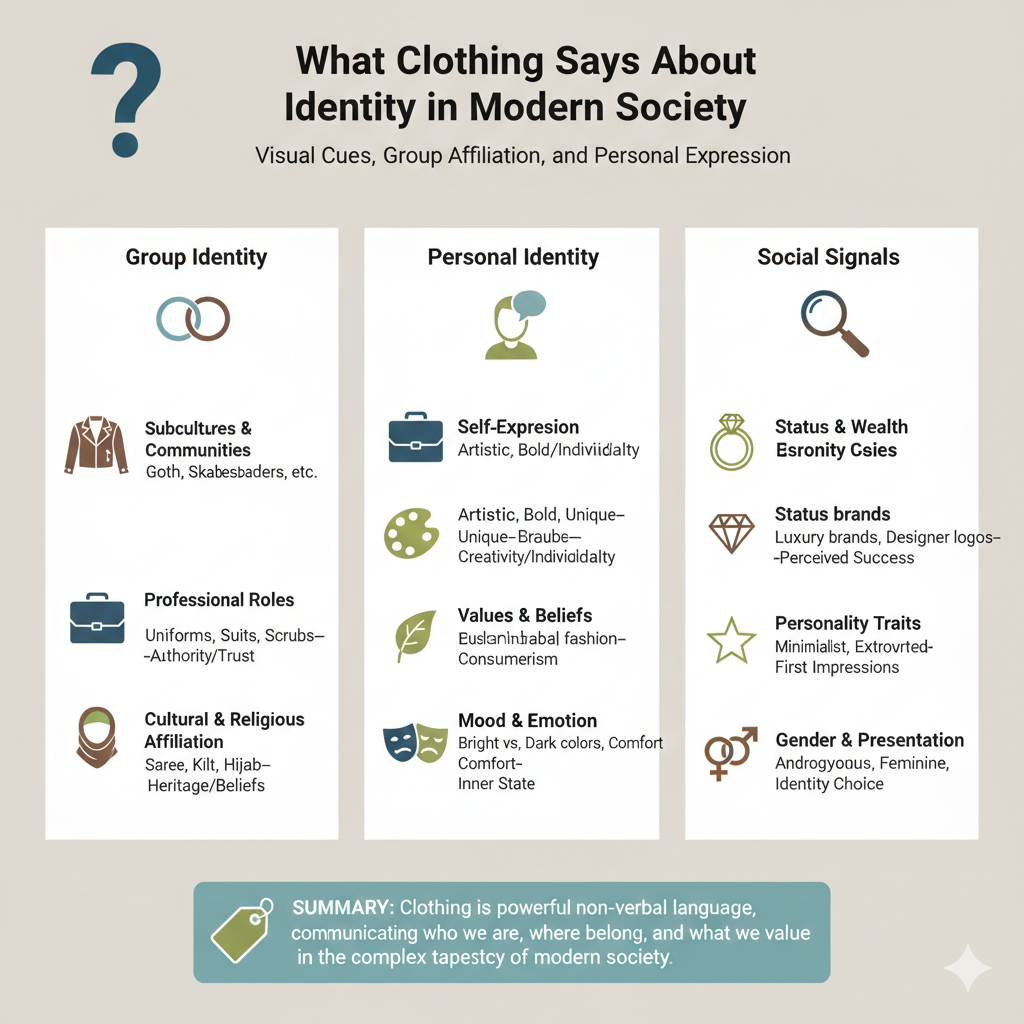
Fast forward to the modern era, and clothing remains one of the most immediate ways we express who we are. A tailored suit suggests professionalism and ambition. Ripped jeans and vintage band tees hint at nonconformity and nostalgia. Athletic wear signals health consciousness or simply comfort-first living. Every outfit is a story we tell the world before we open our mouths.
The rise of how streetwear changed modern dressing habits demonstrates how profoundly fashion can shift cultural norms. What started as underground youth culture became mainstream luxury, blurring lines between high fashion and everyday wear. Understanding human clothing evolution history reveals that this transformation isn’t new—it’s the latest chapter in a saga that spans thousands of years. For a deeper dive into clothing meaning and psychology hub, exploring these connections offers endless insight.
The Psychology Behind Clothing Choices
Why do we agonize over what to wear to a job interview? Why does slipping into a favorite hoodie feel like a warm hug? The answers lie in psychology, where clothing functions as both mirror and mask.
Self-Expression Through Style
Clothing is a canvas for self-expression. When you choose an outfit, you’re making decisions about how you want to be seen and how you want to feel. Someone who gravitates toward bold colors and patterns might be signaling openness and creativity. A minimalist wardrobe dominated by neutrals could reflect a preference for simplicity and focus.
These choices aren’t always conscious. Many people select clothing based on intuition, guided by emotions and past experiences. A dress that made you feel confident at a pivotal moment becomes a go-to piece. A jacket that received compliments gets worn more often. Over time, these patterns solidify into a personal style—a visual shorthand for personality.
Research shows that what we wear influences not just how others see us, but how we see ourselves. This phenomenon, called “enclothed cognition,” suggests that clothing affects cognitive processes. Wearing formal attire can increase abstract thinking and attention to detail. Athletic gear primes the body for movement and energy. The clothes we put on shape our mental state, sometimes more than we realize.
Social Identity and Belonging
Humans are social creatures, and clothing helps us navigate group dynamics. From school uniforms to corporate dress codes, what we wear signals membership and allegiance. Subcultural movements—punk, goth, hip-hop, prep—use clothing as a badge of identity, instantly communicating shared values and aesthetics.
This desire to belong through dress starts young. Teenagers experiment with different styles to fit in or stand out, testing boundaries and forming identity. Adults continue this practice in subtler ways, adjusting wardrobes to match professional expectations or social circles. The business casual outfit for a client meeting differs from the relaxed ensemble for weekend brunch with friends.
Clothing also marks life transitions. Graduation gowns, wedding dresses, mourning attire—these garments carry ritualistic significance, anchoring personal milestones within collective traditions. They help individuals process change while signaling new roles to the community.
Understanding why humans started wearing clothes reveals that this social function has always been intertwined with practical needs. Clothing evolved alongside human civilization, adapting to serve both physical and psychological purposes.
Cultural Signals Hidden in Everyday Outfits
Every culture writes its history into fabric. The patterns, colors, and cuts we see in contemporary fashion carry echoes of tradition, geography, and social structure.
Color, Symbols, and Social Status
Color carries cultural weight. In many Western societies, black signifies mourning and formality. In parts of Asia, white holds similar associations with death and funerals. Red can mean luck and celebration in Chinese culture, while in Western contexts it often conveys passion, danger, or power.
Symbols embedded in clothing—logos, emblems, motifs—communicate allegiance and aspiration. Designer labels signal wealth and taste, often functioning as status markers more than functional garments. Band logos and political slogans turn clothing into walking billboards for beliefs and affiliations.
Historically, sumptuary laws regulated who could wear certain fabrics, colors, or styles, codifying class distinctions into wardrobes. Though such laws have largely disappeared, economic barriers still determine access to fashion. A handmade couture gown versus a fast-fashion replica tells different stories about resources and priorities.
Influence of Cultural Traditions
Traditional garments—kimonos, saris, dashikis, kilts—carry deep cultural significance. Even as globalization homogenizes fashion, these pieces persist as markers of heritage and pride. Wearing traditional clothing in modern contexts becomes an act of cultural preservation and celebration.
Contemporary fashion increasingly blends global influences, creating hybrid styles that reflect multicultural identities. A designer might pair Japanese minimalism with Scandinavian functionality and West African prints. This fusion speaks to how identity itself has become more fluid and intersectional.
Yet this blending raises questions about cultural appropriation versus appreciation. When fashion borrows from marginalized cultures without credit or context, it can perpetuate harm. Thoughtful engagement with cultural garments requires understanding their origins and respecting their meanings.
The impact of ancient civilizations shaping clothing styles continues to resonate in today’s fashion landscape, reminding us that every trend has roots worth acknowledging.
Digital Identity and Modern Fashion Behavior
The internet changed how we dress. Social media platforms turned personal style into public performance, influencing everything from purchasing habits to outfit planning.
Online, identity is curated and malleable. Profile pictures, outfit posts, and fashion hauls present idealized versions of self. Algorithms learn preferences and serve targeted ads, creating feedback loops that shape desires. Influencers collaborate with brands, blurring lines between authentic expression and commercial endorsement.
This digital layer adds complexity to clothing choices. People now dress not just for physical spaces but for virtual audiences. The “Instagrammable” outfit—visually striking, photogenic, shareable—has become a distinct category. Some garments get purchased, photographed, and returned, worn only for content creation.
The disconnect between online and offline fashion behavior reveals interesting contradictions. Someone might present a polished, trend-forward image on Instagram while defaulting to comfortable basics in everyday life. This duality isn’t dishonesty—it reflects the multifaceted nature of identity in digital age.
Virtual fashion is emerging as a legitimate market. Digital-only clothing exists for avatars in video games and social platforms, worn in metaverse spaces where physical limitations don’t apply. These garments still signal identity and status, proving that even in virtual worlds, humans crave self-expression through appearance.
The social media influence on modern clothing demonstrates how technology reshapes not just what we wear, but why and how we think about fashion.
Emotional Connection Between Humans and Clothing
Clothing is deeply personal. It comforts, empowers, and tells stories that words often can’t capture.
Certain pieces carry emotional resonance. A parent’s vintage jacket becomes a cherished heirloom. A lucky shirt worn during important moments transforms into a talisman. Clothing can anchor memories, transporting us back to specific times, places, and feelings.
This emotional attachment explains why decluttering wardrobes feels difficult. Letting go of clothing means releasing the versions of ourselves those garments represent—the person we were, the person we hoped to become. Marie Kondo’s famous question, “Does it spark joy?” acknowledges this emotional dimension, validating the feelings we invest in fabric.
Clothing also influences mood and confidence. Getting dressed with intention can shift mindset and energy. “Dress for the job you want” isn’t just career advice—it’s psychological strategy. When we look the part, we’re more likely to embody it.
Comfort dressing has gained recognition, particularly after global events like the pandemic normalized remote work and casual attire. Loungewear sales soared as people prioritized physical ease over formal presentation. This shift reflects a broader cultural conversation about authenticity, well-being, and the pressure to perform through appearance.
Understanding emotional dressing and confidence can help individuals make wardrobe choices that support mental health and self-esteem.
Identity as the Next Stage of Clothing Evolution
Clothing has journeyed from survival tool to identity signifier. As technology advances and cultural values shift, fashion continues evolving, reflecting changing ideas about self, community, and expression.
Sustainability is reshaping the industry. Consumers increasingly demand ethical production, transparency, and longevity over disposability. This shift recognizes that identity isn’t just personal—it’s planetary. What we wear impacts ecosystems and labor systems, making fashion choices ethical statements as much as aesthetic ones.
Customization and inclusivity are expanding definitions of style. Adaptive clothing for people with disabilities, gender-neutral designs, and extended size ranges challenge traditional fashion norms. Technology enables personalization at scale, allowing individuals to create truly unique wardrobes that reflect diverse identities.
The next frontier may dissolve boundaries between physical and digital entirely. Augmented reality could let us “try on” clothes virtually before purchasing. Smart fabrics might change color or pattern based on mood or environment. As future of human clothing in a digital world unfolds, identity expression through dress will likely become more dynamic, interactive, and boundary-defying than ever before.
Clothing will always matter because identity will always matter. As long as humans seek to understand themselves and communicate with others, we’ll use clothing as a tool for that essential work. The fabrics may change, the technologies may advance, but the fundamental human need to say “this is who I am” through what we wear will endure.