


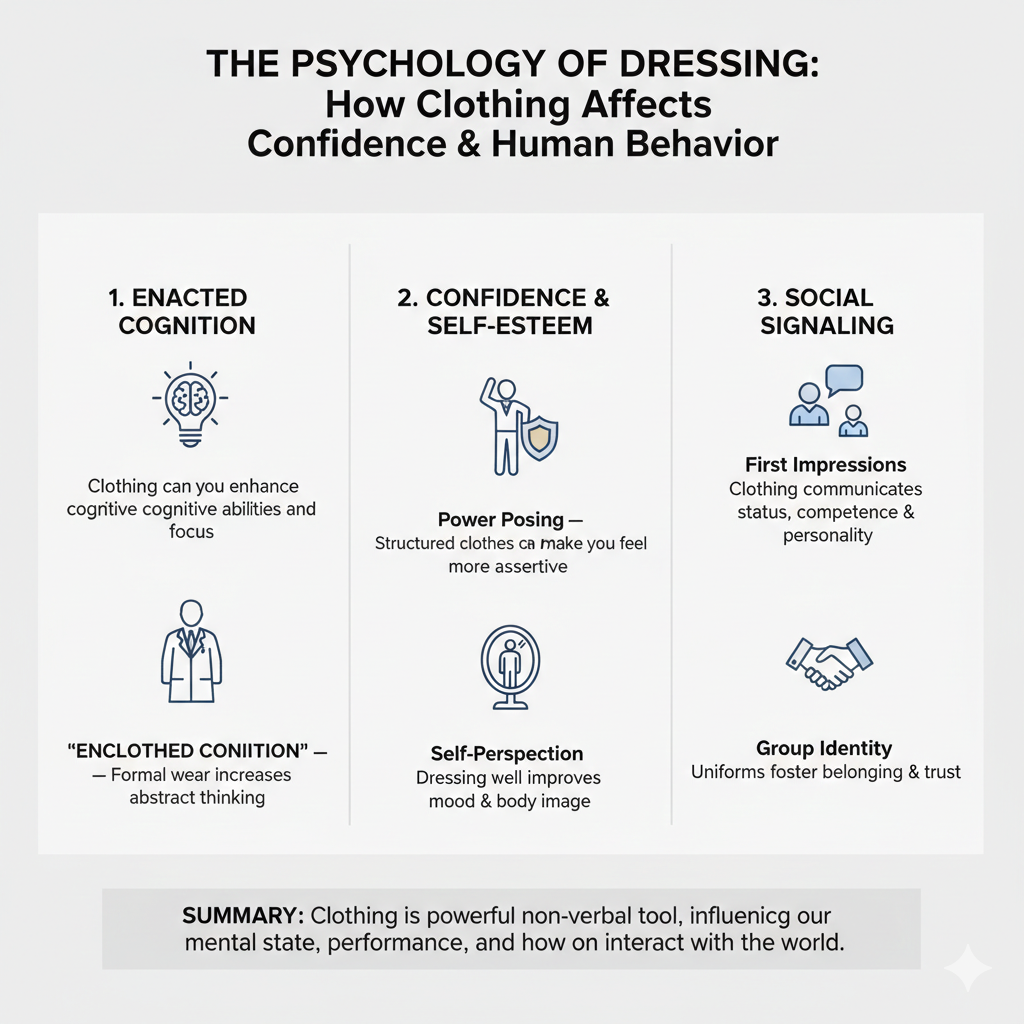
What you wear doesn’t just cover your body—it shapes how you think, feel, and present yourself to the world. From the crispness of a freshly ironed shirt to the comfort of well-worn jeans, clothing carries psychological weight that extends far beyond fabric and thread.
Research shows that our garments influence everything from self-perception to professional performance. A 2012 study published in the Journal of Experimental Social Psychology found that participants wearing a white lab coat performed better on attention-requiring tasks than those in street clothes. The researchers coined this phenomenon “enclothed cognition,” demonstrating that what we wear can directly alter our mental processes.
But the connection between clothing and psychology runs deeper than a single study. Throughout human history, garments have served as powerful signals of identity, status, and intention. Understanding what clothing says about identity in modern society reveals how deeply our wardrobe choices intersect with self-concept and social positioning.
This relationship between fabric and psyche has evolved alongside human civilization. From the earliest days when humans started wearing clothes for protection, to contemporary fashion statements that broadcast personality and values, clothing has always been more than utilitarian. It’s a language we speak without words, a tool for emotional regulation, and a bridge between our internal world and external expression.
Exploring the psychological dimensions of dress illuminates why we feel powerful in certain outfits, why first impressions matter so profoundly, and how modern human clothing styles continue to reflect our evolving understanding of self-expression and identity.
The Science Behind Clothing and Confidence
The psychological impact of clothing operates through multiple mechanisms, from neurological responses to learned associations. Scientists have identified specific ways that garments influence our mental state and behavior.
Enclothed Cognition Explained
Enclothed cognition refers to the systematic influence that clothes have on the wearer’s psychological processes. This phenomenon occurs when two critical conditions are met: the symbolic meaning of the clothing and the physical experience of wearing it.
The white lab coat study demonstrated this beautifully. When participants believed they were wearing a doctor’s coat, their attention and carefulness increased. However, when told the same coat belonged to a painter, the effect disappeared. The symbolic meaning attached to the garment proved essential to its psychological impact.
This principle extends to everyday clothing choices. Wearing professional attire can trigger a more formal, focused mindset. Athletic wear might prime the body for movement and energy. Comfortable loungewear signals relaxation and ease. Understanding how body shapes influence clothing silhouettes adds another layer, as garments that fit and flatter your form naturally enhance confidence through both comfort and aesthetic satisfaction.
The physical sensation of clothing matters too. Textures, weights, and fits create tactile feedback that your brain processes alongside visual and symbolic information. A well-structured blazer literally holds you differently than a loose sweater, and your posture, breathing, and self-perception adjust accordingly.
Emotional Connection to Personal Style
Beyond cognitive effects, clothing forms emotional bonds that shape our psychological landscape. Certain garments become anchored to memories, experiences, or aspirations. A dress worn during a significant achievement might carry confidence-boosting associations for years afterward.
Personal style develops as we discover which clothing makes us feel authentically ourselves. This alignment between internal identity and external presentation creates psychological coherence that translates to confidence. When your outfit reflects who you are—or who you’re becoming—you move through the world with greater assurance.
The relationship between what is a clothing silhouette and personal preference demonstrates how technical aspects of design interact with emotional response. Some people feel empowered in structured, tailored silhouettes that create clean lines and defined shapes. Others find confidence in flowing, organic forms that emphasize movement and ease.
Color psychology plays a role too. Red has been associated with power and attraction, while blue conveys trust and stability. Black communicates sophistication and authority. These aren’t universal truths, but culturally learned associations that influence how we feel in different hues and how others perceive us.
Cultural Influence on Psychological Dressing
Clothing psychology never exists in a vacuum. Cultural context determines which garments carry which meanings, shaping our emotional responses to different styles and dress codes.
Every society develops clothing norms that reflect its values, climate, resources, and social structures. What signals confidence in one culture might read entirely differently in another. Business attire in New York differs from business attire in Tokyo, not just in style but in the psychological associations attached to formality, modesty, and professional presentation.
Historical perspectives illuminate how cultural clothing psychology develops. Looking at functional vs symbolic clothing in early tribes reveals that humans have always used garments to communicate group membership, status, and role. These early functions established patterns that persist today, though the specific symbols and meanings have evolved.
Understanding how ancient civilizations shaped clothing styles shows how deeply cultural identity intertwines with dress. Roman togas, Japanese kimonos, and West African kente cloth each carried complex social meanings that influenced how wearers felt and behaved. Contemporary fashion continues this tradition, with certain styles signaling cultural affiliation, rebellion, conformity, or innovation.
Globalization has created interesting tensions and opportunities in clothing psychology. Western business attire has spread worldwide, carrying its associated psychological effects across cultures. Simultaneously, traditional garments experience revivals as people seek connection to heritage and resist cultural homogenization. Both movements demonstrate clothing’s power to shape not just personal psychology but collective identity.
Migration and multicultural societies create spaces where different clothing psychology systems intersect. A person might feel one way in their family’s traditional dress, another in mainstream Western clothing, and synthesize these experiences into a unique relationship with fashion that reflects their complex cultural position.
Comfort vs Expression — Finding Balance in Style
Modern clothing choices often involve negotiating between physical comfort and self-expression. This tension reveals important insights about how garments affect our psychological state.
Physical comfort directly impacts confidence and performance. Restrictive, uncomfortable clothing creates a constant low-level distraction that drains cognitive resources. Conversely, garments that move with your body and feel pleasant against your skin free your attention for other tasks while providing a baseline of physical ease that supports mental wellbeing.
The rise of athleisure clothing trends exemplifies how contemporary fashion seeks to dissolve the comfort-expression dichotomy. Athleisure combines the physical ease of athletic wear with style elements that make these garments socially acceptable in diverse settings. This development acknowledges that people want both comfort and the confidence that comes from looking intentional and put-together.
Technical innovation supports this balance. Understanding the difference between woven and knitted garments illuminates how fabric construction affects both comfort and appearance. Knitted fabrics generally offer more stretch and ease of movement, while woven fabrics provide structure and formality. Modern clothing often combines these properties, creating garments that satisfy both physical and psychological needs.
Personal boundaries around comfort versus expression vary widely. Some people feel most confident in precise, structured clothing that projects a carefully curated image. Others need physical freedom to feel psychologically at ease. Neither approach is superior—what matters is understanding your own comfort-confidence relationship and choosing clothing accordingly.
Context matters too. The same person might prioritize comfort during creative work, expression during social events, and a strategic balance during professional presentations. Developing a wardrobe that serves different psychological needs across various situations enhances overall confidence and effectiveness.
Social Media and the Psychology of Dressing
Digital platforms have transformed clothing psychology by creating new contexts for self-presentation and new influences on style choices.
Social media introduces a performative element to dress that affects how people think about their clothing. When your outfit might appear in photos shared with hundreds or thousands of people, getting dressed becomes an act of personal branding. This can enhance the intentionality and creativity people bring to their clothing choices, but it can also create pressure and anxiety around appearance.
The visual nature of platforms like Instagram and TikTok has elevated fashion’s importance in digital identity construction. People curate carefully photographed outfits that communicate personality, lifestyle, and values to their networks. This process can deepen engagement with personal style and increase the confidence boost from well-executed outfits.
However, constant exposure to idealized images and trending styles can undermine confidence for those who feel they don’t measure up. The psychological impact depends partly on how people engage with fashion content—as inspiration versus comparison, as creative exploration versus obligation.
How streetwear changed modern dressing habits demonstrates social media’s power to accelerate fashion movements and democratize style influence. Streetwear’s rise from subculture to mainstream fashion happened largely through digital platforms, where anyone with style credibility could shape trends regardless of traditional fashion industry gatekeeping.
Looking ahead, the future of human clothing in a digital world raises fascinating questions about clothing psychology. As virtual and augmented reality develop, people may express identity through digital clothing in online spaces while prioritizing comfort in physical garments. This could fundamentally alter the psychological relationship between dress and self-presentation.
Digital fashion shows, virtual try-ons, and AI-powered style recommendations are already changing how people discover and choose clothing. These technologies might reduce the anxiety of in-person shopping while introducing new psychological dimensions to the relationship between self and style.
Practical Ways Clothing Can Boost Confidence
Understanding clothing psychology becomes most valuable when translated into practical strategies for enhancing confidence through dress.
Start with fit and comfort. No garment will boost confidence if it pinches, restricts, or requires constant adjustment. Invest in proper sizing and alterations. Clothes that fit your actual body—not the body you wish you had—create a foundation of physical ease that supports psychological confidence.
Develop a signature element. This might be a particular color, silhouette, accessory, or style detail that feels distinctly “you.” Having recognizable personal style elements creates consistency in self-presentation that builds confidence over time. Others come to associate these elements with you, reinforcing your sense of identity.
Dress slightly above the occasion. When unsure, aim for slightly more polished than strictly necessary. This strategy, sometimes called “peacocking,” can boost confidence through enclothed cognition effects without making you feel overdressed or uncomfortable.
Create outfit formulas. Decision fatigue erodes confidence. Develop reliable combinations that work for different situations so you’re not starting from scratch each day. This doesn’t mean wearing the same thing constantly, but having frameworks that reduce cognitive load.
Consider your environment. Confidence comes partly from appropriate fit with context. Understanding dress codes and social norms for different situations allows you to express personality within frameworks that help rather than hinder your goals.
Experiment intentionally. Confidence grows through successful risks. Try new styles, colors, or silhouettes in low-stakes situations. Each positive experience with unfamiliar clothing expands your style range and confidence in carrying off different looks.
Honor your evolution. Style that served you five years ago might not reflect who you are now. Regularly assess whether your wardrobe still aligns with your current identity and aspirations. Understanding why humans started wearing clothes reminds us that adaptation has always been central to the human-clothing relationship.
Understand clothing fundamentals. Learning about the history of clothing evolution provides context that deepens appreciation for contemporary choices. Knowledge about fabric, construction, design, and fashion history can inform more intentional, confidence-building wardrobe decisions.
Balance investment pieces with experiments. Build a foundation of quality basics in colors and styles that consistently make you feel good. This base allows affordable experimentation with trends and new looks without risking your daily confidence on untested clothing.
Pay attention to your responses. Notice which garments make you stand taller, speak more confidently, or feel more yourself. These observations provide data about your personal clothing psychology that no general fashion advice can match.
Clothing as a Tool for Emotional Expression
The journey from survival necessity to psychological instrument traces humanity’s evolving relationship with clothing. What began as protection from elements transformed into one of our most powerful tools for navigating social worlds and managing internal states.
Garments serve as the visible interface between private self and public persona. This positioning gives clothing unique psychological potency—it’s intimate and personal, yet simultaneously social and communicative. Few other aspects of daily life occupy this intersection so completely.
The psychological effects of clothing operate continuously but often unconsciously. We experience the confidence boost of a favorite outfit, the constraint of ill-fitting clothes, or the self-consciousness of inappropriate dress without necessarily recognizing these as clothing psychology in action. Bringing awareness to these processes enhances our ability to use dress intentionally for psychological benefits.
Cultural evolution continues to expand how humans use clothing for emotional and psychological purposes. From the utilitarian garments explored in the human clothing evolution journey to contemporary fashion’s sophisticated play with identity and expression, each era has added new dimensions to the clothing-psychology relationship.
Modern understanding recognizes that there’s no single “right” way to dress for confidence. The psychological impact of clothing depends on individual associations, cultural context, body relationship, and situational factors. What matters is developing self-awareness about your own clothing psychology and making intentional choices aligned with your needs and goals.
Fashion’s continuing evolution suggests that clothing psychology will remain a dynamic field. As societies change, as technology introduces new possibilities, and as individuals keep pushing creative boundaries, the ways that garments shape our mental and emotional lives will keep developing.
Ultimately, understanding what clothing says about identity recognizes that the conversation is ongoing. Every outfit you choose contributes to how you feel, how others perceive you, and how you navigate your world. That’s considerable power for something as simple as the fabric on your body.