


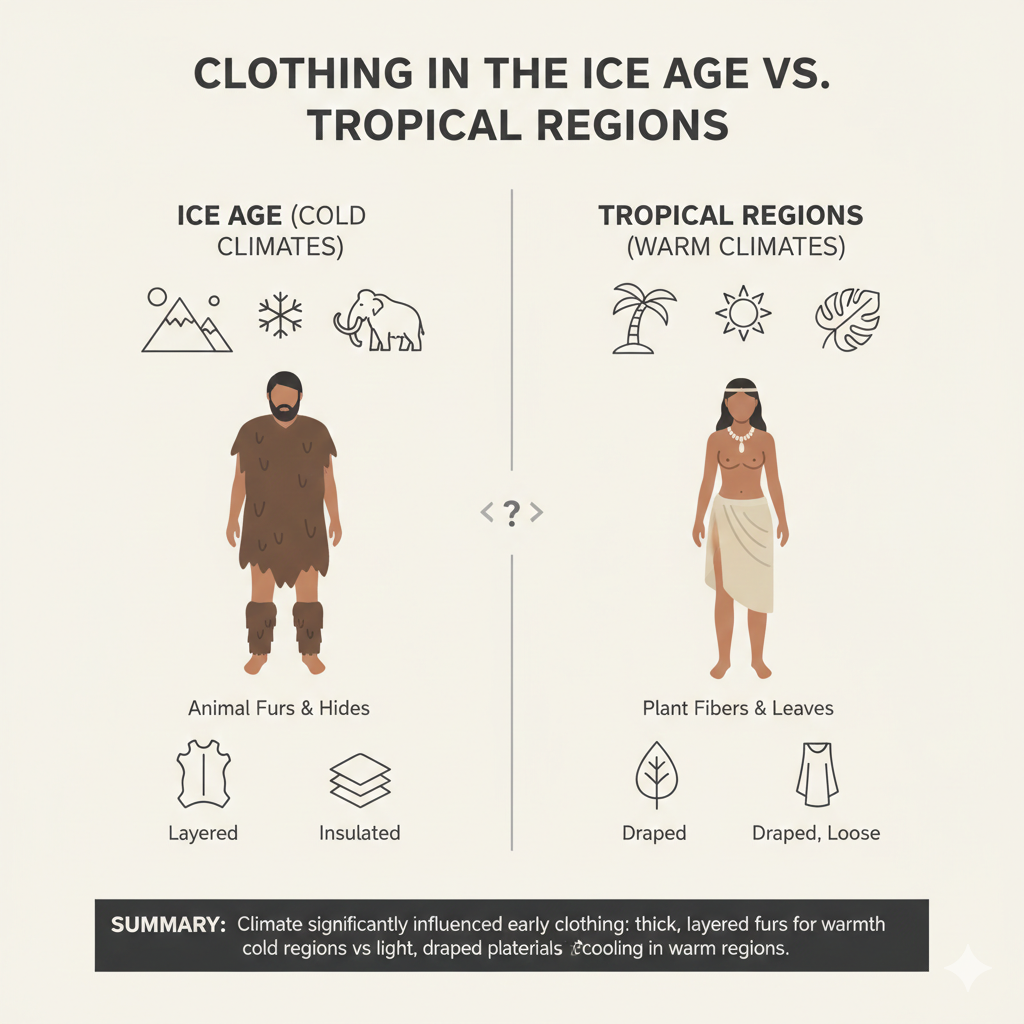
When early humans first began covering their bodies, they weren’t making a fashion statement. They were solving a survival problem. And that problem looked wildly different depending on where they lived.
In frigid Ice Age environments, clothing meant the difference between life and death. Thick layers of animal hide, carefully stitched with bone needles, protected against subzero temperatures and biting winds. Meanwhile, humans living near the equator faced an entirely different challenge: staying cool while navigating dense vegetation, scorching sun, and insects.
These contrasting environments drove dramatically different approaches to garment construction. Ice Age populations developed complex layering systems and insulation techniques. Tropical communities, by contrast, created minimal coverings from plant fibers that allowed airflow and freedom of movement.
Understanding this divide reveals something fundamental about human innovation: we don’t just adapt to our surroundings—we reshape them. The climate vs culture in early clothing debate shows us that while environment provided the initial constraints, human creativity determined the solutions.
This exploration traces how geography influenced material selection, construction methods, and design philosophy across two vastly different climate zones. By examining these adaptations, we can better understand the foundations of clothing evolution and how environmental pressures sparked innovations that continue to influence garment design today.
Clothing Adaptations During the Ice Age
Survival in Ice Age climates demanded more than basic covering. Humans needed garments that could withstand temperatures plummeting well below freezing, protect against wind and moisture, and allow enough mobility for hunting and gathering. The solutions they developed were remarkably sophisticated.
Layered Animal Hide Garments
Ice Age humans mastered the art of layering long before modern outdoor enthusiasts discovered its benefits. Archaeological evidence from sites across Europe and Asia reveals multi-layer clothing systems that trapped warm air between garments while keeping out wind and snow.
The outer layer typically consisted of thick, durable hides from large mammals like reindeer, bison, or mammoth. These provided wind resistance and initial insulation. Beneath this, softer furs worn with the hair facing inward created an insulating air pocket that retained body heat—a principle still used in modern cold-weather gear.
Animal skins used in early garments were carefully selected based on their thermal properties. Winter pelts, harvested when animals had developed their thickest coats, offered superior insulation compared to summer hides. Different animals served different purposes: wolverine fur, which resists frost buildup from breath, was prized for hood linings, while caribou hide combined lightness with excellent insulation.
Creating these garments required extensive knowledge. Hides needed proper treatment to remain flexible in freezing temperatures. Early humans developed techniques to remove fat and tissue, then worked the hides with stone tools until they achieved the right suppleness. Some evidence suggests they used animal brains, which contain natural oils, to soften and waterproof the material.
Insulation and Survival Techniques
Beyond material selection, Ice Age clothing incorporated clever design features that maximized warmth. Garments were cut to minimize gaps where cold air could enter. Sleeves extended past the wrists, and tunics hung low enough to tuck into leggings or boots, creating sealed layers.
The evolution of early sewing tools transformed what was possible. Bone and ivory needles with eye holes, dating back at least 40,000 years, allowed for tight, precise stitching that closed gaps and created structured garments. This wasn’t just about keeping cold out—carefully sewn seams prevented the splitting and tearing that would have been catastrophic in harsh conditions.
Footwear deserves special mention. Ice Age boots combined multiple materials: thick outer soles for traction and durability, insulating inner layers of fur or dried grass, and carefully shaped uppers that could be tightened around the calf to keep out snow. Some archaeological finds suggest the use of sinew as both thread and drawstring, providing strength and flexibility.
Head coverings evolved into sophisticated hoods attached to or integrated with outer garments. Protecting the head, neck, and face from exposure was critical—these areas lose heat rapidly and are vulnerable to frostbite. Detachable hoods, which could be adjusted or removed as conditions changed, show an impressive understanding of thermal regulation.
Perhaps most remarkably, Ice Age clothing demonstrated an understanding of moisture management. Wet clothing in freezing conditions becomes dangerous quickly. Outer layers made from water-resistant hides shed snow and rain, while inner layers of absorbent fur could wick moisture away from skin. This two-part system—waterproof exterior and moisture-managing interior—mirrors the construction of modern technical outerwear.
Tropical Clothing and Lightweight Materials
While their northern counterparts bundled against the cold, humans in tropical regions faced opposite challenges. Excessive heat, high humidity, intense sun exposure, and dense vegetation shaped entirely different clothing solutions. The goal wasn’t insulation but ventilation, protection, and freedom of movement.
Plant Fibers and Breathable Designs
Tropical environments offered abundant plant materials ideally suited to warm-weather garments. Bark cloth, made by pounding the inner bark of certain trees until it formed a soft, pliable fabric, became a staple material across tropical regions. This process, practiced independently in Africa, Southeast Asia, and the Pacific, created lightweight sheets that could be wrapped, draped, or fashioned into basic garments.
Palm fronds and grasses provided materials for woven items. Though we associate weaving primarily with later textile development, simple twining and plaiting techniques allowed early tropical populations to create breathable fabrics from available fibers. These materials allowed air circulation while providing sun protection—critical in regions where UV exposure posed genuine danger.
The first materials used in human clothing varied dramatically by region, but tropical areas showed particular innovation in processing plant matter. Softening tough fibers through pounding, soaking, or fermentation required different skills than working animal hides, but the results were well-suited to hot climates.
Unlike the fitted, layered garments of cold regions, tropical clothing emphasized loose draping and strategic covering. Wide wraps that could be adjusted throughout the day allowed wearers to regulate their temperature. When working in full sun, additional fabric could be wrapped around the head and shoulders. During rest periods in shade, less covering allowed maximum cooling.
Minimal Garment Structures
Tropical clothing philosophy centered on covering only what needed protection while leaving as much skin exposed as possible for cooling. This minimalist approach wasn’t about modesty or fashion—it was thermal engineering with available materials.
Many tropical populations developed garments that covered primarily the groin and, for women, the chest. These minimal coverings served practical purposes: protecting sensitive areas from sun, insects, and vegetation while moving through the environment. Why humans started wearing clothes in tropical regions had less to do with temperature regulation and more to do with protection from environmental hazards.
Accessories played a surprisingly important role. Woven headbands kept hair away from the face and absorbed sweat. Arm and leg bands, often made from plant fibers or vines, protected against insect bites in areas where mosquitoes and other pests carried disease. Even decorative elements served functional purposes: certain plant materials used in body ornaments had insect-repelling properties.
The lack of complex construction didn’t indicate less sophistication—it demonstrated different priorities. Where Ice Age clothing required extensive preparation, cutting, and sewing, tropical garments could often be created quickly from readily available materials. This allowed for frequent replacement, which was necessary in humid environments where organic materials degraded rapidly.
Footwear in tropical regions often consisted of simple sandals or went entirely absent. Tough foot soles developed naturally when walking barefoot, and minimal footwear prevented the moisture buildup that could lead to fungal infections in humid climates. When protection was necessary—crossing rocky terrain or thorny vegetation—temporary wrappings of bark or leaves sufficed.
Migration Between Climates and Clothing Innovation
Human populations didn’t remain static. As groups migrated across continents, they encountered dramatically different environmental conditions that forced rapid innovation in clothing design. These transitions revealed the adaptability of human problem-solving and accelerated the development of garment technology.
Early human migration shaping clothing created situations where traditional solutions failed. A group adapted to tropical conditions moving northward into temperate or subarctic zones faced an urgent need for warmer coverings. They couldn’t wait generations to develop cold-weather clothing—survival demanded immediate solutions.
Archaeological evidence suggests that migrating populations initially adapted by layering multiple tropical-style garments, creating insulation through air pockets between layers. This interim solution eventually led to purpose-built layered systems as groups gained experience with cold-weather survival. The knowledge that multiple layers trapped heat better than a single thick layer may have originated from these migration experiences.
Material substitution drove innovation. Groups moving from regions with abundant plant fibers into areas where animals provided the primary resources needed to develop entirely new processing techniques. The reverse was also true: populations moving from cold to warm climates had to abandon familiar hide-working methods and learn to process plant materials effectively.
Trade and cultural exchange accelerated this knowledge transfer. Groups living at climate boundaries could observe and learn from neighbors adapted to different conditions. A population straddling temperate and subtropical zones might develop hybrid garments incorporating both animal hides and plant fibers, taking advantage of each material’s strengths.
Seasonal migration within regions also influenced clothing design. Groups that moved between summer and winter ranges needed versatile garments that could be adapted to changing conditions. Detachable components—sleeves that could be removed, hoods that could be unfastened, or outer layers that could be shed—emerged from these seasonal needs.
The cognitive leap required to preemptively prepare clothing for conditions not currently experienced shouldn’t be underestimated. A group planning to migrate knew they would need different garments before experiencing the new climate directly. This forward-thinking approach to garment preparation indicates sophisticated planning and abstract reasoning about future needs.
How migration influenced early clothing design extended beyond simple adaptation. It created conditions for experimentation and innovation that wouldn’t have occurred in stable populations. The pressure of survival in new environments, combined with fresh resources and techniques, pushed clothing technology forward rapidly.
Environmental Influence on Future Clothing Construction
The climate-driven innovations of Ice Age and tropical populations laid groundwork for all subsequent clothing development. Techniques developed to solve immediate survival problems became the foundation for increasingly sophisticated garment construction as human societies evolved.
The principle of layering, perfected in Ice Age climates, remains central to modern clothing design. Contemporary outdoor gear still relies on the same basic concept: multiple layers that can be added or removed to regulate temperature. The moisture-wicking base layer, insulating middle layer, and weather-resistant outer shell directly descend from Ice Age innovations.
Plant fiber processing techniques developed in tropical regions led eventually to textile production. The skills needed to extract, prepare, and work plant fibers—whether bark, grass, or eventually cotton and flax—originated with early tropical populations seeking breathable materials. The from fiber to fabric clothing process traces its roots to these early innovations.
Construction techniques evolved differently in response to available materials. The precise sewing required for fitted Ice Age garments, using sinew and bone needles, developed sewing skills that would later be applied to woven textiles. Tropical populations’ expertise in knotting, plaiting, and weaving plant materials provided techniques that would eventually produce complex woven fabrics.
Climate also influenced how communities thought about clothing permanence and replacement. Cold-weather populations invested significant time and effort into durable garments that would last multiple seasons. This culture of careful construction and repair influenced later clothing traditions in temperate and cold regions. Tropical populations’ expectation of frequent garment replacement, driven by material degradation in humid conditions, created different attitudes toward clothing maintenance and renewal.
Regional clothing traditions that emerged thousands of years later still reflect these environmental origins. Northern European clothing history shows clear continuation of layered, fitted garment construction. Traditional tropical garments maintained loose, draped styles that prioritized ventilation. Even as ancient civilizations shaping clothing styles introduced new cultural elements, environmental foundations remained visible.
Understanding this environmental influence helps explain why certain clothing innovations emerged where and when they did. Developments in textile production, for example, advanced most rapidly in regions with climate stability and access to both plant fibers and animal materials—conditions that allowed experimentation beyond immediate survival needs.
Climate’s Lasting Impact on Clothing Design
The split between Ice Age and tropical clothing approaches represents one of humanity’s earliest examples of design thinking. Early humans assessed their environmental challenges, evaluated available resources, and created solutions tailored to specific needs. These weren’t random developments but purposeful innovations driven by observation and experimentation.
The sophistication of these early garments often surprises us. Ice Age clothing incorporated principles of insulation, moisture management, and modular design that seem remarkably modern. Tropical garments demonstrated equally impressive understanding of ventilation, UV protection, and material properties. Both systems solved complex problems with elegant efficiency.
These climate-adapted solutions shaped the entire human clothing evolution journey. Every subsequent innovation in garment design—from the development of woven textiles to modern synthetic materials—builds on principles first established by humans adapting to extreme climates. The history of clothing evolution cannot be understood without recognizing how environmental pressures drove initial innovation.
Perhaps most significantly, studying climate-adapted clothing reveals human creativity operating under constraints. Early populations couldn’t simply choose their ideal materials or construction methods—they had to work with what their environment provided. The ingenuity they demonstrated in transforming available resources into effective garments speaks to our species’ remarkable capacity for problem-solving and