


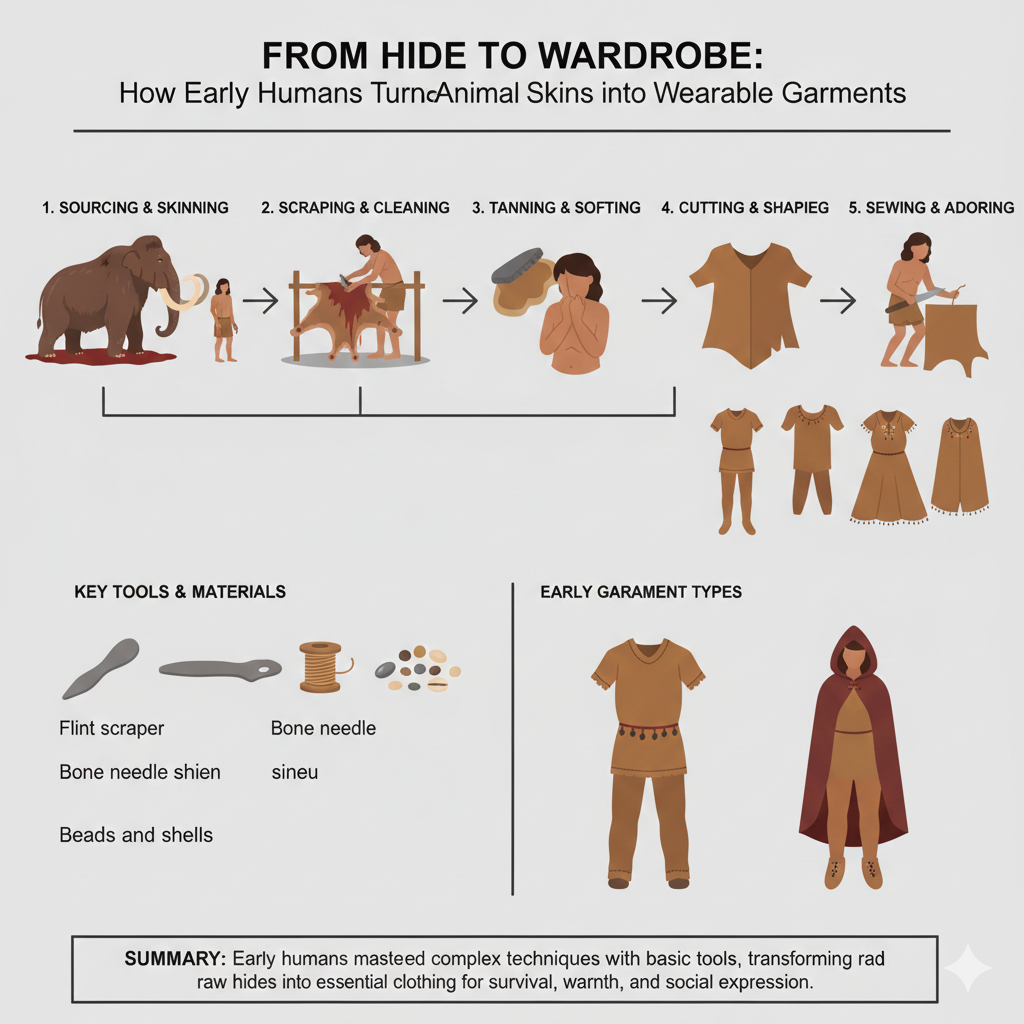
Long before looms and spinning wheels, humans relied on one of nature’s most accessible materials: animal hides. These skins offered warmth, protection, and mobility—three essentials for survival in unpredictable climates. But raw animal hides weren’t ready to wear straight off the carcass. Transforming them into functional garments required ingenuity, labor, and a deep understanding of materials.
This process wasn’t just about practicality. It marked a turning point in human development, enabling migration into harsher environments and laying the groundwork for more sophisticated clothing technologies. Understanding how early humans prepared and wore animal skins reveals much about their resourcefulness and adaptability.
In this post, we’ll explore the techniques early humans used to turn raw hides into durable garments, the tools they developed, and the broader role these garments played in human evolution and migration.
Animal Skins as Early Human Clothing
Animal hides became a natural choice for clothing once humans began hunting larger prey. Unlike plant fibers, which required complex processing, skins were readily available and provided immediate protection from the elements. The shift toward wearing animal hides likely occurred alongside advancements in hunting tools and techniques, which made acquiring pelts more reliable.
These hides weren’t just about staying warm. They offered protection from abrasions, insect bites, and harsh sunlight. For early humans living in variable climates, this versatility made animal skins indispensable.
Archaeological evidence suggests that humans were wearing tailored garments made from animal hides at least 40,000 years ago, though the practice likely began much earlier. Bone needles, scrapers, and other tools found at ancient sites indicate that early humans had developed systematic methods for working with hides.
The use of animal skins represents one of the first materials used in human clothing, a development closely tied to why humans started wearing clothes in the first place. This shift reflects both environmental pressures and evolving social behaviors.
Hunting and Resource Use in Early Garment Creation
Using Entire Animal Resources
Early humans practiced efficient resource use by necessity. When an animal was hunted, nearly every part served a purpose. Meat provided nutrition, bones became tools or weapons, and sinew acted as thread. The hide, meanwhile, offered raw material for clothing, shelter, and storage containers.
This approach minimized waste and maximized the value of each successful hunt. Hides from larger animals like mammoths, bison, or deer provided enough material to create multiple garments or coverings. Smaller animals contributed pelts for accessories or insulation layers.
The preparation process began immediately after the kill. Leaving hides untreated for too long risked spoilage, so early humans developed methods to preserve and process them quickly. This urgency drove innovation in scraping, drying, and softening techniques.
Environmental Necessity and Survival
Climate played a central role in shaping how early humans used animal skins. In temperate regions, lighter hides or plant-based materials might suffice. But in colder climates, thick fur-lined garments became essential for survival.
During glacial periods, temperatures in Europe and Asia dropped significantly. Without adequate insulation, humans couldn’t have survived prolonged exposure. Animal hides, particularly those with intact fur, trapped body heat and provided a barrier against wind and moisture.
This relationship between climate and early clothing development shows how environmental pressures drove technological innovation. As humans moved into diverse climates, they adapted their garment-making techniques to suit local conditions and available resources.
Preparing Animal Skins for Wearable Use
Cleaning and Softening Techniques
Raw animal hides are stiff, smelly, and prone to decay. Making them wearable required multiple stages of processing. The first step involved removing flesh, fat, and connective tissue from the inner surface. Early humans used sharpened stones or bone scrapers to clean the hide thoroughly.
Next came the tanning process, which prevented decomposition and made the material more pliable. Early tanning methods likely involved several techniques:
Brain tanning: Animal brains contain oils and enzymes that break down proteins in the hide, making it soft and flexible. This method is still used by some indigenous communities today.
Smoking: Exposing hides to smoke from fires altered their chemical structure, making them water-resistant and less likely to rot.
Fat rubbing: Repeatedly working animal fats into the hide kept it supple and prevented cracking.
Stretching and drying: Hides were stretched on frames and dried in the sun or near fires. This step helped set the shape and remove excess moisture.
These processes were labor-intensive and required skill. A poorly prepared hide would crack, stiffen, or decompose quickly. Mastery of these techniques likely passed down through generations, with experienced members of a group teaching younger ones.
Primitive Tools and Early Sewing Methods
Transforming hides into fitted garments required more than just softening them. Early humans needed ways to cut, shape, and fasten pieces together. This need drove the development of specialized tools.
Stone scrapers were among the earliest implements. These tools featured sharp edges for removing tissue and smoothing surfaces. Different scraper shapes suited different tasks, showing that early toolmakers understood the importance of precision.
Bone awls allowed early humans to punch holes in leather, creating openings for lacing or stitching. These pointed tools were essential for joining separate pieces of hide.
Bone needles represent a major advancement. The oldest known needles date back approximately 50,000 years and feature carefully drilled eyes for thread. These needles enabled complex stitching patterns and more tailored garments.
Thread came from animal sinew—tough, fibrous tissue from tendons. When dried and split into thin strips, sinew became surprisingly strong and durable. It could be moistened to make it easier to work with, then dried in place to create secure seams.
The evolution of early sewing tools reflects growing sophistication in garment construction. Simple draped hides gave way to fitted clothing with sleeves, hoods, and other features that improved comfort and functionality.
The Role of Animal Hide Clothing in Migration and Adaptation
Animal hide garments weren’t just about comfort—they were enablers of human expansion. Without effective cold-weather clothing, early humans couldn’t have migrated into northern latitudes during ice ages.
Archaeological evidence shows that humans reached Siberia and eventually crossed into the Americas during periods of extreme cold. This would have been impossible without garments capable of withstanding subzero temperatures and harsh winds.
Fur-lined parkas, mittens, and boots made from animal hides provided the insulation necessary for survival in these environments. These garments trapped air between layers, creating an insulating barrier that preserved body heat. Design elements like hoods and cinched waists further improved their effectiveness.
The ability to create and wear such clothing represented a cognitive leap. It required planning, tool creation, and an understanding of material properties. It also facilitated social cooperation, as preparing hides and sewing garments often involved multiple people working together.
As humans adapted to different climates, they modified their garment-making techniques accordingly. Arctic populations developed sophisticated layering systems, while groups in warmer regions focused on lighter, more breathable materials. This adaptability highlights the importance of clothing in ice age environments and beyond.
From Animal Skins to Textile Evolution
While animal hides served humans well for millennia, they had limitations. Hides were heavy, required constant maintenance, and became less effective when wet. As human societies grew more complex, the search for alternative materials intensified.
The development of textile production marked a major shift. Spinning fibers into thread and weaving thread into fabric created lighter, more versatile materials. Early textiles included plant-based fibers like flax and animal fibers like wool.
This transition didn’t happen overnight. For thousands of years, hide garments and textile clothing coexisted. Hides continued to serve specific purposes—footwear, outerwear, and protective gear—even as woven fabrics became more common.
The from fiber to fabric clothing process built upon skills developed through hide preparation. Cutting, stitching, and fitting techniques transferred readily to textile garments. In this way, animal hide clothing laid the groundwork for all subsequent clothing technologies.
Animal Skins as the Foundation of Clothing Evolution
The journey from raw animal hide to tailored garment reveals remarkable human ingenuity. Early humans didn’t just use what was available—they transformed it through careful observation, experimentation, and skill development.
These garments enabled survival in hostile environments, facilitated migration across continents, and established fundamental techniques still used in clothing production today. The tools and methods developed for working with hides influenced everything from textile production to modern leatherworking.
Understanding this history deepens our appreciation for the human clothing evolution journey and the history of clothing development. Animal hides weren’t merely the first material humans wore—they were the foundation upon which all future clothing innovations were built.
From those first scraped and softened skins to the complex garments we wear today, clothing has always been about more than protection. It reflects our ability to adapt, innovate, and thrive in diverse environments. That legacy began with animal hides, shaped by human hands thousands of years ago.