




Why Plant-Based Diets Are Growing Worldwide (USA Focus)

Walk down the aisle of any major grocery store in the United States, and the shift is unmistakable. Where there was once a small, dusty section of tofu and soy milk, entire refrigerated cases now boast almond milk, oat milk, plant-based burgers, and dairy-free cheeses. This isn’t just an American phenomenon; it’s a reflection of a significant global dietary transition. From bustling cities in Europe to emerging markets in Asia, people are rethinking what they put on their plates.
But what is driving this massive change? It’s rarely a single factor. For some, it’s a doctor’s recommendation to lower cholesterol. For others, it’s a documentary about climate change or a viral TikTok recipe that makes lentils look surprisingly gourmet. The rise of plant-based eating sits at the intersection of health, sustainability, economics, and culture. It is no longer a fringe movement reserved for animal rights activists; it has firmly entered the mainstream.
This article explores the driving forces behind the worldwide surge in plant-based diets, examining specific trends within the USA, the health and environmental benefits fueling the shift, and whether this is a fleeting trend or a permanent change in human nutrition.
What Is a Plant-Based Diet?
Before diving into the trends, it is helpful to clarify what “plant-based” actually means, as the terminology can be confusing.
Definition and Scope
A plant-based diet focuses primarily on foods derived from plants. This includes not just fruits and vegetables, but also nuts, seeds, oils, whole grains, legumes, and beans. It doesn’t necessarily mean that you are vegetarian or vegan and never eat meat or dairy. Rather, you are proportionately choosing more of your foods from plant sources.
Plant-Based vs. Vegan vs. Vegetarian
While often used interchangeably, these terms have distinct differences:
- Vegan: Excludes all animal products, including meat, dairy, eggs, and honey. This is often a lifestyle choice that extends beyond diet to exclude leather, fur, and products tested on animals.
- Vegetarian: Excludes meat, poultry, and seafood but typically includes dairy and eggs.
- Plant-Based: A broader term. A person following a plant-based diet might still eat a steak on the weekend or put dairy milk in their coffee, but the foundation of their diet is plants. This flexibility is a key reason for its widespread adoption.
Why Plant-Based Diets Are Growing Worldwide
The global shift towards plants is being propelled by a powerful combination of increased information and urgent global challenges.
Global Health Awareness
Information is more accessible than ever. People across the globe have instant access to studies linking high consumption of processed meats to chronic diseases. Public health organizations in numerous countries are updating dietary guidelines to recommend more fruits, vegetables, and whole grains while advising limits on red and processed meats. This awareness is a primary driver, as individuals seek to take control of their longevity and vitality through nutrition.
Environmental and Sustainability Concerns
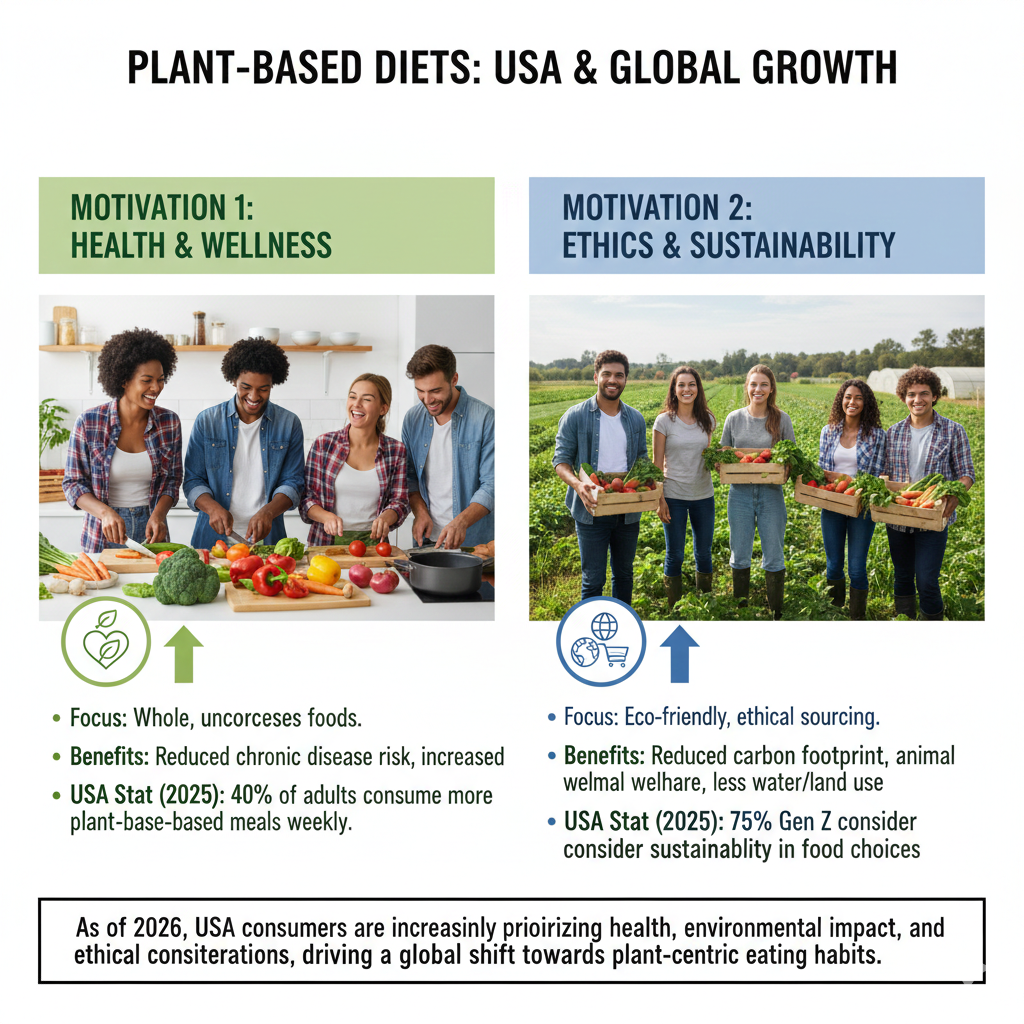
Climate change has moved from a theoretical future problem to a current reality for many. Consumers are increasingly aware of the environmental toll of industrial animal agriculture, which is a significant contributor to greenhouse gas emissions, deforestation, and water usage. For younger generations especially, choosing a bean burger over a beef burger is seen as a direct, daily action they can take to reduce their personal carbon footprint.
Growth of Plant-Based Diets in the USA
The United States, historically known for its high meat consumption, is becoming a hotbed for plant-based innovation and adoption.
Consumer Adoption Trends
Data consistently shows a rise in Americans identifying as flexitarian—people who actively try to reduce their meat intake without eliminating it entirely. It’s estimated that over one-third of Americans are actively trying to eat more plant-based foods. This isn’t just happening in coastal cities like Los Angeles or New York; the trend is visible in the Midwest and South as well, driven by health consciousness and curiosity.
Mainstream Availability and Acceptance
Perhaps the biggest indicator of growth is availability. Fast-food chains, from Burger King to Starbucks, now offer prominent plant-based menu items. You don’t have to go to a specialty health food store to find quinoa or nutritional yeast anymore; they are available at Walmart and Target. This accessibility removes the biggest barrier to entry: convenience. When a plant-based option is right there on the menu next to the traditional option, consumers are far more likely to try it.
Health Reasons Driving Plant-Based Eating
While ethical and environmental concerns are strong motivators, personal health remains the number one reason people shift their diets.
Heart and Metabolic Health
Cardiovascular disease remains the leading cause of death globally. Extensive research suggests that diets rich in fiber, vitamins, and minerals—and lower in saturated fats found in animal products—can lower blood pressure, reduce LDL cholesterol, and decrease the risk of heart disease. Furthermore, plant-based diets have been shown to be effective in preventing and managing type 2 diabetes by improving insulin sensitivity.
Weight Management and Energy Levels
Many individuals turn to plant-based eating for weight management. Plant foods are generally less energy-dense than animal foods, meaning you can eat larger portions for fewer calories. The high fiber content also promotes satiety, keeping you fuller for longer. Beyond the scale, many adopters report increased energy levels and better digestion after reducing their intake of heavy, processed meats and dairy, attributing this boost to the nutrient density of whole plant foods.
Environmental Impact and Sustainability
The environmental argument for plant-based diets is backed by significant scientific consensus.
Lower Carbon Footprint
Producing plant-based food generally results in far fewer greenhouse gas emissions than producing meat and dairy. Beef production, in particular, is resource-intensive. By shifting calories from animal sources to plant sources, even partially, individuals can significantly slash their diet-related emissions.
Reduced Resource Use
Livestock farming requires vast amounts of land and water—not just for the animals themselves, but for the crops grown to feed them. Growing crops directly for human consumption is far more efficient. As water scarcity becomes a pressing issue in parts of the USA (like the Southwest) and the world, the water efficiency of plant-based proteins like lentils and peas becomes an increasingly attractive feature of the diet.
Economic and Accessibility Factors
Historically, eating healthy was perceived as expensive. While some specialty vegan products carry a premium price tag, the economic narrative is shifting.
Cost Comparison with Animal-Based Diets
Whole food plant-based staples—beans, rice, lentils, seasonal vegetables, and potatoes—are some of the most affordable foods on the planet. In contrast, meat prices have been volatile and generally rising due to supply chain issues and inflation. Families looking to stretch their grocery budget are finding that “Meatless Mondays” or bean-based stews are wallet-friendly strategies.
Expansion of Affordable Plant-Based Options
As production scales up, the cost of processed plant-based alternatives (like nuggets and milks) is coming down, narrowing the price gap with animal products. Private label brands at supermarkets like Kroger, Aldi, and Trader Joe’s offer affordable plant-based lines, making these options accessible to a wider demographic beyond the affluent shopper.
Cultural and Lifestyle Shifts
Diet isn’t just about biology; it’s about culture and identity. The way we view meat is undergoing a cultural transformation.
Flexitarian and Reduced-Meat Lifestyles
The binary choice of “meat-eater” vs. “vegetarian” is fading. The rise of the “flexitarian” identity allows people to participate in the plant-based movement without strict labels or social isolation. It promotes inclusivity and progress over perfection, making the transition feel less daunting.
Influence of Social Media and Wellness Culture
Instagram and TikTok have revolutionized how we see food. Vibrant, colorful plant-based bowls are aesthetically pleasing and highly shareable. Influencers and celebrities promoting plant-forward lifestyles normalize these choices. Wellness culture, which emphasizes holistic health and “clean eating,” naturally aligns with plant-based principles, further embedding them into the cultural zeitgeist.
Role of Food Industry Innovation
The food industry hasn’t just responded to demand; they have actively fueled it through massive innovation.
Plant-Based Meat and Dairy Alternatives
We are far past the era of dry, flavorless veggie patties. Food technology companies like Beyond Meat and Impossible Foods have engineered products that bleed, sizzle, and taste remarkably like beef. In the dairy aisle, precision fermentation is beginning to create animal-free dairy proteins that mimic the functionality of whey and casein.
Improved Taste, Texture, and Nutrition
Early iterations of meat alternatives often relied on fillers and lacked nutritional value. Today’s innovations focus heavily on matching the macronutrient profile of meat—providing high protein content—while refining texture and mouthfeel. This appeals to the omnivore who wants the experience of eating meat without the animal.
Plant-Based Diets Across Different Regions
While the USA is a major player, the adoption of plant-based diets varies significantly by region.
USA vs. Europe
Europe is often ahead of the curve regarding regulation and labeling of sustainable foods. Countries like Germany and the UK have seen an explosion in vegan product launches, often outpacing the US in per capita variety. In the US, the growth is driven heavily by the fast-food sector and innovation in meat analogues, whereas in parts of Europe, there is a strong cultural emphasis on organic and whole-food plant options.
Asia and Latin America Trends
In Asia, tofu and tempeh have been staples for centuries. The modern “plant-based” movement there is a blend of traditional Buddhism-influenced vegetarianism and new, trendy western-style meat alternatives. In Latin America, interest is surging, particularly among younger generations concerned about the environmental impact of cattle ranching in the Amazon, though meat culture remains deeply ingrained.
Common Myths About Plant-Based Diets
Despite the growth, misconceptions persist that can deter potential adopters.
Protein Concerns
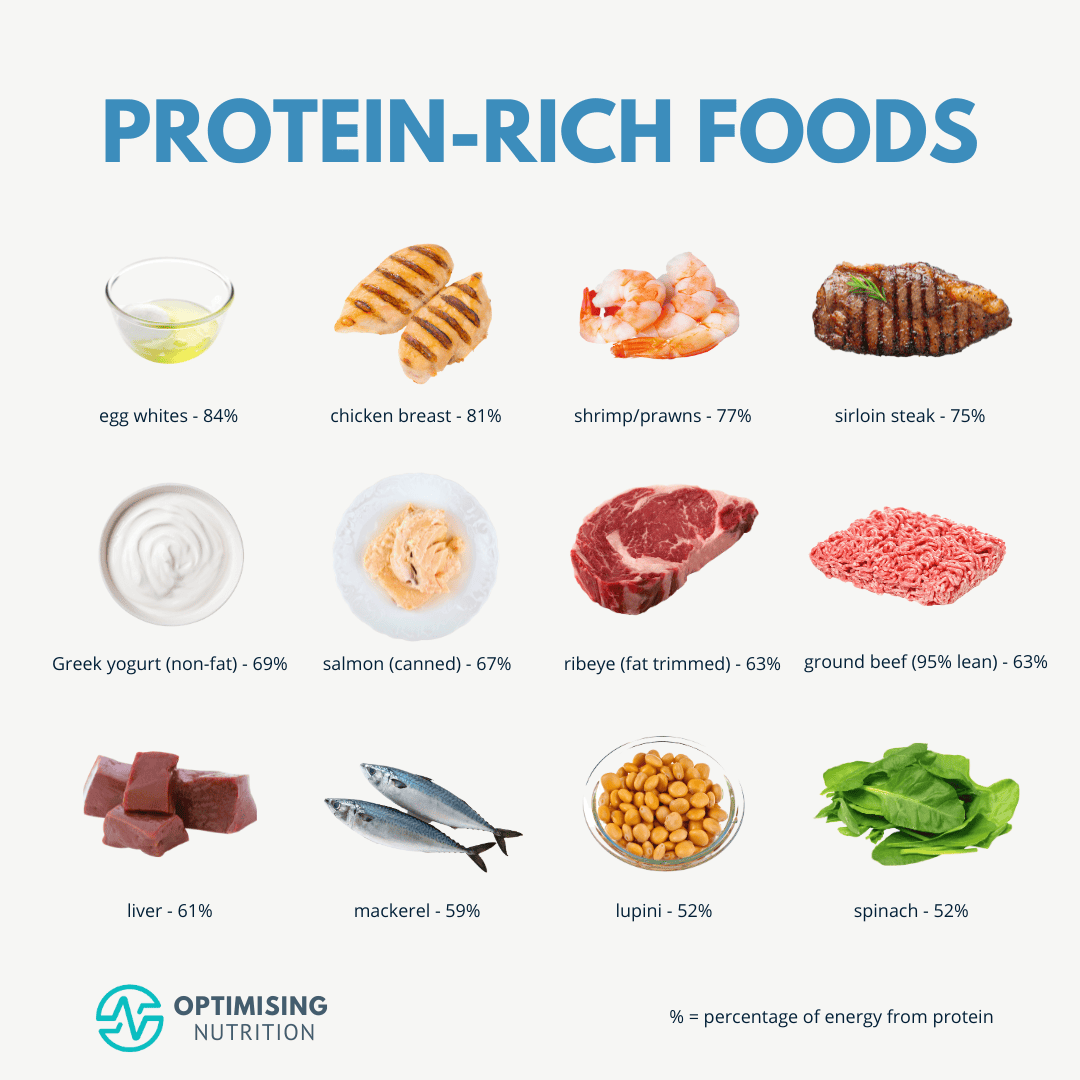
“Where do you get your protein?” remains the most common question. The reality is that protein deficiency is extremely rare in developed nations. Legumes, tofu, seitan, quinoa, nuts, and even vegetables like broccoli contain protein. A well-rounded plant-based diet easily meets daily protein requirements for the average person and even for athletes.
Nutrient Adequacy Misconceptions
Some believe plant-based diets are inherently deficient. While Vitamin B12 does need to be supplemented (as it is found primarily in animal products), a varied plant-based diet is typically richer in vitamins C, E, folate, magnesium, and fiber than a standard American diet. Fortified foods also make closing nutrient gaps easier than ever.
Challenges Slowing Adoption
The path to a plant-forward world isn’t without speed bumps.
Habit Change Resistance
Food is emotional and habitual. Changing lifelong eating patterns is difficult. Many people simply enjoy the taste of meat and find it hard to imagine a meal without it as the centerpiece. Overcoming the “meat and three veg” mindset requires learning new cooking techniques and flavor profiles.
Availability in Certain Regions
While major cities are awash in options, rural areas and food deserts in the USA and globally often lack access to fresh produce and high-quality plant-based alternatives. If the only convenient food options are gas station snacks or fast food without plant-based menus, adoption will naturally stall.
Is Plant-Based Eating a Long-Term Shift?
Is this a bubble, or the new normal?
From Trend to Dietary Norm
Trends come and go, but the drivers behind plant-based eating—climate change, resource scarcity, and chronic disease—are long-term structural issues. Because the movement addresses these fundamental challenges, it is likely transitioning from a “trend” to a dietary norm.
Future Outlook
We can expect continued diversification in the market. The next frontier includes “whole cut” meat alternatives (like plant-based steaks), seafood alternatives, and hybrid products that blend meat and plants. As technology improves and prices drop, plant-based eating will likely become the default for a growing percentage of the global population, with meat becoming a premium, occasional item rather than a daily staple.
FAQs – Plant-Based Diet Growth
Why are plant-based diets becoming popular?
The popularity is driven by a convergence of three main factors: personal health benefits (like better heart health), environmental concerns (reducing carbon footprint), and improved animal welfare awareness. Additionally, the vast improvement in the taste and availability of plant-based food options has made the switch easier for the general public.
Are plant-based diets healthier?
Generally, yes. Studies consistently show that diets high in plant foods and low in processed animal products are associated with lower risks of heart disease, type 2 diabetes, obesity, and certain cancers. However, a “junk food vegan” diet high in processed sugar and refined carbs can still be unhealthy. The key is focusing on whole, unprocessed foods.
Is the USA leading plant-based adoption?
The USA is a leader in innovation and product availability, home to many of the world’s largest plant-based meat companies. However, regarding per capita vegetarian/vegan population, countries like India (due to cultural/religious reasons) and several European nations often rank higher. The USA is leading the “flexitarian” market growth.
Do plant-based diets provide enough protein?
Yes. Plants can provide all the necessary protein a human needs. Sources like lentils, chickpeas, tofu, edamame, hemp seeds, and quinoa are protein powerhouses. The idea that plants don’t offer “complete” proteins is largely outdated; as long as you eat a variety of foods throughout the day, your body gets all the essential amino acids it needs.
Will plant-based diets keep growing globally?
Most market research predicts strong continued growth. As the global population rises, the inefficiency of animal agriculture makes it difficult to feed everyone on a meat-heavy diet. Sustainability pressures and ongoing health trends suggest that the shift toward plant-based eating will continue to accelerate globally over the coming decades.
Turning Over a New Leaf
The rise of plant-based diets is more than a fleeting fad; it is a fundamental restructuring of our food system. Whether motivated by the health of their hearts, the health of the planet, or simply the curiosity to try a new burger that sizzles, people in the USA and around the world are voting with their forks.
The transition doesn’t require perfection. It doesn’t require everyone to become vegan overnight. The growth we are seeing is fueled by imperfect progress—millions of people simply choosing to eat more plants, more often. As innovation makes these choices tastier and more accessible, the future of food looks increasingly green.