
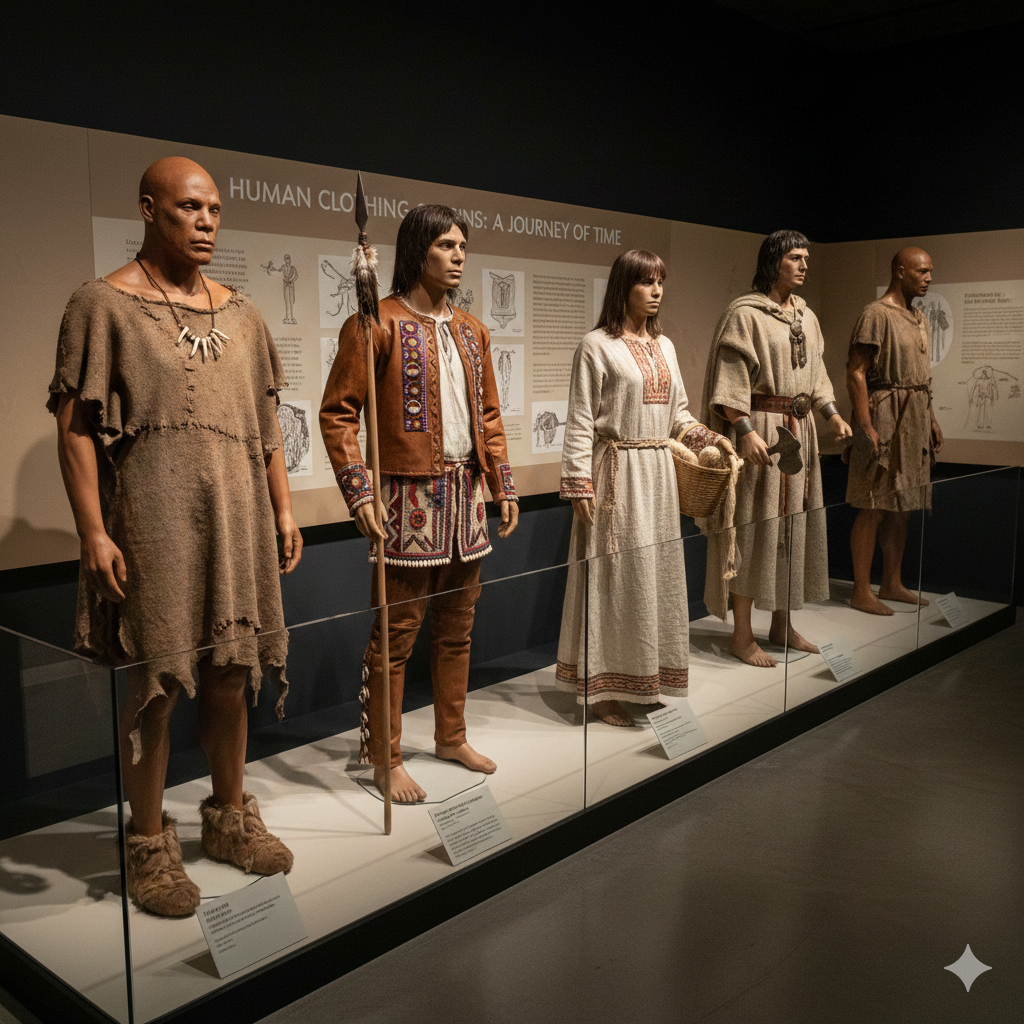


The Transition from Tribal Dress to Structured Fashion

Long before runways and fashion weeks, before tailors and pattern-makers, clothing served purposes far removed from aesthetics. It protected bodies from harsh climates, signaled status within communities, and marked participation in sacred rituals. But somewhere along the path of human history, garments began to shift. They moved from loose, draped fabrics and animal hides into something more deliberate—structured, shaped, and symbolic in new ways.
This transformation didn’t happen overnight. It unfolded across millennia as communities developed new technologies, adopted farming lifestyles, and began trading goods across vast distances. What emerged was the foundation of organized fashion systems: garments with consistent forms, identifiable silhouettes, and cultural meanings that transcended mere function.
Understanding this transition helps us see how human clothing history isn’t just about survival or modesty. It’s about identity, innovation, and the social forces that turned simple coverings into expressive, structured dress.
From Tribal Clothing to Early Fashion Systems
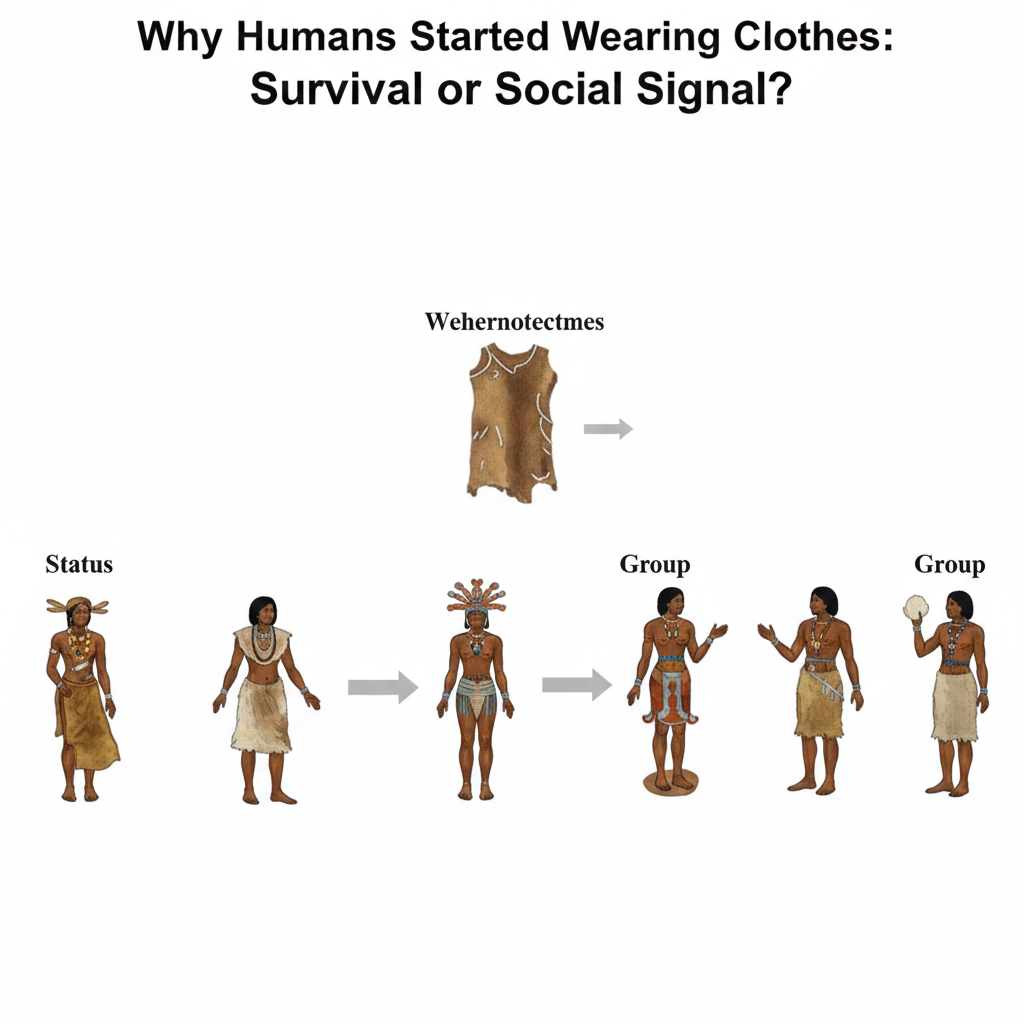
Tribal societies developed clothing primarily for practical reasons—protection from the elements, camouflage during hunts, and basic coverage. These early garments were often assembled from available materials: animal skins, plant fibers, bark, or woven grasses. They wrapped, tied, or draped around the body without much shaping.
But even in these early forms, clothing carried meaning. A hunter might wear specific animal pelts to honor a successful kill. A healer could don feathers or shells to signal their role. This duality—functional vs symbolic clothing in early tribes—set the stage for more complex systems to come.
As human societies grew more complex, so did their garments. Agriculture allowed communities to settle, specialize in crafts, and invest time in textile production. Trade routes emerged, bringing new materials and ideas. These shifts created the conditions for clothing to evolve beyond tribal patterns into the structured forms we associate with ancient civilizations.
The leap from tribal dress to organized fashion wasn’t merely technical. It reflected broader changes in how humans lived, worked, and understood themselves. Clothing became less about adapting to immediate environments and more about expressing who you were within increasingly stratified societies. This evolution mirrors how ancient civilizations shaped clothing styles, introducing hierarchy, symbolism, and structure into everyday dress.
Tribal Clothing and Its Cultural Foundations
Survival-Based Garments
Early humans developed clothing out of necessity. Animal hides offered warmth in cold climates. Woven plant fibers provided protection from sun and insects in tropical regions. These garments were functional first, designed to help wearers endure their environments and perform daily tasks like hunting, gathering, and child-rearing.
Yet even survival-based clothing carried traces of cultural identity. Different tribes processed materials in distinct ways, creating recognizable styles. Coastal communities might favor fish leather, while forest dwellers used tree bark. These choices weren’t arbitrary—they reflected available resources and accumulated knowledge about what worked best in specific conditions.
Interestingly, some scholars argue that body decoration before clothing played an equally important role in early human societies. Paint, tattoos, and scarification marked group belonging and personal achievements long before garments became widespread. Clothing eventually absorbed some of these decorative functions, blending protection with visual communication.
Symbolic and Ritual Dress
Beyond survival, tribal clothing served ceremonial purposes. Special garments distinguished shamans, warriors, and elders from other community members. Ritual dress often incorporated rare materials—bright feathers, precious shells, or intricately carved bone—to signal spiritual power or social authority.
These symbolic garments were often more elaborate than everyday wear. They featured layering, complex construction techniques, and carefully chosen colors. A warrior might don a headdress adorned with eagle feathers before battle. A bride could wear a ceremonial robe woven with patterns representing fertility and prosperity.
This symbolic dimension reveals something crucial: humans have always used clothing to communicate meaning beyond the practical. Even when resources were scarce and survival uncertain, communities invested time and skill in creating garments that spoke to values, beliefs, and social structures. The role of modesty in early clothing also emerged during this period, as certain cultures began associating body coverage with social propriety rather than purely physical protection.
Understanding why humans started wearing clothes means recognizing both functions—the practical and the symbolic—as equally important drivers of clothing evolution.
The Rise of Structured Garments in Early Civilizations
As humans transitioned from nomadic lifestyles to settled agricultural communities, clothing production changed dramatically. Farming societies generated surplus resources, allowing specialization in crafts like weaving and textile production. This specialization introduced new techniques that moved clothing toward more structured, consistent forms.
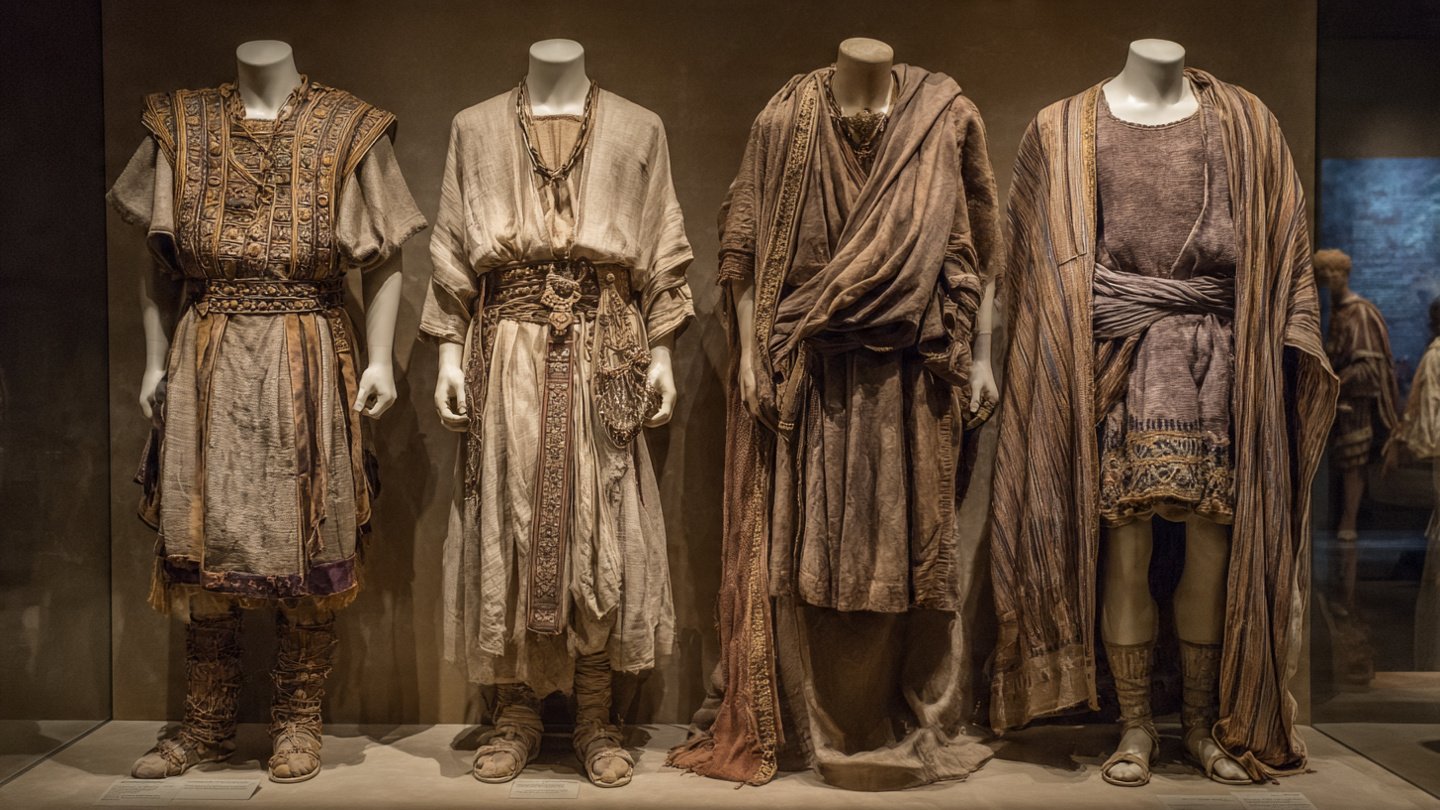
The invention of weaving transformed how garments were made. Instead of simply draping animal hides or wrapping plant materials, weavers could create fabric with specific dimensions, patterns, and textures. This represented the earliest textile creation in human history, laying groundwork for tailored garments that fit the body in predictable ways.
Looms appeared in multiple ancient civilizations—Mesopotamia, Egypt, China, and the Americas—each developing unique weaving traditions. These technologies allowed for standardized cloth production, which in turn enabled more complex garment construction. A woven tunic could be cut and sewn to create armholes, necklines, and hems, introducing structure that draped fabrics couldn’t achieve.
Sewing represented another leap forward. Early needles made from bone or wood allowed craftspeople to join fabric pieces, creating three-dimensional forms that conformed to body shapes. This shift—from fiber to fabric clothing process—marked a turning point in how humans conceived of dress.
Tailoring emerged as communities recognized that fitted garments offered advantages: better mobility for workers, clearer status distinctions, and enhanced comfort. A well-fitted robe signaled wealth and access to skilled artisans. A soldier’s tunic, designed for ease of movement, improved battlefield performance.
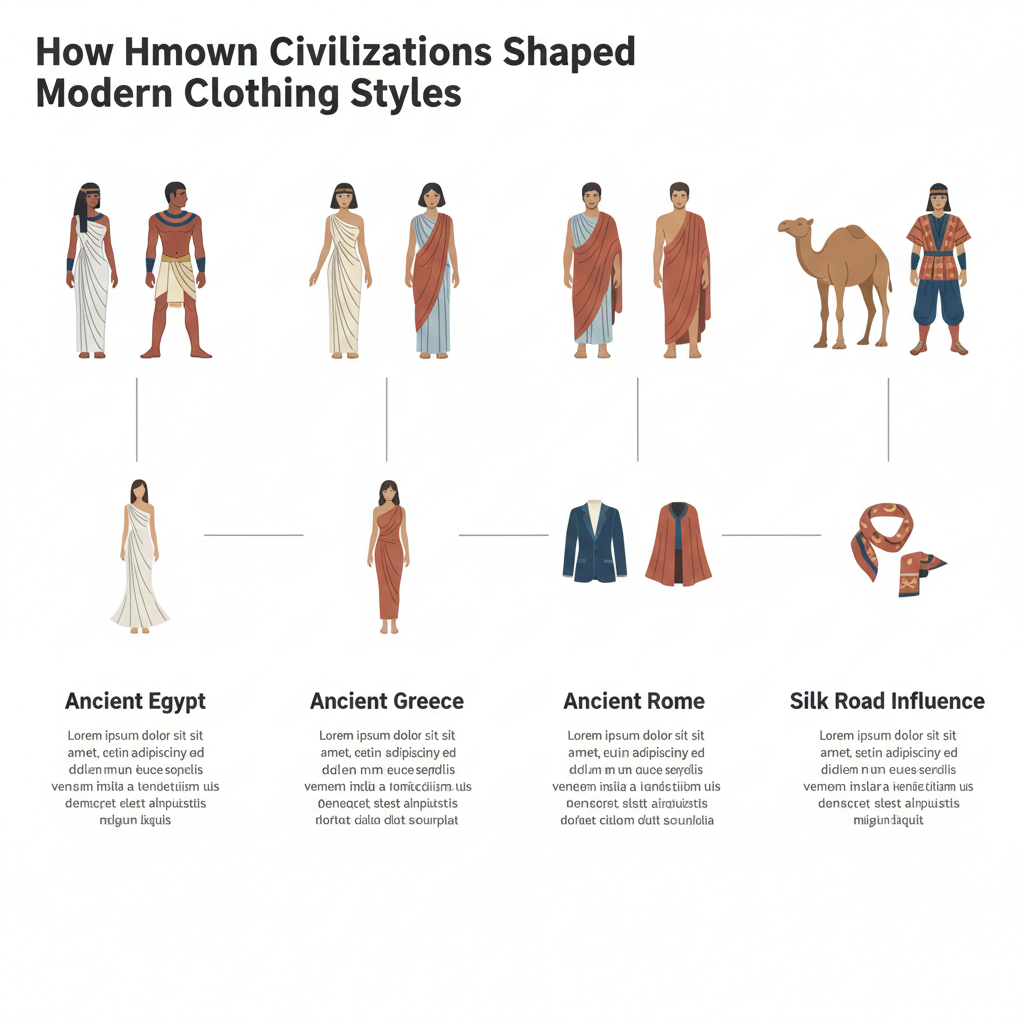
The evolution of early sewing tools paralleled these developments, as bronze and later iron needles enabled finer stitching and more intricate designs. Civilizations began developing signature garment types—Egyptian pleated linen, Roman togas, Chinese robes—that reflected both available technologies and cultural preferences.
These structured garments weren’t just functional improvements. They represented new ways of thinking about the body, social identity, and aesthetic value. Fashion, as an organized system, was beginning to take shape.
Early Silhouettes and the Birth of Fashion Identity
Once civilizations mastered textile production and tailoring, garments began taking on recognizable shapes—what we now call silhouettes. These forms weren’t random. They emerged from cultural values, climate considerations, and available materials, creating visual languages that communicated social information at a glance.
Understanding what is a clothing silhouette helps clarify this shift. A silhouette refers to the overall shape a garment creates when worn—whether loose or fitted, long or short, flowing or rigid. Early civilizations developed distinct silhouettes that became markers of cultural identity.
Egyptian dress favored straight, columnar forms that emphasized simplicity and elegance. Linen tunics, often pleated, hung close to the body in hot climates. Greek and Roman garments like the chiton and toga used draped fabric to create volume and movement, signaling both comfort and social status. In contrast, Chinese robes featured wide sleeves and cross-collar construction, creating a distinctive profile that differed markedly from Mediterranean styles.
These silhouettes weren’t just aesthetic choices. They reflected practical concerns—heat management in Egypt, ease of movement in Greece, ceremonial formality in China—while also conveying cultural values about beauty, modesty, and social hierarchy.
Gender expression became increasingly tied to clothing silhouettes as civilizations grew more complex. Clothing silhouettes and gender expression evolved as societies assigned specific garment types to men and women, often with clear visual distinctions. Women’s dress might emphasize curves or modesty through layering, while men’s clothing prioritized mobility and authority.
These gendered silhouettes weren’t universal. Different cultures developed their own norms, and some societies maintained more fluid approaches to gendered dress. But the emergence of recognizable silhouettes marked a crucial step toward fashion as we understand it: a system where clothing choices communicate identity, status, and cultural belonging.
As trade routes expanded and civilizations interacted, these silhouettes began influencing one another, setting the stage for even greater diversity in structured fashion.
Cultural Exchange and the Spread of Structured Fashion
No civilization developed clothing in isolation. Trade, migration, and conquest brought diverse communities into contact, sparking exchanges of materials, techniques, and design ideas. These interactions accelerated the evolution of structured fashion, introducing new possibilities for garment construction and decoration.
The Silk Road exemplifies this process. Connecting China, Central Asia, the Middle East, and Europe, this network facilitated the exchange of silk, wool, cotton, and dyes. Merchants didn’t just trade raw materials—they shared weaving techniques, pattern designs, and tailoring methods. A Chinese silk robe might inspire Persian adaptations, which in turn influenced Byzantine court dress.
How migration influenced early clothing design played an equally important role. When communities relocated, they brought clothing traditions with them, adapting them to new environments and materials. Indo-European migrations spread wool-working techniques across Europe and Asia. Polynesian seafarers carried bark cloth traditions throughout the Pacific, each island group developing local variations.
Military conquests often imposed dominant clothing styles on conquered peoples, though these interactions rarely flowed in only one direction. Roman soldiers adopted trousers from Celtic and Germanic tribes, recognizing their practicality in colder climates. Islamic expansion introduced new textile technologies and modesty norms across North Africa and parts of Europe, influencing local dress traditions for centuries.
Climate events, famines, and plagues also shaped clothing evolution. Major historical events that changed clothing forced communities to adapt garment production methods, seek new materials, or adopt foreign styles when traditional resources became unavailable.
These exchanges created hybrid forms—garments that blended multiple traditions into something new. A Greco-Roman tunic might incorporate Persian embroidery techniques and Egyptian linen. A Chinese robe could feature Central Asian patterns worked in silk. These fusions enriched fashion vocabularies, offering more options for personal and cultural expression.
Cultural exchange didn’t erase local traditions. Instead, it expanded possibilities, allowing communities to borrow, adapt, and innovate in response to new influences. This dynamic process laid groundwork for the diverse, interconnected fashion systems that would emerge in later historical periods.
The Foundation of Organized Fashion
The transition from tribal dress to structured fashion wasn’t a single moment of innovation. It unfolded gradually across thousands of years as humans developed agriculture, mastered textile production, invented tailoring techniques, and established trade networks. Each advancement built on previous knowledge, creating increasingly complex systems for producing and wearing clothing.
What emerged was more than improved garments. It was fashion as an organized cultural practice—a system where clothing communicated identity, status, and belonging through recognizable forms and consistent production methods. Silhouettes became identifiable markers of civilization. Garment construction reflected technological sophistication. Design choices conveyed cultural values.
This foundation set the stage for everything that followed. Medieval guild systems, Renaissance court fashion, industrial textile production, and modern haute couture all trace their origins to this pivotal period when clothing moved from simple coverings into expressive, structured dress.
Understanding this human clothing evolution journey helps us appreciate that fashion isn’t frivolous or superficial. It’s a fundamental human practice rooted in survival, innovation, and the desire to communicate who we are. The structured garments we wear today—whether jeans, dresses, suits, or traditional robes—carry echoes of ancient innovations that transformed how humans present themselves to the world.
The story doesn’t end here. As civilizations continued evolving, so did fashion. New technologies, social movements, and cultural exchanges would further transform clothing in ways early societies could never have imagined. But they built the foundation—showing us that how ancient civilizations shaped clothing styles continues influencing what we wear thousands of years later.