





The Sabalenka Stranglehold: Can Anyone Stop Aryna in the 2026 Final?
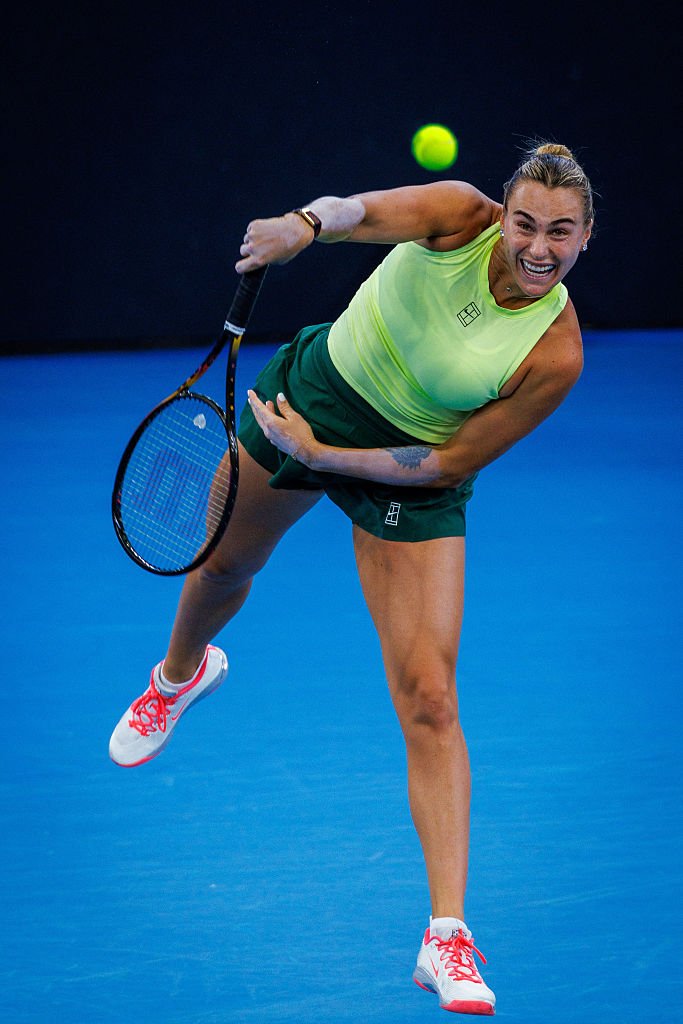

When Aryna Sabalenka steps onto the hard courts these days, the air feels different. It’s thinner, heavier with expectation, and charged with the kind of inevitability we once associated with Serena Williams or Steffi Graf. As we look toward the 2026 final, the tennis world isn’t just asking who will win; they are asking if anyone can even make it a contest.
The last two years have been nothing short of a coronation. Sabalenka has transformed from a volatile talent with a double-fault problem into a ruthless winning machine. Her dominance over the WTA has felt total, a suffocating grip on the tour’s biggest trophies that has left rivals scrambling for answers. But sports are never truly scripted. Even as the Belarusian powerhouse looks unbreakable, the margins at the elite level remain razor-thin. A bad day, a hot opponent, or a momentary lapse in focus can shatter even the most impressive streaks.
In this deep dive, we’ll explore the mechanics of the “Sabalenka Stranglehold,” dissect her path to this hypothetical 2026 final, and analyze the few contenders who might possess the weapons to break her serve—and her spirit.
Sabalenka’s Dominance in 2025–2026
To understand the challenge facing her opponent in the final, we first have to appreciate the sheer scale of the mountain they must climb. The 2025 and early 2026 seasons have been defined by Sabalenka dominance in the WTA. It hasn’t just been about winning; it’s been about how she wins.
She has collected multiple titles, sweeping through majors and key finals with a blend of raw power and newfound tactical patience. The days of spraying errors under pressure seem like a distant memory. Instead, we see a player who uses her power to construct points, not just end them. This evolution has solidified her spot at the top of the WTA No. 1 ranking, creating a significant points gap between her and the chasing pack.
Financial records have tumbled alongside the records on the court. Her historic prize money record is a testament to her consistency at major events, particularly on hard courts. While other top seeds often fall victim to early-round upsets, Sabalenka has become the tour’s iron woman, reliably making the second week of Slams and deep runs in 1000-level events. Aryna Sabalenka’s 2026 form suggests she isn’t just defending points; she is expanding her empire.
Her Path to the 2026 Final
Sabalenka’s run to her fourth straight Australian Open final has been a masterclass in efficiency. Melbourne Park has effectively become her fortress. The surface speed, the balls, the atmosphere—everything about the “Happy Slam” seems tailored to her aggressive game.
Her path this year was littered with dangerous floaters and seeded threats, yet she neutralized them all. Against defensive baseliners, she took time away, stepping inside the court to punish short balls. Against fellow big hitters, she simply hit bigger and more consistently. The Sabalenka unbeaten record in Melbourne is starting to look like Nadal in Paris or Djokovic on Rod Laver Arena—a specific alchemy of player and place that feels magical.
Opponents who tried to disrupt her rhythm with slices or drop shots found her movement significantly improved. She no longer looks uncomfortable moving forward; she attacks the net with purpose. This versatility has made her path to the championship match look almost routine, hiding the immense physical and mental effort required to maintain such a level.
How Sabalenka’s Game Creates a Stranglehold
So, what exactly is the “stranglehold”? It starts, inevitably, with the serve. Once her biggest liability, her serve is now arguably the most effective weapon in women’s tennis. She hits spots with terrifying precision, and her second serve—once a source of anxiety—now kicks high and heavy, preventing opponents from attacking.
But the Aryna Sabalenka playing style is about more than just serving bombs. It’s the relentless weight of shot from the baseline. She suffocates opponents by denying them time. Every ball comes back deep, hard, and flat. She pushes rivals onto their back foot immediately, forcing them to defend from uncomfortable positions.
Perhaps the most critical evolution, however, is her mental toughness. In key moments—break points down, serving for the set—she no longer panics. She trusts her technique. This mental fortitude exerts its own pressure. Opponents know they cannot count on a “Sabalenka meltdown” anymore. They have to beat her, and that knowledge often forces them to overplay, leading to unforced errors. This is the essence of her stranglehold: she beats you physically with power and mentally with her aura of invincibility.
Top Contenders Who Could Challenge Her in 2026
Despite the dominance, the locker room is not empty. There are women on tour who believe they have the tools to dismantle the Sabalenka game. If anyone is going to stop her in the 2026 final, it will likely be one of these WTA title contenders.
Elena Rybakina
The most obvious threat remains Elena Rybakina. As a Grand Slam champion and prior finalist, Rybakina matches up well because she doesn’t fear pace. In fact, she thrives on it. Her own serve is lethal, capable of earning free points that neutralize Sabalenka’s return game. When Rybakina is firing, she can take the racquet out of Aryna’s hands.
Jessica Pegula
Pegula is the ultimate consistent tour threat. She may not hit as hard as Sabalenka, but her flat, penetrating groundstrokes and incredible anticipation allow her to absorb pace and redirect it. She forces Sabalenka to hit one more ball, testing her patience and fitness. If Sabalenka has an off day, Pegula is precisely the type of player to capitalize.
Coco Gauff
The rising star has become a supernova. With an improved all-court game and a reconstructed forehand, Coco Gauff offers a different challenge. She is arguably the best athlete on tour, capable of tracking down balls that would be winners against anyone else. Her defense forces Sabalenka to aim closer to the lines, increasing the risk of error.
Madison Keys
A major title winner in this hypothetical timeline, Madison Keys possesses the “big-hitting potential” to simply blast anyone off the court. When Keys is in the zone, playing “unconscious” tennis, match-ups and rankings cease to matter. She can match Sabalenka power-for-power, making her a dangerous wildcard in any final.
Matchups That Could Break Her Stranglehold
Tennis is a game of matchups, and certain styles give Sabalenka more trouble than others.
In a Rybakina vs. Sabalenka rematch, the dynamic is often “first strike tennis.” Points are short and explosive. If Rybakina serves well, Sabalenka’s rhythm breaks. She can’t lean into her groundstrokes if she’s constantly lunging for aces. Rybakina’s cool, emotionless demeanor also contrasts sharply with Sabalenka’s fire, sometimes frustrating the Belarusian.
Madison Keys presents a different problem: chaos. Keys hits with such velocity that tactical plans often go out the window. In a final against Keys, Sabalenka might find herself rushed, unable to set her feet.
Then there is the Gauff factor. Gauff’s athleticism creates a physical tax on Sabalenka. She makes Aryna hit four, five, six explosive shots to win a point. Over three sets, that fatigue accumulates. If Gauff can extend rallies and turn the match into a physical war of attrition, the stranglehold loosens. These Sabalenka head-to-head rivals know that the key to beating her isn’t just out-hitting her—it’s making her uncomfortable.
Surface and Conditions: Do They Favor Sabalenka?
The context of the 2026 final matters immensely. We know hard courts are her most successful environment. The true bounce and speed reward her flat hitting. On clay, the ball sits up, giving her time to wind up, but it also slows down her winners, allowing defenders like Gauff or Iga Świątek (should she return to hard-court prominence) back into points.
Grass is a double-edged sword. It rewards her serve and first-strike tennis, but the low bounce can be tricky for tall players moving laterally. However, at the Australian Open and US Open, the conditions are practically made for her. The tennis surface impact is real: on a fast hard court, Sabalenka is a heavy favorite. On a gritty, slow hard court or clay, the door opens slightly for the defensive geniuses of the tour.
Mental Game and Pressure Situations
For years, the book on Sabalenka was that she was a physical giant with a fragile mindset. That book has been burned. Sabalenka’s consistency in finals and deep runs proves she has mastered the art of playing under pressure.
However, a final is a unique beast. The pressure of defending points, of chasing history, of maintaining a streak—it weighs heavy. Challengers often have the psychological edge of playing with “house money.” They have nothing to lose.
How challengers handle big moments defines these finals. Do they double fault on break point? Or do they hit an ace? Sabalenka has proven she can serve her way out of trouble. The question for 2026 is whether her opponent can do the same when the stadium feels like it’s closing in.
Is a New Era Emerging or Just a Season of Dominance?
Zooming out, we must ask if we are witnessing a permanent changing of the guard in women’s tennis or just a peak season. Comparing Sabalenka’s run to past eras—specifically the Serena years or the brief dominance of Ash Barty—shows similarities in the fear factor she instills.
But tennis is cyclical. Are others ready to dethrone her long-term? Players like Iva Jovic and Mirra Andreeva are maturing rapidly. The “Next Gen” is always hungry. If Sabalenka wins the 2026 final comfortably, it signals a true era of hegemony. If she struggles, or loses, it suggests the WTA generational shift is more fluid, a constant battle for supremacy rather than a monarchy.
Frequently Asked Questions (FAQ)
What makes Sabalenka so hard to beat?
It is the trifecta of power, consistency, and mindset. Many players have power; few can control it with the topspin and margin Sabalenka now uses. Combined with a serve that bails her out of trouble and a belief that she belongs at #1, she presents a puzzle with very few solutions.
Who has the best record against her on tour?
Historically, Iga Świątek has been her primary foil, particularly on slower surfaces. However, on hard courts, Elena Rybakina and Coco Gauff have had the most success in troubling her, thanks to Rybakina’s serve and Gauff’s speed.
Can younger stars like Gauff or Jovic topple her?
Absolutely. Youth brings fearlessness. Gauff has already beaten her in a major final (US Open 2023). As younger players physically mature and gain experience, the gap in power closes, while their athletic prime begins.
Does Sabalenka dominate only on certain surfaces?
She is competent on all surfaces, but she dominates on hard courts. Her game is neutralized slightly on clay (though she is a multiple-time Madrid champion) and grass, where movement and variety play larger roles.
Has anyone beaten Sabalenka in a major final recently?
In this 2026 context, her record is stellar, but she is not invincible. Losses usually come from opponents playing “red-line” tennis—hitting winners from everywhere—or from Sabalenka having an uncharacteristically poor serving day against a top-tier returner.
Final Thoughts — A Stranglehold, But Not Unbeatable
Aryna Sabalenka enters the 2026 final not just as a player, but as a force of nature. Her consistency makes her the favorite, a status she has earned through sweat, reinvention, and relentless aggression. The “stranglehold” is real; it is built on 120mph serves and forehands that bruise the backboards.
But tennis is beautiful because it is unpredictable. Elite rivals like Rybakina, Gauff, and Pegula create real threats on any given day. They know that even giants have weak points. The 2026 final will be more than a match; it will be a referendum on the state of the WTA. Will the stranglehold tighten, suffocating the tour’s hope for another year? Or will someone find the courage, the shot-making, and the luck to break the grip?
We’ll be watching.