





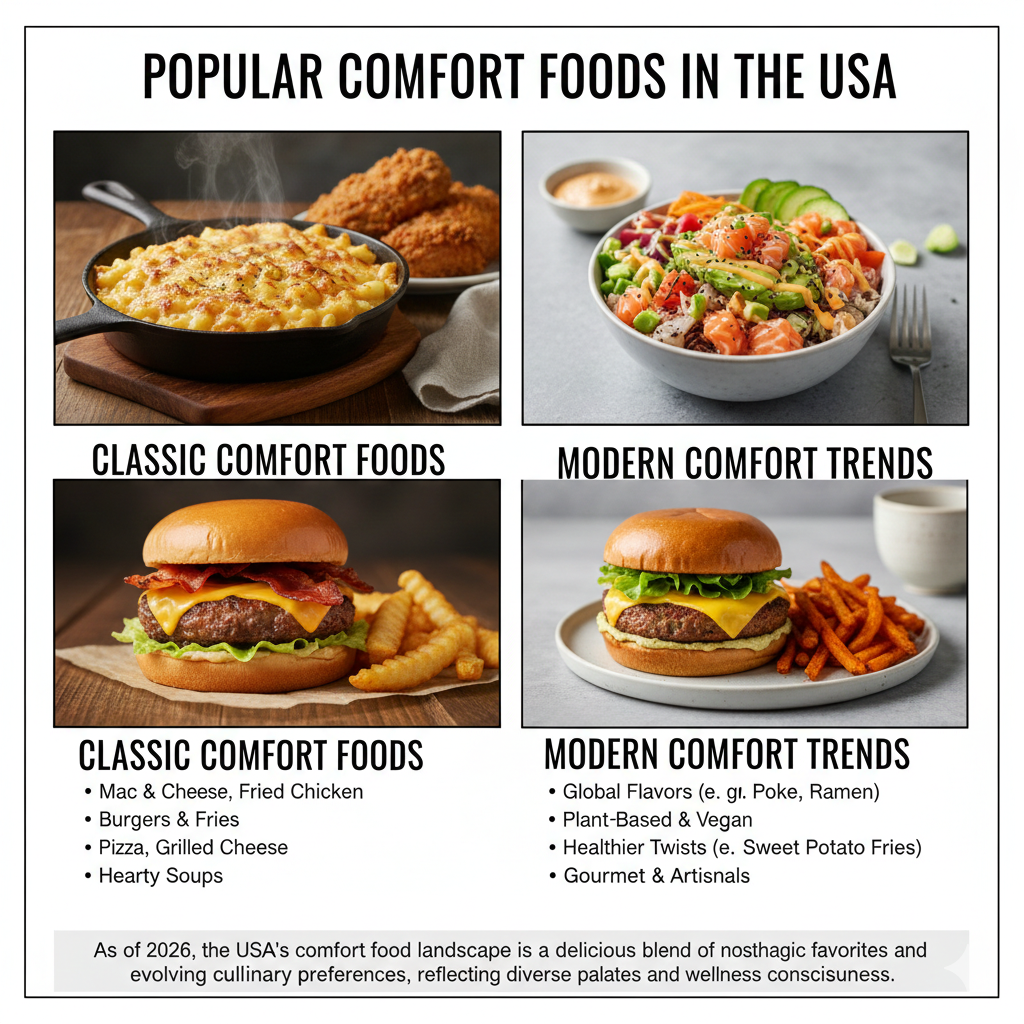
Popular Comfort Foods in the USA

We have all had that day. The rain is pouring, work was stressful, or you just feel a little bit under the weather. In those moments, a kale salad or a light vinaigrette just isn’t going to cut it. You crave something specific. Maybe it’s a bowl of steaming soup that reminds you of your grandmother’s kitchen, or perhaps it’s a cheesy slice of pizza that takes you back to college Friday nights.
Food is so much more than simple sustenance. It is a time machine, a stress reliever, and a communal experience all wrapped into one. In the United States, the concept of “comfort food” is deeply ingrained in the culture. It represents a culinary hug—a way to soothe the soul through flavors and textures that feel safe and familiar.
This guide explores the heart of American comfort cuisine. We will look at the dishes that top the charts, the regional variations that define different states, and the psychology behind why we reach for the mac and cheese when life gets tough. So, grab a fork (or a spoon) and let’s dig into the dishes that make us feel at home.
What Are Comfort Foods?
At its core, comfort food is exactly what the name implies: food that provides a sense of physical and emotional comfort. While the specific dish varies from person to person, these foods generally share a few defining characteristics. They are often energy-dense, featuring high levels of carbohydrates, simple sugars, or fatty acids.
However, the scientific composition is only half the story. The true definition lies in the emotional connection. These are the meals associated with security, childhood, and positive social interactions. They are the dishes served at family gatherings, holiday tables, and on sick days.
Comfort food is rarely complex or challenging. It doesn’t ask you to acquire a new taste or navigate a complicated etiquette. It is accessible, often soft in texture, and warm. It is the culinary equivalent of a weighted blanket—grounding, heavy, and undeniably soothing.
Why Comfort Foods Are So Popular in the USA
The United States is a melting pot of cultures, but the drive toward comfort food is a universal thread. The popularity of these dishes stems largely from nostalgia. For many Americans, specific smells and tastes trigger powerful autobiographical memories. The scent of baking cookies might instantly transport someone back to a safe, happy childhood moment.
Stress relief also plays a massive role. When cortisol levels rise, the body naturally craves high-energy foods. Consuming carbohydrates boosts serotonin production, which can have a calming effect on the brain. In a culture that often prizes productivity and hustle, these meals offer a permissible pause—a moment to slow down and savor something simply for the joy of it.
Furthermore, these foods are bound to tradition. Thanksgiving stuffing, Fourth of July burgers, or Super Bowl wings are not just meals; they are rituals. Participating in eating them creates a sense of belonging and continuity that reinforces social bonds.
Most Popular Comfort Foods in the USA
While personal favorites vary, certain dishes have achieved hall-of-fame status across the country. These are the heavy hitters of the American table.
Macaroni and Cheese
Few dishes rival the universal appeal of macaroni and cheese. Whether it comes from a blue box with powdered orange sauce or is baked from scratch with Gruyère and breadcrumbs, it is the gold standard of comfort. The appeal lies in its texture: soft pasta coated in warm, creamy sauce requires little chewing and offers immediate satisfaction. It is one of the first “favorite foods” for many American children, creating a lifelong attachment to its cheesy goodness.
Pizza
Pizza is the ultimate communal comfort food. It represents convenience and celebration. It is the food of sleepovers, movie nights, and office parties. The combination of savory tomato sauce, melted mozzarella, and a chewy, carb-heavy crust hits every pleasure point on the palate. Plus, its customizability means it can be a personal comfort for anyone, whether you love pepperoni, vegetables, or even pineapple.
Fried Chicken
With its roots deep in the American South, fried chicken has conquered the entire nation. The contrast is the key here: the shattering crunch of the seasoned skin giving way to tender, juicy meat. It is a labor-intensive dish to make at home, which makes eating it feel like a special occasion or a treat. It is messy, savory, and deeply satisfying, often paired with other comfort staples like biscuits or coleslaw.
Mashed Potatoes
If food could be a pillow, it would be mashed potatoes. This side dish is less about distinct flavor and more about pure texture and warmth. When whipped with butter, milk, or cream, potatoes transform into a smooth, savory vehicle for gravy. They represent safety and simplicity, acting as the anchor for many traditional Sunday dinners and holiday feasts.
Burgers
The hamburger is an American icon. It evokes memories of backyard barbecues, summer days, and roadside diners. A burger is a self-contained meal that offers a perfect balance of savory beef, soft bun, and fresh toppings. It is casual and unpretentious. Eating a burger with your hands connects you to the food in a primal, satisfying way that using a knife and fork simply cannot match.
Meatloaf
Meatloaf is the quintessential “mom’s cooking” dish. It was popularized during the Great Depression as a way to stretch ingredients, but it stayed because it is delicious. A well-made meatloaf is tender, flavorful, and usually topped with a sweet and tangy glaze that caramelizes in the oven. It is sturdy, reliable food that makes for excellent leftovers.
Grilled Cheese and Tomato Soup
This pairing is the dynamic duo of rainy days. The grilled cheese provides the crunch of toasted bread and the pull of melted cheese, while the tomato soup offers acidic brightness and warmth. Dipping the sandwich into the soup softens the bread and creates a perfect bite. It is a simple meal that anyone can cook, making it accessible comfort for all ages.
Chicken Noodle Soup
Known affectionately as “Jewish Penicillin” or just a cure-all, chicken noodle soup is the go-to comfort food for physical illness. The warm broth hydrates and soothes a sore throat, while the noodles and chicken provide easy-to-digest energy. Beyond the physical benefits, receiving a bowl of soup is an act of caregiving, making the eater feel loved and looked after.
Regional Comfort Foods Across the USA
America’s vast geography means comfort food speaks with a different accent depending on where you are.
Southern Comfort
The South is arguably the capital of American comfort food. Here, you will find biscuits and sausage gravy, a hearty breakfast designed to keep you full all day. Shrimp and grits offers a creamy, savory delight, while chicken and dumplings provides a thick, stew-like experience that warms the bones.
Midwest Classics
The Midwest is the land of the casserole, often referred to as “hotdish” in places like Minnesota. These one-pan meals usually feature a starch (tater tots or noodles), a meat, a vegetable, and a creamy binder like cream of mushroom soup. Cheese curds—fresh, squeaky chunks of cheddar—are another staple, often served deep-fried.
East Coast Favorites
On the East Coast, comfort comes from the sea and the deli. New England Clam Chowder is a thick, creamy soup packed with potatoes and clams. In Philadelphia, the Cheesesteak—thinly sliced ribeye smothered in cheese on a hoagie roll—reigns supreme. In New York, a warm bagel with cream cheese is a morning ritual that offers distinct comfort to locals.
West Coast Variations
The West Coast leans toward lighter, fresher interpretations, though they are still comforting. Fish tacos, with battered fish and creamy slaw, are a staple in California. The “Mission Burrito,” a massive flour tortilla stuffed with rice, beans, meat, and salsa, is a San Francisco icon. Even avocado toast has become a modern classic, offering creamy fat and carbs in a simple package.
Comfort Foods and Emotional Well-Being
The connection between what we eat and how we feel is undeniable. When life feels chaotic, we often seek control and predictability. A favorite childhood dish tastes exactly the same today as it did twenty years ago. That consistency is grounding.
Psychologically, these foods can act as a coping mechanism. While turning to food for every emotional low can be problematic, occasional indulgence is a normal part of the human experience. It is a form of self-soothing. The warmth of a hot meal can mimic feelings of social closeness, which is why we often crave these foods when we feel lonely.
It is important to recognize that comfort food feeds the mind as much as the body. Allowing oneself to enjoy a slice of cake or a bowl of pasta without guilt is part of a healthy relationship with food.
Comfort Foods vs Modern Diet Trends
As health consciousness rises, comfort food has found itself in an interesting position. How does a bacon cheeseburger fit into a world of keto and paleo diets?
The answer is balance. Many Americans are finding ways to integrate comfort foods into a healthy lifestyle rather than eliminating them. This might mean enjoying a smaller portion of mac and cheese alongside a large salad. It creates a sustainable approach to eating where no food is strictly “off-limits.”
There is also a rise in “health-ified” comfort foods. Cauliflower is mashed to mimic potatoes or baked with cheese to replace pasta. Zucchini noodles stand in for spaghetti. While purists may argue these aren’t the same, they offer a way to scratch the itch for comfort flavors while adhering to dietary goals.
When Americans Eat Comfort Foods Most
Cravings for these dishes follow distinct patterns. Seasonality is a huge driver. As the weather turns cold and days get shorter, the desire for heavy, warm foods increases. This is biological—our bodies want to conserve energy and stay warm—but also cultural, as fall and winter are packed with food-centric holidays.
Stressful life events also trigger these cravings. During exam weeks for students, after a breakup, or during periods of high work stress, sales of ice cream, pizza, and chocolate tend to spike. Even global events can shift eating habits; during the early days of the pandemic, Americans returned to baking bread and making meatloaf in record numbers, seeking stability in uncertain times.
How Comfort Foods Have Evolved
Comfort food is not stagnant. It evolves with the country’s palate. Today, we are seeing a gourmet renaissance of classic dishes. High-end restaurants serve truffle-infused mac and cheese or burgers made with Wagyu beef. Chefs are elevating humble dishes with premium ingredients, proving that comfort can also be sophisticated.
Plant-based innovations are also changing the game. Vegan comfort food is a booming industry. Impossible Burgers and dairy-free grilled cheese sandwiches allow those with dietary restrictions or ethical concerns to participate in these nostalgic food traditions. The definition of comfort is expanding to include global flavors, with ramen and pho becoming go-to comfort meals for a new generation of Americans.
Are Comfort Foods Healthy?
If looking strictly at macronutrients, traditional comfort foods are rarely categorized as “health foods.” They are typically high in caloric density, sodium, and saturated fats.
However, nutrition is not just about vitamins and minerals; it is about nourishment. A strict diet that leads to misery is not holistic health. Mental and social health are crucial pieces of the puzzle. Sharing a pizza with friends creates joy. Eating your mom’s soup when you are sick provides emotional relief.
The key lies in moderation and portion awareness. Enjoying these foods as part of a varied diet is perfectly healthy. It is about the context of the meal. Eating comfort food should be a pleasurable experience, not one riddled with guilt.
FAQs – Comfort Foods in the USA
What is the most popular comfort food in the USA?
While rankings vary by year and survey, pizza and macaroni and cheese consistently battle for the top spot. They are closely followed by burgers and fried chicken.
Why do comfort foods reduce stress?
High-carbohydrate and fatty foods can trigger the release of dopamine and serotonin in the brain, which are neurotransmitters associated with pleasure and calmness. Additionally, the psychological association with safety and childhood nostalgia helps lower stress.
Are comfort foods different by region?
Absolutely. While staples like pizza are nationwide, regional history dictates local favorites. The South leans toward fried foods and grits, the Southwest favors Tex-Mex, and New England loves hearty seafood chowders.
Can comfort foods be healthy?
Yes. You can modify recipes to include more vegetables, whole grains, and lean proteins. Alternatively, eating the traditional versions in moderation is compatible with a healthy lifestyle.
Why do people crave comfort food in winter?
Biological evolution drives us to seek calorie-dense foods to maintain body heat and energy reserves in cold weather. Furthermore, shorter days can affect mood (Seasonal Affective Disorder), leading people to seek the mood-boosting effects of carbohydrates.
Savoring the Simple Joys
Comfort food is a testament to the power of a good meal. It reminds us that eating is not just a biological necessity, but a deeply emotional and social act. Whether it is a grilled cheese sandwich on a Tuesday night or a Thanksgiving feast, these dishes keep us grounded. They connect us to our past, to our families, and to each other.
Next time you feel the urge to order a pizza or whip up a batch of mashed potatoes, lean into it. Gather some friends or family, share the meal, and appreciate the simple, enduring joy of American comfort food.