



How Ancient Humans Adapted Clothing for Hunting and Survival
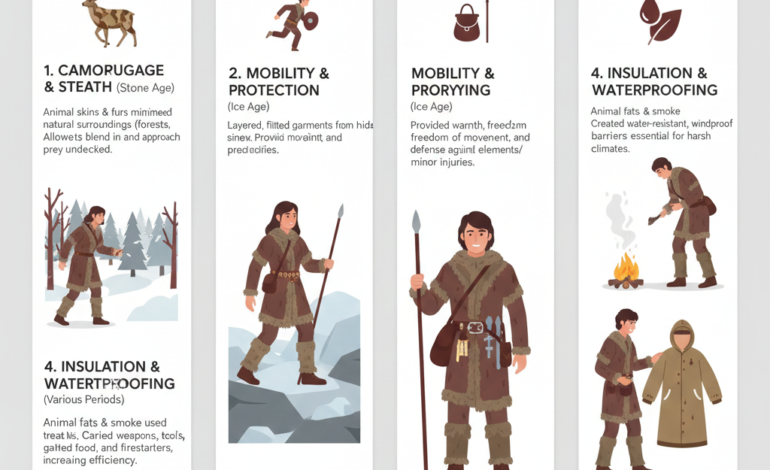

Long before fashion became an art form, clothing served a far more urgent purpose: keeping humans alive. Early garments weren’t about self-expression or status—they were survival tools, designed to protect against harsh climates, dangerous terrain, and the physical demands of hunting.
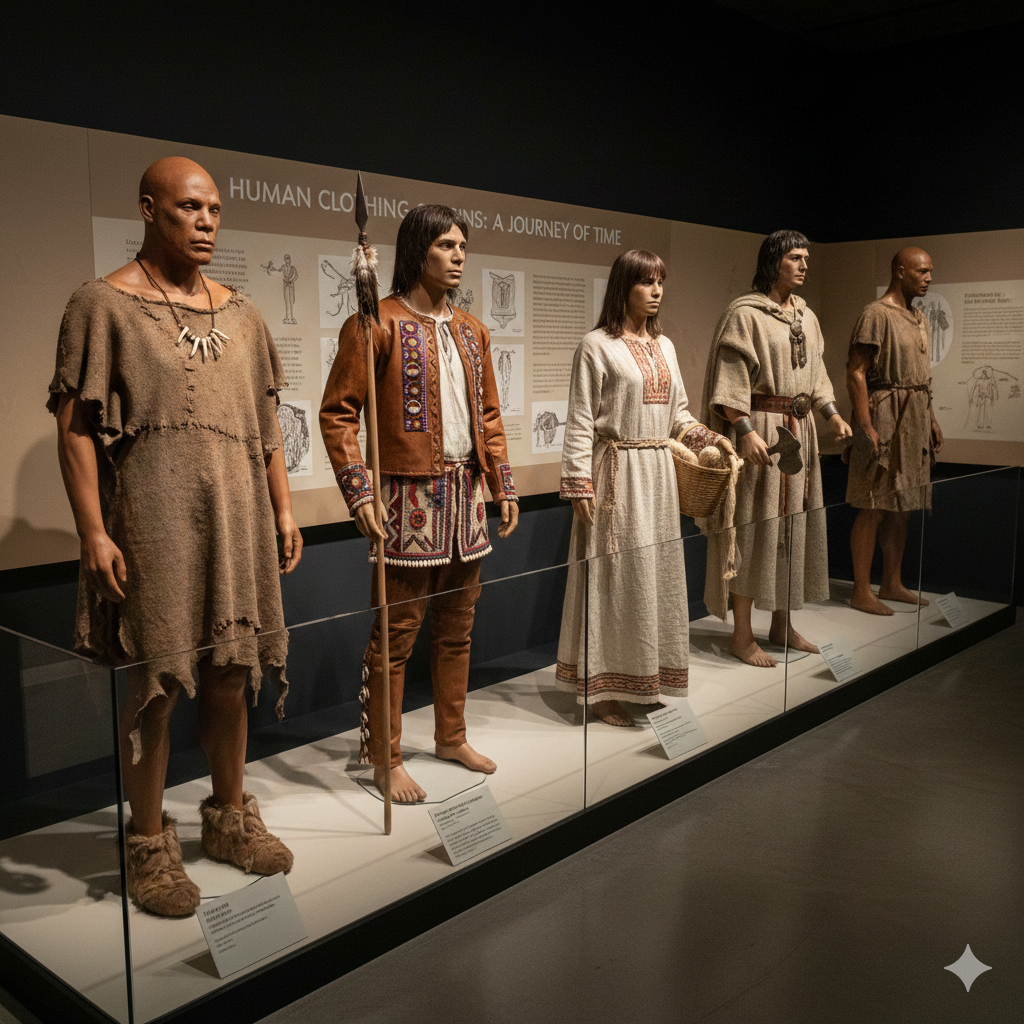
Understanding why humans started wearing clothes reveals a fascinating story of innovation born from necessity. Our ancestors didn’t have the luxury of modern materials or manufacturing techniques. Instead, they relied on what nature provided: animal skins, plant fibers, and bone tools. Every garment they created reflected both environmental challenges and cultural knowledge passed down through generations.
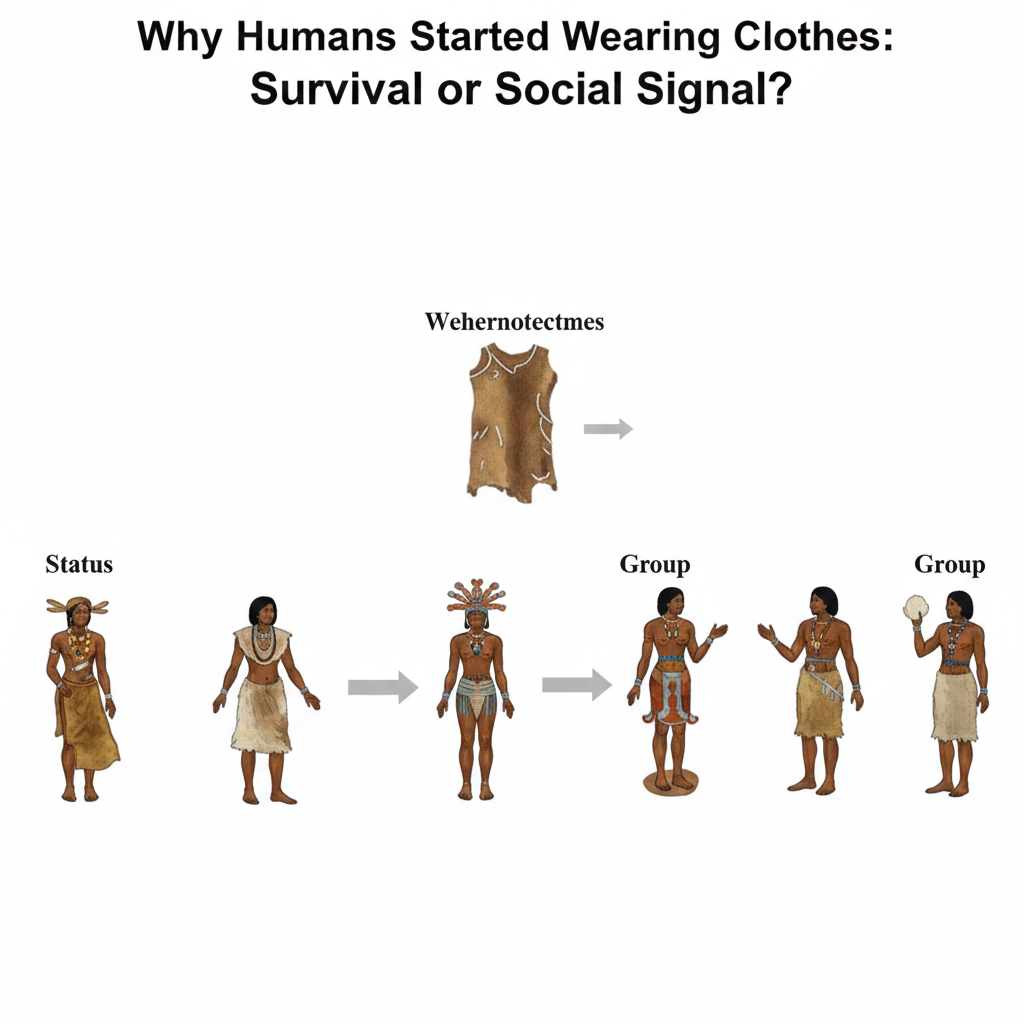
The relationship between functional vs symbolic clothing in early tribes was more complex than we might assume. Even purely practical garments often carried meaning, identifying hunters within their group or signaling successful kills. This dual nature of clothing—simultaneously utilitarian and communicative—would eventually give rise to the rich traditions documented in our human clothing origins hub.
This exploration examines how ancient humans engineered their earliest garments specifically for hunting and survival, adapting designs to meet the relentless demands of their environment.
Clothing for Hunting and Mobility
Successful hunting required more than just weapons and strategy. Early humans needed clothing that allowed them to move silently, track prey across varied landscapes, and endure hours—sometimes days—in pursuit of food. Their garments had to balance protection with flexibility, warmth with breathability.
Flexible Garments for Movement
Hunters couldn’t afford to be slowed down by restrictive clothing. The animal skins used in early garments were carefully selected and processed to maximize flexibility. Deer hide, for instance, became prized for its combination of durability and suppleness. Once properly tanned and softened, it moved with the body rather than against it.
Evidence from archaeological sites suggests early humans developed sophisticated techniques for creating fitted garments. Rather than simply draping skins over their bodies, they cut and shaped materials to allow freedom of movement in the shoulders, hips, and knees—precisely the joints most crucial for hunting activities like throwing spears, running, and crouching.
The processing of these skins was labor-intensive. Hunters would scrape away fat and flesh, then work the hide with tools made from bone or stone until it became soft and pliable. Some cultures treated skins with animal brains or liver, which contain natural oils that further improved flexibility. This investment of time and effort demonstrates how essential proper clothing was to hunting success.
Footwear deserves special attention here. Early shoes and boots needed to provide protection without hindering the foot’s natural movement. Archaeological evidence from several sites reveals that ancient humans created multi-layered foot coverings: an inner layer of soft leather against the skin, and an outer layer of tougher hide to resist wear from rocks and thorns.
Protection Against Terrain and Weather
The relationship between climate vs culture in early clothing becomes most evident when examining hunting garments. Humans who hunted across diverse landscapes needed clothing that could adapt to rapidly changing conditions.
In colder regions, hunters faced a different set of challenges than their counterparts in temperate or tropical zones. The differences in clothing in ice age vs tropical regions weren’t merely aesthetic—they represented fundamentally different approaches to survival. Arctic hunters developed thick, insulated garments made from multiple layers of fur, worn with the fur facing both inward and outward to trap warm air. Meanwhile, hunters in warmer climates opted for lighter materials that protected against sun exposure and vegetation without causing overheating.
Rain posed particular problems. Wet clothing loses its insulating properties and can lead to dangerous drops in body temperature. Some cultures addressed this by treating hides with oils or resins that provided water resistance. Others created outer garments from tightly woven plant fibers that shed water while allowing air circulation.
Terrain-specific adaptations were equally important. Hunters tracking prey through dense forests needed clothing that wouldn’t snag on branches or create noise by rustling against vegetation. Those pursuing game across rocky mountains required reinforced garments at pressure points—knees, elbows, and seats—where contact with stone would otherwise cause rapid wear.
Layering Techniques and Survival Strategies
As humans spread into increasingly diverse and extreme environments, they developed one of their most crucial clothing innovations: layering. This seemingly simple concept represented a sophisticated understanding of how to regulate body temperature while maintaining protection.
The principle was straightforward but effective. An inner layer sat against the skin, absorbing moisture. A middle layer provided insulation, trapping warm air close to the body. An outer layer protected against wind, rain, and physical damage. This system allowed hunters to adapt to changing conditions by adding or removing layers as needed.
Archaeological evidence and ethnographic studies of modern hunter-gatherer societies suggest that ancient humans chose first materials used in human clothing based on these layering principles. Soft, absorbent materials like processed plant fibers or thin leather formed inner layers. Thicker furs and hides with the hair intact created insulation. Tough, weather-resistant outer skins completed the system.
Creating these layered garments required tools and techniques that evolved over thousands of years. The evolution of early sewing tools transformed clothing from simple draped hides to tailored, multi-component garments. Bone needles, some dating back more than 40,000 years, allowed humans to pierce through multiple layers of material and bind them together with sinew or plant-fiber thread.
This ability to sew changed everything. Instead of holding garments closed with hands or crude fasteners, hunters could create clothing that stayed in place during vigorous activity. They could adjust the fit to their bodies, eliminating gaps where cold air might enter. They could join different materials in a single garment, placing tough leather at stress points while using softer, more flexible skins where movement was crucial.
Seasonal adaptation required different layering strategies. Summer hunting in temperate regions might involve only a single light layer, while winter expeditions in the same area could require three or more layers. Experienced hunters learned to anticipate weather changes and adjust their clothing accordingly, carrying extra garments when conditions were uncertain.
The ability to create effective layered clothing directly impacted hunting range and success. Groups with superior clothing technology could pursue prey in conditions that would have defeated less well-equipped hunters. This advantage translated into better nutrition, stronger populations, and ultimately, the ability to colonize new territories.
Cultural Influence on Functional Clothing Design
Even the most practical hunting garments carried cultural significance. The boundary between pure function and symbolic meaning was rarely clear-cut. Hunters didn’t simply wear whatever kept them warm and mobile—they wore garments that identified them within their social group and reflected accumulated cultural knowledge about survival.
Before humans developed extensive clothing traditions, they practiced body decoration before clothing, using pigments, scarification, and ornaments to communicate identity and status. When clothing became necessary for survival, it absorbed some of these communicative functions. A hunter’s garments might indicate their role within the group, their hunting achievements, or their spiritual connections.
The role of modesty in early clothing remains debated among researchers, but evidence suggests that even purely functional garments sometimes served to maintain social norms around body coverage. However, in many early cultures, modesty appeared less important than other factors like warmth, protection, and group identification.
Certain garment features transcended pure utility. Decorative elements—patterns sewn with different colored sinews, arrangements of shells or teeth, distinctive cuts or shapes—served as a form of visual communication. These features could identify which hunting party a person belonged to, helping prevent confusion or conflict when multiple groups operated in the same territory.
Some cultures developed specific garment types associated with particular hunting activities. A seal hunter’s outfit might differ from a deer hunter’s, not only in materials but in design elements that became culturally standardized. These differences helped transmit knowledge across generations: young hunters learned what to wear by observing their elders and understanding the reasoning behind each design choice.
Spiritual beliefs also influenced hunting garments. Many cultures believed that wearing parts of previously killed animals—teeth, claws, or specially prepared hides—could grant hunters the animal’s qualities or appease its spirit. Whether these elements provided practical benefits or not, they demonstrate how cultural beliefs shaped even the most survival-focused aspects of early clothing.
How Survival Clothing Influenced Ancient Civilizations
The hunting and survival garments developed by early humans laid crucial groundwork for the clothing traditions of later civilizations. When humans transitioned from nomadic hunting to settled agriculture, they didn’t abandon the clothing technologies they’d developed—they adapted and expanded them.
The techniques for processing animal hides evolved into leather-working trades. Knowledge about plant fibers transformed into textile production. Sewing skills became specialized crafts. The cultural significance attached to certain garments developed into complex systems of dress codes and fashion.
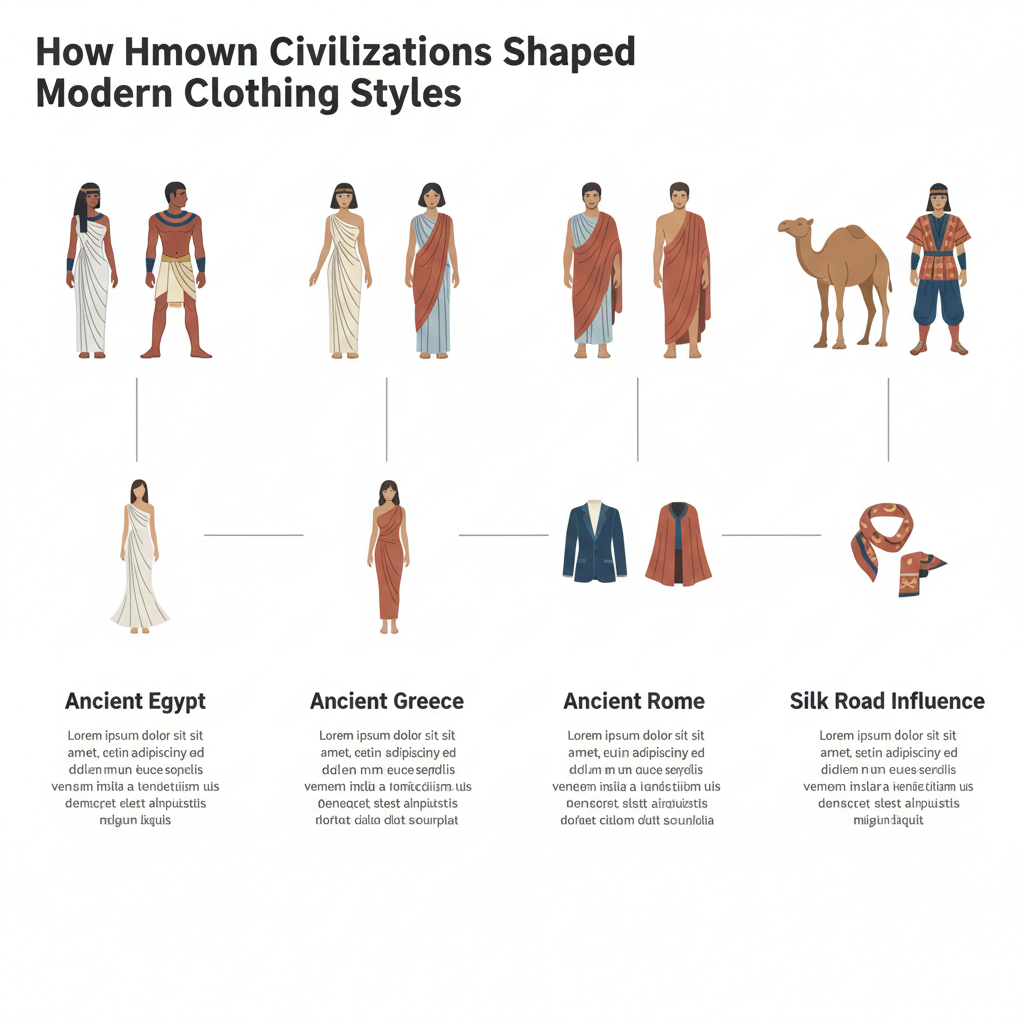
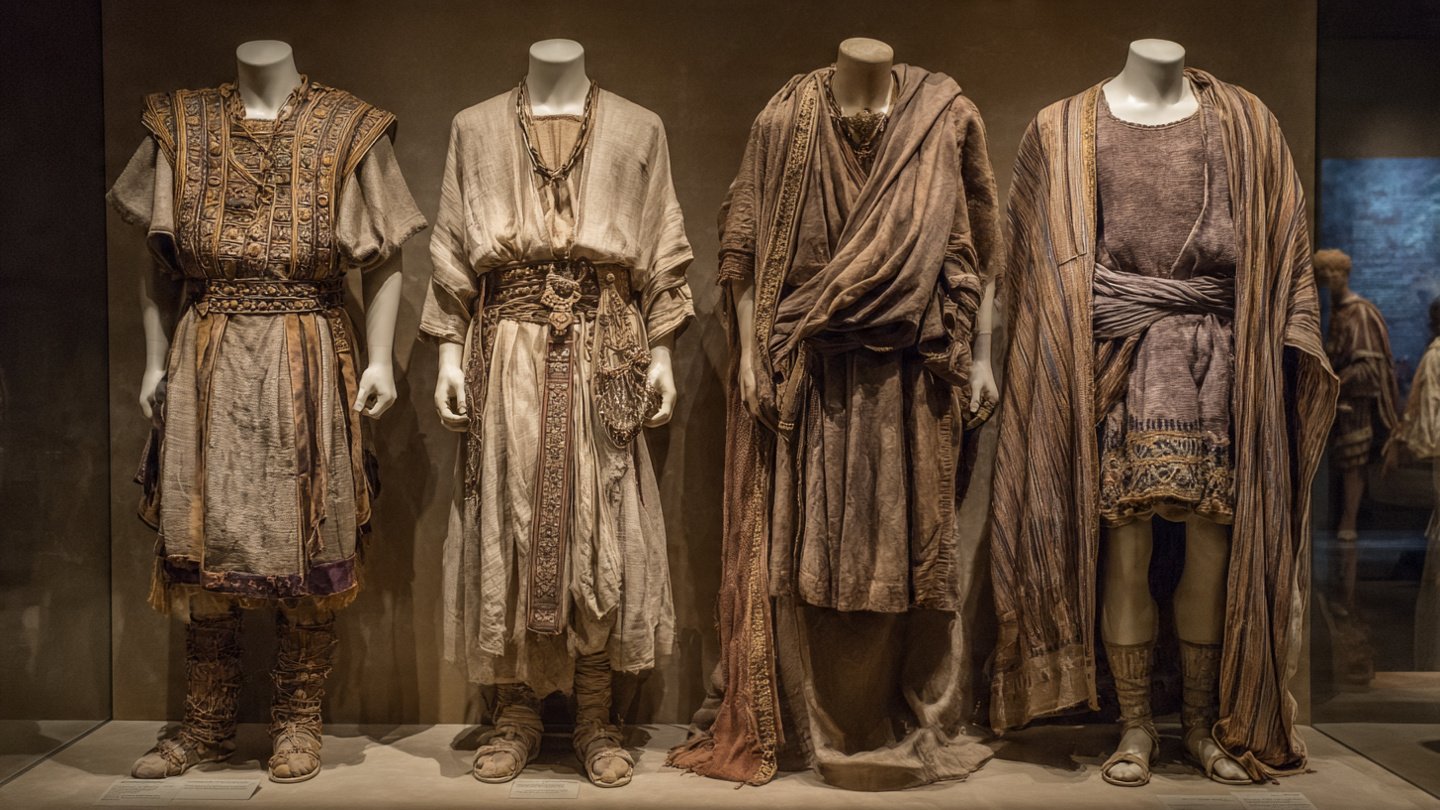
Ancient civilizations shaping clothing styles drew heavily on these foundational technologies. Egyptian linen production built on thousands of years of experience with plant fibers. Roman military uniforms incorporated design principles first developed for hunting mobility. Mesopotamian wool processing refined techniques originally used to prepare animal hides.
The history of clothing evolution shows clear lines of continuity from survival garments to civilization-era fashion. Layering principles remained central to clothing design across cultures. The relationship between clothing and identity—first expressed through hunter’s garments—became increasingly elaborate in settled societies. Even purely decorative clothing in ancient civilizations often retained vestigial features that once served survival purposes.
Trade networks that emerged with civilization depended partly on clothing technologies. Cultures with superior techniques for producing durable, weather-resistant fabrics could trade these materials or the finished garments themselves. Knowledge about clothing production became valuable intellectual property, sometimes closely guarded by specific groups or guilds.
Climate adaptation strategies developed by hunters influenced architectural decisions in early cities. Understanding how layering worked in clothing helped builders design structures with multiple walls or compartments that trapped air for insulation. The same principles that kept hunters warm on winter expeditions were scaled up to protect entire communities.
The Enduring Legacy of Adaptive Clothing
The story of how ancient humans developed clothing for hunting and survival isn’t just historical curiosity—it’s the foundation of humanity’s relationship with fashion, technology, and environmental adaptation. Every garment we wear today, from technical outdoor gear to haute couture, traces its lineage back to those first hunters who figured out how to stay warm, dry, and mobile enough to feed their families.
The human clothing evolution journey began with these essential survival needs. Early humans faced a simple but urgent problem: their bodies alone couldn’t protect them from their environment. The solutions they developed—processed animal skins, layered garments, fitted and sewn constructions—represented some of humanity’s earliest and most crucial innovations.
Understanding from fiber to fabric clothing process starts with recognizing that our ancestors didn’t distinguish between clothing technology and survival technology. They were the same thing. The skills required to create effective hunting garments—observing animals and plants, testing materials, refining techniques across generations—established patterns of innovation that would eventually lead to every subsequent development in textile production.
Modern hunters and outdoor enthusiasts still apply these ancient principles. Technical fabrics may have replaced animal hides, but the core strategies remain: layering for temperature regulation, choosing materials based on specific environmental challenges, prioritizing mobility and protection simultaneously. The hunting jacket hanging in your closet is a direct descendant of garments created thousands of years ago, refined across countless generations but serving fundamentally the same purpose.
Perhaps most significantly, these early clothing innovations demonstrate humanity’s defining characteristic: the ability to adapt to nearly any environment through technology and cultural knowledge rather than biological evolution. Where other species required millions of years to develop biological adaptations to new climates, humans accomplished the same feat in mere generations by improving their clothing.
The hunters who first wrapped themselves in animal skins and ventured into new territories didn’t know they were establishing traditions that would last millennia. They were simply trying to survive another day, another season, another hunt. Yet their innovations in adaptive clothing made possible every human achievement that followed—from the rise of civilizations to the colonization of the coldest and hottest regions of the planet. Survival wasn’t just the foundation of clothing evolution; it was the foundation of human success itself.