



Climate vs Culture: What Really Created the First Clothes?
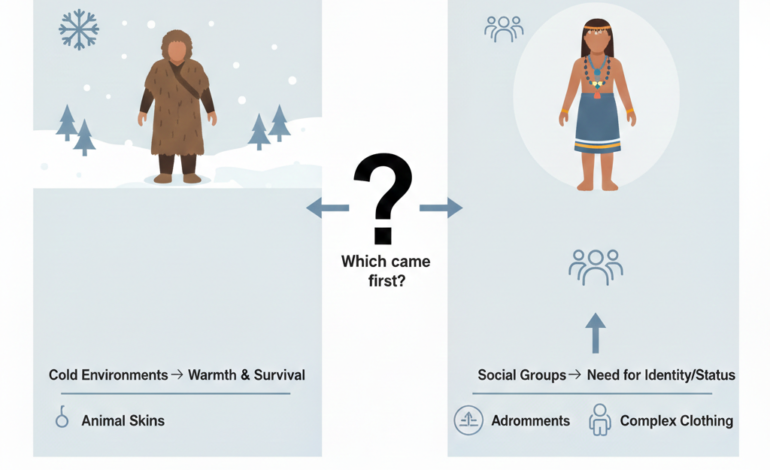

When did humans first decide to cover their bodies, and more importantly—why? The story of early clothing is far more complex than simply needing warmth. Archaeological evidence, genetic studies of body lice, and anthropological research all point to a fascinating intersection of necessity and identity that shaped why humans started wearing clothes.
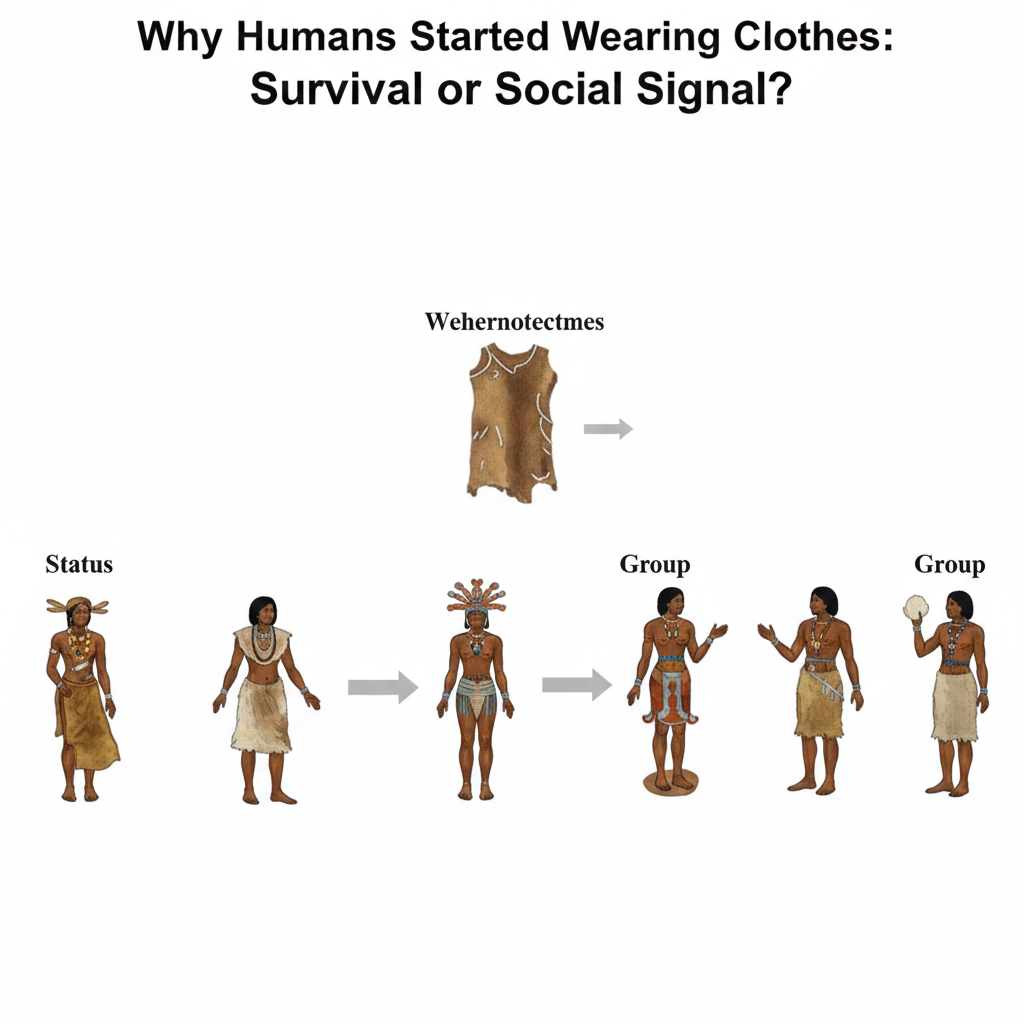
Two primary theories have dominated scholarly debate for decades. The first suggests clothing emerged purely from environmental pressure—humans needed protection from harsh climates as they migrated from Africa into colder regions. The second proposes that clothing served as an early form of cultural expression, signaling group membership, social status, and individual identity long before practical concerns took precedence.
Neither explanation tells the complete story. The truth likely involves a dynamic interplay between survival needs and social complexity. Understanding this balance requires examining the first materials used in early clothing, the environmental challenges our ancestors faced, and the deep human drive to communicate through appearance.
Recent discoveries have pushed the timeline of clothing’s origins further back than previously thought. DNA analysis of clothing lice suggests humans may have been wearing garments as early as 170,000 years ago—long before the major migration out of Africa around 70,000 years ago. This raises intriguing questions about the primary motivations behind early dress.
Did climate create the first clothes, or did culture? The answer shapes how we understand human innovation, adaptation, and the fundamental relationship between function and meaning in material culture.
Climate as a Driving Force in Early Clothing Development
Environmental pressures undeniably influenced early clothing development. As humans spread across diverse ecosystems, they encountered temperature extremes, precipitation patterns, and terrain that their hairless bodies were ill-equipped to handle. Clothing became an adaptive technology—a second skin that allowed survival in otherwise inhospitable environments.
Ice Age Protection and Layering
The Last Glacial Maximum, which peaked around 20,000 years ago, presented extreme challenges for human populations in northern latitudes. Temperatures in Europe and Asia plummeted, making adequate thermal protection a matter of life and death. Archaeological evidence from this period reveals sophisticated clothing construction techniques.
Cave paintings and carved figurines from the Upper Paleolithic period (roughly 40,000 to 10,000 years ago) depict humans wearing fitted garments that appear tailored rather than simply draped. The famous Venus figurines often show detailed representations of what appear to be woven caps, belts, and skirts. More tellingly, bone needles with eyes—indicating the ability to sew fitted garments—appear in the archaeological record around 40,000 years ago.
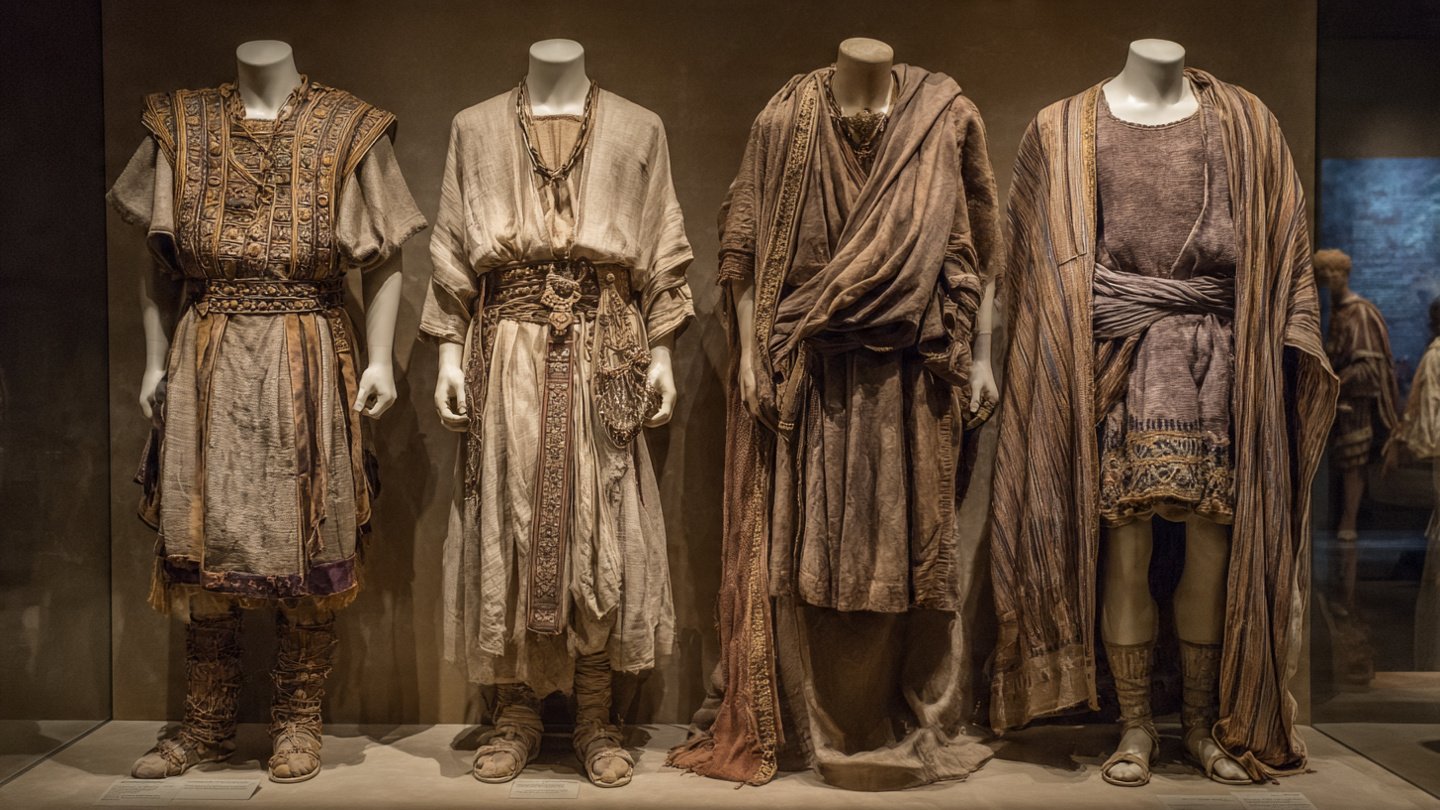
Animal hides provided the primary material for cold-weather clothing. Leather and fur offered insulation, wind resistance, and water repellency. The process of preparing these materials required significant knowledge: scraping, drying, smoking, and treating hides with brain matter or other natural oils to maintain flexibility. This wasn’t simple covering—it was advanced material engineering.
Layering became essential in extreme cold. Evidence suggests early humans wore multiple garments: an inner layer against the skin, middle insulating layers, and an outer windproof shell. This principle remains fundamental to cold-weather clothing design today. The invention of such systems demonstrates sophisticated understanding of heat retention and moisture management.
Tropical Adaptation and Lightweight Garments
Climate’s influence on clothing wasn’t limited to cold regions. Tropical environments presented different challenges that also shaped early dress. Contrary to assumptions that minimal clothing made sense in warm climates, various protective needs emerged.
Intense sun exposure created risks of sunburn and heat stroke. Loose, breathable garments provided shade while allowing air circulation—more effective than exposed skin in managing heat. Plant fibers like bark cloth, woven grasses, and early forms of linen served these purposes well. These materials were lightweight, could be easily replaced, and didn’t require the intensive processing that animal hides demanded.
Protection from insects, thorny vegetation, and minor abrasions also drove clothing adoption in warmer regions. Evidence of grass skirts, bark cloth wraps, and woven fiber garments appears across tropical archaeological sites, suggesting that environmental adaptation took varied forms beyond simple temperature regulation.
Interestingly, clothing in ice age vs tropical regions developed along remarkably different technological paths. Northern populations invested in tailoring, sewing, and complex hide preparation. Tropical groups developed weaving, plant fiber processing, and dyeing techniques. These divergent innovations would later combine as human populations intermingled, creating the diverse textile traditions we recognize today.
Cultural Identity and Social Signals in Early Dress
While climate created practical needs, it doesn’t fully explain the elaborate decoration, variety, and social complexity evident in early clothing. Many aspects of dress served no obvious survival function yet appeared consistently across different cultures and time periods. This points to clothing’s powerful role as a cultural technology—a way to communicate membership, status, and individual identity.
Tribal Decoration and Symbolism
Archaeological evidence reveals that decoration often preceded practical clothing. Beads made from shells, carved bone, and pierced animal teeth appear in the archaeological record before clear evidence of tailored garments. These ornaments served no thermal purpose but clearly held social significance.
Body decoration created visual distinctions between groups. Specific patterns, colors, or materials could signal tribal affiliation, making friend-or-foe recognition immediate. This had survival value in its own right—establishing social bonds, facilitating trade relationships, and preventing conflict through clear group identification.
Ochre pigments, found at numerous Paleolithic sites, suggest early humans painted their bodies and possibly their garments. Red ochre appears particularly significant, showing up in burials and living sites across Africa, Europe, and Asia. The effort required to collect, process, and apply these pigments indicates their cultural importance exceeded mere aesthetics.
Religious and ritual significance likely attached to certain garments or decorative elements. Shamanic traditions across cultures often involve special dress that marks the wearer as occupying a different social role or spiritual state. While direct evidence from deep prehistory remains elusive, ethnographic parallels suggest similar practices may extend far back in human history.
The role of modesty in early clothing remains debated among anthropologists. Some argue that covering the body arose from emerging social norms around sexuality and reproduction. Others contend that modesty is a more recent cultural development, and that practical or symbolic functions drove early clothing adoption. The diversity of clothing norms across contemporary hunter-gatherer societies suggests no single universal explanation fits all contexts.
Status and Group Identity
As human societies grew more complex, clothing became a marker of social hierarchy. Access to certain materials, colors, or garment styles could signal elevated status. This created incentives for clothing innovation that had nothing to do with environmental protection.
Labor-intensive decorative elements—intricate beadwork, fine weaving, rare pigments—demonstrated either personal skill or access to resources. Wearing such items communicated social capital. This dynamic appears across cultures at various developmental stages, suggesting a fundamental human tendency to use dress as social communication.
Gender distinctions in dress also likely served social organization functions. Different garment styles, decorative elements, or materials for men and women helped reinforce social roles and behavioral expectations. These distinctions appear even in societies where climate would suggest minimal clothing needs, pointing to cultural rather than environmental drivers.
Age-based clothing variations marked life transitions. Initiation ceremonies across cultures often involve changes in permitted dress, signaling movement from childhood to adulthood, or from single to married status. While we can’t observe such practices directly in prehistoric populations, their near-universal presence in ethnographic records suggests deep roots.
Migration and Environmental Influence on Clothing Styles
Human migration created unique pressures that shaped clothing development. As populations moved into new territories, they encountered unfamiliar climates, available materials, and ecological challenges. This process drove rapid innovation and adaptation in clothing technology.
The movement of anatomically modern humans out of Africa beginning around 70,000 years ago required dramatic adjustments. Populations entering the Middle East, Europe, and Asia faced seasonal temperature variations unknown in equatorial Africa. This shift likely accelerated clothing development from simple protective wraps to tailored, fitted garments.
Material availability dictated local clothing solutions. Arctic populations developed specialized techniques for working with seal skin, caribou hide, and bird skins—each offering specific advantages for extreme cold. European populations utilized deer, bear, and later domesticated animal hides. Asian groups incorporated silk production earlier than other regions, creating entirely different textile traditions.
How migration influenced early clothing design extended beyond materials to construction methods. Fitted, sewn garments emerged in colder climates where loose draping provided insufficient protection. Weaving developed independently in multiple regions where plant fibers were abundant. Felting appeared in Central Asian grasslands where wool-bearing animals and nomadic lifestyles intersected.
Trade routes eventually allowed material and technical exchange. Obsidian blades from volcanic regions reached communities thousands of miles away, suggesting exchange networks that could also transmit clothing innovations. A particularly effective hide-tanning method or weaving technique could spread far beyond its point of origin through these connections.
Climate zones created pressure for specific innovations, but human ingenuity found multiple solutions to similar problems. This explains why cold-weather clothing from Siberia, Scandinavia, and arctic North America share functional similarities despite developing independently—convergent evolution driven by similar environmental challenges.
Seasonal migration patterns influenced clothing design in subtle ways. Nomadic groups needed garments that could pack efficiently, resist repeated folding, and serve multiple purposes. Sedentary populations could develop more elaborate, fragile, or specialized clothing items that didn’t require constant transport.
Climate vs Culture—Which Had Greater Impact?
Attempting to determine whether climate or culture more strongly influenced early clothing development may be the wrong question. These forces didn’t operate independently but rather created a feedback loop that drove clothing’s evolution.
Climate created initial needs—protection from cold, sun, rain, or injury. These practical demands established baseline requirements that clothing had to meet. However, humans rarely stop at “good enough.” Once basic protection was achieved, cultural forces shaped how that protection was delivered, decorated, and imbued with meaning.
Cultural practices also generated their own functional requirements. Ritual garments needed durability for repeated ceremonial use. Status markers required visual impact that might sacrifice comfort or practicality. Modesty norms created coverage requirements unrelated to climate. These culturally-driven demands then spurred technical innovations that expanded what clothing could achieve.
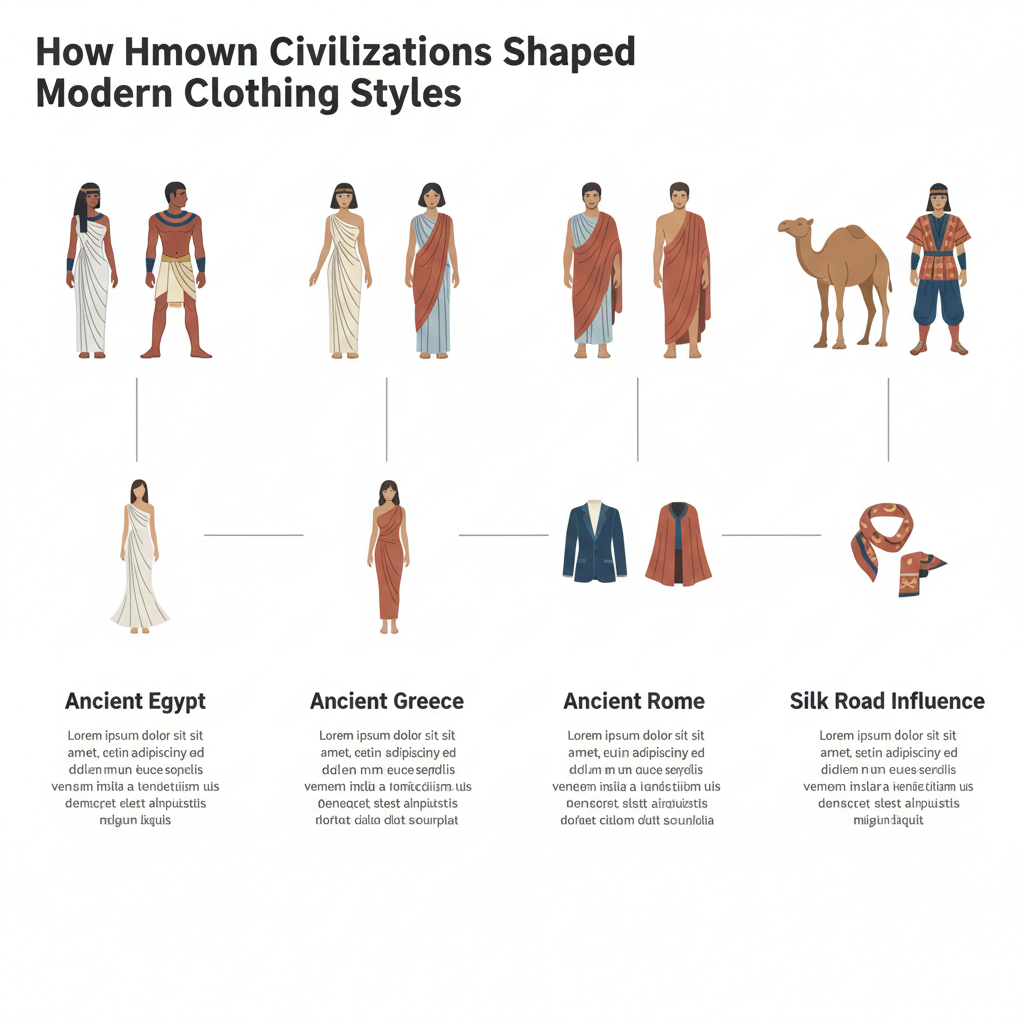
The interplay becomes clear when examining specific historical examples. The how ancient civilizations shaped clothing styles demonstrates this dynamic clearly. Egyptian linen production achieved remarkable sophistication not purely for climate adaptation—Egypt’s warm, dry climate required minimal clothing—but because fine linen became a status symbol and religious offering. Technical innovation served cultural purposes.
Similarly, Chinese silk production began as royal monopoly, its techniques guarded as state secrets. Silk’s properties made it comfortable in various climates, but its true value emerged from cultural meanings attached to it: luxury, status, imperial power. Environmental factors influenced how it was worn, but culture drove its production and distribution.
European medieval clothing provides another illustration. Climate necessitated warm garments, but the elaborate layering, specific colors, and strict sumptuary laws (dictating who could wear what) arose from social hierarchy, religious values, and economic systems. A peasant and noble in the same climate wore dramatically different garments—not because their bodies required different protection, but because culture demanded visual distinction.
Contemporary anthropological research on hunter-gatherer societies offers insights into this balance. Groups living in similar climates often develop remarkably different clothing traditions. The Inuit of arctic North America created sophisticated tailored garments with fitted hoods and specialized waterproof stitching. The Sami people of arctic Scandinavia developed different solutions using similar materials but distinct construction techniques. Climate created the problem; culture determined the solution.
Conversely, groups in similar cultural contexts but different climates necessarily adapted their clothing differently. The widespread use of hide garments across Northern Hemisphere cultures reflects both available materials (climate-determined) and shared cultural practices around hunting and animal processing. Function and meaning intertwined inseparably.
Modern understanding suggests early clothing development followed a predictable pattern: climate created initial needs, cultural practices shaped solutions, successful solutions became traditions, and those traditions then influenced how subsequent environmental challenges were addressed. Neither climate nor culture operated alone.
How Early Forces Shaped Clothing’s Future Evolution
The fundamental drivers that created the first human garments—environmental protection and cultural communication—continue shaping clothing today. Modern fashion balances these same tensions between function and meaning, practicality and identity.
Understanding this dual origin helps explain persistent patterns in human dress. We still use clothing to signal group membership, whether through uniforms, subcultural styles, or fashion trends. We still adapt dress to environmental conditions, though central heating and air conditioning have reduced climate’s direct impact in many contexts.
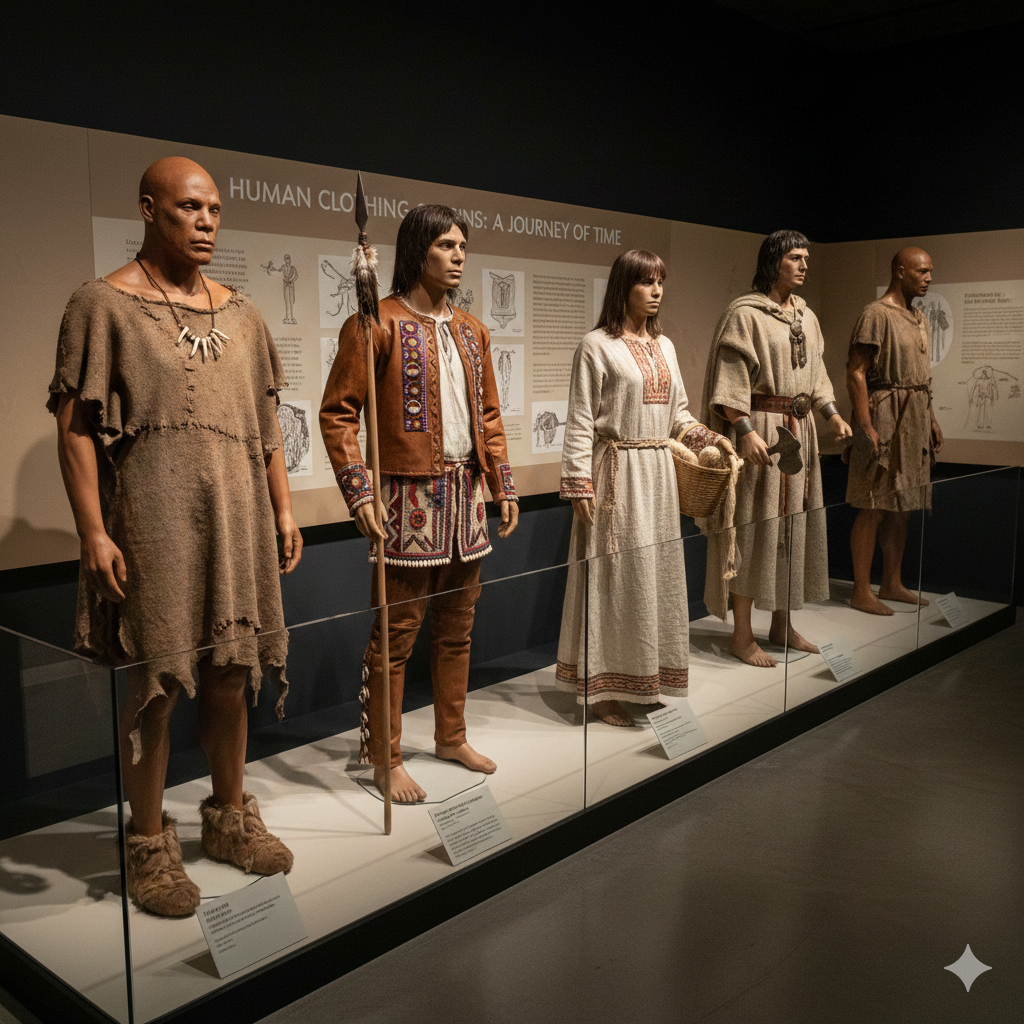
The human clothing evolution journey from those first simple coverings to contemporary global fashion industries spans tens of thousands of years. Yet the core purposes remain recognizable: protect the body, communicate identity, signal social position, and express individual creativity within cultural bounds.
Archaeological and anthropological research continues refining our understanding of clothing’s origins. New discoveries push timelines earlier, reveal unexpected sophistication in ancient techniques, and demonstrate the remarkable ingenuity of our ancestors. Each finding reinforces that clothing represents one of humanity’s most important technological and cultural achievements.
The question of whether climate or culture created the first clothes ultimately misses the deeper truth. Humans created clothing because we are creatures of both environment and society. We feel cold and seek warmth—but we also crave belonging and pursue beauty. The first garments emerged from this uniquely human combination of practical problem-solving and symbolic thinking.
This dual nature makes clothing endlessly fascinating. A simple hide tunic simultaneously solved a thermal regulation problem and communicated tribal identity. A woven grass skirt protected skin from sun and thorns while signaling the wearer’s cultural sophistication. Form and function, need and meaning, survival and expression—clothing encompasses all these dimensions.
The history of clothing evolution continues unfolding. Contemporary innovations in smart fabrics, sustainable materials, and adaptive clothing demonstrate that the same drives propelling our ancestors still push us forward. We still seek better environmental protection, and we still use dress to communicate who we are and where we belong.
Examining clothing’s origins reveals fundamental truths about human nature. We are problem-solvers who rarely settle for purely functional solutions. We are social beings who communicate through material culture. We are creative innovators who find multiple answers to similar challenges. The first clothes embodied all these qualities—and set patterns that continue shaping how we dress today.