


Why Sustainable Fashion Is Becoming Mainstream in the USA

Not long ago, “eco-friendly clothing” conjured images of scratchy hemp fabrics and shapeless, beige silhouettes. It was a niche interest, reserved for specific subcultures or those with the time and money to hunt down obscure boutiques. If you walked into a standard American mall ten years ago, you would be hard-pressed to find a “Conscious Collection” tag.
That reality has shifted dramatically. Today, sustainability is no longer just a buzzword in boardrooms; it is a driving force in the retail market. From high-end designers to everyday department stores, the push for greener, cleaner, and more ethical production is undeniable. We are witnessing a fundamental change in how Americans buy, wear, and think about their clothes.
This transition from niche to mainstream didn’t happen by accident. It is the result of a perfect storm: heightened environmental awareness, a demand for labor rights, and a generation of consumers who refuse to compromise on their values. But what exactly does this shift look like, and is it here to stay?
What Is Sustainable Fashion?
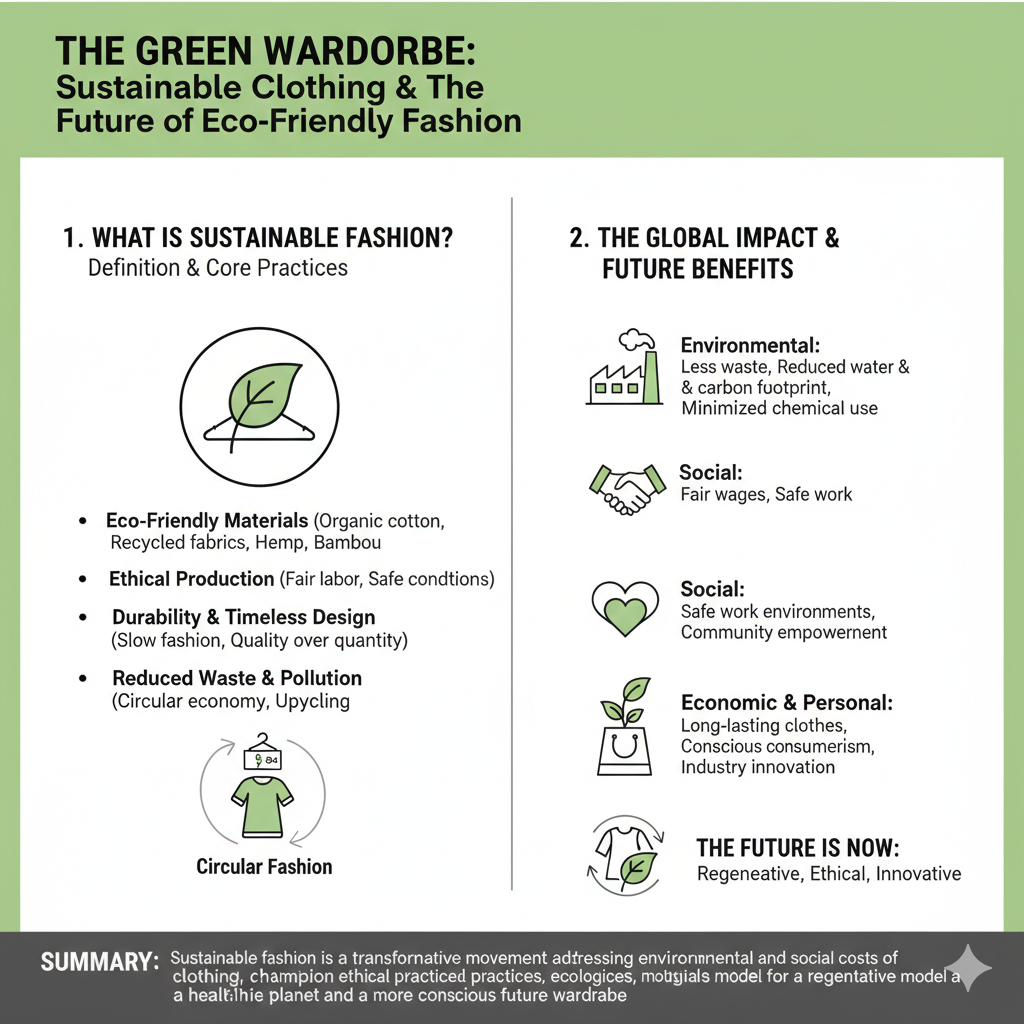
To understand the movement, we first have to define it. When we talk about sustainable fashion USA, we are referring to a design and manufacturing philosophy that prioritizes the health of the planet and the people who inhabit it.
At its core, sustainable fashion operates on a few key principles:
- Environmental Integrity: Using materials that reduce waste, conserve water, and lower carbon emissions.
- Social Justice: Ensuring fair wages, safe working conditions, and rights for garment workers throughout the supply chain.
- Economic Sustainability: Creating a circular economy where products are designed to be durable, reusable, and recyclable.
This stands in stark contrast to the dominant “fast fashion” model. Fast fashion relies on speed and volume. It churns out cheap, trendy clothing meant to be worn a handful of times before being discarded. Sustainable fashion asks us to slow down. It focuses on the entire lifecycle of a garment, from the seeds sown for cotton to how the item is eventually retired or recycled.
Why Sustainable Fashion Is Becoming Mainstream
The question on many industry analysts’ minds is: why sustainable fashion is becoming mainstream USA right now? The answer lies in a growing collective consciousness.
Climate and Environmental Concerns
Americans are more aware of climate change than ever before. We see the headlines about microplastics in our oceans, overflowing landfills, and the immense carbon footprint of the textile industry. The fashion industry is responsible for a significant chunk of global carbon emissions—more than international flights and maritime shipping combined, according to some estimates. As these facts become common knowledge, consumers are looking for ways to reduce their personal impact. Buying an eco-friendly shirt feels like a tangible action against a massive problem.
Ethical Labor Awareness
The human cost of cheap clothing has also come into sharp focus. Tragedies in overseas garment factories and documentaries exposing the harsh realities of the supply chain have made it difficult for consumers to plead ignorance. There is a growing realization that if a t-shirt costs $5, someone else paid the price. This ethical awakening is pushing shoppers toward brands that can prove they treat their workers with dignity.
Changing Consumer Values
The definition of status is changing. For a long time, having a new outfit for every occasion was a sign of success. Now, repeating outfits, buying vintage, and wearing durable, high-quality items is becoming the new status symbol. It signals that you are informed, responsible, and confident enough to opt out of the relentless trend cycle.
Consumer Demand Driving the Change
Brands aren’t shifting their strategies out of the kindness of their hearts; they are doing it because the market demands it. Sustainable fashion consumer trends USA indicate a massive generational divide that is quickly closing.
Gen Z and Millennial Influence
Younger generations are the engine behind this movement. Gen Z and Millennials are statistically more likely to research a brand’s ethical standing before making a purchase. They are digital natives who can spot inauthenticity from a mile away. If a brand claims to be green but hides its supply chain data, these consumers will find out and discuss it on social media. They view their spending as a form of voting, and they are voting for the planet.
The Demand for Transparency
“Where was this made?” and “Who made my clothes?” are questions that were rarely asked two decades ago. Now, they are standard. Consumers want transparency. They want to see the factory, know the materials, and understand the logistics. This pressure forces companies to open their books and clean up their supply chains to avoid public backlash.
Willingness to Pay for Sustainability
There is a lingering myth that Americans won’t pay more for green products. However, recent data suggests otherwise. A significant portion of shoppers indicate they are willing to pay a premium for products that are sustainably sourced. While price remains a barrier for some, the value proposition is shifting. People are realizing that spending $50 on a shirt that lasts five years is a better deal than spending $10 on a shirt that falls apart in the wash.
Brands Making Sustainable Fashion Accessible
For sustainability to truly go mainstream, it cannot remain a luxury good. Fortunately, we are seeing a rise in sustainable clothing brands USA that cater to various price points.
Affordable Sustainable Options
New players in the market are proving that ethical production doesn’t have to cost a fortune. Direct-to-consumer models cut out the middleman, allowing brands to offer higher quality materials at lower prices. We are seeing basics—t-shirts, underwear, denim—produced ethically and sold at prices comparable to mid-tier mall brands.
Major Brands Adopting Eco-Lines
Perhaps the biggest sign of mainstream adoption is when the giants get involved. Major retailers and legacy athletic brands are launching specific lines dedicated to recycled materials and organic cotton. While some critics argue this is a small step, the scale at which these companies operate means that even a 10% shift in their production methods can have a massive global impact. When a massive retailer commits to using 100% sustainable cotton, it changes the entire global cotton market.
Role of Technology and Innovation
You can’t talk about the future of clothing without talking about sustainable fashion technology. Science is providing solutions to problems that previously seemed unsolvable.
Recycled and Bio-Based Fabrics
We are moving beyond simple organic cotton. Innovators are creating leather alternatives from mushrooms (mycelium), pineapple leaves, and cactus. We are seeing fabrics made from recycled plastic bottles and discarded fishing nets. These bio-based materials offer the durability and aesthetic of traditional textiles without the heavy environmental toll.
AI-Driven Supply Chain Efficiency
Artificial Intelligence is helping brands predict trends more accurately. This might sound like a business perk, but it’s a sustainability win. Overproduction is one of the industry’s biggest sins—brands making millions of items that never sell and end up in landfills. AI helps match supply with demand, ensuring that companies only produce what people actually want to buy.
Sustainable Fashion vs Fast Fashion
The battle of sustainable fashion vs fast fashion is often framed as a battle of price versus ethics, but it is also a battle of quality.
Cost-Per-Wear Comparison
Fast fashion wins on the sticker price. You can walk out of a store with a whole outfit for under $30. However, sustainable fashion wins on “cost-per-wear.” If you buy a $100 sustainable jacket and wear it 100 times, the cost is $1 per wear. If you buy a $30 fast-fashion jacket that loses a button and rips after five wears, the cost is $6 per wear. Americans are starting to do this math.
Quality and Durability
Sustainable garments are generally constructed better. Because the materials cost more, the manufacturing process is usually more careful. Stronger seams, better fabric weight, and higher-quality dyes mean the clothes look better for longer. Fast fashion relies on planned obsolescence—clothes designed to wear out so you have to buy more.
Environmental Footprint
The difference in footprint is staggering. Fast fashion relies on synthetic, petroleum-based fabrics like virgin polyester, which take hundreds of years to decompose. Sustainable fashion leans toward biodegradable natural fibers or closed-loop recycling systems where waste is minimized.
Government, Media, and Cultural Influence
The shift isn’t happening in a vacuum. Sustainability awareness USA is being bolstered by external forces.
Policy and Regulation
The government is beginning to step in. Legislation is being proposed in states like New York to hold fashion brands accountable for their environmental and social impacts. If passed, these laws would require brands to map their supply chains and disclose their carbon footprints. This moves sustainability from “voluntary” to “mandatory.”
Media and Influencer Advocacy
Social media has played a complicated but vital role. While it accelerates trends, it also educates. Influencers are now showing off “thrift hauls” instead of fast fashion sprees. TikTok creators are teaching their followers how to mend clothes and sew buttons. Documentaries about the climate crisis are readily available on streaming platforms, keeping the conversation front and center.
Challenges Slowing Full Adoption
Despite the progress, there are significant challenges of sustainable fashion USA.
Higher Upfront Costs
The biggest hurdle remains the price tag. For families living paycheck to paycheck, the long-term savings of sustainable clothes don’t matter as much as the immediate affordability of fast fashion. Until sustainable options achieve price parity with budget brands, full adoption will be difficult.
Greenwashing Concerns
As sustainability becomes profitable, dishonesty increases. “Greenwashing” occurs when brands use vague terms like “eco-friendly” or “natural” without any evidence to back them up. This confuses consumers. A shopper might think they are making a responsible choice, only to find out the item is 95% polyester with 5% organic cotton. Cutting through the marketing noise requires effort that not every consumer has time for.
Limited Consumer Education
While awareness is growing, many Americans still don’t know how to care for clothes to make them last (washing on cold, air drying, mending). The “throwaway culture” is a hard habit to break, and re-learning how to maintain a wardrobe takes time.
What the Future Holds for Sustainable Fashion
Looking ahead, the future of sustainable fashion USA appears to be circular.
We are moving away from the linear “take-make-waste” model. The resale market is exploding. Platforms that allow people to buy and sell second-hand clothes are growing faster than traditional retail. We will likely see a future where major brands offer repair services in their stores, and where renting clothes for events becomes more common than buying them.
Eventually, the distinction between “fashion” and “sustainable fashion” may disappear. As regulations tighten and resources become scarcer, sustainability won’t just be an option; it will be the only way to do business.
Frequently Asked Questions (FAQ)
Q1. Why is sustainable fashion becoming popular in the USA?
It is driven by increased climate change awareness, a desire for ethical labor practices, and social pressure from younger generations who demand transparency from brands.
Q2. Is sustainable fashion more expensive than fast fashion?
The upfront cost is usually higher due to fair wages and quality materials. However, because the items last longer, the cost-per-wear is often lower over time.
Q3. Are major brands adopting sustainable practices?
Yes. Many large retailers are launching eco-conscious lines, using recycled materials, and setting carbon reduction goals to meet consumer demand and anticipated regulations.
Q4. How can consumers identify truly sustainable fashion?
Look for specific certifications like GOTS (Global Organic Textile Standard), Fair Trade Certified, or B Corp status. Check the fabric composition tag for natural or recycled materials.
Q5. What materials are commonly used in sustainable clothing?
Common materials include organic cotton, linen, hemp, Tencel (lyocell), and recycled polyester (rPET).
Q6. Is sustainable fashion better for the environment?
Yes. It generally uses less water, fewer harsh chemicals, and produces lower carbon emissions compared to conventional fashion manufacturing.
Q7. Will sustainable fashion fully replace fast fashion?
It is unlikely to fully replace it overnight due to economic barriers, but it is forcing the fast fashion industry to adapt and reducing its dominance in the market.
Final Thoughts: Sustainability as the New Normal
The rise of sustainable fashion in the USA is more than just a passing trend; it is a correction. For too long, we viewed clothing as disposable, ignoring the resources and labor required to make it. The mainstreaming of sustainable practices signals a return to valuing quality and craftsmanship.
Consumers hold immense power. Every time you choose to repair a zipper instead of tossing a jacket, buy second-hand, or support a brand that pays fair wages, you are shaping the industry. The transition to a fully sustainable fashion future won’t happen instantly, but the momentum is undeniable. The closet of the future is green, and it is here to stay.