

What Is a Clothing Silhouette and Why It Matters in Style

When you look at an outfit from across the room, what do you see first? Not the fabric texture. Not the stitching. You see the shape—the outline of the garment against the body. That shape is called a silhouette, and it’s one of the most fundamental elements of clothing design.
A silhouette refers to the overall contour or outline that a garment creates when worn. It defines how clothing interacts with the human form, whether it clings, drapes, or stands away from the body. Understanding silhouettes helps explain why certain garments look timeless, why others feel dated, and how fashion communicates identity through shape alone.
Silhouettes aren’t just about aesthetics. They reveal how how human clothing is constructed and how design choices evolved to meet functional, cultural, and expressive needs. From the earliest wrapped garments to today’s tailored jackets and oversized streetwear, the silhouette has always been the bridge between construction and style.
This post explores what silhouettes are, how they emerged from early garment-making practices, and why they remain central to human clothing evolution history and modern fashion expression.
How Silhouettes Emerged from Early Garment Construction
Silhouettes didn’t start as a design concept. They emerged naturally from the way humans learned to cover and protect their bodies. The shape of early clothing was dictated by available materials, construction methods, and the practical needs of survival.
Functional Shapes in Early Clothing
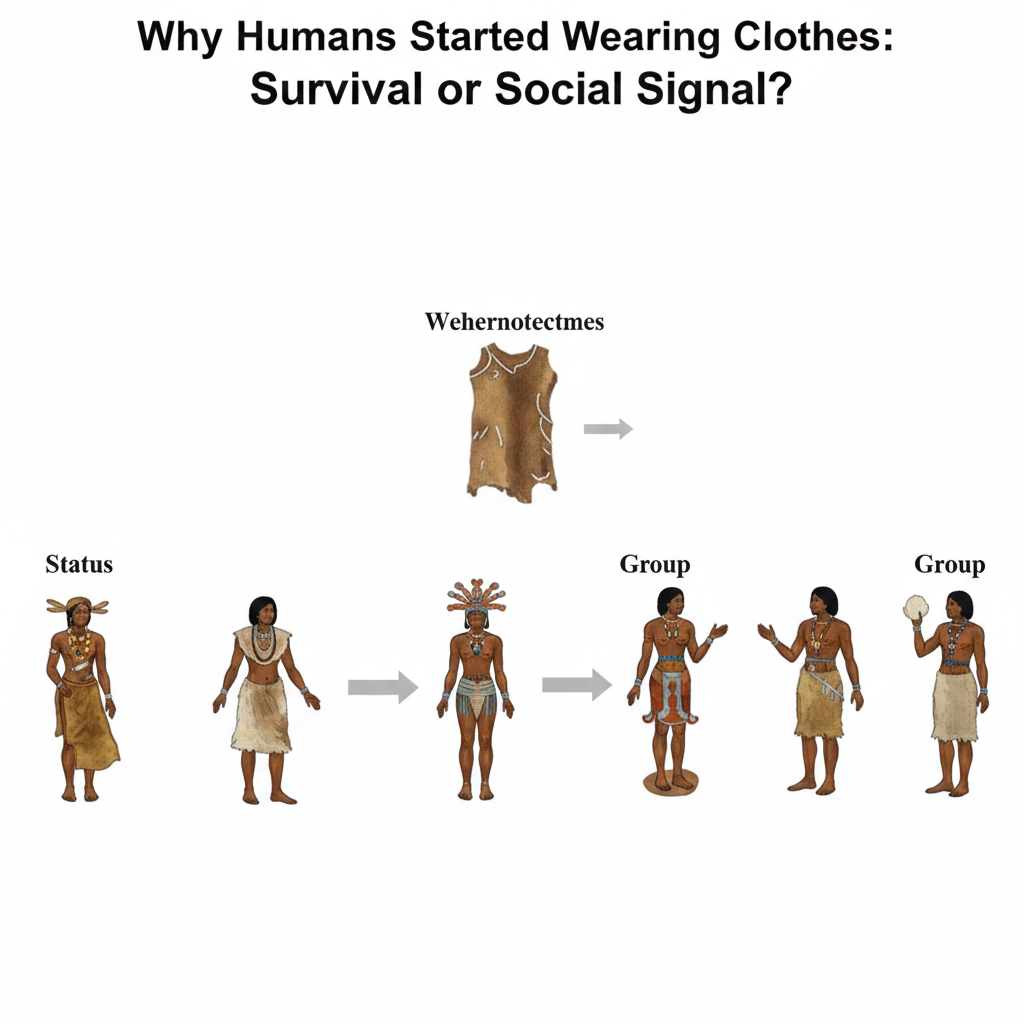
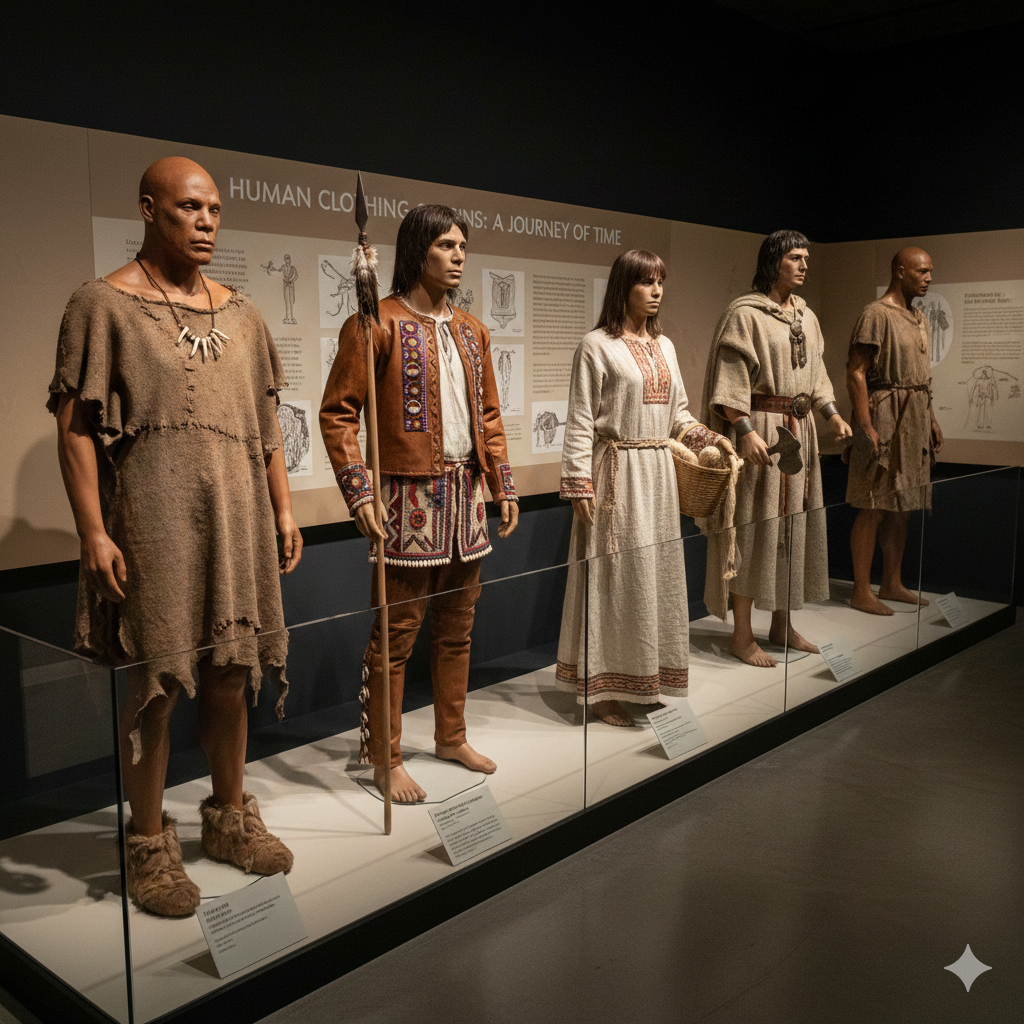
The first garments were simple. Humans draped animal hides, woven grass, or plant fibers over their bodies to shield themselves from the elements. These early forms created the most basic silhouettes: loose, unstructured, and functional.
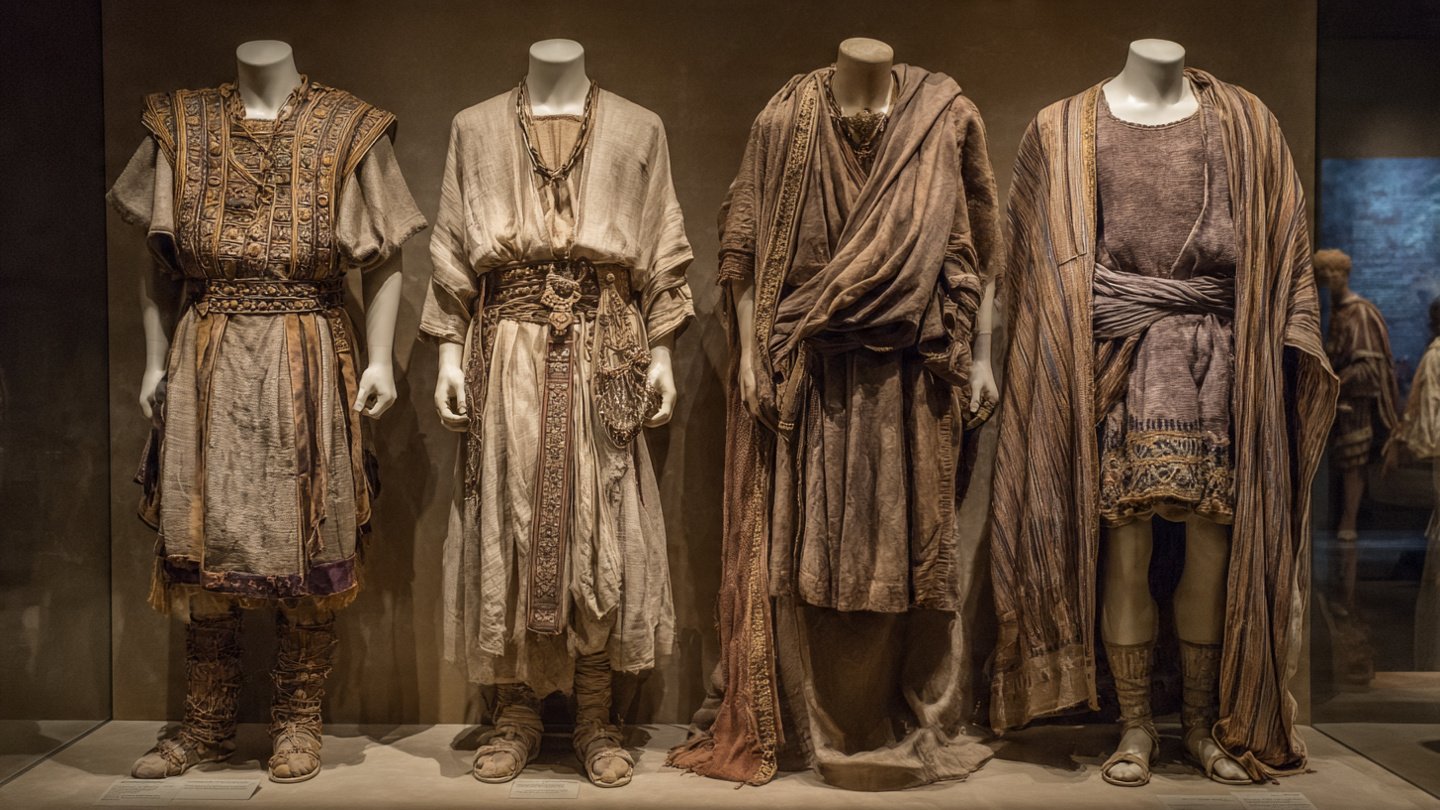
As humans developed tools and learned to sew, garments began to fit more closely to the body. Tunics, wraps, and robes became common across cultures. These garments created straight, flowing silhouettes that allowed for ease of movement and comfort. The shape wasn’t planned—it was a byproduct of wrapping, folding, and tying fabric around the torso and limbs.
Understanding from fiber to fabric clothing process helps explain why early silhouettes were so uniform. Without advanced cutting or tailoring techniques, most garments followed the natural dimensions of the material. A rectangular piece of cloth could be draped, belted, or pinned, but it would always create a relatively simple outline.
Cultural Influences on Garment Form
As societies developed, silhouettes began to reflect more than just practicality. Cultural values, climate, and social hierarchies influenced how garments were shaped and worn.
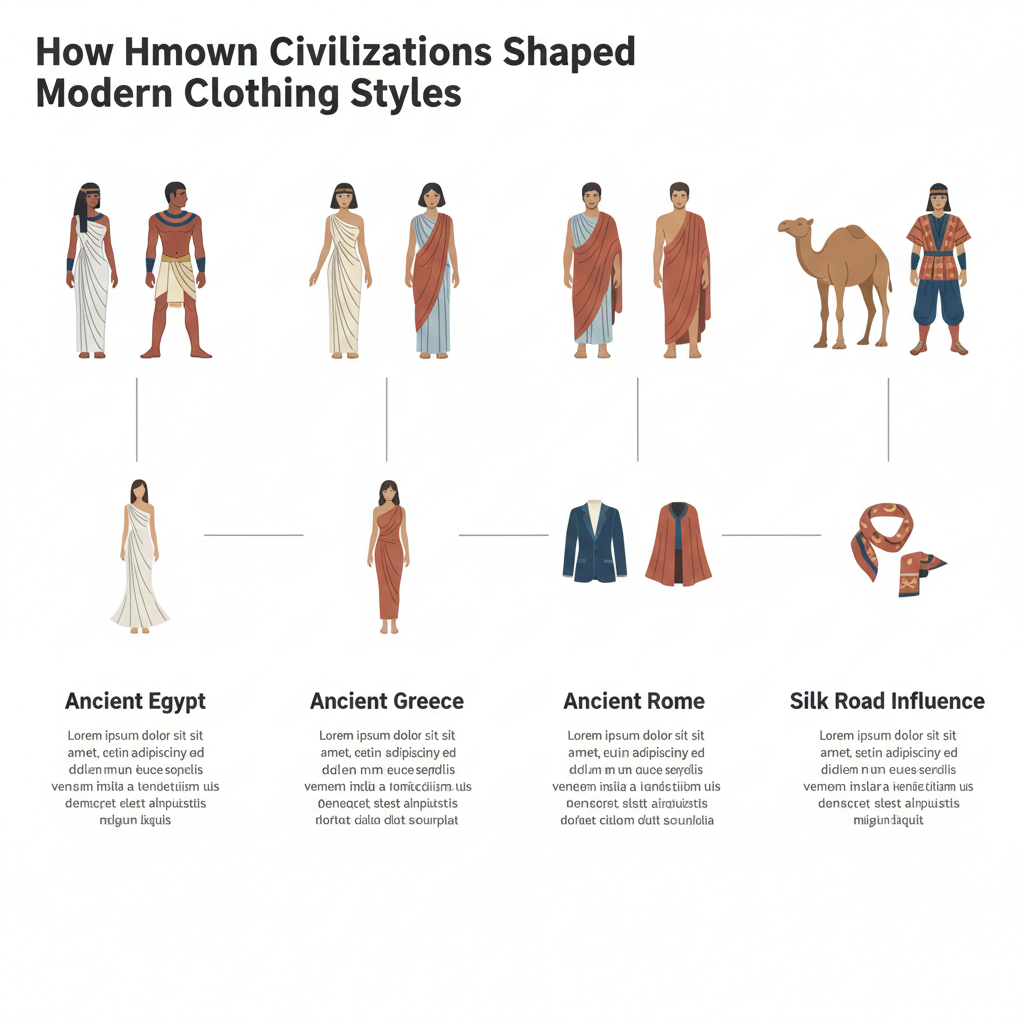
In ancient Egypt, linen garments were cut to create narrow, column-like silhouettes that emphasized elegance and symmetry. In contrast, robes worn in colder climates were bulkier and more voluminous, designed to trap heat and protect against harsh weather.
Religious and social norms also played a role. In some cultures, loose, flowing silhouettes were favored to maintain modesty. In others, fitted garments signaled status or profession. Over time, the silhouette became a visual language—a way to communicate identity, rank, and belonging without words.
Types of Basic Clothing Silhouettes
While silhouettes can vary widely depending on culture and era, most can be grouped into a few basic categories. These categories describe how the garment relates to the body and how volume is distributed across the form.
Straight and Structured Shapes
Straight silhouettes follow the natural line of the body without adding or removing volume. They create a clean, elongated outline that emphasizes proportion and symmetry.
Examples include:
- Column dresses and tunics
- Tailored trousers and pencil skirts
- Fitted blazers and shirts
Straight silhouettes are often associated with formality, professionalism, and minimalism. They’re precise and controlled, relying on fit and construction to create their shape. This type of silhouette is common in structured vs flowing silhouettes comparisons because it represents the opposite of loose, draped forms.
Flowing and Relaxed Forms
Flowing silhouettes prioritize movement and comfort over structure. These garments drape over the body, creating soft, organic shapes that shift as the wearer moves.
Examples include:
- Kafkans and robes
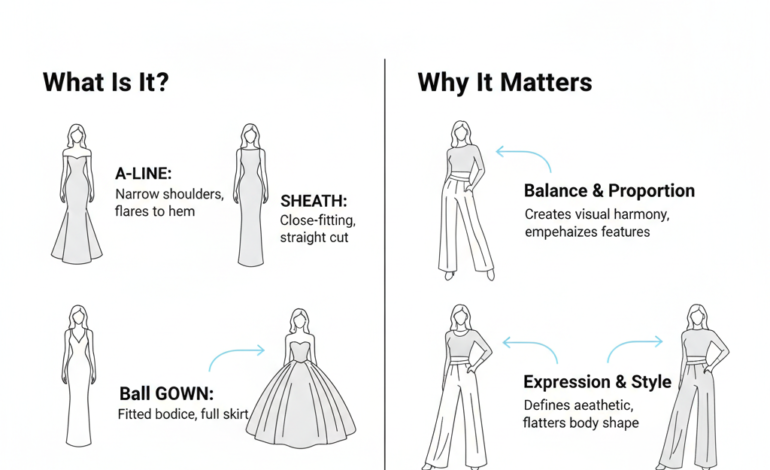
- A-line dresses
- Oversized shirts and tunics
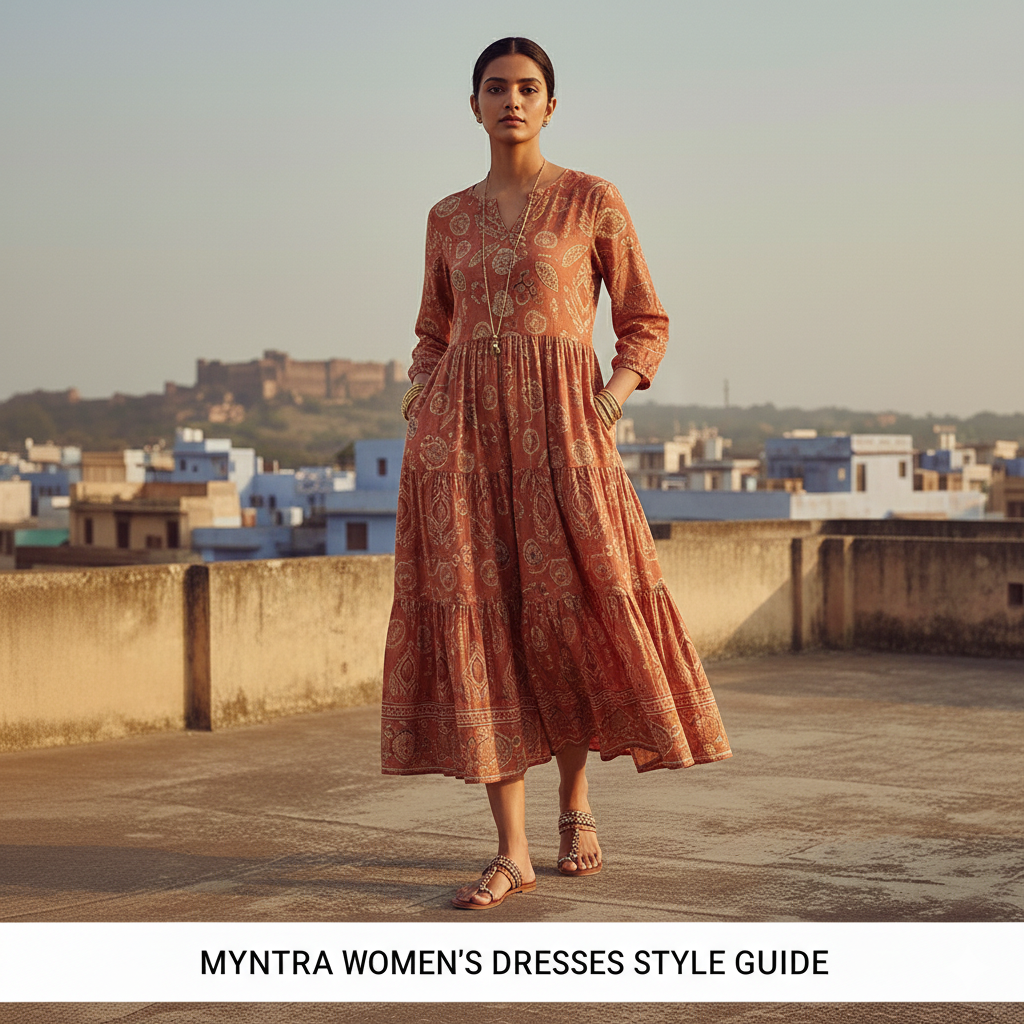
Flowing silhouettes are often seen in casual wear, loungewear, and traditional garments. They allow for breathability and ease of movement, making them ideal for warm climates and everyday wear. Culturally, they’re associated with relaxation, creativity, and comfort.
Volume and Proportion in Design
Some silhouettes are defined by exaggerated volume in specific areas. These shapes manipulate proportion to create visual interest or emphasize certain parts of the body.
Examples include:
- Bell-shaped skirts with volume at the hem
- Puffed sleeves or shoulders
- Wide-leg trousers with volume at the thigh
Volume-based silhouettes can be dramatic or subtle. They use fabric, structure, and construction techniques to add dimension and movement. Historically, these silhouettes were often tied to fashion trends and social status, as creating volume required more fabric and skill.
Understanding how silhouettes use volume helps explain why certain garments feel modern or historical. Fashion cycles often revisit these shapes, reinterpreting them for contemporary tastes.
The Role of Body Shape and Movement in Silhouette Design
Silhouettes don’t exist in isolation. They interact with the human body, adapting to different shapes, sizes, and movements. This relationship between garment and wearer is central to understanding why certain silhouettes feel comfortable, flattering, or restrictive.
Early garment makers had to consider how clothing would move with the body. A tunic that restricted arm movement wasn’t practical for labor. A robe that dragged on the ground posed safety risks. These functional concerns shaped silhouette choices long before fashion became a consideration.
As humans developed more advanced construction techniques, they could create silhouettes that enhanced or altered the natural body shape. Tailoring, darting, and structured support allowed garments to fit closely in some areas while adding volume in others. This gave rise to silhouettes that emphasized the waist, broadened the shoulders, or lengthened the legs.
The connection between body shapes and clothing evolution is crucial here. Different cultures developed silhouettes that aligned with their ideals of beauty, proportion, and modesty. In some eras, narrow waists and wide hips were emphasized. In others, loose, androgynous shapes were preferred.
Ergonomics also played a role. Garments designed for specific activities—like hunting, farming, or ceremonial events—had silhouettes tailored to those needs. A flowing robe might be ideal for a stationary ritual, but a fitted tunic was better for physical labor.
How Modern Fashion Uses Silhouettes to Express Identity
Silhouettes have evolved from purely functional shapes to powerful tools of self-expression. Modern fashion uses silhouette to communicate personality, challenge norms, and push creative boundaries.
Designers manipulate silhouettes to create mood and meaning. Oversized silhouettes can convey rebellion, comfort, or rejection of traditional beauty standards. Tailored, structured silhouettes suggest professionalism, power, or control. Asymmetrical or deconstructed silhouettes challenge expectations and invite interpretation.
Fashion movements often rally around specific silhouettes. The boxy, androgynous shapes of 1920s flapper dresses broke away from the corseted, hourglass silhouettes of earlier decades. The wide-shouldered power suits of the 1980s used silhouette to project authority and ambition. Streetwear’s oversized hoodies and baggy pants reject the fitted, body-conscious silhouettes of high fashion.
Understanding modern human clothing styles explained requires recognizing how silhouettes function as visual shorthand. A silhouette can signal subcultural affiliation, economic status, or political stance. It can mark someone as trendy, traditional, or avant-garde.
Silhouettes also allow individuals to shape how they’re perceived. Someone might choose a flowing silhouette for comfort and modesty, or a fitted silhouette to project confidence. The ability to control one’s silhouette is an act of agency—a way to curate identity through shape.
Frequently Asked Questions About Clothing Silhouettes
What’s the difference between a silhouette and a garment shape?
Silhouette refers to the overall outline of the garment when worn, while shape can describe both the garment’s structure and its individual design elements. Silhouette is what you see from a distance; shape includes the details.
Can the same garment create different silhouettes?
Yes. How a garment is styled, fitted, or layered can change its silhouette. A shirt tucked into high-waisted pants creates a different silhouette than the same shirt worn loose over jeans.
Why do silhouettes change over time?
Silhouettes evolve in response to cultural shifts, technological advances, and changing ideals of beauty and function. What’s fashionable in one era may feel outdated in another, even if the garment’s construction is similar.
Are certain silhouettes more flattering than others?
“Flattering” depends on personal preference, body type, and context. Some silhouettes emphasize certain features, while others create balance or proportion. There’s no universal standard—only what feels right to the wearer.
Silhouettes as the Bridge Between Construction and Style
Silhouettes are where function meets expression. They’re the result of how fabric is cut, sewn, and shaped, but also how culture, identity, and creativity influence design choices. From the earliest draped garments to today’s experimental fashion, the silhouette has always been central to how clothing is understood and experienced.
Understanding silhouettes helps decode the rise of modern human clothing styles. It reveals why certain shapes recur across centuries, why others feel revolutionary, and how something as simple as an outline can carry deep meaning.
As fashion continues to evolve, silhouettes will remain a primary tool for designers and wearers alike. They allow us to shape not just our appearance, but how we move through the world and how we’re seen by others.
Whether you’re drawn to structured tailoring, flowing drapes, or bold, exaggerated shapes, recognizing the power of the silhouette deepens your appreciation for the art and history of clothing.