


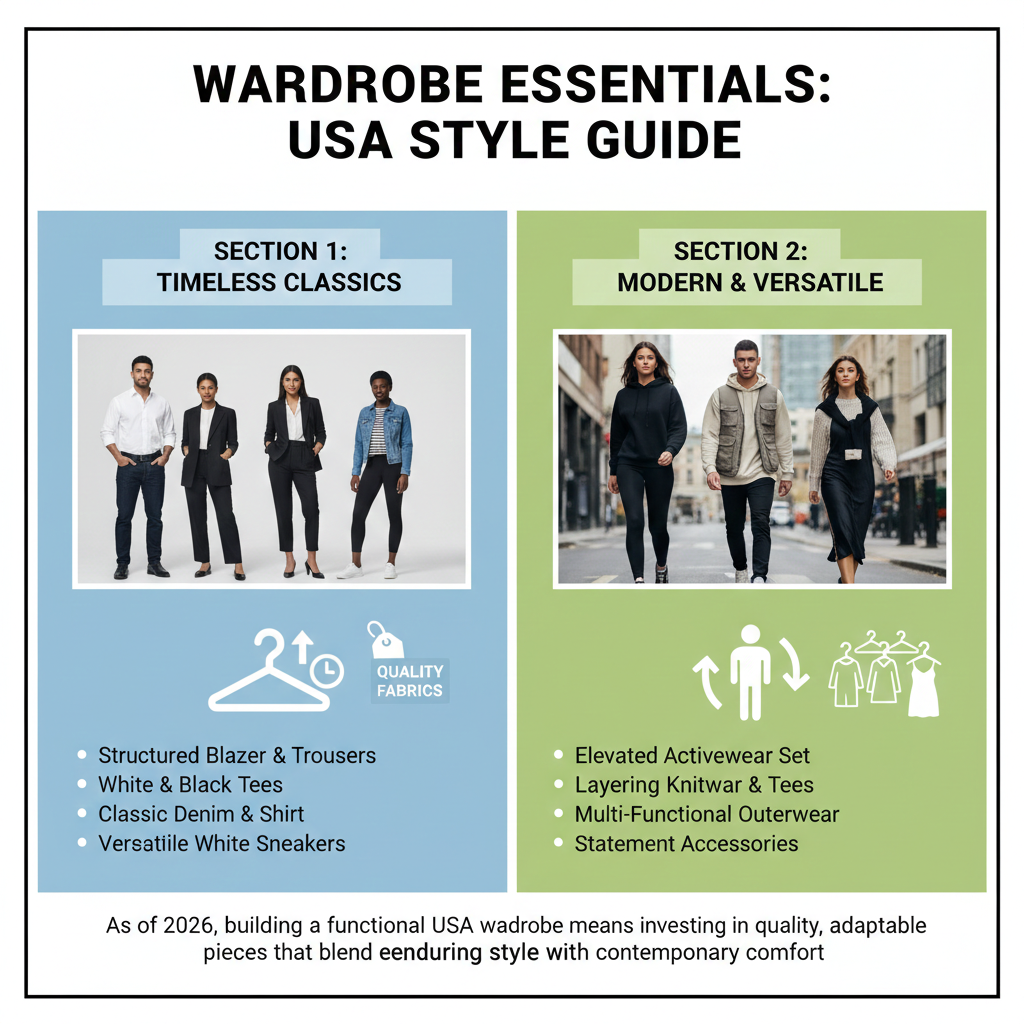
Have you ever opened a closet full of clothes and felt like you had absolutely nothing to wear? It is a common frustration that spans generations and geography. The problem usually isn’t a lack of clothing but a lack of connected clothing. When your closet is packed with trendy patterns, one-off statement pieces, or items that only work for very specific occasions, getting dressed becomes a chore.
The solution lies in building a foundation of wardrobe essentials. These are the workhorses of your closet—the items that mix and match effortlessly, fit you perfectly, and survive passing fads. Whether you are a college student in Boston, a remote worker in Austin, or a retiree in Florida, the core principles of a functional wardrobe remain the same.
This guide will walk you through the must-have pieces every American needs in their rotation. By focusing on versatility and quality, you can save money, reduce decision fatigue, and look put-together with minimal effort.
What Are Wardrobe Essentials?
Wardrobe essentials are the foundational items that anchor your personal style. They are typically neutral in color, simple in design, and high in functionality. Think of them as the canvas upon which you paint the rest of your outfit. Without this canvas, the “paint”—your colorful accessories or trendy statement pieces—has nowhere to land.
Why basics matter more than trends
Fashion trends move at breakneck speed. One month it is neon colors; the next, it is oversized blazers. Chasing these trends is exhausting and expensive. Essentials, on the other hand, are timeless. A crisp white button-down shirt looked good in 1950, it looks good today, and it will likely look good in 2050. Prioritizing basics means you are investing in items that will serve you for years rather than weeks.
Why Wardrobe Essentials Are Important
Building a wardrobe around essentials isn’t just about fashion; it is about practicality and economics.
Cost efficiency and versatility
When you buy a trendy item that only matches one pair of pants, the “cost per wear” of that item is high. Essentials lower that cost significantly because they go with almost everything. A high-quality pair of dark denim jeans can be worn with a t-shirt to a barbecue, a blazer to a casual meeting, or a sweater for a movie night. You get more mileage out of fewer items, which keeps your wallet happy.
Easier daily outfit choices
Decision fatigue is real. By the time you’ve finished your morning coffee, you have already made dozens of choices. Deciding what to wear shouldn’t add to that stress. When your closet is stocked with compatible essentials, you can reach in blindly and pull out a top and bottom that likely work well together. This streamlines your morning routine and lets you save your mental energy for more important tasks.
Core Wardrobe Essentials for Everyone
Regardless of your gender, age, or location, these core items belong in every closet. They are the universal building blocks of American style.
Well-Fitting T-Shirts
The humble t-shirt is the ultimate staple. You should own at least three: one white, one black, and one gray or navy.
Neutral colors and quality fabrics: Stick to solids. Large graphics or logos limit where you can wear the shirt. Focus on fabric quality—look for 100% cotton or a cotton blend that feels soft but substantial. The fit should be comfortable; not skin-tight, but not billowing. It should skim your body.
Classic Jeans
Denim is the unofficial fabric of the USA. A great pair of jeans is non-negotiable.
Straight or slim fits: While wide-leg or skinny styles drift in and out of fashion, a straight-leg or slim-straight cut is universally flattering and timeless.
Everyday versatility: Opt for a medium-to-dark wash with no distressing (no holes or fraying). Darker washes tend to look dressier and can transition easily from day to night.
Casual and Dress Shirts
You need options that bridge the gap between a t-shirt and formal wear.
Button-down staples: For men, this is often an Oxford cloth button-down (OCBD). For women, it might be a crisp poplin shirt or a softer silk blend. White and light blue are the safest and most versatile colors.
Work and casual use: These shirts look just as good tucked into slacks as they do worn open over a t-shirt with jeans. They add a layer of polish without being overly stuffy.
Comfortable Everyday Shoes
If your feet hurt, your outfit doesn’t work.
Sneakers or flats: A clean, minimal white leather sneaker is a modern classic that pairs with everything from shorts to sundresses to chinos. Additionally, have a slip-on option—loafers, ballet flats, or boat shoes—that offers comfort without the athletic look of a running shoe.
Daily wear importance: Since you wear these more than any other item, do not skimp on support. Your daily shoes should be able to handle a mile-long walk without causing blisters.
Versatile Jacket or Outerwear
Layers add visual interest and functionality.
Denim, blazer, or lightweight coat: A denim jacket is a fantastic casual layer for spring and fall. For a sharper look, a navy blazer or a neutral trench coat works wonders. The goal is to have one piece of outerwear that isn’t a heavy winter parka but provides warmth on a breezy day.
Neutral Sweater or Layering Piece
Even in warmer climates, air conditioning can be freezing.
Year-round layering: A crewneck sweater in gray, navy, or beige is indispensable. Merino wool or cotton blends are great choices because they regulate temperature well. You can wear it alone or layer it over your collared shirt.
Quality Undergarments
It is impossible to look good if your foundation is uncomfortable.
Comfort and durability: Worn-out elastic and ill-fitting cuts ruin the silhouette of your outer clothes. Invest in underwear and socks that stay in place and breathe. It may seem like a boring purchase, but it makes the biggest difference in your daily comfort.
Wardrobe Essentials for Workwear
While casual dress codes are becoming more common across the U.S., you still need items appropriate for professional settings, interviews, or important meetings.
Professional basics
Even if you don’t wear a suit daily, owning one well-fitting suit (or a blazer and matching trousers/skirt) is smart. Navy or charcoal gray are the most professional colors. These pieces can be broken up; wear the trousers with a sweater, or the blazer with jeans.
Business-casual staples
Chinos (khaki pants) are the cornerstone of American business casual. They are more formal than jeans but less rigid than suit trousers. Pair them with a polo shirt or a fine-gauge knit sweater for a look that works in 90% of office environments. A knee-length skirt or a simple sheath dress fulfills the same role for women.
Seasonal Wardrobe Essentials
The U.S. has diverse climates, so your essentials need to adapt to the thermometer.
Summer essentials
When the heat hits, fabrics matter. Linen and lightweight cotton are your friends.
- Shorts: A tailored pair of shorts (hitting just above the knee) in khaki or navy.
- Breathable Shirts: Polos or light-colored linen button-downs reflect the sun and keep air moving.
- Sandals: A supportive pair of leather sandals or slides for beach days and weekends.
Winter essentials
Functionality takes precedence here.
- The Heavy Coat: A wool peacoat or a high-quality puffer jacket is necessary for those in the North and Midwest.
- Boots: Waterproof leather boots protect your feet from slush and snow while looking stylish.
- Accessories: A neutral scarf and leather gloves add warmth without ruining your outfit’s aesthetic.
Accessories That Complete a Wardrobe
Accessories are the “punctuation” of your outfit. A minimalist approach is usually best.
Belt, watch, and bag: Match your leathers. If you are wearing brown shoes, wear a brown belt. A simple analog watch with a leather or metal strap looks professional and grown-up. Finally, a quality bag—whether a leather tote, a structured backpack, or a briefcase—keeps your daily carry organized and secure.
Building a Wardrobe on a Budget
Revamping your closet doesn’t require a winning lottery ticket.
Prioritizing essentials first
Do not buy everything at once. Start with the items you lack most. If your jeans are falling apart, replace those first. If you have plenty of t-shirts, focus on getting a good jacket.
Quality over quantity
It is better to own two amazing shirts than ten mediocre ones. Cheap fabric pills, shrinks, and loses its shape after a few washes. Buying better quality means you buy less often. Check thrift stores and consignment shops; you can often find high-end brands for a fraction of the retail price.
Wardrobe Essentials by Lifestyle
Your daily activities dictate your needs.
Office professionals
Your focus should be on trousers, blazers, and button-down shirts. Ensure your shoes are polished and comfortable enough for a commute. You might need fewer t-shirts and more blouses or dress shirts.
Remote workers
Comfort is key, but you still need to look presentable on Zoom. focus on “keyboard-up” dressing. Invest in high-quality tops—sweaters, polos, and soft shirts. Your bottoms can be softer (like elevated joggers or stretch chinos), but avoid staying in pajamas all day to maintain a productive mindset.
Students and travelers
You need durability and washability. Jeans, t-shirts, hoodies, and sneakers are the uniform here. If you are traveling, look for wrinkle-resistant fabrics and layers that can be easily removed in transit. A large, durable backpack is arguably your most important accessory.
How to Maintain a Timeless Wardrobe
Buying clothes is only half the battle; caring for them ensures they last.
Care and storage tips
- Wash less: Denim does not need to be washed after every wear.
- Read the label: If it says “dry clean only,” believe it.
- Fold knits: Hanging sweaters stretches out the shoulders. Fold them on a shelf.
- Use better hangers: Swap wire hangers for wood or velvet ones to maintain the shape of your shirts and jackets.
When to replace essentials
Essentials are durable, but they aren’t immortal. Replace white t-shirts when they turn yellow or gray. Replace sweaters when they pill beyond repair. Replace shoes when the soles are worn down or the heel support collapses. Wearing tattered basics makes even an expensive outfit look sloppy.
Common Wardrobe Mistakes to Avoid
Even with the best intentions, it is easy to veer off course.
Trend overload
It is okay to like trends, but don’t let them overrun your closet. A good rule of thumb is the 80/20 rule: 80% of your wardrobe should be classic essentials, and 20% can be fun, trendy items. This keeps your style current without sacrificing function.
Poor fit choices
The most expensive suit in the world looks terrible if it doesn’t fit, while a cheap t-shirt looks amazing if the fit is right. Do not obsess over the size on the tag. Buy what fits your widest part and have a tailor adjust the rest. A $15 alteration can make a $30 shirt look like it cost $100.
Start Building Your Foundation Today
Creating a functional wardrobe is a journey, not a sprint. It requires honest assessment of your lifestyle, a bit of discipline to avoid impulse buys, and a commitment to quality. But the reward is worth it. By stocking your closet with these American wardrobe essentials, you grant yourself the freedom of effortless style. You will spend less time stressing about what to wear and more time enjoying your life in clothes that make you feel confident and comfortable.
FAQs – Wardrobe Essentials
What are basic wardrobe essentials?
Basic wardrobe essentials are the versatile, timeless items that form the core of your closet. They typically include a white t-shirt, dark denim jeans, a button-down shirt, a neutral sweater, a blazer or jacket, and clean, comfortable shoes like white sneakers or boots.
How many clothes do you really need?
There is no magic number, but many stylists recommend a “capsule wardrobe” approach of about 30 to 40 items per season (excluding underwear and gym clothes). The goal is to have enough clothes to get you through laundry week without running out of options, but not so many that your closet is cluttered.
Are wardrobe essentials different by gender?
The specific cuts and styles differ, but the categories remain largely the same. Both men and women need quality denim, neutral tees, layering pieces, and professional options. A woman’s list might include a “Little Black Dress” and flats, while a man’s might include chinos and loafers, but the principle of versatility is identical.
How often should wardrobe basics be replaced?
This depends on how often you wear them and the quality of the item. T-shirts and socks may need replacing every 6 to 12 months. Jeans and sweaters can last several years. Outerwear and high-quality leather shoes can last a decade or more with proper care.
Can essentials still reflect personal style?
Absolutely. Essentials are the canvas, not the painting. You express your style through how you fit them (oversized vs. tailored), how you accessorize (bold jewelry vs. minimal watches), and the specific textures you choose (leather vs. denim). Essentials support your style; they don’t suppress it.