

Virtual Fashion and Digital Clothing: The Next Style Revolution

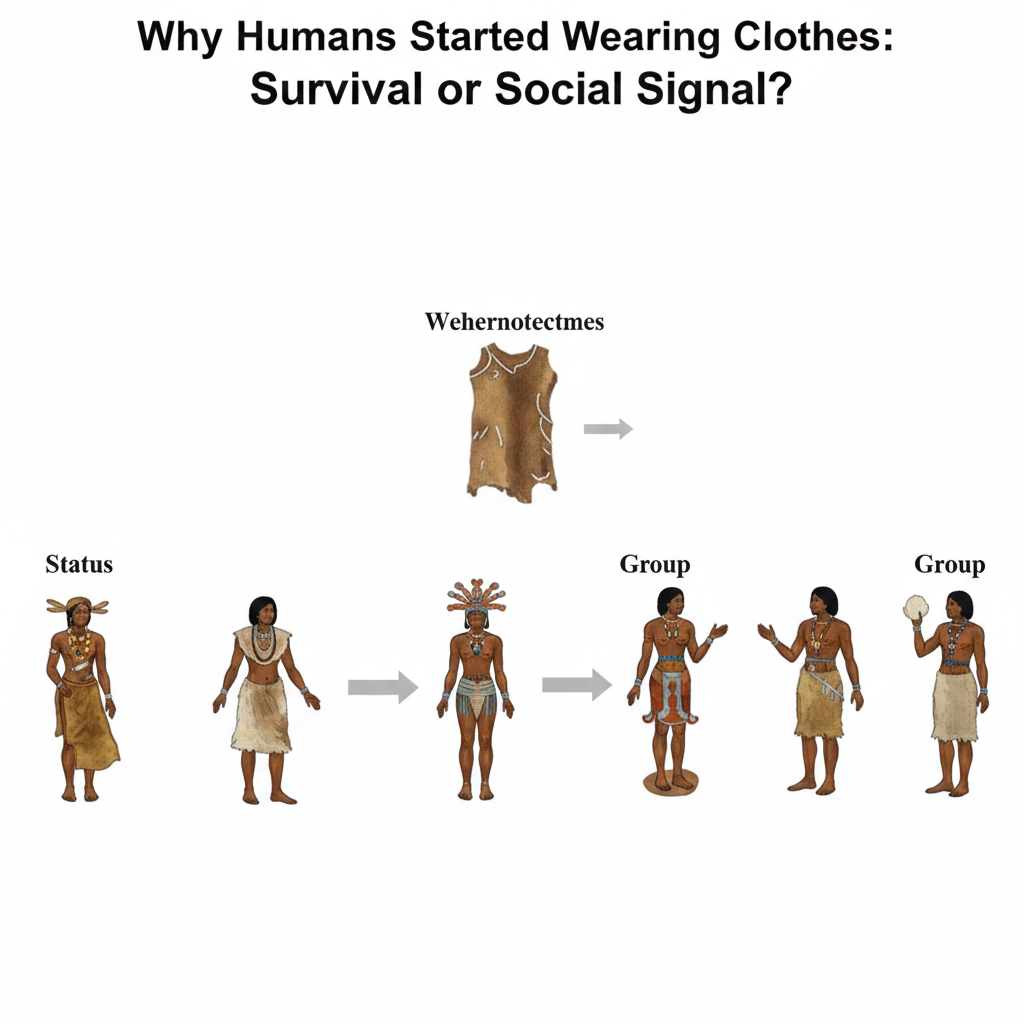
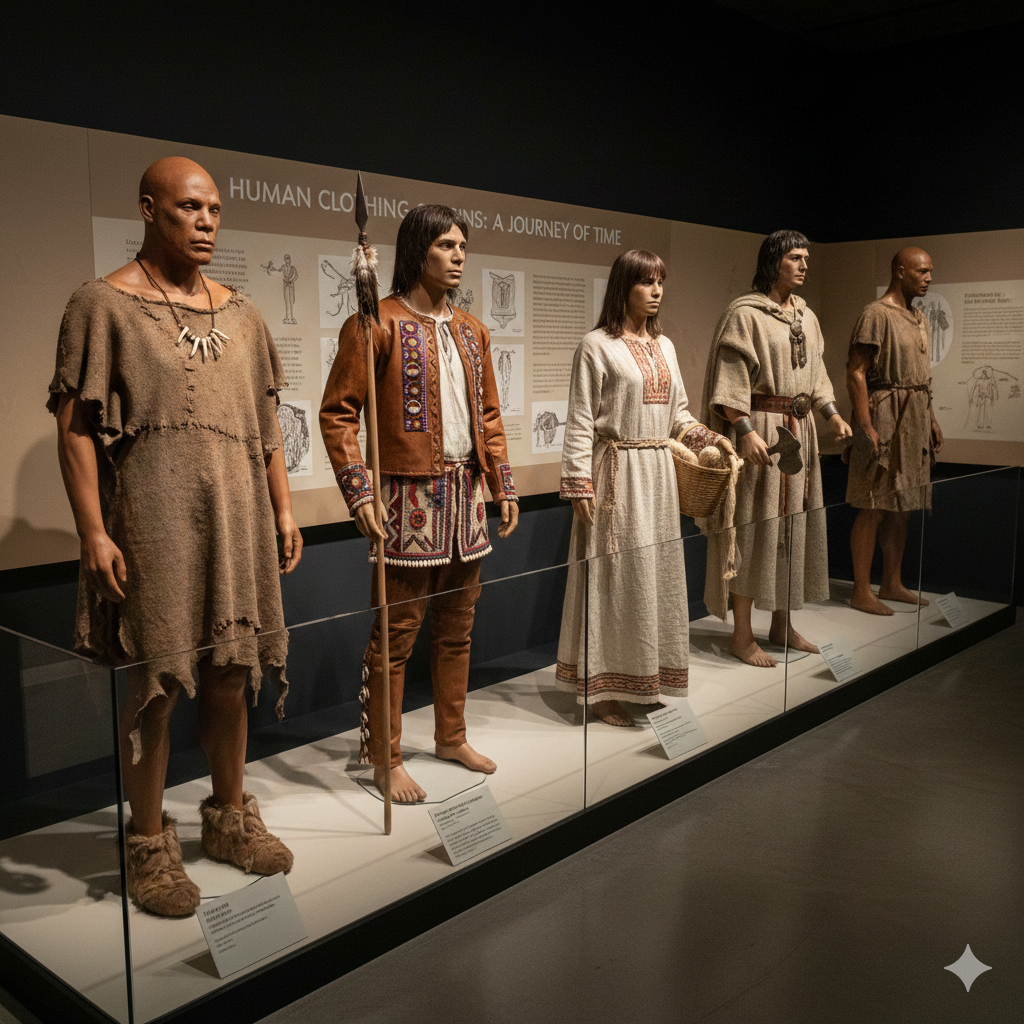
For thousands of years, clothing served clear purposes: protection from the elements, social signaling, and cultural identity. But what happens when fashion moves beyond fabric and thread? Digital clothing is rewriting the rules of style, transforming how we dress, express ourselves, and even think about sustainability.
Virtual garments exist entirely online. They can be worn by avatars in video games, tried on through augmented reality filters, or digitally layered onto photos for social media. Some pieces never touch a sewing machine, yet they’re bought, sold, and valued just like physical items. This shift isn’t just about novelty—it reflects broader changes in how humans interact with technology, identity, and the planet.
As the future of human clothing in a digital world continues to unfold, virtual fashion sits at the intersection of innovation and tradition. It challenges designers to rethink silhouettes, consumers to reconsider ownership, and brands to reimagine production. Meanwhile, smart clothing and wearable technology explained show how digital features are merging with physical garments, blurring the line between what’s real and what’s rendered.
This blog explores what virtual fashion is, how it works, and why it matters. We’ll trace its evolution from physical garments to digital expression, examine its impact on design and psychology, and consider its role in creating a more sustainable fashion industry.
What Is Virtual Fashion and How Does It Work?
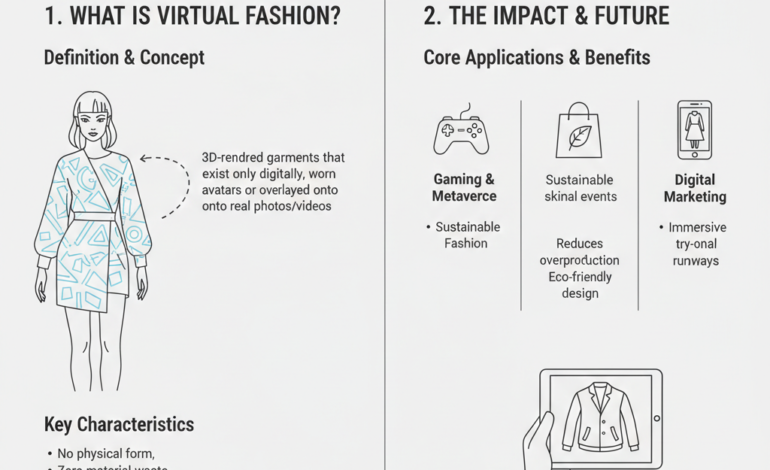
Virtual fashion refers to clothing designed exclusively for digital environments. Unlike traditional garments, these pieces don’t require physical materials. They’re created using 3D modeling software, rendered with textures and colors, and worn by digital avatars or overlaid onto real-world images.
Digital Garments and Avatars
Digital garments are most commonly seen in gaming and virtual worlds. Players customize avatars with outfits that range from realistic streetwear to fantastical costumes. Platforms like Fortnite, Roblox, and The Sims have turned avatar fashion into a billion-dollar market. Players purchase skins, accessories, and full outfits to personalize their digital personas.
These virtual wardrobes allow for experimentation without physical limits. Want to wear a glowing cyberpunk jacket or a Victorian ball gown while exploring a sci-fi landscape? Digital fashion makes it possible. This freedom of expression taps into deeper themes around what clothing says about identity in modern society—even when that identity exists only online.
Beyond gaming, digital fashion houses like The Fabricant and DressX create haute couture pieces meant for social media. Customers purchase digital garments, submit a photo, and receive an edited image of themselves wearing the item. It’s fashion as visual content rather than physical possession.
Augmented Reality and Online Style
Augmented reality (AR) takes virtual fashion a step further by blending digital garments with the real world. Apps and social media filters let users “try on” clothes virtually, seeing how different styles look without visiting a store or ordering a sample.
Brands like Gucci and Balenciaga have experimented with AR try-ons and virtual collections. Snapchat and Instagram filters enable users to overlay outfits onto their bodies in real time, making fashion more interactive and accessible. This technology reduces return rates for online retailers and lets consumers explore styles they might not have considered.
AR also democratizes fashion. Geographic location, body size, and budget become less restrictive when clothing exists digitally. Users can experiment with luxury brands or avant-garde designs without financial commitment. This accessibility reflects how clothing reflects culture and social identity in an increasingly connected world.
Evolution from Physical Garments to Digital Expression
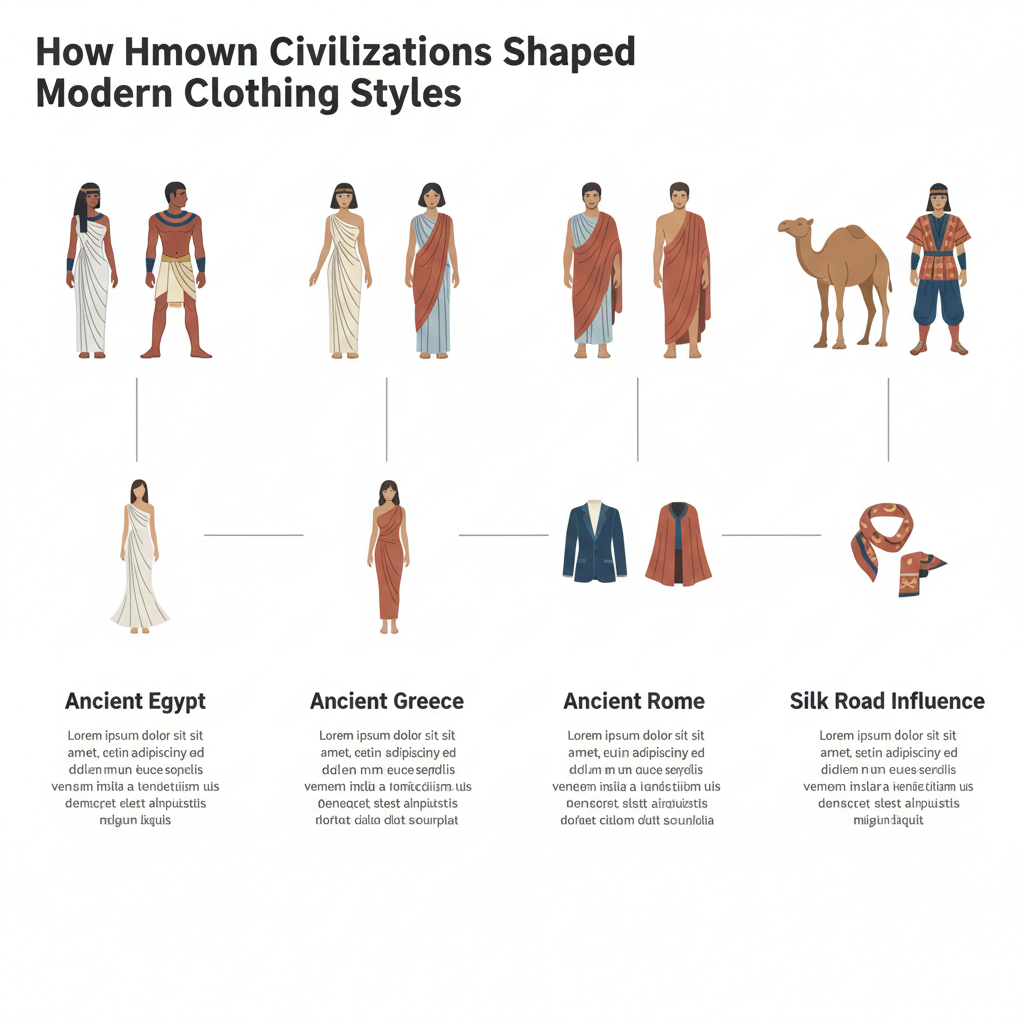
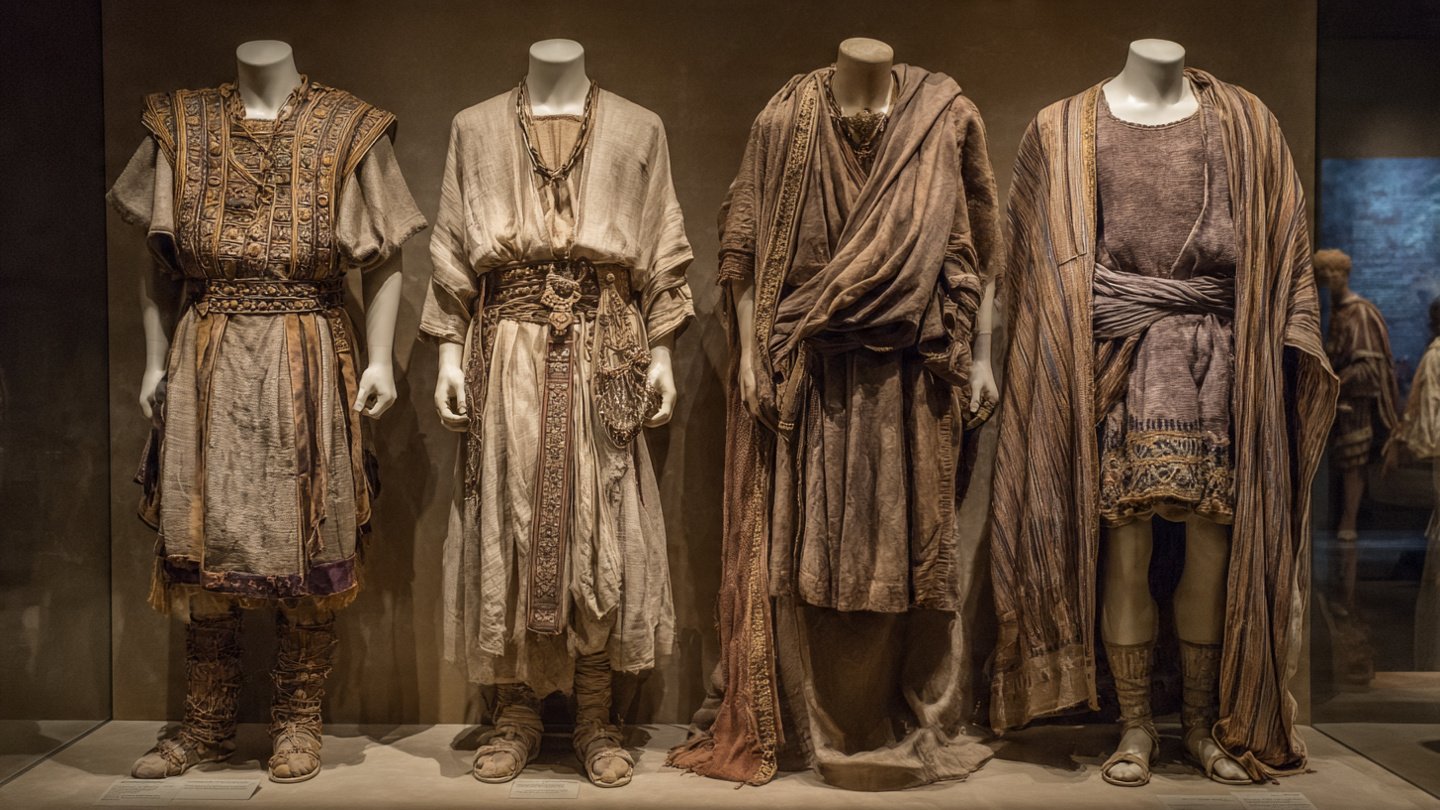
Fashion has always evolved in response to cultural, technological, and economic shifts. From hand-stitched tunics to mass-produced fast fashion, each era brought new materials, techniques, and philosophies. Virtual fashion continues this trajectory, adapting clothing to the digital age.
Historically, major historical events that changed clothing forever included the Industrial Revolution, which introduced mechanized production, and World War II, which brought rationing and utilitarian design. These moments redefined what clothing meant and how it was made. Virtual fashion represents another turning point—one driven by the internet, gaming, and social media.
The rise of online spaces created demand for digital self-expression. As people spend more time in virtual environments, the desire to curate and personalize digital identities grows. Clothing, a longstanding tool for signaling personality and status, naturally extended into these spaces.
Fast fashion also played a role in virtual fashion’s appeal. The environmental and ethical costs of rapid production cycles have led consumers to seek alternatives. Digital garments offer a way to satisfy the desire for novelty and variety without contributing to waste. Understanding how fast fashion changed modern human clothing helps explain why virtual fashion resonates with environmentally conscious consumers.
Digital fashion doesn’t replace physical clothing—it complements it. Many people still value tactile experiences, craftsmanship, and the practicality of real garments. But virtual fashion expands the wardrobe beyond the closet, offering new ways to experiment, express, and engage.
Virtual Silhouettes and Future Design Concepts
Traditional fashion design relies on physical constraints: fabric drape, body movement, gravity. Digital fashion removes these limitations, allowing designers to explore silhouettes and structures impossible in the physical world.
What is a clothing silhouette? It’s the overall shape and outline of a garment on the body. Classic silhouettes include A-line, hourglass, and column shapes, each defined by how fabric interacts with the human form. Digital fashion reimagines these conventions.
In virtual spaces, garments can defy gravity, change color in response to movement, or morph into entirely new shapes. A dress might flow like water, a jacket could shimmer with animated textures, or pants might feature impossible geometric patterns. Designers experiment with volume, proportion, and material in ways physical production couldn’t support.
This creative freedom doesn’t mean abandoning design principles. How proportion and balance shape clothing silhouettes still matters, even digitally. Designers consider visual weight, symmetry, and how elements relate to the avatar’s body. The difference is that digital tools expand what’s achievable.
Virtual fashion also accelerates the design process. Prototyping in 3D software is faster and cheaper than creating physical samples. Designers can test variations, receive feedback, and iterate without producing waste. This efficiency benefits both independent creators and established brands.
As virtual fashion matures, expect to see more crossover between digital and physical design. Some brands create digital-first collections, then produce limited physical versions. Others use virtual prototypes to refine designs before committing to production. This hybrid approach could redefine how fashion is conceptualized and brought to market.
Psychological Impact of Digital Fashion on Identity
Clothing influences how we see ourselves and how others perceive us. It’s a tool for self-expression, confidence, and belonging. These effects extend into digital spaces, where virtual fashion plays a similar role.
Research shows that how clothing affects confidence and human psychology applies to avatar customization as well. Studies on online gaming reveal that players who personalize their avatars feel more engaged and invested in virtual experiences. Choosing an outfit for an avatar can boost confidence, just as selecting the right outfit does in real life.
Digital fashion also offers a low-risk environment for experimentation. People can try bold styles, unexpected colors, or unconventional combinations without social judgment. This freedom encourages exploration and helps individuals discover aspects of their identity they might not express physically.
For marginalized communities, virtual fashion provides a space to embody identities that may not feel safe or accessible offline. Transgender individuals, for example, can experiment with gender expression through avatar clothing. People with disabilities can explore fashion without physical limitations. These opportunities highlight why humans use clothing to express emotion and mood—even when that expression happens digitally.
However, virtual fashion isn’t without psychological complexities. The pressure to maintain a curated online persona can be stressful. Just as social media creates unrealistic beauty standards, digital fashion can contribute to comparison and insecurity. Balancing self-expression with authenticity remains a challenge in both physical and virtual realms.
Sustainability and the Role of Digital Fashion in Reducing Waste
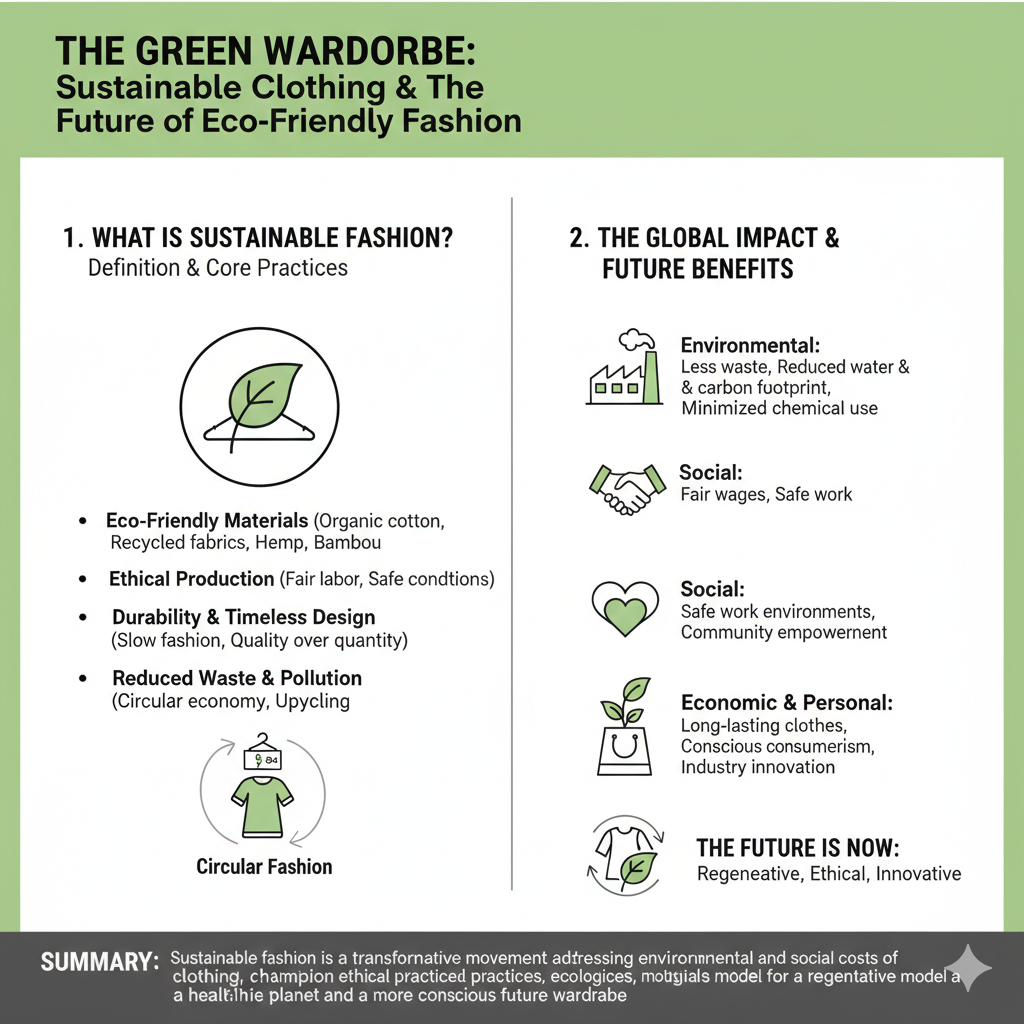
Fashion is one of the world’s most polluting industries. Textile production consumes vast amounts of water, energy, and raw materials. Fast fashion’s emphasis on cheap, disposable clothing exacerbates the problem, contributing to overflowing landfills and environmental degradation.
Virtual fashion offers a potential solution. Digital garments require no physical materials, produce no waste, and leave no carbon footprint from manufacturing or shipping. For consumers seeking novelty without environmental guilt, virtual fashion provides an appealing alternative.
This shift aligns with minimalist philosophies that emphasize intentional consumption. How minimalism influenced modern clothing styles highlights a growing preference for quality over quantity, timeless pieces over fleeting trends. Virtual fashion takes this further by removing material consumption entirely while still satisfying the desire for variety.
Brands are beginning to recognize digital fashion’s sustainability potential. Some offer virtual collections alongside physical lines, allowing customers to purchase digital versions of garments for social media or gaming. Others create digital-only pieces as a way to experiment with bold designs without committing to production.
Critics argue that virtual fashion alone won’t solve the industry’s environmental crisis. Physical clothing remains essential for daily life, and the infrastructure supporting digital fashion—servers, devices, energy—has its own environmental costs. Still, as part of a broader strategy that includes ethical production, circular fashion, and reduced consumption, virtual fashion can play a meaningful role.
Looking ahead, the future of human clothing in a digital world may involve a hybrid model. Consumers might own fewer physical pieces, reserving them for practical needs and special occasions, while maintaining extensive digital wardrobes for online expression. This balance could reduce waste while preserving fashion’s creative and expressive potential.
The Digital Era of Human Clothing Evolution
Virtual fashion marks another chapter in humanity’s long relationship with clothing. From why humans started wearing clothes—protection, modesty, identity—to today’s digital garments, fashion has always adapted to meet evolving needs.
The history of clothing evolution shows that innovation often sparks resistance before gaining acceptance. Machine-made textiles, synthetic fabrics, and even ready-to-wear clothing all faced skepticism. Virtual fashion is no different. Some dismiss it as frivolous or impractical, while others see it as a natural extension of fashion into the digital age.
What’s clear is that virtual fashion reflects broader cultural shifts. As humans spend more time online, digital identity becomes increasingly important. Clothing, a fundamental aspect of self-expression, naturally follows. Virtual garments allow people to signal personality, creativity, and values in spaces where physical clothing doesn’t exist.
Digital fashion also democratizes style. Geographic barriers, financial constraints, and physical limitations matter less when clothing is virtual. Anyone with internet access can experiment with high fashion, avant-garde design, or culturally significant garments that might otherwise be inaccessible.
The future of fashion likely includes both physical and digital dimensions. Physical garments will continue to serve practical, tactile, and cultural roles. Digital fashion will expand creative possibilities, reduce environmental impact, and offer new ways to express identity. Together, they represent the next phase of human clothing evolution—one that honors tradition while embracing innovation.