


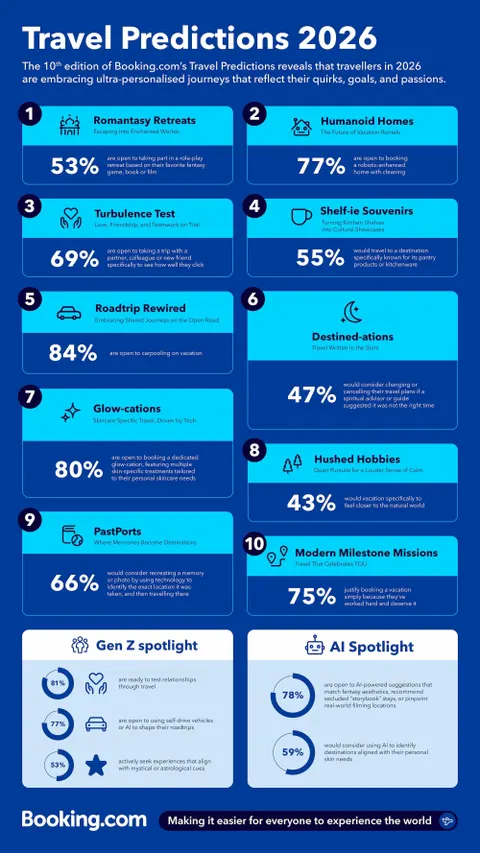
The way Americans explore the world has fundamentally shifted. It wasn’t long ago that travel was largely about checking items off a bucket list or snapping the perfect photo for social media. But as we move further into the latter half of the decade, the priorities of the modern traveler have evolved.
We are seeing a move away from frantic sightseeing and toward deeper, more meaningful connection. Post-pandemic aftershocks, economic fluctuations, and a renewed focus on mental health have all converged to rewrite the rulebook on American tourism. Travelers aren’t just asking “Where should I go?” but rather “Why am I going?” and “How will this trip make me feel?”
From the rise of “workcations” that blur the line between office and oasis to a serious commitment to sustainability, the travel trends shaping 2026 in the USA reflect a more conscious, flexible, and value-driven approach to adventure. This guide explores exactly how these shifts are playing out and what they mean for your next journey.
The Current State of Travel in the USA
To understand where we are going, we have to look at where we are. The landscape of American travel is currently defined by a tug-of-war between the desire for exploration and practical constraints. While the appetite for travel remains voracious, the approach has become far more calculated.
Domestic travel continues to hold its ground against international excursions. While trips to Europe or Asia are rebounding, many Americans are rediscovering the vastness of their own backyard. This preference is driven partly by ease—no passport required, no currency exchange—and partly by budget. Inflationary pressures in recent years have made travelers more price-sensitive, leading to a rise in “value-focused” decision-making.
However, “budget awareness” doesn’t necessarily mean “cheap.” Travelers are willing to spend, but they demand high value in return. They are trading five-star hotels for unique, experience-rich stays, or opting for shoulder-season trips to maximize their budget. Flexibility has become a non-negotiable currency; rigid booking policies are out, and adaptable plans are in.
Top Travel Trends Shaping 2026
The travel trends shaping 2026 USA are not fleeting fads; they are structural changes in consumer behavior. The overarching theme is intention. Travelers are no longer passive consumers of destinations; they are active participants in their journeys.
Purpose-Driven Travel
Vacations are no longer just an escape from something; they are a journey toward something. Whether it’s reconnecting with distant family, learning a new skill (like culinary workshops or language immersion), or volunteering, trips now have a clear “why.”
Flexible Itineraries
The days of the minute-by-minute itinerary are fading. Travelers are embracing “slow travel,” leaving days open for spontaneity. This reduces the stress of planning and allows for genuine discovery.
Value-Focused Planning
As mentioned, value is king. This goes beyond the sticker price. It involves evaluating what is included. Is breakfast provided? Is there free Wi-Fi? Does the location save on transportation costs? Travelers are becoming forensic accountants when planning their trips to ensure every dollar works hard.
Sustainable & Responsible Travel
Sustainability has moved from a niche concern to a mainstream expectation. Sustainable travel USA is no longer just about reusing towels in a hotel room; it encompasses a holistic view of a traveler’s footprint.
Eco-Friendly Accommodations
Travelers are actively seeking certifications like LEED or Green Key when booking hotels. There is a growing preference for lodgings that use renewable energy, minimize plastic waste, and source food locally. Glamping and eco-lodges are seeing a surge in popularity as people seek closer contact with nature without the environmental guilt.
Low-Impact Tourism
The concept of “leave no trace” has expanded from hiking trails to cities. Tourists are more conscious of overcrowding and are opting for “second-city” travel—visiting lesser-known destinations to relieve pressure on major hotspots. For example, visiting Savannah instead of Charleston, or exploring Boise instead of Denver.
Supporting Local Communities
The ethical dimension of travel involves money staying in the local economy. Travelers are increasingly bypassing global chains in favor of family-owned restaurants, local tour guides, and artisan shops. This ensures that tourism dollars benefit the people who call the destination home.
Rise of Remote Work & “Workcation” Travel
The traditional two-week vacation is being supplemented, and in some cases replaced, by the “workcation.” With remote work solidified as a permanent fixture for millions of Americans, the distinction between living and traveling is blurring.
Digital Nomad-Friendly Destinations
Cities and towns across the USA are competing to attract remote workers. Locations with reliable high-speed internet, coworking spaces, and vibrant coffee shop cultures are winning. Places like Tulsa, Oklahoma, and Burlington, Vermont, have tailored their tourism marketing to appeal specifically to this demographic.
Extended Stays & Blended Trips
Why fly somewhere for a weekend when you can stay for a month? Travelers are booking longer stays, often renting apartments or homes rather than hotel rooms. This allows them to work during the day and explore like a local in the evenings and on weekends. “Bleisure” travel—tacking vacation days onto the end of a business trip—has evolved into fully blended trips where work and leisure coexist daily.
Work-Life Balance on the Road
The challenge for 2026 is maintaining boundaries. While working from a beach house sounds idyllic, travelers are learning they need discipline to ensure they actually enjoy the destination. This has led to a rise in accommodations that offer dedicated, ergonomic workspaces separate from the living areas.
Domestic Travel & Local Exploration
The “Great American Road Trip” is undergoing a renaissance. Domestic travel trends USA indicate a shift toward regional exploration. It is less about cross-country hauls and more about discovering hidden gems within a few hundred miles of home.
Road Trips & Regional Travel
The flexibility of car travel remains unmatched. It allows for spontaneous detours and eliminates the stress of airport security. Electric Vehicle (EV) infrastructure has improved significantly, making EV road trips a viable and popular option for eco-conscious adventurers.
National Parks & Small Towns
While Yellowstone and Yosemite remain popular, travelers are branching out to lesser-known state parks and national monuments to avoid crowds. Small towns are having a moment, offering the charm, affordability, and relaxed pace that major metros often lack.
Short, Frequent Getaways
Instead of saving up for one massive annual trip, many Americans are opting for “micro-cations.” These are shorter, more frequent trips—three or four days at a time—spread throughout the year. This strategy helps prevent burnout and keeps the excitement of travel alive year-round.
Budget-Conscious & Value Travel
Affordability is a major driver of behavior. Affordable travel trends USA show that people aren’t stopping travel; they are just getting smarter about it.
Off-Season Travel
Shoulder season (the period between peak and off-peak) is the new peak season for smart travelers. Visiting Europe in October or Florida in September offers milder weather, fewer crowds, and significantly lower prices.
Flexible Booking & Deal Hunting
Travelers are using technology to track prices. Apps that predict flight price drops or alert users to mistake fares are essential tools. Furthermore, people are booking refundable rates whenever possible to protect their investment against unforeseen changes.
Prioritizing Experiences Over Luxury
The prestige of a five-star hotel lobby matters less than the memory of a unique sunset kayak tour. Budgets are being reallocated from accommodation to activities. Travelers are happy to stay in a budget boutique hotel if it means they can afford a guided food tour or a bucket-list excursion.
Technology Transforming Travel Planning
The role of technology has shifted from simple booking engines to intelligent travel companions. Travel technology trends USA highlight how AI and mobile-first strategies are removing friction from the journey.
AI-Powered Trip Planning
Generative AI has revolutionized the research phase. Travelers can now ask AI tools to “Plan a 5-day itinerary for a family of four in San Diego with a budget of $2000, focusing on outdoor activities,” and receive a detailed plan in seconds. This saves hours of research and uncovers options that might have been missed.
Contactless Travel Experiences
From mobile check-ins at hotels to biometric boarding at airports, the physical touchpoints of travel are disappearing. This not only speeds up processes but also aligns with a continued preference for hygiene and personal space.
Mobile-First Bookings & Apps
The entire travel lifecycle—from inspiration to booking to reviewing—happens on a smartphone. Integrated apps that hold boarding passes, hotel keys, and itinerary details are now the standard expectation for travelers.
Wellness & Experience-Focused Travel
Wellness is no longer just about spas; it’s about holistic well-being. Wellness travel trends USA suggest that mental and physical health are now central to itinerary planning.
Mental Health & Relaxation Trips
“Sleep tourism” is a real and growing trend. Hotels are offering sleep-optimized rooms with soundproofing, specialized mattresses, and meditation apps. The goal is to return from vacation feeling rested, not exhausted.
Active and Outdoor Travel
Hiking, biking, and kayaking trips are surging. Americans are seeking active engagement with nature. This combines physical fitness with the mental benefits of being outdoors, offering a dual reward.
Cultural Immersion Experiences
Surface-level tourism is out. Travelers want to understand the “soul” of a place. This means cooking classes with local chefs, historical tours led by residents, and attending local festivals rather than just visiting tourist traps.
How Travelers Can Adapt to 2026 Travel Trends
Navigating this new landscape requires a new set of strategies. Here is how to plan travel in 2026 USA effectively:
Smart Budgeting Tips
Set up price alerts for flights months in advance. Consider credit cards that offer travel rewards and insurance. Look for “city passes” that bundle attraction tickets at a discount.
Flexible Planning Strategies
Book the big things (flights, main accommodation) but leave the days open. Use cancellation policies to your advantage—if you see a better price later, rebook and save.
Choosing Meaningful Destinations
Don’t go somewhere just because it’s trending on Instagram. Choose destinations that align with your personal interests, whether that’s history, food, nature, or art. The most rewarding trips are the ones that resonate with you personally.
Frequently Asked Questions (FAQ)
Q1. What are the biggest travel trends shaping 2026 in the USA?
The biggest trends include a shift toward purpose-driven and sustainable travel, the integration of remote work into trips (workcations), and a heavy reliance on AI for value-focused planning.
Q2. Is domestic travel still more popular than international travel?
Yes, domestic travel remains a top choice due to cost-effectiveness, convenience, and a renewed interest in regional exploration, though international travel is steadily recovering.
Q3. How is sustainability influencing travel decisions?
Travelers are increasingly choosing eco-friendly accommodations, reducing waste, and visiting less crowded destinations to lower their environmental impact.
Q4. What is workcation travel and why is it growing?
Workcation travel involves combining remote work with leisure travel. It is growing because flexible work policies allow employees to extend their trips without using vacation days.
Q5. Are Americans traveling more on a budget in 2026?
Americans are traveling with a focus on value. They are not necessarily spending less total money, but they are prioritizing spending on experiences and seeking deals on flights and accommodations to maximize their budget.
Q6. How is technology changing travel planning?
AI is personalizing itinerary creation, making it faster and more tailored. Mobile apps are centralizing bookings, and contactless technology is streamlining the airport and hotel experience.
Q7. What types of travel experiences are most popular now?
Wellness retreats, outdoor adventure trips, and culturally immersive experiences (like food tours or local workshops) are currently the most popular.
Final Thoughts: The Future of Travel in the USA
As we look toward 2026 and beyond, it is clear that the “how” of travel is changing just as much as the “where.” The future of tourism in the USA is smarter, greener, and more flexible. It prioritizes the human experience over the logistical hurdle.
For the traveler, this is good news. It means more options, better tools to find value, and a travel industry that is increasingly catering to personal well-being and ethical concerns. Whether you are planning a weekend road trip to a national park or a month-long remote work stay in a new city, embracing these trends will ensure your travels are not just enjoyable, but truly transformative.