


The transition to a clean energy future is often framed as a political or economic challenge. We talk about policy mandates, tax incentives, and the market forces driving coal and gas out of the mix. While these factors are critical, they are merely the vehicle. The engine driving this transformation is science.
Without physics, chemistry, and materials science, the ambitious climate goals set by the United States would remain abstract concepts. We cannot simply legislate a more efficient solar panel or regulate a battery into holding a charge longer. These capabilities must be invented, tested, and perfected in laboratories before they can power our homes.
As the United States accelerates its shift toward a carbon-neutral grid, the bridge between theoretical research and practical application becomes increasingly vital. This article explores the deep connection between scientific discovery and the booming renewable sector, examining how laboratory breakthroughs are translating into the utility-scale solutions powering the nation today.
What Is Renewable Energy Science?
When we discuss renewable energy science USA initiatives, we are looking at a multidisciplinary field dedicated to solving one problem: how to harvest, store, and distribute energy from natural sources more efficiently and cheaply than fossil fuels.
This field encompasses a vast ecosystem of innovation. It begins with fundamental research—understanding how light interacts with matter at the atomic level or how chemical bonds can store energy more densely. This fundamental science takes place in university labs and government facilities across the country.
However, discovery is only the first step. Renewable energy science also covers the rigorous engineering required to scale these ideas. It involves stress-testing wind turbine blades to withstand hurricane-force winds and developing software that can manage the complex flow of electricity on a modern grid. From the initial spark of an idea in a test tube to the deployment of a gigawatt-scale solar farm in the Mojave Desert, science provides the roadmap for viability.
Role of Science in Renewable Energy Growth
The role of science in renewable energy growth USA cannot be overstated. A few decades ago, renewable energy was an expensive alternative, suitable only for niche applications or off-grid living. Today, it is frequently the cheapest source of new electricity generation in the country. This shift did not happen by accident; it was engineered.
Science drives growth through three primary mechanisms:
- Efficiency Improvements: Research has allowed us to capture more energy from the same amount of sunlight and wind. Higher efficiency means fewer panels or turbines are needed to produce the same output, directly improving the economics of projects.
- Cost Reductions: Manufacturing innovations, often rooted in materials science, have plummeted the cost of production. As costs drop, adoption spreads from early adopters to the mass market.
- Reliability and Scalability: Scientific advancements have turned intermittent sources into reliable grid assets. We now have the technology to predict weather patterns with high accuracy and store excess energy for later use.
Scientific Advances in Solar Energy
Solar power creates the most visible example of how research translates to market dominance. Solar energy research USA has moved well beyond the bulky, inefficient silicon panels of the 1980s.
High-Efficiency Photovoltaic Cells
The core of solar research revolves around the photovoltaic (PV) cell. Scientists are constantly pushing against the theoretical limits of how much sunlight can be converted into electricity. While traditional silicon cells dominate the market, researchers are making strides with perovskites—a crystal structure that can be printed onto flexible surfaces and offers the potential for much higher efficiency rates at a lower manufacturing cost.
Thin-Film and Next-Gen Materials
Beyond rigid panels, science is enabling thin-film technologies that can be integrated into building materials, such as windows or roof shingles. This building-integrated photovoltaics (BIPV) approach turns passive structures into active power generators. Furthermore, research into bifacial panels, which catch reflected light from the ground as well as direct sunlight from above, is rapidly becoming the industry standard for utility-scale farms.
Solar Cost and Performance
The result of this rigorous inquiry is a dramatic drop in the Levelized Cost of Energy (LCOE) for solar. By refining the manufacturing processes and reducing the amount of expensive raw materials required for each cell, science has made solar competitive with, and often cheaper than, natural gas.
Wind Energy Technology and Research
Wind power has a long history in America, but wind energy technology USA is currently undergoing a renaissance driven by aerodynamics and advanced manufacturing.
Taller Turbines and Better Blades
The physics of wind energy are straightforward: higher altitudes offer stronger, more consistent winds. To reach them, engineers have designed massive turbines with towers taller than the Statue of Liberty. However, building big isn’t easy. It requires lightweight, ultra-strong materials that can withstand immense structural loads. Science has delivered carbon fiber composites and advanced aero-elastic designs that allow blades to flex without breaking, capturing energy even in lower wind speeds.
Offshore Wind Research
The next frontier is offshore. The U.S. coastline possesses immense energy potential, but the environment is harsh. Research is currently focused on floating wind turbines, which are tethered to the sea floor rather than driven into it. This technology opens up deep-water areas where winds are strongest, previously inaccessible to fixed-bottom turbines.
Predictive Modeling
Modern wind farms are data centers as much as they are power plants. Using complex fluid dynamics and atmospheric modeling, operators can predict wind shifts minutes or hours in advance, adjusting the angle of turbine blades to maximize capture and minimize wear and tear.
Energy Storage and Battery Innovation
Renewable energy has an intermittency problem: the sun doesn’t always shine, and the wind doesn’t always blow. Battery storage research USA is the key to solving this puzzle and smoothing out the supply curve.
Lithium-Ion Improvements
Lithium-ion batteries, the same type found in laptops and electric vehicles, currently do the heavy lifting for grid storage. Research in this area focuses on changing the cathode and anode materials to squeeze more energy into the same footprint while reducing the reliance on cobalt, a mineral with a problematic supply chain.
Solid-State and Next-Gen Batteries
The “holy grail” of battery science is the solid-state battery. By replacing the liquid electrolyte with a solid one, these batteries promise to be safer (no fire risk), charge faster, and hold much more energy. While still largely in the development phase, breakthroughs in US labs are bringing this technology closer to commercial viability.
Grid-Scale Solutions
For long-duration storage, scientists are looking beyond chemical batteries. Research into flow batteries (which store energy in liquid tanks) and thermal storage (heating rocks or molten salt) offers pathways to store energy for days or weeks, rather than just hours, ensuring reliability during prolonged weather events.
Science Behind Grid Integration & Reliability
Generating clean electricity is only half the battle; moving it to where it is needed is the other. Renewable energy grid integration USA is a massive computational and electrical engineering challenge.
The legacy US power grid was designed for a one-way flow of electricity: from a central power plant to the consumer. Renewables disrupt this by adding millions of distributed generation points, like rooftop solar. Science is modernizing the grid through “smart” technologies that use sensors and automated controls to balance the load in real-time.
Artificial intelligence plays a growing role here. AI algorithms analyze vast amounts of data from weather satellites and grid sensors to forecast demand spikes and generation dips. This allows utility operators to dispatch energy more efficiently, ensuring that the lights stay on without having to fire up dirty “peaker” plants.
Materials Science and Clean Energy
The hardware of the clean energy transition relies on stuff—specifically, metals, minerals, and polymers. Materials science renewable energy focuses on making this hardware more sustainable and durable.
Lightweight and Durable Materials
Solar panels bake in the sun for decades; wind blades spin through rain and hail. Materials scientists develop coatings and composites that resist corrosion and UV degradation, extending the lifespan of these assets. The longer a panel or turbine lasts, the lower its carbon footprint over time.
Recycling and Circular Economy
As the first generation of solar and wind installations nears retirement, the US faces a waste challenge. Science is stepping in to develop new chemical processes that make it easier to separate and recover valuable materials like silver, copper, and silicon from old panels. Creating a circular economy where old renewables become the raw materials for new ones is a priority for sustainable growth.
Role of Government & Academic Research
Private companies often struggle to fund high-risk, early-stage research. This is where renewable energy research funding USA becomes critical.
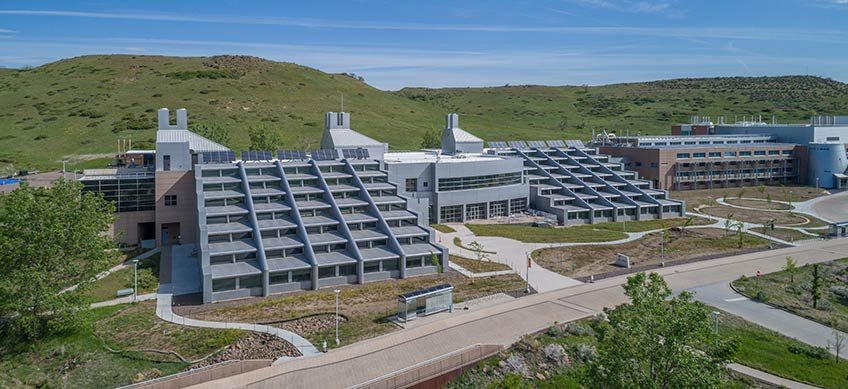
The ecosystem relies heavily on the Department of Energy’s National Laboratories, such as the National Renewable Energy Laboratory (NREL), and major research universities. These institutions perform the foundational science that is too risky for private capital. They prove that a concept works, de-risking the technology so that private companies can step in to commercialize it.
Public-private partnerships accelerate this transfer. By connecting academic brilliance with industrial manufacturing muscle, the US creates a pipeline that turns a doctoral thesis into a product that lowers utility bills for American families.
Challenges Science Is Still Solving
Despite immense progress, hurdles remain. Renewable energy challenges USA are now less about “can we do it?” and more about “how do we do it at scale?”
Energy storage remains the primary bottleneck. While we can store energy for hours, we still lack affordable technology to store renewable energy for entire seasons. Furthermore, the physical infrastructure of transmission is outdated. Moving wind energy from the plains of the Midwest to the cities on the coasts requires advanced high-voltage direct current (HVDC) lines, which present both engineering and materials challenges.
Finally, scalability brings cost barriers. As we install more renewables, the “low-hanging fruit” sites are taken. Science must help us develop technologies that work efficiently in less-than-ideal locations, such as lower-wind areas or cloudier regions.
Frequently Asked Questions (FAQ)
Q1. How does science support renewable energy growth in the USA?
Science drives growth by increasing the efficiency of technologies (getting more power from the same resources), creating new materials that lower manufacturing costs, and developing software to integrate these variable energy sources into the existing power grid reliably.
Q2. What scientific breakthroughs improved solar and wind energy?
For solar, the development of high-efficiency silicon cells and bifacial panels has been revolutionary. For wind, the use of carbon-fiber composites allowed for massive blade sizes that capture wind at higher altitudes, significantly boosting energy output.
Q3. Why is battery research critical for clean energy?
Batteries solve the intermittency issue. Since the sun and wind are not constant, batteries store excess production for use during the night or calm days. Research focuses on making these batteries cheaper, safer, and longer-lasting.
Q4. How does science make renewable energy more affordable?
Through materials science and manufacturing engineering, researchers find cheaper alternatives to expensive raw materials and streamline production processes. This reduces the Levelized Cost of Energy (LCOE), making renewables competitive with fossil fuels.
Q5. What role do universities and labs play in renewable energy?
They perform foundational research and early-stage testing. Institutions like NREL and university labs take on the high-risk scientific inquiry that private companies often avoid, providing the breakthroughs that later become commercial products.
Q6. Can renewable energy fully replace fossil fuels?
Scientifically, yes. However, it requires significant advancements in long-duration energy storage, grid infrastructure modernization, and the electrification of heavy industries (like steel and shipping) that currently rely on combustion.
Q7. What future scientific advances will impact clean energy?
Expect to see major impacts from solid-state batteries, floating offshore wind platforms, perovskite solar cells, and the use of AI to manage decentralized power grids autonomously.
Powering a Cleaner Tomorrow Through Innovation
The story of renewable energy in the United States is a story of scientific perseverance. It is easy to look at a solar panel and see a piece of glass and metal, but it is actually a crystallized artifact of decades of research, trial, and error.
As we look toward a net-zero future, innovation remains the backbone of renewables. The easy wins have largely been achieved; the next phase of growth requires solving harder problems regarding storage, transmission, and material sustainability. Continued investment in science is not just an academic exercise—it is the most practical strategy we have for securing a clean, affordable, and energy-independent future.