


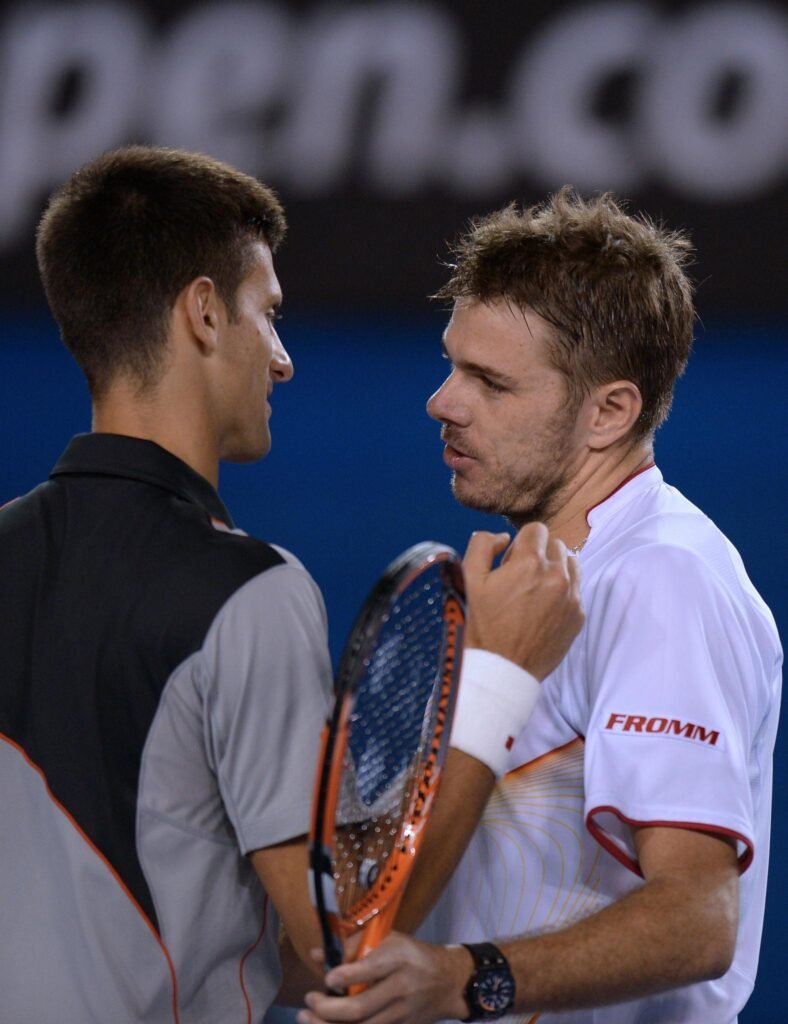
In the relentless world of professional tennis, time is the one opponent that remains undefeated. Yet, for nearly two decades, Novak Djokovic and Stan Wawrinka seemed to negotiate a truce with the years, extending their primes well beyond the traditional expiration date for elite athletes. But as the sun set over Melbourne Park in January 2026, the atmosphere felt different. It wasn’t just about another Grand Slam tournament; it was about witnessing the twilight of an era.
The 2026 Australian Open will likely be remembered not just for who lifted the Norman Brookes Challenge Cup, but for the poignant campaigns of two of the sport’s most enduring figures. Djokovic, the undisputed king of Melbourne, and Wawrinka, the man who famously solved the Djokovic puzzle on the biggest stages, arrived with heavy legs but full hearts. Their runs were less about dominance and more about defiance—a final, gritty stand against a field that has grown younger, faster, and hungrier.
For tennis fans, this tournament served as a stark reality check. The “Big Three” era has long been dissolving, but seeing Djokovic and Wawrinka battle through the early rounds in 2026 solidified the transition. This post dissects their performances, analyzes the tactical shifts forced by father time, and reflects on what their journeys in Melbourne mean for the future of men’s tennis.
Why the 2026 Australian Open Feels Like an Ending
There is a specific melancholy that hangs over a sporting event when the legends are no longer the overwhelming favorites. The 2026 Australian Open carried the weight of history in every match involving the veterans. We weren’t watching to see if they would win; we were watching to see how long they could last.
The narrative has shifted dramatically. Where once the draw would open up for Djokovic almost by default, 2026 presented a minefield of 20-somethings who grew up idolizing him but no longer feared him. The emotional resonance of the tournament was undeniable. Every serve, every backhand down the line felt like a precious commodity, a fleeting glimpse of greatness that we might not see on this court again.
The presence of Australian Open 2026 veterans like Djokovic and Wawrinka highlighted a massive generational divide. The locker room is now dominated by players who track their recovery on AI-driven apps and play a style of tennis that is explosively physical. In contrast, the veterans brought a classic, almost artisanal approach to the game, relying on court craft and muscle memory. This tournament felt like the final chapter because the gap between the legends’ will to win and their body’s ability to execute has finally, undeniably, closed.
Novak Djokovic at the 2026 Australian Open
Novak Djokovic entered Melbourne Park with the history of the venue woven into his DNA. No player has ever owned a court quite like Djokovic owns Rod Laver Arena. However, his 2026 campaign was a test of survival rather than a procession of dominance.
Match Results and Overall Performance
Djokovic’s path through the draw was arduous. Gone were the straight-set demolitions of the past. In the early rounds, he dropped sets to opponents he would have previously dismantled in under two hours. His resilience was on full display, but the aura of invincibility had faded. The Novak Djokovic 2026 Australian Open run was characterized by longer rallies, more unforced errors, and a reliance on his serve to bail him out of trouble—a stark departure from his relentless baseline suffocation of previous years.
Movement, Endurance, and Shot Selection
The most noticeable change was in his movement. The elastic defense that defined his career—the ability to slide on hard courts and turn defense into offense in a split second—was less explosive. He was still elite, but the recovery steps were a fraction slower. Consequently, his shot selection had to evolve. He sought to shorten points, coming to the net with more frequency and utilizing the drop shot not just as a surprise tactic, but as a necessary tool to disrupt the rhythm of younger baseliners.
Signs of Evolution vs. Physical Decline
It is too simplistic to label his performance purely as a decline. It was an evolution born of necessity. Djokovic’s tennis IQ remains unmatched. He managed his energy reserves with surgical precision, often “tanking” games in a set he was losing to preserve energy for the next. Yet, the physical decline was evident in his recovery between matches. The bounce-back ability that allowed him to play five-setters and look fresh 48 hours later was compromised, making deep runs in the second week exponentially harder.
Stan Wawrinka’s 2026 Australian Open Campaign
If Djokovic was the ruler trying to hold onto his kingdom, Stan Wawrinka was the old warrior returning for one last crusade. The “Stanimal” brought his signature heavy hitting to Melbourne, reminding everyone why his backhand is considered one of the greatest shots in tennis history.
Draw Difficulty and Key Matches
Wawrinka’s draw was unforgiving. Without the protection of a high seed, he faced dangerous floaters early on. His Stan Wawrinka 2026 AO journey was a rollercoaster of brilliance and fatigue. He engaged in brutal physical battles in the opening rounds, matches that thrilled the crowd but drained his tank. His ability to hit through the court remains intact, but the consistency required to string together seven wins is a mountain too steep at this stage.
Power Game vs. Modern Baseline Tennis
Wawrinka’s game has always been built on raw power and heavy topspin. In 2026, this style faced a fascinating challenge against the modern “elastic” defense of the younger generation. Players today defend incredibly well out of the corners, absorbing Wawrinka’s pace and redirecting it. While his power could still blow opponents off the court in isolation, sustaining that level of aggression without accumulating errors became the primary struggle.
Physical Resilience and Recovery
The brutality of best-of-five tennis is unforgiving on a body with as many miles as Wawrinka’s. His movement, never his greatest asset, was exposed against agile opponents who made him run laterally. Yet, his physical resilience was inspiring. He played through discomfort, tape visible on his knees, refusing to retire. His recovery between points was slower, relying on the shot clock to its limit, a clear sign of the immense effort required to keep pace with the tour’s elite.
Head-to-Head History and Its Legacy
The spectre of the Djokovic vs Wawrinka rivalry loomed large over the tournament, even though they didn’t meet in the final. Their history is integral to the story of the Australian Open.
Overview of the Rivalry
This was never a rivalry of equals in terms of consistency, but in terms of peak level, Wawrinka was one of the few who could go toe-to-toe with Djokovic and win. Their head-to-head record is heavily skewed in Djokovic’s favor, yet Wawrinka holds the distinction of beating Djokovic in three Grand Slam matches, including two finals.
Iconic Grand Slam Clashes
Their clashes in Melbourne are legendary—marathon five-setters that defined the “physicality” era of tennis. Who could forget the 2013 fourth-round epic or the 2014 quarterfinal upset? These matches weren’t just contests; they were wars of attrition. In 2026, highlights of those battles played on the stadium screens, serving as a reminder of the colossal standard these two set.
How the Rivalry Aged
By 2026, the dynamic had shifted from competitive ferocity to mutual respect. The tension that once existed in their high-stakes matches has softened into a shared acknowledgement of survival. They are the last of their kind, survivors of the golden era, and their interactions in Melbourne reflected a deep bond forged in the fires of competition.
Tactical Adjustments in 2026
Both players had to reinvent themselves to stay competitive. You cannot play “2015 tennis” in 2026 and expect to win. The game has moved on, and so did they.
Shorter Points and Net Play
The days of the 30-shot rally being the norm are over for these veterans. The 2026 tournament saw both Djokovic and Wawrinka aggressively hunting short balls. They looked to finish points within the first four shots (serve plus one, or return plus one). Net play became a crucial metric; approaching the net wasn’t just about finishing a point, it was about intimidating opponents and shortening the court geometry.
Serve Placement and Return Efficiency
With groundstroke dominance waning, the serve became the lifeline. Djokovic focused on spot serving—hitting lines rather than chasing speed. Wawrinka relied on his heavy kick serve to push opponents back. Return efficiency, however, dipped. The reaction times required to handle 220 km/h serves from the next gen have slowed, forcing both to guess more often on returns rather than reacting instinctively.
Managing Younger, Faster Opponents
Tactically, the goal was to disrupt the rhythm. Younger players thrive on pace and consistent rhythm. Djokovic used slices, drop shots, and moonballs to break this flow. Wawrinka used sheer heaviness of shot to push them behind the baseline. The strategy was clear: don’t beat them with fitness; beat them with confusion and discomfort.
Physical Fitness, Injuries, and Recovery
The elephant in the room for any athlete over 35 is the body. In 2026, the physical toll was not a subplot; it was the main story.
Age-Related Physical Challenges
Tennis longevity fitness is a science, and Djokovic has been its leading professor. But biology eventually catches up. The explosive first step was dampened. The rotational speed required for Wawrinka’s backhand generated more strain on the lower back. We saw longer medical timeouts and more rigorous warm-up routines.
Injury Management During the Tournament
Both players carried niggles into the event. It wasn’t about being 100% fit; it was about being fit enough. Injury management became an art form. This involved strategic use of physiotherapists, ice baths, and hyperbaric chambers. The mental energy spent on simply getting the body ready to play was immense, detracting from the energy available for the match itself.
Conditioning vs. Match Load
There is a difference between gym fitness and match fitness. You can be in supreme condition, but the specific load of a Grand Slam match—the stopping, starting, and mental stress—is different. In 2026, we saw that while their conditioning was elite, the cumulative match load accumulated faster than in their prime, leading to “heavy legs” earlier in the tournament.
Mental Strength and Competitive Fire
If the bodies were waning, the minds were as sharp as ever. This mental toughness is what kept them competitive against physically superior opponents.
Motivation in Late-Career Grand Slams
Why keep playing? It’s the question everyone asks. For Djokovic and Wawrinka, the motivation in 2026 wasn’t just trophies; it was the love of the battle. The desire to solve the problem of a tennis match remained undimmed. They fed off the competition, finding joy in the struggle itself.
Pressure Handling
Experience is the one advantage that never fades. In tiebreaks and break-point situations, the veterans were ice cold. While younger opponents often tightened up, overhitting or double-faulting, Djokovic and Wawrinka played their most solid tennis when it mattered most. This veteran mindset in Grand Slams allowed them to steal sets they had no business winning based on the run of play.
Crowd Support and Emotional Moments
The Melbourne crowd, notoriously raucous, embraced them like returning war heroes. Every match felt like a celebration. The support was less about partisanship and more about appreciation. This emotional fuel powered them through moments of exhaustion, creating an electric atmosphere that the younger generation has yet to replicate.
Comparing Their 2026 Runs to Peak Years
Nostalgia can be a liar, making the past seem brighter. But a statistical comparison of 2026 to their prime years reveals the stark reality of athletic aging.
Performance Metrics vs. Prime Seasons
In his prime (e.g., 2011 or 2015), Djokovic’s unforced error count was almost non-existent. In 2026, that number climbed. His conversion rate on break points dropped. For Wawrinka, the sheer number of winners he could hit from the baseline decreased as he had less time to set up his shots. The margins for error, once wide, were razor-thin in 2026.
Expectations vs. Reality
The expectation in 2015 was “win or bust.” In 2026, the expectation was “fight and see.” This shift liberated them in some ways but also highlighted the reduced ceiling of their performance. We had to adjust our eyes to see a version of Djokovic who could be bullied from the baseline and a version of Wawrinka who could be out-hit.
Legacy Consistency Over Dominance
Their legacy in 2026 wasn’t defined by dominance, but by consistency. To still be reaching the second week of majors at this stage is a statistical anomaly. They proved that greatness isn’t just about the height of the peak, but the length of the plateau.
What Their 2026 AO Performance Means for Men’s Tennis
The 2026 Australian Open was a pivot point. The “Big Three” era didn’t end with a bang, but with a gradual, respectful handover.
Symbolic Handover
There were moments in 2026 where Djokovic or Wawrinka lost to a 21-year-old, and the handshake at the net felt symbolic. It was a passing of the torch, not given freely, but wrestled away. This changing of the guard in tennis is now complete. The veterans are no longer the gatekeepers; they are the elder statesmen.
Influence on Tour Culture
Their professionalism has seeped into the tour’s culture. The diet, the recovery, the mental training—the blueprint Djokovic created is now the standard for every junior player. Their influence ensures that the level of tennis will continue to rise even in their absence.
Inspiration for Longevity
They have redefined what is possible for an athlete’s lifespan. By playing deep into the 2020s, they have given hope to every player over 30 that their career doesn’t have to end. They have stretched the timeline of a tennis career, influencing how contracts, sponsorships, and schedules are managed.
Retirement Talk or One Last Run?
The question hanging over every press conference: Is this it?
Post-AO Statements and Signals
Neither player explicitly announced a retirement date in Melbourne, but the language was telling. Phrases like “cherishing every moment” and “not sure when I’ll be back” were used. The ambiguity is deliberate, allowing them to dictate their own exit terms, but the writing is on the wall.
Likelihood of Future Grand Slam Appearances
It is highly probable we will see them at Roland Garros or Wimbledon, but the frequency will drop. The days of playing a full schedule are over. They will likely target specific events, prioritizing prestige over ranking points.
Scheduling and Physical Sustainability
The schedule will be ruthless in its selectivity. Physical sustainability is the only metric that matters now. If the body says no, they will listen. The 2026 season will likely be a farewell tour in practice, if not in name, with every tournament potentially being the “last time.”
Frequently Asked Questions (FAQ)
Was the 2026 Australian Open Djokovic’s last realistic title chance?
Realistically, yes. While you can never fully count out a champion of his caliber, the physical gap between him and the top seeds on hard courts has widened significantly. Wimbledon, with its grass surface rewarding experience and precision, might offer a better, final window, but Melbourne 2026 likely marked the end of his status as a perennial hard-court favorite.
Did Wawrinka exceed expectations in 2026?
Absolutely. Entering the tournament with a lower ranking and questions about his fitness, winning multiple rounds and pushing top-tier opponents was a massive overachievement. He proved that his top-level tennis is still dangerous, even if he can’t sustain it for two weeks.
How did age affect their performance in Melbourne?
Age manifested primarily in recovery and movement. The inability to recover fully between long matches meant their level dropped as the tournament progressed. Tactically, they couldn’t defend the corners as well, forcing them to take higher risks on offense, which led to higher error counts.
Which player adapted better to modern tennis in 2026?
Djokovic adapted better tactically, utilizing his serve and net play to shorten points. However, Wawrinka’s power game paradoxically held up well because raw power ages better than movement-based defense. Wawrinka could still hit through opponents, whereas Djokovic had to out-think them.
What legacy do Djokovic and Wawrinka leave behind?
They leave a legacy of physical and mental resilience. Djokovic will be remembered as the most complete player in history, a master of every surface. Wawrinka will be remembered as the ultimate “big match” player, the man who could beat the best when it mattered most. Together, they defined an era of brutal, beautiful baseline tennis.
Final Thoughts — A Fitting Final Chapter
The 2026 Australian Open wasn’t a fairy tale ending with a trophy, but real life rarely offers such neat conclusions. Instead, it offered something more profound: dignity. Novak Djokovic and Stan Wawrinka didn’t go gently into that good night. They raged, they fought, and they played with the pride of champions who know their time is fleeting.
This tournament wasn’t about proving they are still the best; it was about proving they are still here. In a sport that relentlessly churns through talent, their presence alone was a victory. As the tennis world moves forward into a new era, the 2026 Australian Open stands as a respectful, emotional closing act for two icons who gave everything they had to the game, right up until the very last ball was struck.