


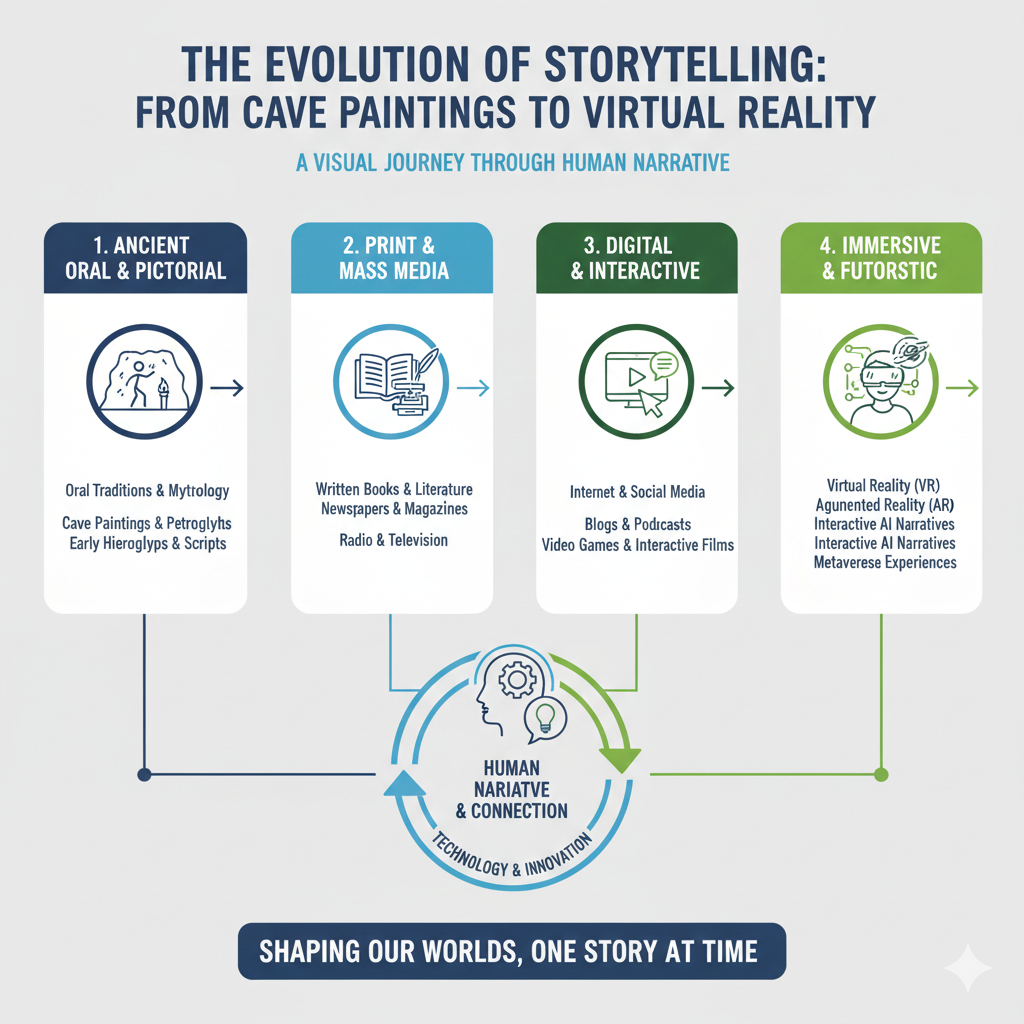
Introduction to Storytelling
Storytelling is an enduring facet of the human experience, weaving together the strands of culture, history, and communication. From the earliest days of humankind, stories have served as a means of sharing knowledge, preserving traditions, and fostering connections between individuals and communities. This ancient practice transcends geographical boundaries and cultural differences, acting as a universal language that resonates with all people regardless of their background.
The significance of storytelling in human culture cannot be overstated. It operates as a powerful tool for conveying moral lessons, historical events, and personal experiences. Through narratives, individuals can recreate past events and express abstract concepts, making them accessible and relatable to others. In various forms, storytelling plays a crucial role in education, entertainment, and social cohesion, allowing societies to maintain continuity while adapting to change.
Moreover, storytelling can evoke empathy and understanding, facilitating an emotional bond among listeners. When stories are shared, they can reflect diverse perspectives and experiences that help bridge gaps between cultures. This essential human activity has been instrumental in fostering dialogue, enriching lives, and shaping identities over generations.
As we embark on the exploration of storytelling’s evolution, it becomes clear that its transformation mirrors technological advancements and societal changes. From ancient cave paintings that depict prehistoric life to modern digital narratives in virtual reality, each iteration of storytelling reflects the values, beliefs, and artistic expressions of its time. This blog post will delve deep into the various stages of storytelling, highlighting how it has progressed and the impact it continues to have on contemporary society.
Storytelling in Prehistoric Times: Cave Paintings and Oral Traditions
The roots of storytelling trace back to prehistoric times, showcasing humanity’s innate desire to communicate and convey experiences. One of the most notable ancient forms of storytelling is cave painting, which served as a vital visual narrative method for early humans. These cave artworks, often found in locations such as Lascaux in France and Altamira in Spain, depict various scenes that provide insight into the lives and beliefs of prehistoric people. Utilizing natural pigments, these early artists created images of animals, hunting scenes, and human figures, aiming to record events or convey significant rituals. The imagery not only reflects the experiences of daily life but also signifies a deeper connection to cultural identity and community values.
In tandem with these visual narratives, oral traditions played a crucial role in the preservation and transmission of stories among prehistoric societies. Before the advent of written language, spoken word was the primary means of communication, enabling the sharing of tales that encapsulated communal wisdom, morals, and history. Oral storytelling allowed individuals to convey experiences, beliefs, and lessons from one generation to the next, forging bonds within communities and enriching their cultural tapestry. These stories often embodied mythological elements, serving to explain natural phenomena or impart ethical lessons, thereby nurturing a shared understanding of the world.
The combination of cave paintings and oral traditions illustrates the multifaceted nature of early storytelling. As societies evolved, these narrative practices laid the foundation for more complex forms of storytelling, ultimately shaping the cultures and civilizations that followed. This initial interplay between visual and verbal communication highlights that storytelling, whether through art or speech, was not merely an artistic endeavor but an essential aspect of human connection and cultural identity.
The Written Word: Ancient Civilizations and Literature
The transition from oral storytelling to the written word marked a significant evolution in the way human cultures preserved and shared their narratives. This transformation is vividly illustrated in the great ancient civilizations of Mesopotamia, Egypt, and Greece. These early societies recognized the importance of recording events, beliefs, and stories in a tangible form, leading to the development of writing systems that have had a lasting impact on literature.
In Mesopotamia, one of the first writing systems, cuneiform, was developed around 3200 BCE. It allowed the Sumerians to inscribe their epics and religious texts on clay tablets. One of the most notable literary works from this region is the 4Epic of Gilgamesh4, which explores themes of friendship, mortality, and the quest for immortality. This ancient narrative provides insights not only into the values of Sumerian society but also into the human condition itself, making it one of the earliest examples of written literature.
Moving to Egypt, hieroglyphics emerged as a complex writing system that combined logographic and alphabetic elements. The Egyptians used these symbols to create rich narratives inscribed on the walls of temples and tombs, emphasizing their mythology and the afterlife. Texts such as the Pyramid Texts and later the Book of the Dead served as essential guides for the deceased, illustrating the Egyptians’ beliefs and culture.
In ancient Greece, a significant advancement in storytelling occurred with the verses of Homer, whose epic poems, the Iliad and the Odyssey, are central to Greek literature. These works not only provide captivating tales of heroism and adventure but also reflect the values and ideals of Greek society. Through the evolution of storytelling, these texts laid the foundation for Western literature and influenced countless generations of writers that followed.
Medieval Storytelling: Folklore, Myths, and the Rise of Literature
The medieval period, spanning roughly from the 5th to the late 15th century, was a transformative era for storytelling. This period witnessed the flourishing of folklore and myths that played a crucial role in shaping cultural identities across various regions. Stories were not merely forms of entertainment; they served a vital function in preserving heritage and imparting moral lessons. Folklore, characterized by tales passed down orally, included a wealth of legends, fables, and heroic sagas that reflected the values, fears, and aspirations of societies.
Myths were particularly significant, often intertwining with religious beliefs. They provided explanations for natural phenomena and human existence while embedding cultural principles within their narratives. For example, creation myths served to contextualize humanity’s place within the larger cosmos, while legendary figures became embodiments of cultural ideals. These stories were proliferated through communal gatherings, traveling storytellers, and eventually written texts, signaling the start of a broader literary tradition.
As the medieval era progressed, literature began to emerge as a structured form of storytelling. Religious texts, such as the Bible and various hagiographies, were pivotal in this development. They were not only instrumental in disseminating religious dogma but also in fostering literacy among the clergy and laity alike. Beyond religious narratives, epic poetry, such as “Beowulf” in England or the “Divine Comedy” in Italy, exemplified grand storytelling that blended history, mythology, and moral lessons, captivating audiences and establishing enduring literary traditions.
This evolution from oral storytelling to written literature marked a significant shift in how stories were shared and preserved. While oral traditions continued to thrive, the inscription of stories onto parchment began to create a lasting record of humanity’s narrative journey, paving the way for the complex storytelling methods we recognize today.
The Renaissance to the Age of Enlightenment: The Birth of Modern Storytelling
The Renaissance, a period spanning from the 14th to the 17th century, marked a significant cultural rebirth in Europe. This era ignited a renewed interest in art, science, and literature, laying the groundwork for modern storytelling. The advent of the printing press by Johannes Gutenberg in the mid-15th century was a pivotal moment, as it allowed for the mass production of written works, thus democratizing access to literature.
Before this innovation, storytelling was primarily an oral tradition, with narratives conveyed through spoken word. With the introduction of the printing press, however, stories could be replicated and disseminated widely. This proliferation of printed material not only impacted the reading habits of the population but also fostered a new form of storytelling—one that was more structured and complex. Novelists and playwrights began to explore character development, intricate plots, and diverse themes, all of which contributed to the rise of modern storytelling.
The 16th and 17th centuries witnessed a surge in the production of novels and plays that captured the imagination of the masses. Writers like William Shakespeare, Miguel de Cervantes, and John Milton emerged, each contributing uniquely to the narrative landscape. Shakespeare, in particular, revolutionized the use of language in storytelling, utilizing it to evoke deep emotions and present intricate characters, while Cervantes’ “Don Quixote” infused storytelling with a new level of self-awareness and satire.
Furthermore, this era witnessed the flourishing of various literary genres that would influence future generations. The emergence of poetry, prose, and drama during the Renaissance laid the foundation for narrative techniques used in modern literature. As the Age of Enlightenment approached, storytelling continued to evolve, intertwining with emerging philosophical ideals that would forever change the fabric of narrative across cultures.
The 19th and 20th Centuries: From Oral Traditions to Mass Media
The 19th and 20th centuries marked a pivotal turning point in the evolution of storytelling, driven by notable advancements in technology that transformed the way narratives were created, shared, and consumed. This period saw the rise of mass media, which greatly expanded the reach of storytelling beyond traditional oral traditions.
In the 19th century, the invention of the printing press made literature more accessible, resulting in the proliferation of novels and other written works. This shift allowed for more complex narrative structures, enabling authors to craft longer and more intricate stories that could be enjoyed by a wider audience. Periodicals and newspapers became popular, further democratizing information and entertainment, and laying the groundwork for modern storytelling forms.
The advent of the 20th century introduced an array of innovative media formats, including radio, film, and later, television. Each of these mediums created new opportunities and challenges for storytellers. Radio, for instance, allowed for the immediate transmission of stories, connecting audiences through audio narratives. Scriptwriters needed to adapt their storytelling techniques to engage listeners using dialogue, sound effects, and music, enhancing the emotional resonance of the story without visual elements.
Meanwhile, film brought a visual dimension to storytelling, leading to a unique fusion of visual arts and narrative. Filmmakers utilized techniques such as editing, cinematography, and special effects to convey deeper meanings and evoke strong emotions. As films became mainstream, they started to influence public culture and norms, establishing cinema as a powerful medium for storytelling.
Finally, with the rise of television, story engagement transformed yet again. Serialized storytelling became prominent, providing audiences with continuous narratives that encouraged viewer loyalty. This new format allowed for deeper character development and intricate plotlines. The 19th and 20th centuries, therefore, stand as a testament to how technological progress profoundly reshaped storytelling, creating a more immersive experience for audiences and expanding the boundaries of narrative forms.
Digital Age Storytelling: Interactive and Participatory Narratives
With the advent of the internet in the late 20th century, storytelling underwent a profound transformation. The proliferation of digital platforms has profoundly altered the way in which narratives are created, shared, and consumed. This era of storytelling, characterized by interactivity and participation, has allowed audiences to engage with stories in ways previously unimaginable.
The rise of social media platforms has democratized content creation, enabling anyone with access to the internet to share their narratives. This shift has led to a diverse array of voices entering the storytelling landscape, offering perspectives that were often sidelined in traditional media. Blogs, vlogs, and podcasts have emerged as powerful mediums that encourage user participation and enable storytellers to connect directly with their audiences. Unlike conventional formats, these platforms facilitate a two-way interaction, where feedback and comments allow for narrative evolution.
Interactive storytelling has also gained traction, blending traditional story elements with gamified experiences. Video games and digital applications have redefined narrative engagement, allowing users to make choices that influence plot development and character outcomes. This form of storytelling invites the audience to not only consume narratives but participate in their unfolding, enhancing emotional investment and immersion.
Moreover, the rise of virtual reality (VR) and augmented reality (AR) technologies has taken storytelling to an unprecedented level. VR experiences transport users into the narrative universe, allowing them to explore and interact within richly designed environments. This innovation has significant implications for education, entertainment, and even therapy, as the opportunities for immersive narrative experiences expand.
In conclusion, the digital age has transformed storytelling into a collaborative and interactive endeavor, with the internet and social media playing pivotal roles in shaping modern narratives. As technology continues to evolve, so too will the methods and forms through which stories are told, ensuring that innovation and interactivity remain at the forefront of this age-old art form.
Virtual Reality and Immersive Experiences: The Future of Storytelling
Virtual reality (VR) and augmented reality (AR) stand at the forefront of technological advancements that are transforming the landscape of storytelling. These immersive technologies provide unprecedented opportunities for narrative experiences that are both engaging and interactive. By enveloping users in a simulated environment, VR allows them to step directly into the story, experiencing events from a first-person point of view. This immersive quality not only enhances emotional connections but also encourages active participation, as viewers are no longer passive consumers but engaged participants in the unfolding narrative.
Traditional forms of storytelling have generally maintained a clear separation between the audience and the narrative. However, with the introduction of VR and AR, this boundary is increasingly blurred. Users can explore virtual worlds, interact with characters, and make decisions that influence the course of the story. This shift offers storytellers new tools to create complex narratives that respond dynamically to user actions and choices. The result is a highly personalized storytelling experience that caters to individual preferences and enhances engagement.
Moreover, both VR and AR have application potential beyond entertainment. In areas such as education, health, and marketing, immersive storytelling can provide practical benefits by fostering deeper understanding and retention of information. For instance, educational content delivered through VR can offer students experiential learning that transcends the limitations of traditional curricula. As technology continues to advance, the blending of storytelling and immersive experiences will likely evolve, promising to redefine how we engage with stories across various mediums.
Conclusion: The Timeless Nature of Storytelling and Its Future
Storytelling has been an integral aspect of human culture since our ancestors gathered around fires, sharing tales that reflected their experiences and values. This enduring practice connects generations, transcending boundaries of time and geography. Even as technologies evolve, the core essence of storytelling remains unchanged—a means of communication that captures our imagination and fosters empathy.
As we move further into the digital age, new formats are emerging that offer unprecedented ways to share stories. Virtual reality, for instance, allows audiences to immerse themselves in narratives, experiencing events from unique perspectives. Augmented reality enhances our interactions with storytelling by overlaying digital content onto the physical world, thereby blending reality with fiction. These innovations present exciting opportunities for creators to engage audiences in more dynamic and participatory ways.
Moreover, the rise of social media platforms has democratized storytelling, allowing anyone with an internet connection to share their narratives with a global audience. This shift signifies a profound change in how stories are crafted and consumed, leading to a rich tapestry of voices that reflect diverse experiences and viewpoints. However, as this landscape evolves, it is essential to maintain the authenticity and integrity of storytelling. The challenge lies in balancing technological advancement with the foundational elements that make a story resonate with its audience.
In conclusion, while the tools and mediums have transformed over millennia, the fundamental human need to share stories endures. As we look ahead, it is clear that storytelling will continue to evolve, shaped by emerging technologies that will redefine narrative experiences. The future of storytelling holds the potential for deeper connections and richer insights into the human condition, ensuring its relevance for generations to come.