





Saving vs Investing: Key Differences Explained in the USA
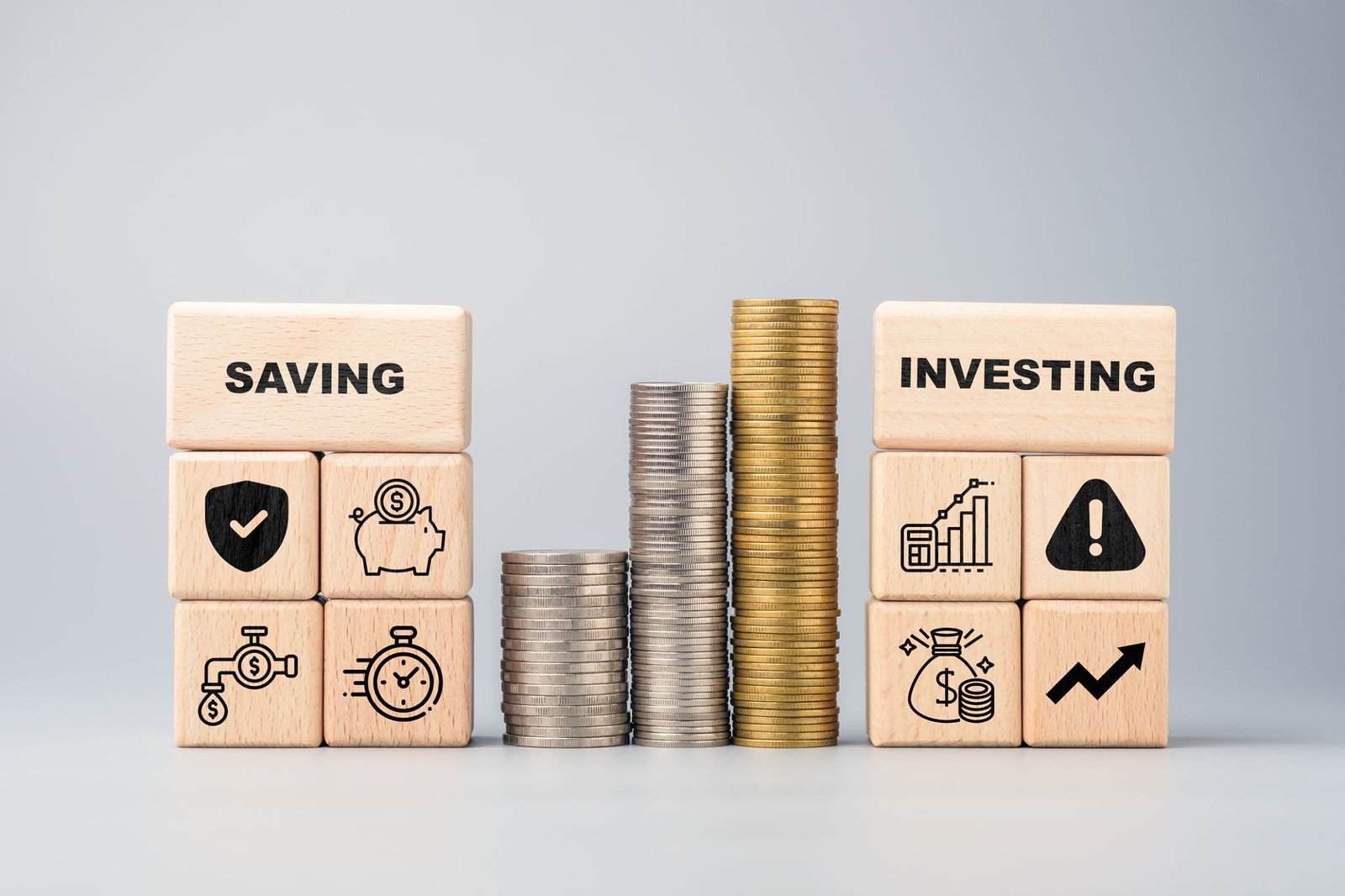

Making smart choices with your money often feels like navigating a maze without a map. You work hard for your paycheck, pay your bills, and hopefully have a little left over at the end of the month. But what should you actually do with that leftover cash? Should it sit safely in a bank account, or should you put it into the stock market where it might grow—or shrink?
The terms “saving” and “investing” are often used interchangeably in casual conversation, but in the financial world, they are distinct concepts with very different purposes. Confusing the two can lead to missed opportunities for growth or, conversely, exposing money you need for rent to unnecessary market risks.
Understanding the difference isn’t just semantics; it is the foundation of financial health. Your financial journey requires a strategy that utilizes both tools effectively. This guide breaks down exactly how saving and investing work in the US, the pros and cons of each, and how to balance them to secure your financial future.
What Is Saving?
At its core, saving is the act of setting aside money for future use. It is cash that you choose not to spend today so that it is available for you tomorrow. When you focus on saving money USA based strategies, the primary goal is preservation. You want to know that $1,000 deposited today will still be $1,000 (plus a little interest) when you need it next month or next year.
The defining characteristics of saving are safety and liquidity. Safety means there is virtually no risk of losing your principal amount. Liquidity means you can access the funds quickly and easily without penalty or delay.
Common Saving Tools in the US
Most Americans utilize federally insured institutions for their savings. The most common vehicles include:
- Traditional Savings Accounts: Offered by almost all banks and credit unions, these provide easy access to funds but typically offer lower interest rates.
- High-Yield Savings Accounts (HYSA): Usually offered by online banks, these accounts function like traditional ones but offer significantly higher Annual Percentage Yields (APY), helping your money keep pace with inflation.
- Certificates of Deposit (CDs): These are time-bound deposits. You agree to lock your money away for a set period (like 12 months) in exchange for a guaranteed, higher interest rate.
- Money Market Accounts: These are hybrid accounts that often offer check-writing abilities along with interest rates higher than standard savings accounts.
Because these accounts are typically FDIC or NCUA insured up to $250,000 per depositor, saving is considered the bedrock of financial security.
What Is Investing?
Investing is a different beast entirely. It involves buying assets with the expectation that they will increase in value over time or generate income. When you look into investing basics USA, you aren’t just storing money; you are putting your money to work.
The primary goal of investing is wealth creation. You accept a certain level of risk in exchange for the potential of higher returns. Unlike saving, where your balance is stable, investment values fluctuate. You might check your portfolio one day and see it up 5%, and down 2% the next.
Common Investment Vehicles
Investing involves purchasing assets that have the potential to appreciate. Common examples include:
- Stocks (Equities): Buying a share of stock means you own a tiny slice of a corporation. If the company grows, your shares gain value.
- Bonds (Fixed Income): This is essentially loaning money to a government or corporation in exchange for interest payments over time.
- Mutual Funds and ETFs: These allow investors to buy a basket of many different stocks or bonds at once, providing instant diversification.
- Real Estate: Purchasing property for rental income or resale.
While saving adds up, investing compounds. Over long periods, the returns from investing have historically outperformed cash savings, making it the primary engine for building significant wealth.
Saving vs Investing: Key Differences
To build a robust financial plan, you must distinguish between these two strategies. Here is a breakdown of the saving vs investing USA landscape across four major categories.
1. Risk Level
Saving carries minimal risk. If you keep your money in an FDIC-insured bank account, the only real risk is inflation (which we will discuss later). You will not wake up to find your savings account balance has dropped because the stock market had a bad day.
Investing carries inherent market risk. The value of stocks, real estate, and other assets can go down. It is possible to lose some or all of your initial investment, depending on what you buy. However, this risk is the “price” you pay for the potential of higher rewards.
2. Expected Returns
Because saving is safe, the returns are generally low. You might earn 0.5% to 5% annually, depending on the economic environment and the type of account. This interest is helpful, but it rarely builds substantial wealth on its own.
Investing offers higher potential returns. Historically, the S&P 500 (a benchmark for the US stock market) has returned an average of about 10% annually before inflation. While past performance doesn’t guarantee future results, investing is the only reliable way to grow money significantly faster than the cost of living.
3. Time Horizon
Saving is typically for the short term. It is for money you might need in the next one to three years.
Investing is for the long term. Because markets fluctuate, you need time to ride out the volatility. Financial advisors generally recommend that you should not invest money you will need within the next five years.
4. Accessibility and Liquidity
Savings are highly liquid. You can transfer money from a savings account to a checking account instantly. Investments are less liquid. Selling stocks or real estate takes time, and there may be tax implications or transaction fees involved in accessing that cash.
Risk vs Reward Explained
The relationship between risk and reward is the central trade-off in finance. In the context of risk vs return investing, the rule of thumb is simple: to earn higher returns, you must accept higher volatility.
Safe investments (like savings accounts or government bonds) offer lower returns because the outcome is nearly guaranteed. The institution pays you less because they are taking on less risk.
Risky investments (like stocks in a new tech startup) offer the potential for massive gains because there is also a high chance the company could fail.
Your personal “risk tolerance” dictates how much of your portfolio should be in savings versus investments. A young professional with 30 years until retirement can afford to take more risks because they have time to recover from market dips. A retiree living on a fixed income needs more stability and generally prioritizes the safety of savings or low-risk bonds.
When Saving Makes More Sense
There are specific life scenarios where saving is not just better—it is the only responsible choice. You should prioritize when to save money USA strategies in the following situations:
Building an Emergency Fund
Life is unpredictable. Cars break down, medical bills arrive unexpectedly, and layoffs happen. An emergency fund consisting of 3 to 6 months of living expenses should be kept in a liquid savings account. This is your financial safety net. You do not want this money invested in the stock market, because you don’t want to be forced to sell stocks during a market crash just to pay for a car repair.
Short-Term Financial Goals
If you are planning a wedding next year, saving for a down payment on a house in two years, or going on a vacation this summer, that money belongs in savings. The timeline is too short to risk market volatility. Imagine planning to buy a house, only to find your down payment fund dropped 20% right before you made an offer. Savings accounts protect your principal for these near-term targets.
Uncertain Income
Freelancers, contractors, or those in volatile industries often need a larger cash cushion than salaried employees. If your income fluctuates, having a robust savings account smooths out the lean months.
When Investing Is the Better Choice
Once your safety net is established, holding too much cash becomes a liability. You should pivot to when to invest money USA strategies for long-term objectives:
Retirement Planning
Retirement is the most expensive purchase you will ever make. To fund 20 or 30 years of living without a paycheck, you need your money to grow. Accounts like 401(k)s and IRAs (Individual Retirement Accounts) are designed for this purpose. The compounding interest of investments over decades is the primary way Americans fund their retirement.
Long-Term Wealth Building
If you want to build generational wealth or achieve financial independence, you cannot save your way there. You need assets that appreciate. Investing allows your money to make more money, eventually creating a passive income stream.
Beating Inflation
This is the most critical reason to invest. If your goal is more than five years away, keeping the money in cash virtually guarantees it will lose value due to inflation. Investing is necessary to maintain and increase your purchasing power.
Impact of Inflation on Saving and Investing
Inflation is the rate at which the cost of goods and services rises. It is the reason a cup of coffee cost $0.50 in 1980 and costs $4.00 today. The inflation impact savings investing USA analysis reveals a harsh truth: cash is not safe from inflation.
If the inflation rate is 3% and your savings account pays 1% interest, you are effectively losing 2% of your purchasing power every year. Your balance technically grows, but what you can buy with that balance shrinks.
Investing acts as a hedge against inflation. Companies can raise prices to match inflation, which often leads to higher stock prices. Real estate rents typically rise with inflation. By owning these assets, your wealth has a much better chance of growing faster than the cost of living, ensuring your lifestyle doesn’t downgrade over time.
How Saving and Investing Work Together
The most successful financial plans do not choose one over the other; they integrate both. A balanced saving and investing strategy USA usually follows a specific order of operations:
- Establish the Foundation: Start by saving $1,000 to cover minor mishaps so you don’t have to use credit cards.
- Get the Match: If your employer offers a 401(k) match, invest enough to get it. That is an immediate 100% return on your money—better than any savings account or stock pick.
- Build the Fortress: Expand your savings to cover 3 to 6 months of living expenses. Put this in a High-Yield Savings Account.
- Clear Toxic Debt: Pay off high-interest debt (like credit cards). This is a guaranteed “return” equal to the interest rate you were paying.
- Invest for the Future: Once the safety net is secure and bad debt is gone, funnel excess income into tax-advantaged investment accounts (IRAs, 401ks) and brokerage accounts.
This tiered approach ensures you are protected against today’s problems while preparing for tomorrow’s opportunities.
Common Myths About Saving and Investing
Misinformation often keeps people paralyzed. Let’s debunk a few saving vs investing myths that might be holding you back.
Myth 1: Investing is only for the wealthy.
Decades ago, high broker fees made this true. Today, apps and platforms allow you to buy “fractional shares” of stock for as little as $1 or $5. You can start investing with the change in your pocket.
Myth 2: Saving is “safe” and investing is “gambling.”
We have established that saving carries inflation risk. Furthermore, investing is not gambling if you diversify. Gambling is betting on a single outcome (like one stock skyrocketing). Investing is betting on the long-term growth of the global economy by holding a diversified portfolio.
Myth 3: You need to be a market expert to invest.
You do not need to watch financial news channels or analyze balance sheets. Most successful investors buy “index funds”—collections of stocks that track the whole market—and hold them for decades. It requires zero expertise, just patience.
Beginner Tips for Smart Money Decisions
If you are ready to take control of your finances, here are three actionable steps for beginner financial planning USA:
Set Clear Goals
Money needs a job. Label your accounts. “New Car Fund” is a savings goal. “Retirement 2055” is an investment goal. knowing the “why” dictates the “how.”
Automate Everything
Willpower is a finite resource; do not rely on it. Set up automatic transfers from your checking account to your savings and investment accounts on payday. You cannot spend what isn’t there.
Start Small and Stay Consistent
Consistency beats intensity. Investing $50 a month for 30 years is often more effective than trying to invest $10,000 once and trying to time the market. The earlier you start, the less you have to save to reach your goals thanks to compound interest.
Frequently Asked Questions (FAQ)
Q1. What is the main difference between saving and investing?
Saving is setting aside cash for short-term needs and safety, usually in a bank. Investing is buying assets (like stocks) for long-term growth and wealth building, which comes with higher risk.
Q2. Is saving safer than investing?
In terms of protecting your principal dollar amount, yes. Savings accounts are federally insured. However, savings are risky in the long run because inflation erodes their purchasing power.
Q3. Can beginners invest with little money?
Absolutely. Many US brokerage apps allow you to start with as little as $5. You can buy fractional shares of expensive stocks or invest in ETFs with very low minimums.
Q4. Should I save or invest first in the USA?
Generally, you should save first. Build a small emergency fund (around $1,000 to one month of expenses) to protect yourself from immediate debt. Once that buffer exists, you can begin investing, especially if your employer offers a 401(k) match.
Q5. How does inflation affect savings?
Inflation reduces the value of the money in your savings account. If inflation is 3% and your bank pays 1%, you are losing 2% in real purchasing power annually.
Q6. Can I lose money when investing?
Yes. The value of investments fluctuates. If you sell when the market is down, you will lock in a loss. However, historically, the market has trended upward over long periods (10+ years).
Q7. Is it okay to do both saving and investing?
It is not just okay; it is recommended. You need savings for stability and liquidity, and investments for growth and future security.
Choosing the Right Financial Path
The debate isn’t really about choosing one over the other; it is about knowing which tool to use for which job. Saving provides the sleep-at-night security that protects you from life’s immediate curveballs. Investing provides the engine that powers your long-term dreams and retirement.
By maintaining a healthy emergency fund while consistently contributing to investment accounts, you create a financial plan that is both resilient and aggressive. You don’t have to predict the future to prepare for it—you just need to balance safety with growth. Start where you are, define your goals, and let your money get to work.