


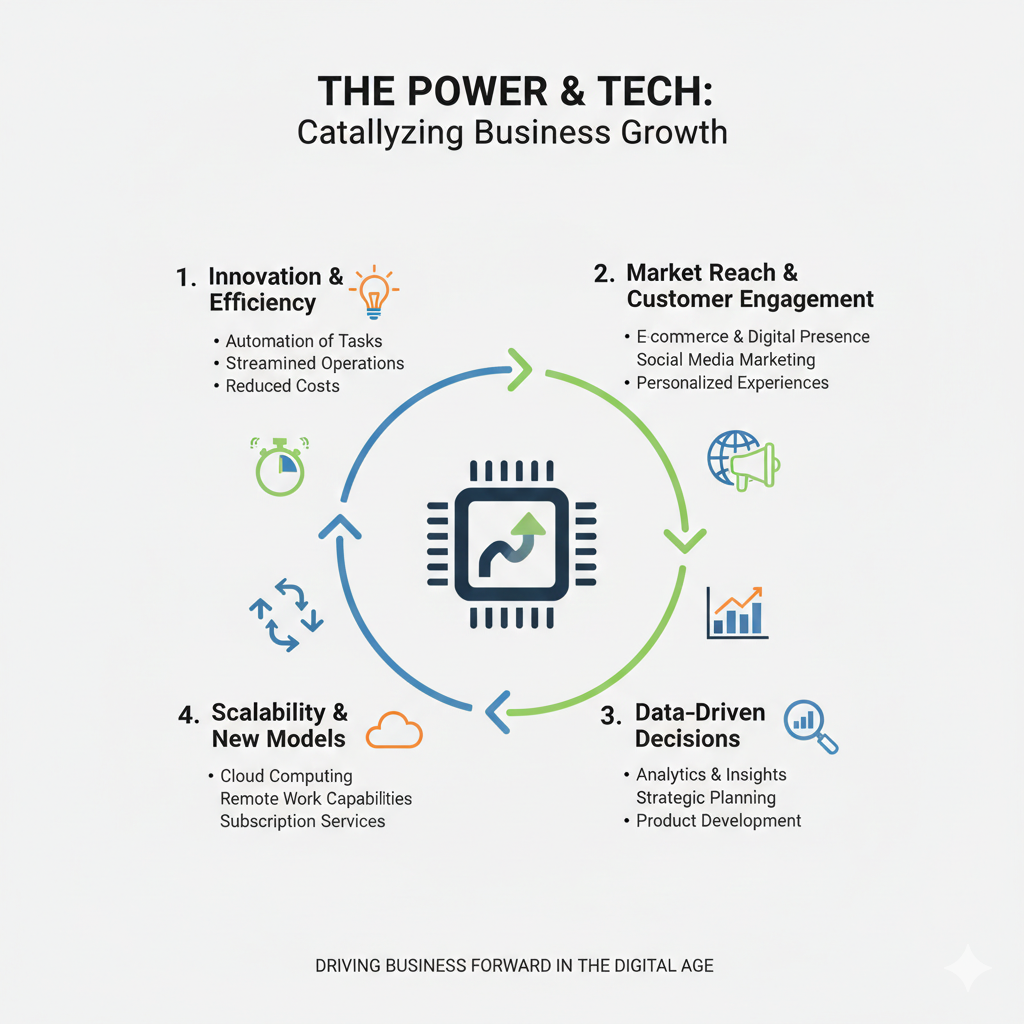
Introduction to Technology and Business Growth
The interplay between technology and business growth has evolved into a symbiotic relationship that is undeniable in today’s economic landscape. Companies are increasingly recognizing that leveraging technology is vital for efficiency, scalability, and competitiveness. Over recent years, the rapid advancement of digital technologies has created a transformative environment that enables organizations to streamline operations, engage customers, and expand their market reach.
In this context, technology encompasses a wide range of tools and innovations, from cloud computing and artificial intelligence to customer relationship management systems. Each of these technologies plays a key role in enabling businesses to adapt to changing market conditions and consumer preferences. For instance, employing cloud-based solutions can enhance collaboration and data management, leading to improved decision-making processes and ultimately driving profitability.
Furthermore, the advent of big data analytics has allowed businesses to gather and analyze vast amounts of information, providing insights into consumer behavior and market trends. By harnessing this wealth of data, companies can tailor their products and services, enhance customer experience, and innovate with greater precision. Additionally, technology has enhanced communication channels, making it easier for businesses to connect with clients and partners globally.
The evolving landscape of technology in business not only presents challenges but also immense opportunities. As businesses embrace technological advancements, staying abreast of trends is essential for maintaining a competitive advantage. The integration of technology into business processes is no longer optional; it is a requisite for growth and long-term success. As we delve deeper into this crucial relationship, it is important to explore how technology is fundamentally reshaping business strategies and driving unprecedented levels of growth.
Understanding the Types of Technology Impacting Business
In the contemporary business environment, the integration of various types of technology has become essential for enhancing operations and fostering growth. Among these, information technology (IT) plays a foundational role. IT encompasses all computing devices, software, and networks that facilitate the management and processing of data. Organizations leverage IT systems to streamline processes, analyze large volumes of data, and make informed decisions, ultimately driving business efficiency and effectiveness.
Communication technology is another vital aspect influencing business practices. This type includes tools and platforms that enable seamless interactions among employees, clients, and stakeholders. Various channels, such as emails, video conferencing tools, and instant messaging apps, enhance connectivity and collaboration, allowing businesses to operate effectively in a rapidly evolving market. Improved communication technology leads to quicker decision-making and fosters innovation through collaborative efforts.
Automation technology significantly contributes to operational efficiency across industries. By utilizing software and machinery to perform repetitive tasks, businesses can minimize human error and reduce workloads. Automation not only increases productivity but also allows employees to focus on strategic tasks that demand creativity and critical thinking. As companies adopt automation solutions, they can enhance their service delivery and product quality, further solidifying their competitive edge.
Lastly, cloud computing has transformed how businesses store and access data. By providing on-demand resources and services over the internet, cloud computing enables organizations to scale their operations efficiently while reducing overhead costs. This technology also supports remote work and collaboration, as employees can access information and applications from anywhere. As a result, cloud computing plays a crucial role in enabling businesses to innovate and adapt quickly in an increasingly digital world.
Enhanced Communication and Collaboration Through Technology
The advent of technology has significantly reshaped the communication and collaboration dynamics within businesses. Modern enterprises are increasingly relying on advanced tools that facilitate seamless interactions among team members, regardless of their geographical locations. Instant messaging platforms, such as Slack and Microsoft Teams, have emerged as essential tools that enable real-time communication. These resources not only allow for quick exchanges of information but also help in fostering a sense of community among employees, promoting engagement and collaboration.
Moreover, video conferencing tools like Zoom and Google Meet have revolutionized how teams conduct meetings. These platforms offer features such as screen sharing, breakout rooms, and recording capabilities, which enhance the overall meeting experience, making it more interactive and productive. As remote work becomes more prevalent, video conferencing technology allows businesses to maintain face-to-face interactions, ensuring that collaboration remains strong despite physical distances.
Additionally, project management software, such as Trello and Asana, has become vital for managing workflows and facilitating team collaboration. These tools help teams to organize tasks, set deadlines, and monitor progress in a transparent manner. By providing a centralized platform where all project-related information is accessible, businesses can ensure that all team members are on the same page and that efforts are coordinated effectively.
In essence, technology has created an environment where communication flows freely and collaboration thrives. By integrating these advanced tools into their operations, businesses can enhance productivity, improve teamwork, and ultimately achieve greater success. The emphasis on embracing technology is crucial for organizations seeking to adapt to the changing landscape and to foster a collaborative work environment that drives growth.
Data Management and Analytics: Driving Business Decisions
In today’s rapidly evolving business landscape, the significance of data management and analytics cannot be overstated. Companies are increasingly relying on technology to collect, process, and analyze vast amounts of data, enabling them to make informed strategic decisions. Through effective data management practices, businesses can ensure that their data is accurate, accessible, and relevant, transforming it into a valuable asset for driving growth.
Technology plays a crucial role in streamlining data collection processes. Organizations can utilize various tools and software to gather data from multiple sources, including customer interactions, market trends, and operational performance. This comprehensive data collection is critical, as it allows for a holistic view of business operations, enabling leaders to identify patterns and trends that may not be evident through traditional methods.
Once data is collected, the next step involves data processing and analysis. Advanced analytics tools equipped with machine learning and artificial intelligence capabilities allow businesses to process large datasets efficiently. By leveraging these technologies, companies can uncover insights that inform strategic business decisions, helping them to optimize operations, enhance customer experiences, and ultimately drive growth.
Moreover, data analytics assists in segmenting customer profiles, allowing businesses to tailor their marketing strategies and products to meet specific customer needs. This personalized approach not only enhances customer satisfaction but also improves retention rates. Additionally, real-time analytics empower organizations to respond swiftly to market changes and operational challenges, ensuring they remain competitive in their respective industries.
In conclusion, effective data management and analytics are vital components that drive business decisions in the modern era. By leveraging technology to gather, process, and analyze data, companies can enhance their operational efficiency, improve customer experiences, and pursue growth opportunities with confidence.
E-Commerce and the Digital Marketplace: Expanding Business Reach
The advent of e-commerce has revolutionized the way businesses operate, enabling them to expand their reach to a global audience. Traditionally, businesses were limited by physical boundaries, but technology has transformed this landscape by providing digital platforms that allow for seamless transactions across geographical distances. This significant shift has been facilitated by the internet, which has not only redefined retail environments but has also paved the way for new business models and marketplaces.
One of the primary advantages of online sales channels is the ability to cater to a wide range of consumers without the constraints of physical storefronts. Businesses can leverage e-commerce websites to display their products to diverse customer bases, significantly increasing potential sales. In addition, the digital marketplace offers robust analytics tools that enable businesses to understand consumer behavior, tailor their offerings, and optimize their marketing strategies to effectively target specific demographics.
Moreover, technology has greatly enhanced digital marketing strategies, which are critical for driving traffic to e-commerce sites. Techniques such as search engine optimization (SEO), pay-per-click advertising (PPC), and social media marketing provide businesses with various methods to promote their products and engage with customers effectively. Through targeted campaigns, companies can attract new clients and retain existing ones, fostering loyalty and encouraging repeat purchases.
Additionally, advancements in payment technologies have significantly simplified the purchasing process for consumers. With options such as e-wallets, mobile payment systems, and secure online transactions, businesses can offer an array of payment solutions that enhance the customer experience. This not only facilitates faster transactions but also builds consumer trust, ultimately contributing to increased sales and revenue growth.
Automation and Efficiency: Redefining Business Processes
In the contemporary business landscape, automation technologies are pivotal in enhancing operational efficiency. Robotic Process Automation (RPA) has emerged as a transformative tool, enabling organizations to automate routine and repetitive tasks that traditionally required human intervention. By deploying RPA, businesses can streamline their processes, minimize human error, and significantly reduce operational costs. This increased efficiency allows employees to focus on more strategic, high-value activities that drive innovation and growth.
Artificial Intelligence (AI) and machine learning are also at the forefront of redefining business processes. AI algorithms can analyze vast datasets to identify patterns and provide insights that humans may overlook. This capability not only optimizes decision-making but also enhances customer experiences through personalized interactions. Furthermore, machine learning models continuously improve over time, further refining processes and increasing productivity.
The integration of these technologies contributes to greater scalability for businesses. As companies grow, the demand for efficiency becomes more pronounced. Automation technologies can easily adapt to increasing workloads without necessitating significant capital investment. This scalability aspect is crucial for businesses looking to expand while maintaining consistent service quality and cost efficiency.
Moreover, the data collected through automated processes can inform strategic planning, allowing organizations to respond swiftly to market changes. By leveraging automation, businesses not only enhance their efficiency but also foster a culture of innovation. The ability to rapidly implement new solutions and adjust processes in response to emerging trends is essential in today’s fast-paced market.
Customer Relationship Management (CRM) Technology
In the contemporary business landscape, Customer Relationship Management (CRM) technology plays a pivotal role in managing customer relationships effectively. These systems are designed to compile and analyze customer information from various channels, leading to informed decision-making and strategic planning. By leveraging CRM technology, businesses can gain a deeper understanding of customer behavior and preferences, which is critical for enhancing service delivery.
One of the primary advantages of implementing a CRM system is the ability to tailor interactions based on individual customer data. Through detailed insights into purchasing patterns, preferences, and feedback, companies can personalize their marketing strategies, ultimately fostering stronger connections with their clientele. For instance, businesses can segment their customer base and create targeted campaigns that resonate well with specific groups, thereby improving engagement and conversion rates.
Moreover, CRM technology not only facilitates personalized interactions but also enhances customer loyalty. By managing communication effectively, businesses can ensure timely responses to inquiries and complaints, which are integral to maintaining positive relationships. Satisfied customers are more likely to return and refer others, thereby driving long-term growth.
In addition to these benefits, CRM systems streamline various operational processes, enabling teams to collaborate more efficiently. Staff members can easily access and share customer data, ensuring that all interactions are consistent and informed. This accessibility ultimately leads to improved service quality and enhanced customer satisfaction.
Thus, CRM technology is essential for businesses aiming to optimize their customer relationship strategies and accelerate growth. By utilizing this sophisticated technology, organizations can not only meet but exceed customer expectations, securing their place in a competitive market.
Challenges of Integrating Technology into Business Growth
Integrating technology into business operations can significantly enhance efficiency and promote growth. However, the journey is often fraught with challenges that organizations must navigate to ensure successful implementation. One of the primary obstacles encountered is resistance to change among employees. Many individuals prefer familiar workflows and may view new technologies as disruptive or intimidating. This resistance can result in a lack of adoption, leading to underutilization of the new systems.
Addressing resistance involves fostering a culture of openness and involving employees in the decision-making process regarding new technology. Providing clear communication about the benefits of the new tools can help mitigate fears and encourage buy-in from team members. Additionally, demonstrating how technology aligns with their daily tasks can enhance acceptance and enthusiasm.
Another significant concern for businesses integrating technology is data security. With the increasing reliance on digital platforms, the potential for data breaches and cyber threats has also amplified. Organizations must ensure they implement robust security measures to protect sensitive information. This may involve conducting comprehensive risk assessments, investing in cybersecurity tools, and developing strict protocols for data handling.
Moreover, the successful integration of new technology necessitates adequate employee training. Employees may struggle to adapt to unfamiliar systems without proper guidance and support. Organizations should prioritize training initiatives that not only teach employees how to use new technology but also emphasize its relevance to their roles. Hands-on training, workshops, and accessible resources can prove valuable in cultivating a tech-savvy workforce.
In conclusion, while the integration of technology presents several challenges, understanding and addressing these hurdles through employee engagement, diligent security measures, and comprehensive training can greatly enhance the likelihood of achieving successful outcomes that foster business growth.
The Future of Technology in Business Growth
As we move forward into an increasingly digital world, technology is poised to play a pivotal role in shaping the future of business growth. Emerging technologies, notably blockchain, virtual reality (VR), and the Internet of Things (IoT), are anticipated to revolutionize how businesses operate and thrive.
Blockchain technology stands as a potentially transformative force for a variety of industries. Its decentralized nature promotes transparency and security, making it ideal for sectors such as finance and supply chain management. By enabling secure transactions and reducing fraud, businesses can streamline operations and enhance customer trust. The adoption of blockchain can lead not only to operational efficiencies but also to new business models, as companies explore decentralized applications and smart contracts.
Virtual reality is another emerging technology that holds substantial promise for business development. Organizations can leverage VR for immersive training experiences, allowing employees to develop skills in a controlled, engaging environment. Additionally, VR can enhance customer experiences in various retail settings, offering virtual try-ons or product demos, which can drive sales and improve satisfaction.
The Internet of Things (IoT) represents a significant leap in connectivity between devices, providing companies with valuable data insights that can inform decision-making. For instance, smart sensors can monitor equipment health in real-time, leading to predictive maintenance and reducing downtime. Similarly, IoT applications in customer engagement can personalize experience, leading to higher retention rates and loyalty.
As these technologies continue to evolve, businesses that embrace and integrate them into their growth strategies are more likely to achieve a competitive edge. The synergy between these emerging technologies enables not just operational enhancements but also fosters innovation, opening doors to new markets and customer segments. Ultimately, the future of technology in business growth lies in its potential to simplify processes, enhance experiences, and drive profitability in unprecedented ways.