






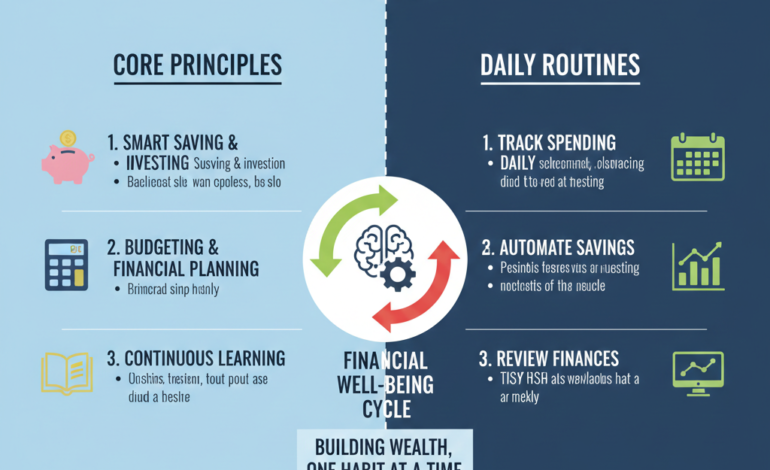

Introduction: The Importance of Money Habits
Financial success is often a culmination of various factors, but one of the most crucial elements is the cultivation of sound money habits. Money habits refer to the behavioral patterns individuals exhibit in their financial dealings, which can significantly influence their overall financial health and prosperity. The development of these habits can lead to a greater understanding of financial principles, enabling individuals to make informed decisions that promote wealth accumulation and long-term financial security.
Understanding the significance of money habits is essential for anyone aspiring to attain financial success. Poor financial habits, such as debt accumulation and impulsive spending, can lead to dire consequences, adversely affecting one’s ability to build wealth. Conversely, establishing positive habits, including budgeting, saving, and investing, lays a strong foundation for a stable financial future. These foundational actions help to create a systematic approach to managing money, facilitating a greater awareness of one’s finances.
The importance of cultivating sound financial habits cannot be overstated. For many financially successful individuals in the USA, their journey toward prosperity began with a commitment to maintaining disciplined money habits. These habits often include setting clear financial goals, diligently tracking expenses, and prioritizing savings. By adhering to such practices, individuals not only foster a responsible attitude toward money management but also position themselves to take advantage of wealth-building opportunities.
As we explore further into this discussion on the money habits of financially successful people, we will uncover specific strategies that can transform the way individuals perceive and engage with their finances. These strategies, grounded in the importance of consistent and disciplined money habits, can serve as valuable tools for anyone looking to enhance their financial standing.
Understanding the Mindset of Financially Successful People
Financially successful individuals often exhibit a distinct mindset that influences their approach to money and wealth-building. At the core of their mentality is a positive attitude towards financial opportunities and challenges. They view wealth not merely as a goal but as a tool for creating value, enhancing their lives, and impacting their communities. This perspective significantly shapes their financial habits and decisions.
One key aspect of this mindset is the willingness to take calculated risks. Financially successful people understand that the potential for substantial rewards typically correlates with a degree of risk. They analyze opportunities critically, weighing potential benefits against possible downsides. This ability to embrace risk, while maintaining a sense of prudence, allows them to explore avenues that can lead to financial growth.
Moreover, these individuals tend to focus on long-term objectives rather than immediate gratification. They prioritize investments and savings that contribute to their future wealth, often delaying consumption in favor of building a solid financial foundation. This discipline distinguishes them from those who may overlook the importance of planning for the future in favor of momentary enjoyment.
Additionally, financially successful people generally possess a commitment to continual learning about personal finance and investing. They actively seek knowledge through books, workshops, and networking opportunities. This dedication to education empowers them to make informed decisions, adapt to changing financial landscapes, and navigate through economic uncertainties.
In summary, the mindset of financially successful individuals is characterized by a constructive attitude towards wealth accumulation, an appetite for calculated risks, a focus on long-term goals, and a commitment to continuous learning. These traits collectively foster an environment conducive to financial success, enabling them to build and sustain their wealth effectively.
Budgeting: The Foundation of Financial Success
Budgeting is a crucial component in the financial habits of successful individuals in the United States. It serves as a fundamental tool that allows them to allocate their income effectively, manage expenses, and ultimately achieve their long-term financial objectives. Prominent among the various budgeting strategies is the 50/30/20 rule, which advocates for allocating 50% of income towards necessities, 30% for discretionary spending, and the remaining 20% towards savings and debt repayment. This approach not only simplifies financial management but also emphasizes the importance of a balanced lifestyle.
Another effective budgeting method is zero-based budgeting, in which every dollar earned is assigned a specific purpose, be it savings, expenses, or investments. This strategy requires individuals to justify each expenditure, thereby instilling a heightened sense of financial accountability. By meticulously planning for every dollar, financially successful people ensure they are consistently making progress towards their financial goals while avoiding unnecessary overspending.
In addition to these methods, tracking expenses plays an integral role in successful budgeting. Many financially astute individuals utilize apps and tools to monitor their daily spending habits, which enables them to identify trends and areas of improvement. This ongoing assessment helps in curbing impulsive purchases and fostering a proactive approach towards managing finances. Financially successful people recognize that maintaining a comprehensive view of their spending allows them to adjust their budgets quickly, ensuring they remain on track with their fiscal goals.
In conclusion, the budgeting practices adopted by financially successful individuals are not merely about restriction; rather, they emphasize informed decision-making and strategic planning. By implementing methods such as the 50/30/20 rule, zero-based budgeting, and diligent expense tracking, individuals can establish a solid financial foundation that paves the way for future success.
The Art of Saving: Strategies Used by the Wealthy
Wealthy individuals often prioritize saving as a fundamental aspect of their financial strategy. One popular approach is automatic savings, a method wherein a predetermined amount of money is automatically transferred to savings accounts on a regular basis, typically coinciding with payday. This tactic diminishes the temptation to spend excess earnings, ensuring that savings grow consistently without requiring manual intervention. By prioritizing automatic savings, financially successful people can build their wealth incrementally, creating a foundation that supports long-term financial goals.
Another essential practice is maintaining an emergency fund. This fund acts as a financial buffer that ensures individuals can address unexpected expenses without derailing their overall budget or resorting to high-interest debt options. The wealthy often recommend keeping enough funds to cover three to six months of living expenses, providing peace of mind during uncertain times. This prudent approach not only helps protect their assets but also facilitates better financial decision-making, as they are not compelled to act impulsively under stress.
Moreover, the power of compound interest cannot be overstated in the context of wealth accumulation. Successful individuals recognize the importance of starting to save early to capitalize on this phenomenon. By investing in various financial instruments such as high-yield savings accounts, stocks, or bonds, they not only secure their capital but also allow their investments to grow exponentially over time. The earlier one starts saving, the more effectively they can leverage compound interest, demonstrating why it is a hallmark of the saving strategies adopted by financially successful people.
Investing Wisely: Putting Money to Work
Financially successful individuals in the USA adopt a variety of investment strategies that align with their long-term goals and risk tolerance. A cornerstone of their approach is the wise allocation of resources across different investment vehicles. These can include stocks, bonds, real estate, and mutual funds, among others. By utilizing a mix of these assets, investors not only enhance the potential for returns but also mitigate risks associated with market volatility.
Diversification is paramount in the investment strategies employed by the wealthy. This technique allows individuals to spread their investments across various sectors and asset classes, which helps to reduce the risk of significant losses. For instance, a well-diversified portfolio might include a blend of stocks from different industries, government bonds for stability, and real estate to provide passive income. This strategic allocation enables successful individuals to safeguard their investments against market fluctuations while still pursuing growth opportunities.
Moreover, it is essential to distinguish between long-term and short-term investing. Financially successful people often focus on long-term investments, which involve holding assets for several years to ride out market volatility and benefit from compounding growth. This strategy typically leads to substantial wealth accumulation over time. In contrast, while short-term investments can yield quick gains, they come with increased risk and may lead to significant losses if not managed carefully. By prioritizing long-term investment strategies, wealthy individuals can foster significant financial growth while minimizing potential setbacks.
In conclusion, embracing a diversified investment approach and prioritizing long-term gains are fundamental to the wealth growth strategies of financially successful people in the USA. These principles not only guide their decision-making but also empower them to build and sustain their financial futures.
The Role of Continuous Learning and Financial Education
For financially successful individuals in the USA, the pursuit of continuous learning and financial education plays a pivotal role in their journey towards wealth creation and management. These individuals recognize that the financial landscape is ever-changing, influenced by economic shifts, emerging technologies, and evolving market trends. As a result, they commit to an ongoing process of education to stay abreast of the latest developments in personal finance, investment strategies, and financial legislation.
Continuous learning allows these successful people to enhance their financial literacy, enabling them to make informed decisions that align with their financial goals and risk tolerance. They often invest time in reading books, attending seminars, and participating in online courses focused on finance and investing. Moreover, they frequently engage with experts in the field, whether through networking or mentorship, to gain insights that can inform their strategies.
This dedication to financial education also empowers them to navigate market volatility and economic uncertainty with greater confidence. By understanding the principles of investing and personal finance, they develop a solid foundation that helps them assess opportunities effectively while managing potential risks. As they enhance their knowledge, they fine-tune their investment strategies, leading to more prudent decision-making and ultimately contributing to their financial success.
Their commitment to lifelong learning fosters a habit of curiosity and adaptability. In a world where information is readily available, financially successful people leverage this resource to refine their skills and their understanding of diverse financial instruments and platforms. This enables them to take advantage of new opportunities as they arise, ensuring they remain at the forefront of financial success.
Networking and Building Relationships: Leveraging Connections
Successful individuals often recognize the significant role that networking plays in their financial achievements. By strategically building and nurturing relationships, they create a robust professional network that can lead to valuable opportunities. Networking is not just about knowing many people; it is about fostering connections that can provide mutual benefits, support, and guidance in various financial endeavors.
At the heart of effective networking is the ability to form genuine relationships with peers, mentors, and industry leaders. Many financially successful people engage in collaboration, pooling resources and knowledge to achieve common goals. This sense of community enables individuals to access a wealth of insights and experiences, which can be instrumental in making informed financial decisions. For instance, participating in mastermind groups or industry-specific organizations allows individuals to learn from others’ successes and failures, thereby enhancing their financial literacy.
Mentorship also plays a critical role in the network-building process. Successful people often seek mentors who can guide them through complex financial landscapes, enabling them to avoid pitfalls and capitalize on promising opportunities. Mentors provide not only advice but also a valuable perspective on navigating challenges and seizing financial prospects. In turn, successful individuals often mentor others, perpetuating a cycle of knowledge and support that strengthens the overall financial acumen of their networks.
Moreover, the exchange of financial knowledge among peers serves to elevate everyone involved. Regular discussions regarding investment strategies, market trends, and economic insights can lead to enhanced decision-making. As individuals share their experiences and strategies, they collectively become more informed about the financial landscape, ultimately leading to improved financial outcomes. Leveraging connections through networking not only aids in individual financial growth but also contributes towards building a resilient and informed community of financially successful individuals.
Avoiding Debt: Financially Savvy Debt Management
Effective debt management is a key characteristic of financially successful individuals in the USA. High-interest debt can significantly hinder financial stability, prompting savvy individuals to exercise caution when considering borrowing options. They are generally well aware of the potential pitfalls of credit card debt and loans with exorbitant interest rates, choosing instead to prioritize expenses that lead to wealth accumulation rather than financial strain.
One fundamental approach that prosperous individuals adopt is leveraging credit wisely. Understanding the nuances of credit scores is crucial in this context. A strong credit score can provide access to lower interest rates, which effectively makes debt more manageable, transforming what might be considered a burden into a tool for growth. This understanding fosters informed decisions on when to borrow and how to maintain a healthy credit history.
Additionally, financially stable individuals often utilize strategic debt management approaches, such as the debt snowball or debt avalanche methods. These strategies encourage proactive engagement with debt repayments, allowing individuals to minimize their financial obligations over time. By methodically addressing high-interest debts first while continuing to make smaller payments on low-interest accounts, they significantly reduce the overall financial impact.
This proactive stance towards debt not only mitigates stress associated with repayments but also positions these individuals to take calculated risks when investing in opportunities that can yield higher returns. They adeptly navigate their finances by understanding that while debt can be intimidating, it can also be a powerful asset when managed with knowledge and discipline. Through willful habits and a clear understanding of debt’s role, financially successful people demonstrate that avoiding excessive debt is not merely about refraining from borrowing but involves strategic decision-making that supports long-term financial health.
Conclusion: Establishing Your Own Money Habits for Success
In reviewing the money habits of financially successful individuals in the USA, it becomes evident that cultivating a disciplined approach to personal finances is crucial. These habits include budgeting meticulously, investing judiciously, and prioritizing savings. The importance of consistency in adhering to these principles cannot be overstated, as they form the foundation of lasting financial stability and growth.
To begin establishing your own successful money habits, start by assessing your current financial situation. This involves taking a close look at your income, expenses, and debts. Once you have a clear understanding, set specific, measurable, achievable, relevant, and time-bound (SMART) goals that align with your aspirations. Whether it’s saving for a home, retirement, or paying off debt, having clear objectives can guide your financial decisions.
Next, implement a budgeting system that works for you. This could involve using apps, spreadsheets, or traditional methods such as the envelope system. The key is to monitor your spending closely, ensuring that you live within your means while allocating a portion of your income to savings and investments. Regularly review and adjust your budget, as financial circumstances can change.
Moreover, prioritize building an emergency fund. This safety net can provide peace of mind and protect against unforeseen circumstances that may impact your finances. Aim to save at least three to six months’ worth of living expenses to secure your financial future.
Finally, commit to continuous learning about personal finance and investing. The more informed you are about financial markets and money management strategies, the better equipped you will be to make sound decisions. By consciously implementing these practices and remaining dedicated to your financial goals, you too can cultivate money habits that lead to success.