


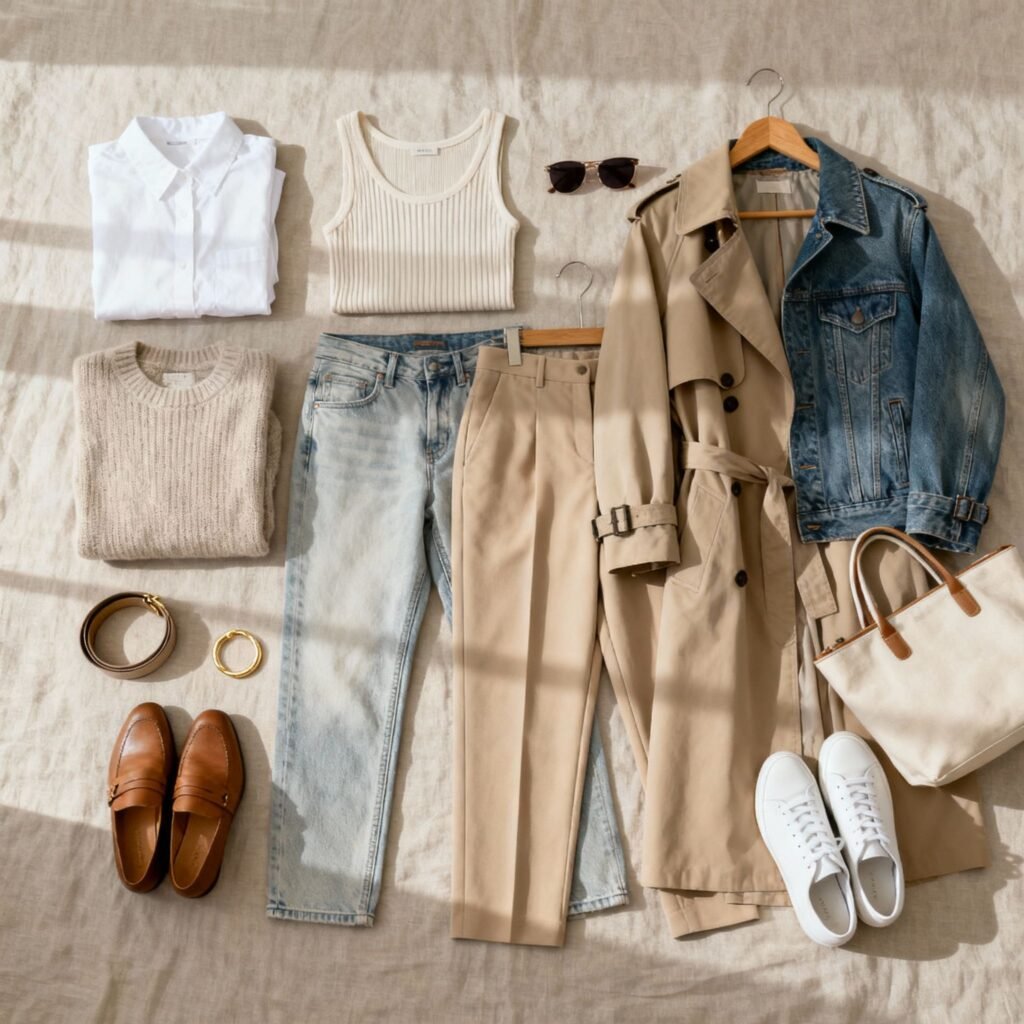
Open your closet. Is it packed so tight that you can’t slide a hanger, yet you still feel like you have nothing to wear? You aren’t alone. This paradox is the driving force behind a significant shift in how Americans approach getting dressed. We are moving away from the chaotic cycle of endless trends and towards a philosophy that values quality, intention, and calm.
This is the essence of minimalism. It isn’t just about owning fewer shirts or sticking to a monochrome palette; it is a conscious decision to opt out of the relentless consumerism that defines the modern retail landscape. By embracing simplicity, you gain more than just closet space—you gain mental clarity, financial freedom, and a sense of personal style that outlasts any fleeting fad.
In this guide, we explore why the minimalist fashion movement is taking hold across the United States, how it benefits both the consumer and the planet, and how you can curate a wardrobe that truly works for you.
What Is the Minimalist Fashion Movement?
At its core, the minimalist fashion movement USA consumers are adopting is about intentionality. It challenges the conventional narrative that more is better. Instead, it champions the idea that having fewer items that you absolutely love is superior to having a surplus of items you merely tolerate.
Minimalism in fashion is defined by three main pillars: simplicity, functionality, and versatility. It strips away the unnecessary details—the loud logos, the impractical cuts, the uncomfortable fabrics—to reveal the garment’s essential form.
However, a common confusion arises between “minimalist” and “basic.” While they overlap, they are not the same. Basic fashion often refers to unbranded, simple items like t-shirts and jeans. Minimalist fashion is a broader philosophy regarding the curation of those items. A minimalist wardrobe might contain a bold, architectural red coat, provided it is a cherished, versatile piece that serves a distinct purpose. It is the rejection of excess, not the rejection of personality.
Why Minimalist Fashion Is Growing in the USA
The retail landscape is changing. The minimalist fashion USA market is expanding as cultural priorities shift. Several factors are driving this change, moving the American consumer away from the “haul” culture of the early 2010s.
First, there is a profound lifestyle shift towards decluttering. Influenced by figures like Marie Kondo and The Home Edit, Americans are realizing that physical clutter leads to mental clutter. A disorganized wardrobe is a daily source of stress. By streamlining their possessions, people are finding a sense of control and peace in their daily routines.
Second, the economic climate plays a significant role. Inflation and the rising cost of living have made consumers more value-driven. The “buy cheap, buy often” model is proving to be expensive in the long run. Consumers are now more willing to spend $100 on one high-quality item that lasts five years than $20 on five items that fall apart after a few washes.
Lastly, awareness is growing regarding the environmental cost of overconsumption. As sustainability conversations enter the mainstream, shoppers are looking for ways to reduce their personal carbon footprint. Buying less is the most effective way to do so.
Capsule Wardrobes Explained
You cannot discuss minimalism without discussing the vehicle that drives it: the capsule wardrobe. A capsule wardrobe USA style enthusiasts swear by is a curated collection of interchangeable clothing items designed to maximize the number of outfits you can create.
Typically, a capsule wardrobe consists of 30 to 50 items, including tops, bottoms, dresses, outerwear, and shoes. This count usually excludes workout gear, swimsuits, and underwear. The magic lies in the cohesion. Because every piece is chosen to complement the others, you can pull any top and any bottom from the rack and know they will work together.
This concept often works best when planned seasonally. You might have a core collection of year-round basics (jeans, white tees) and rotate in seasonal capsules (linen for summer, heavy wool for winter). This rotation keeps the wardrobe feeling fresh without the need to shop for new trends constantly.
Key Elements of Minimalist Style
If you look at the minimalist clothing style USA influencers and everyday people are adopting, you will notice consistent visual themes. These elements ensure that the clothing remains timeless rather than trendy.
Neutral Color Palettes
Neutral tones—black, white, gray, navy, beige, and camel—are the backbone of a minimalist closet. These colors effortlessly pair with one another, removing the “does this match?” anxiety from your morning routine. While pops of color are certainly allowed, they usually act as accents rather than the foundation.
Clean Lines and Classic Silhouettes
Minimalism favors structure and simplicity. Think of a perfectly tailored blazer, a crisp button-down shirt, or straight-leg trousers. These silhouettes have stood the test of time for decades. They don’t rely on gimmicks like excessive ruffles or complicated patterns to make a statement.
Versatile Fabrics
Texture plays a huge role when color is stripped back. Minimalists often gravitate toward natural, high-quality fabrics like cotton, linen, silk, wool, and cashmere. These materials not only look better but tend to drape and wear better than their synthetic counterparts.
Minimalist Fashion vs Fast Fashion
To understand the value of minimalism, one must look at its adversary. The battle of minimalist fashion vs fast fashion is a battle of philosophies.
Fast fashion relies on a model of planned obsolescence. Brands churn out micro-trends at breakneck speeds, using cheap materials and labor to sell garments at rock-bottom prices. The goal is to make the consumer feel off-trend after a few weeks, prompting another purchase. It prioritizes quantity and immediacy.
Minimalist fashion flips this script. It focuses on longevity. The initial price tag of a minimalist piece might be higher, but the “cost-per-wear” is significantly lower. A $200 pair of boots worn 500 times costs $0.40 per wear. A $40 pair of trendy boots worn twice costs $20 per wear. Minimalism asks you to view your clothing as an investment portfolio rather than a disposable commodity.
Role of Sustainability in Minimalist Fashion
The environmental impact of the fashion industry is staggering, contributing significantly to global wastewater and carbon emissions. Sustainable minimalist fashion USA advocates are using their purchasing power to demand change.
Minimalism is inherently sustainable because it drastically reduces consumption. The most eco-friendly garment is the one you already own or the one you don’t buy. By simply buying fewer things, minimalists opt out of the waste cycle.
Furthermore, because minimalists buy less, they often have the budget to support ethical brands. They can afford to pay a premium for organic cotton or fair-trade labor because they aren’t splitting their budget across fifty cheap items. This supports a production model that values human rights and environmental stewardship over corporate profit margins.
How Social Media Influences Minimalist Fashion
While social media is often blamed for fueling overconsumption, it is also responsible for popularizing the minimalist fashion trends USA is seeing today. Platforms like TikTok, Instagram, and Pinterest have given rise to aesthetics like “Old Money,” “Quiet Luxury,” and “The Clean Girl Aesthetic.”
While these labels come and go, the underlying message is consistent: simplicity is chic. Influencers are now gaining followings not by showing off massive shopping hauls, but by showing how to style one white shirt in five different ways.
This normalization of outfit repetition is a massive cultural shift. Social media is helping to dismantle the stigma of being seen in the same outfit twice. It celebrates creativity in styling rather than the volume of ownership.
Benefits of Adopting a Minimalist Wardrobe
Why make the switch? The benefits of minimalist wardrobe adoption extend far beyond looking stylish.
- Reduced Decision Fatigue: The average person makes thousands of decisions a day. Eliminating the morning struggle of “what to wear” saves precious mental energy for things that actually matter.
- Financial Health: When you stop impulse buying and chasing trends, you save a significant amount of money. You can redirect those funds toward experiences, travel, or savings.
- Less Stress and Clutter: A tidy, organized space fosters a tidy mind. Opening a closet where clothes have room to breathe is a calming experience compared to fighting through a jam-packed rail.
- Personal Style Definition: When you can’t hide behind trends, you are forced to figure out what you actually like. Minimalism helps you hone a signature style that feels authentic to you.
Challenges & Misconceptions
Despite the benefits, there are several minimalist fashion myths that deter people from starting.
Myth 1: Minimalism is boring.
Many assume a minimalist wardrobe lacks personality. In reality, a minimalist wardrobe allows your personality to shine through because the clothes aren’t wearing you. You can still wear prints, colors, and accessories; you just do so with intention.
Myth 2: It stifles creativity.
Actually, constraints breed creativity. When you have fewer items, you are forced to experiment with layering and styling in new ways. You become more inventive with what you have.
Myth 3: It’s too expensive to start.
You do not need to throw out your current clothes and replace them with expensive designer basics. Minimalism starts with decluttering, which costs nothing. You replace items slowly, over time, as your budget allows.
How to Start a Minimalist Wardrobe
Ready to make a change? Here is how to build a minimalist wardrobe USA residents can adapt to their specific climate and lifestyle.
1. The Great Edit:
Take everything out of your closet. Create three piles: Keep, Donate/Sell, and Recycle. Be ruthless. If it doesn’t fit, is damaged, or you haven’t worn it in a year, it goes.
2. Identify Your Uniform:
Look at your “Keep” pile. What are the common denominators? Do you love high-waisted jeans? Do you live in button-downs? This is your uniform. Build your future purchases around these silhouettes.
3. Fill the Gaps:
Once you have pared down, you might notice missing links. Maybe you have great jeans but no versatile tops. Make a specific shopping list for high-quality basics to fill these gaps.
4. The “One In, One Out” Rule:
To maintain your new minimalist status, adopt a policy where for every new item you bring in, one old item must leave. This prevents clutter from creeping back in.
Frequently Asked Questions (FAQ)
Q1. What is the minimalist fashion movement?
The minimalist fashion movement is a lifestyle shift toward owning fewer, higher-quality clothing items. It emphasizes simplicity, intentionality, and sustainability over fast-paced trends and excessive consumption.
Q2. Why is minimalist fashion popular in the USA?
It is growing due to a desire to reduce stress and clutter, save money in an inflationary economy, and reduce environmental impact. It counters the overwhelming nature of modern consumerism.
Q3. How many items are in a capsule wardrobe?
While there is no strict rule, most capsule wardrobes contain between 30 and 50 items. This typically includes daily clothing and shoes but excludes accessories, gym wear, and sleepwear.
Q4. Is minimalist fashion sustainable?
Yes, it is one of the most sustainable ways to dress. By buying less and keeping clothes longer, you reduce waste and lower the demand for resource-intensive manufacturing.
Q5. Can minimalist fashion be stylish and trendy?
Absolutely. Minimalist fashion focuses on timeless style, which arguably looks “better” longer than fleeting trends. You can also incorporate current trends through small accessories rather than overhauling your whole wardrobe.
Q6. Does minimalist fashion save money long term?
Yes. Although individual items may cost more upfront, you buy significantly less often. High-quality items also last longer, meaning you don’t have to replace them every season.
Q7. Is minimalist fashion suitable for all ages?
Yes. Because it relies on classic silhouettes and comfort, minimalist fashion works for teenagers, working professionals, and retirees alike. It is adaptable to any life stage.
Style Through Simplicity
The minimalist fashion movement is not about deprivation; it is about liberation. It frees you from the pressure to constantly keep up, the guilt of wasteful spending, and the burden of a cluttered home. By choosing quality over quantity, you are choosing a lifestyle of intention.
Whether you start by simply cleaning out a drawer or committing to a full capsule wardrobe, the journey toward simplicity is rewarding. Fashion should make you feel confident and ready to face the world, not stressed and overwhelmed. In a noisy world, sometimes the boldest statement you can make is a quiet one.