

Major Historical Events That Changed Clothing Forever

Clothing isn’t just about staying warm or following trends. It’s a living archive of human experience—shaped by wars, trade, revolutions, and innovation. Every garment tells a story about the people who made it, wore it, and changed because of it.
Throughout history, certain events have fundamentally altered how we dress. Some shifts were gradual, like the slow exchange of textile techniques along ancient trade routes. Others were abrupt, like the industrial revolution’s transformation of clothing from handmade luxury to mass-produced necessity. Understanding these turning points reveals not just fashion history, but human history itself.
This exploration traces the pivotal moments that redefined what we wear and why. From the transition from tribal dress to structured fashion to modern movements that challenge traditional norms, these events show how clothing evolves alongside society. They demonstrate that fashion is never static—it adapts, reflects, and sometimes drives the changes that define eras.
How History Shaped Human Clothing Evolution
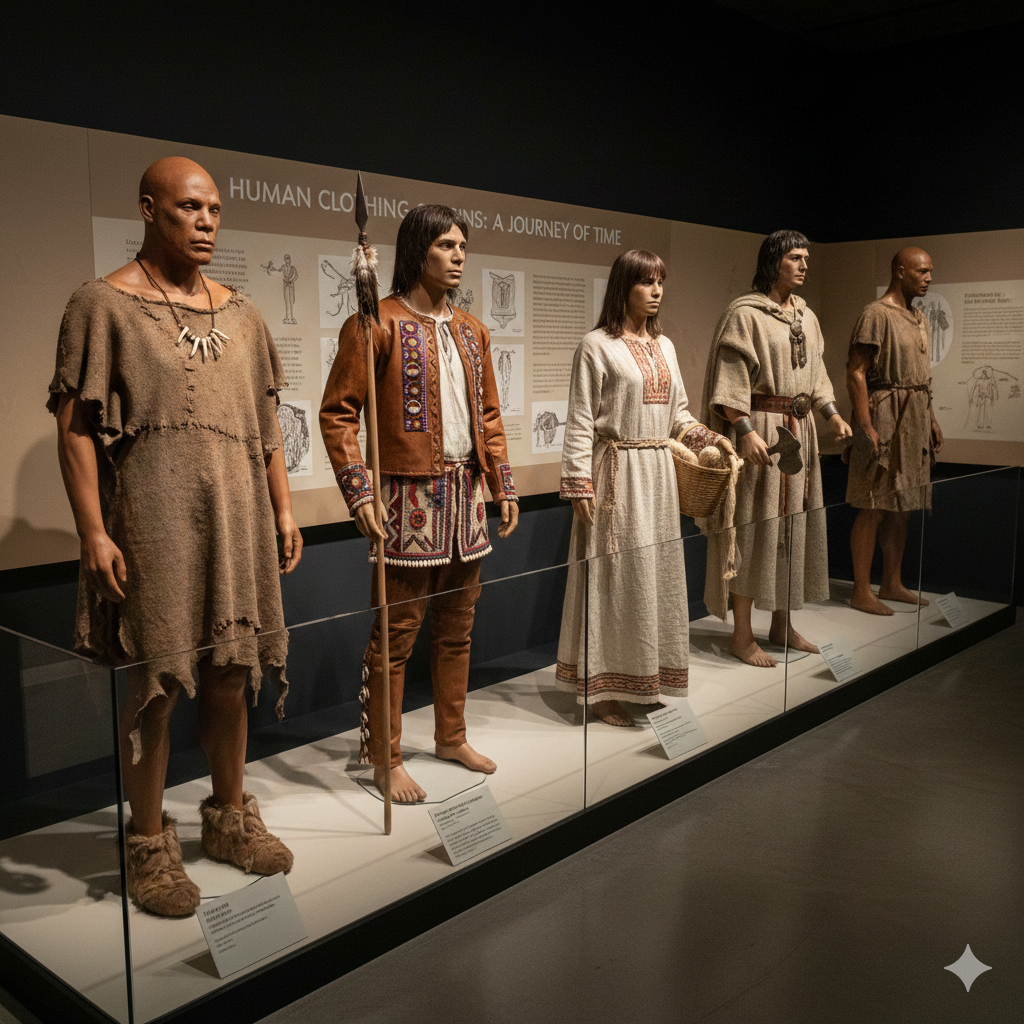
Clothing evolution mirrors human civilization. As societies grew more complex, so did their garments. Political power shifts introduced new status symbols. Economic changes determined who could afford certain fabrics. Social movements questioned who had the right to wear what.
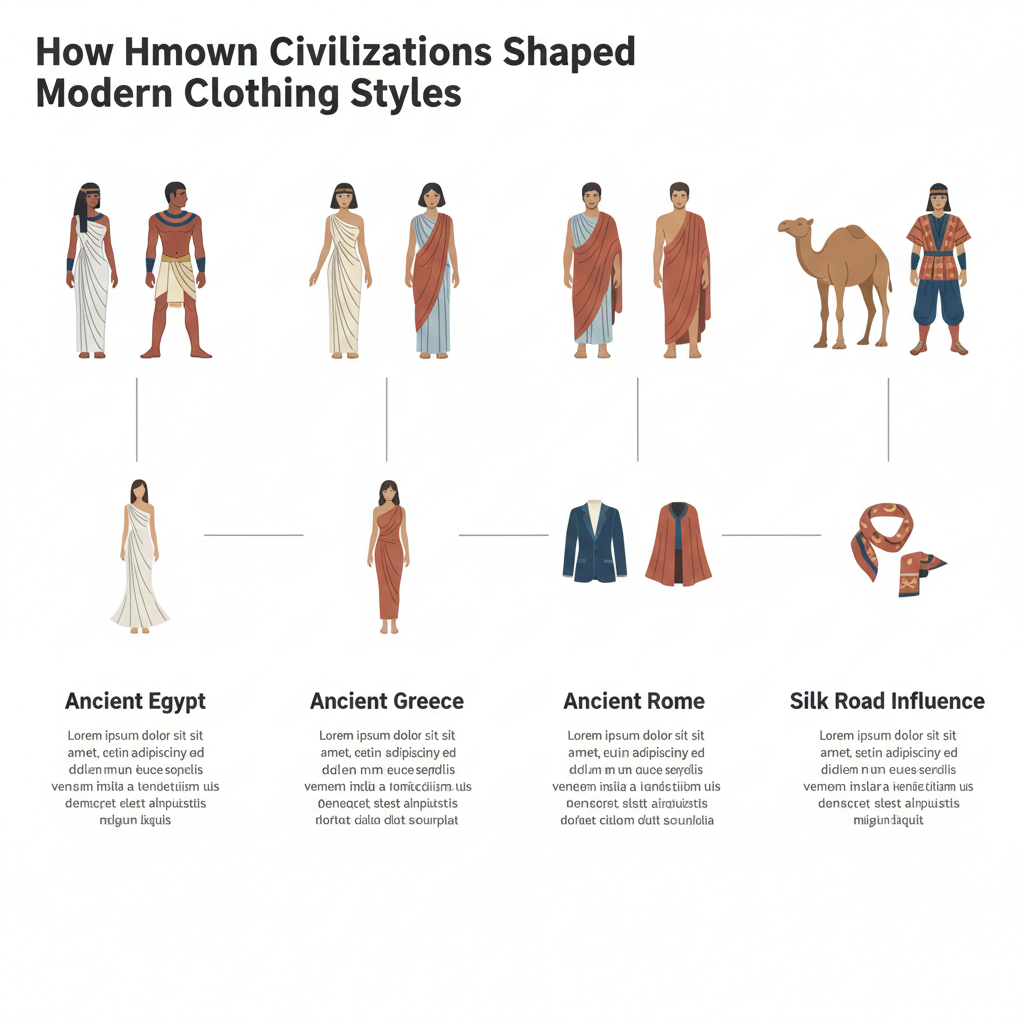
Ancient civilizations laid the groundwork for many practices still visible today. The Egyptians developed linen production techniques that influenced Mediterranean cultures for centuries. Roman togas signaled citizenship and social rank. Chinese silk production remained a closely guarded secret that shaped international relations. These early developments in how ancient civilizations shaped clothing styles created frameworks that would persist for millennia.
Religious and philosophical movements also left their mark. Buddhist monks adopted simple robes that rejected materialism. Islamic traditions emphasized modesty in dress across diverse climates and cultures. Christian monasteries became centers of textile production in medieval Europe. Each belief system brought its own interpretation of what clothing should represent.
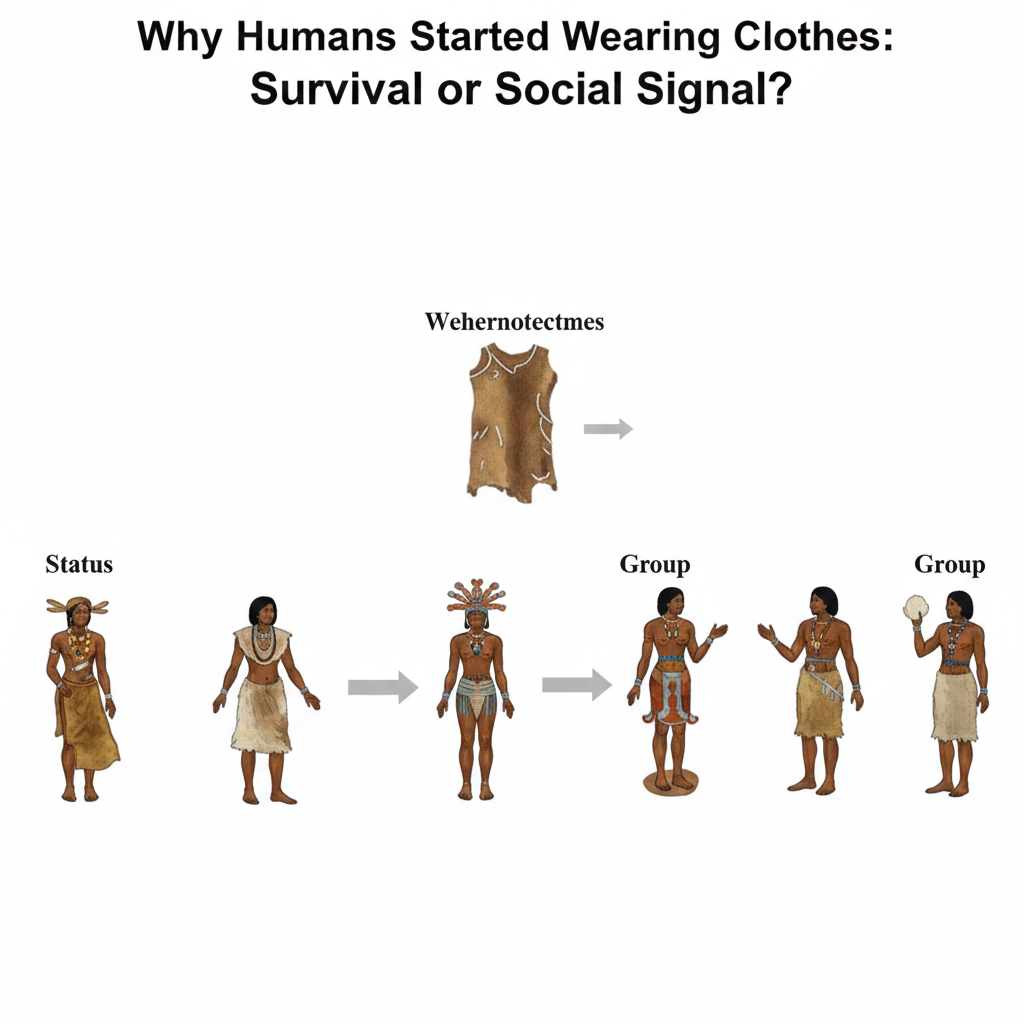
The evolution from functional protection to complex social signaling happened gradually. Early humans needed garments for survival. Later societies used them to communicate wealth, profession, marital status, religious affiliation, and political allegiance. This transformation from necessity to symbol represents one of humanity’s most sophisticated non-verbal languages.
Trade Routes and Cultural Exchange in Clothing Development
The Silk Road and Textile Innovation
The Silk Road wasn’t a single path but a network of routes connecting East and West for over 1,500 years. While it’s famous for silk, this exchange system transformed clothing across three continents. Chinese silk techniques reached Persia, then Europe. Indian cotton textiles traveled to Africa and the Mediterranean. Central Asian dyeing methods influenced both ends of the trade network.
This exchange accelerated innovation. When Chinese silk arrived in Rome, it was worth more than gold by weight. The demand sparked centuries of attempts to replicate production methods. Byzantine emperors eventually succeeded in establishing their own silk industry, breaking China’s monopoly. This competition drove improvements in weaving, dyeing, and garment construction across multiple cultures.
The Silk Road also spread practical knowledge. Desert travelers learned which fabrics best protected against sun and sand. Mountain communities discovered layering techniques. Coastal populations developed weather-resistant treatments. These practical innovations moved along trade routes just as surely as luxury goods, enriching clothing traditions everywhere.
Global Movement of Garment Ideas
Trade routes did more than move products—they relocated people and their expertise. Weavers traveled to new markets. Dyers sought better materials. Tailors followed wealthy patrons to new cities. This movement of skilled workers spread techniques faster than written instructions ever could.
The impact of how migration influenced early clothing design extended beyond practical skills. Aesthetic preferences merged and evolved. Color symbolism shifted as cultures mixed. Garment shapes adapted to new climates while retaining elements from ancestral traditions. What emerged was often more innovative than what existed before.
Maritime trade routes added another dimension to this exchange. Ships carried larger volumes than camel caravans. Port cities became melting pots where clothing traditions from multiple continents intersected. Sailors themselves developed specialized garments that influenced coastal fashion worldwide. The striped shirt, pea coat, and bandana all originated in maritime culture before entering mainstream fashion.
Industrialization and the Rise of Mass Clothing Production
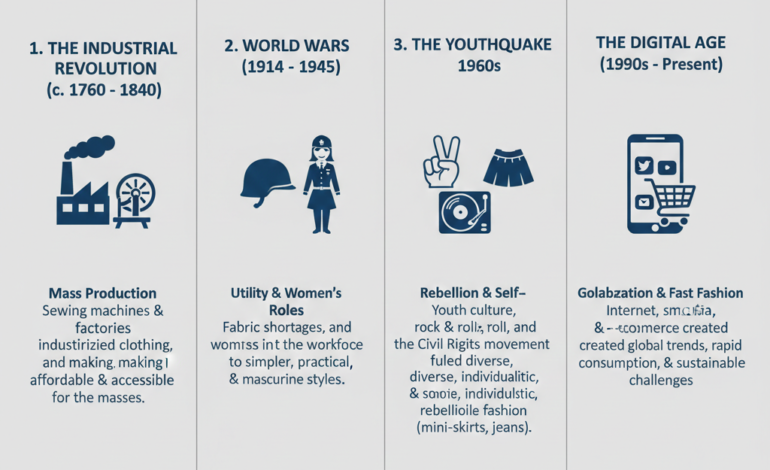
The Industrial Revolution changed everything about how people obtained clothing. For thousands of years, garments were made by hand—in homes, workshops, or by specialized craftspeople. Production was slow and expensive. Most people owned few items of clothing and wore them until they fell apart.
Mechanization shattered this model. The spinning jenny, power loom, and sewing machine transformed clothing from rare commodity to accessible product. A single textile mill could produce more fabric in a day than a hundred hand-weavers could in a month. The difference between woven and knitted garments became less about manual skill and more about machine settings.
This shift democratized fashion in unprecedented ways. Ready-made clothing appeared in shops for the first time. Standard sizing systems developed to serve mass markets. Fashion magazines emerged to promote new styles that could be manufactured quickly. For the first time in history, ordinary people could afford to follow trends rather than wearing traditional regional dress.
However, industrialization also created new problems. Factory conditions were often dangerous and exploitative. Traditional craftspeople lost livelihoods as machines replaced skilled labor. The from fiber to fabric clothing process became fragmented across multiple locations and workers, each performing repetitive tasks. The social cost of cheap clothing became a debate that continues today.
The speed of fashion also accelerated dramatically. Where styles once changed over decades, industrial production enabled seasonal trends. Clothing became disposable rather than heirloom. This shift in mindset—from clothing as investment to clothing as temporary—fundamentally altered humanity’s relationship with garments.
Social Revolutions That Changed Fashion Identity
Clothing has always been political, but certain historical moments made this explicit. The French Revolution saw aristocratic dress codes violently rejected. Revolutionaries adopted simple “sans-culottes” trousers instead of nobility’s knee breeches. This wasn’t merely aesthetic—it was a statement that class distinctions had no place in the new order.
Women’s suffrage movements similarly used clothing as protest. Suffragettes wore white dresses during demonstrations, symbolizing purity of purpose. They also adopted more practical clothing—shorter skirts, simpler silhouettes—as both political statement and practical necessity for active campaigning. These choices challenged the restrictive fashions that had limited women’s mobility for centuries.
The 1960s counterculture movement rejected conformity through dress. Long hair, denim, tie-dye, and ethnic-inspired clothing became symbols of opposition to mainstream values. This wasn’t random rebellion—it was deliberate visual communication about political beliefs, social values, and generational identity. The movement demonstrated what clothing says about identity in modern society more explicitly than ever before.
Civil rights movements also used clothing strategically. The Black Power movement reclaimed African-inspired dress. LGBTQ+ activists challenged gender norms through androgynous and gender-nonconforming fashion. Disabled activists demanded clothing designed for diverse bodies. Each movement recognized that controlling one’s appearance was inseparable from controlling one’s identity and rights.
These social revolutions permanently expanded fashion’s vocabulary. They established that choosing what to wear could be an act of resistance, solidarity, or self-determination. This understanding continues to influence how people use clothing to express beliefs and affiliations today. The psychological impact of these choices, including how clothing affects confidence and human psychology, has become an accepted area of study.
How Historical Events Influenced Silhouettes and Style Trends
Wars have repeatedly reshaped silhouettes out of necessity and symbolism. World War I saw women enter factories, requiring practical clothing. Corsets loosened, skirts shortened, and trousers became acceptable. These weren’t just temporary wartime adjustments—they permanently altered what was considered appropriate for women to wear.
World War II fabric rationing created new design constraints. The “utility suit” with its narrow silhouette and minimal embellishment became both practical necessity and patriotic statement. Women’s fashion embraced broader shoulders and shorter hemlines. These restrictions sparked creativity within limits, proving that innovation often emerges from constraint.
Understanding what is a clothing silhouette helps explain why certain historical moments created lasting changes. The S-curve silhouette of the Edwardian era reflected Victorian ideals about femininity. The boyish flapper silhouette of the 1920s embodied post-war liberation and modernity. The New Look of post-WWII fashion represented a desire to return to glamour and femininity after years of austerity.
Economic booms and busts also influenced silhouettes. Prosperity often brought more elaborate, fabric-intensive styles. Economic hardship favored simplicity and practicality. The relationship between economic conditions and fashion volume is remarkably consistent across different eras and cultures.
Physical ideals shifted with these silhouette changes. Different eras emphasized different body parts—bust, waist, hips, legs. Fashion and how body shapes influence clothing silhouettes became a complex negotiation between designer vision, manufacturing capability, and cultural beauty standards. Each major silhouette shift required society to recalibrate what bodies should ideally look like.
From Historical Change to Modern Fashion Movements
Contemporary fashion movements carry DNA from historical disruptions. Streetwear, now a multi-billion dollar industry, emerged from the same anti-establishment impulses that drove 1960s counterculture fashion. Hip-hop artists used clothing to signal identity and status, much like ancient nobility did with purple dye or ermine fur.
The evolution of how streetwear changed modern dressing habits demonstrates how subcultural fashion can reshape mainstream industry. What began as niche community expression became high fashion runway material. Supreme, Off-White, and other streetwear brands now collaborate with luxury houses, blurring boundaries that once seemed absolute.
Athleisure represents another modern movement with historical precedents. The acceptance of athletic wear in casual settings echoes earlier moments when specialized clothing crossed into everyday wear. Jeans, originally workwear, made a similar transition. T-shirts, once undergarments, became outerwear. The rise of athleisure clothing trends follows this pattern of functional clothing gaining social acceptability.
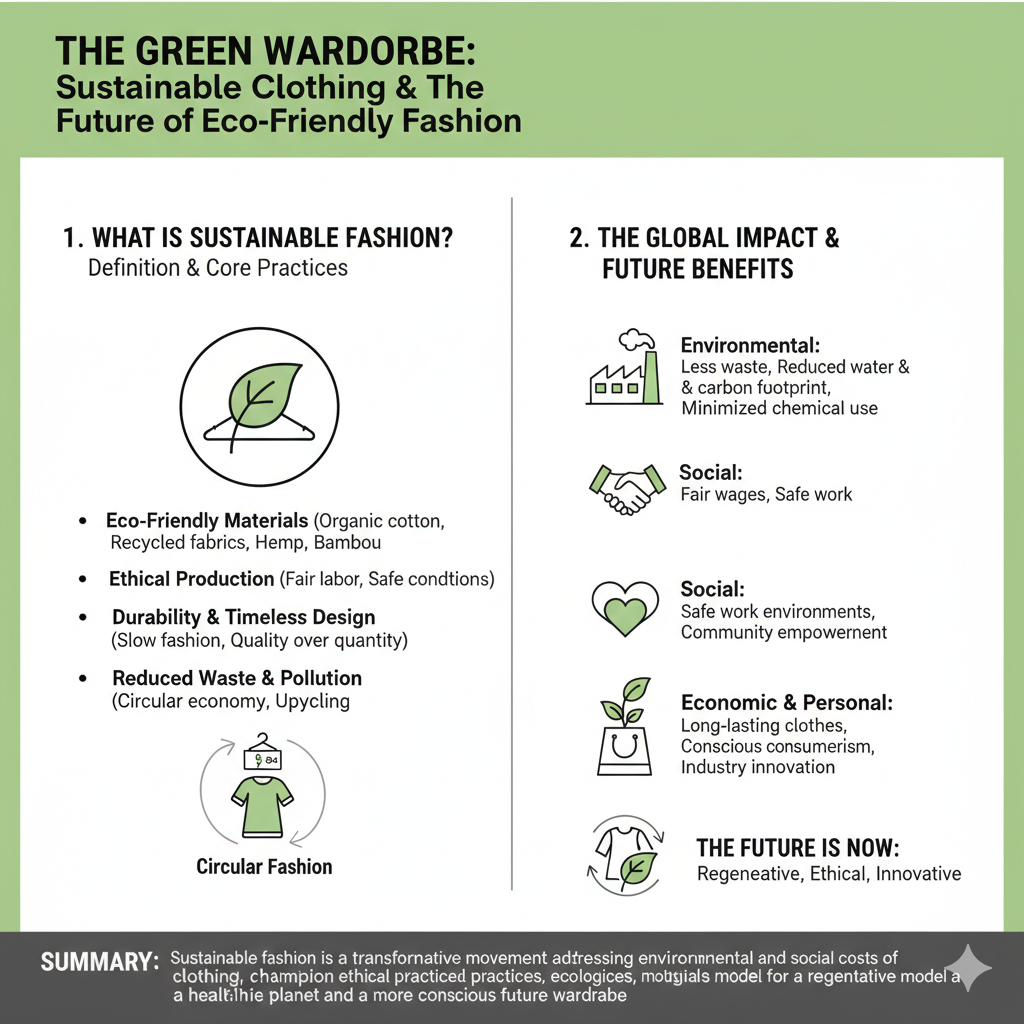
Sustainability movements in fashion look backward to move forward. They revive slow fashion principles that existed before industrialization. The emphasis on quality, durability, and repair echoes pre-industrial attitudes toward clothing as valuable, long-term investment. This isn’t nostalgia—it’s applying historical wisdom to modern environmental challenges.
Digital culture is creating entirely new clothing contexts. Virtual fashion for avatars raises questions about garments’ physical necessity. NFT fashion items exist only as digital assets. Social media has accelerated trend cycles while simultaneously enabling niche styles to find global communities. These developments would seem alien to previous generations, yet they’re logical extensions of clothing’s evolution as human civilization’s mirror.
History as the Engine of Clothing Evolution
Major historical events haven’t just changed clothing—they’ve used clothing to change society. Every significant shift in how humans dress reflects deeper transformations in how we organize ourselves, what we value, and who we believe we are.
The events explored here—trade route exchanges, industrial revolutions, social movements, wars, and cultural shifts—demonstrate that fashion is never frivolous. It’s a system of meaning that adapts as human needs and values evolve. Understanding why humans started wearing clothes helps us appreciate how far we’ve traveled from that origin point.
Looking forward, clothing will continue evolving in response to new challenges and opportunities. Climate change, technological advancement, and shifting cultural values will shape what we wear just as surely as past events did. The future of human clothing in a digital world promises changes as dramatic as any historical transformation discussed here.
History teaches us that clothing evolution is inevitable but not predetermined. Humans have agency in shaping what comes next. The choices made today about sustainability, inclusivity, technology integration, and cultural respect will determine what future generations wear—and what those garments say about this era’s values and vision.