


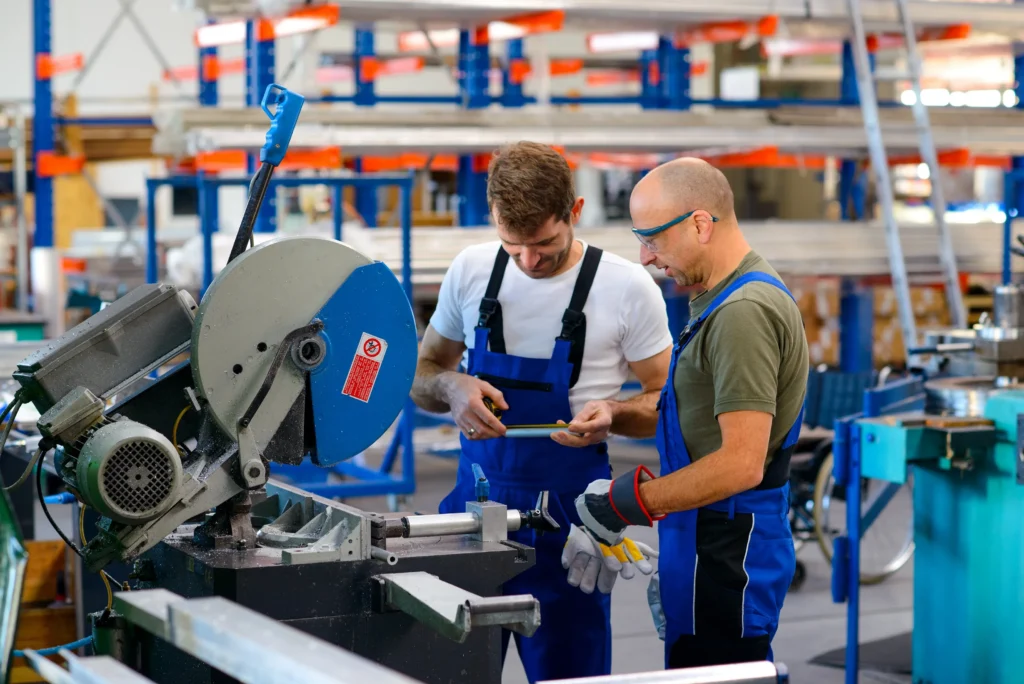
Walk into a grocery store, log into a customer service chat, or watch a modern assembly line, and the shift is undeniable. Machines are no longer just tools we use; they are partners that work alongside us—and in some cases, replace us. The rise of artificial intelligence (AI), advanced robotics, and sophisticated software is reshaping the American labor market at a speed that feels unprecedented.
While headlines often focus on the fear of robots stealing jobs, the reality is far more nuanced. We are witnessing a fundamental transformation in how work is done, how value is created, and what skills are required to earn a living. This isn’t just a story about technology; it’s a story about people and how they adapt to a new economic landscape.
Understanding this shift is critical for employees, business leaders, and policymakers alike. This guide explores the complex relationship between technology and labor, examining exactly how these changes are playing out across the United States.
What Is Workforce Automation?
To understand the current shifts, we first need to define what we are talking about. When we discuss workforce automation USA trends, we are looking at the use of technology to perform tasks with reduced human assistance.
Automation vs. AI: The Distinction
It is important to distinguish between standard automation and artificial intelligence, though they often overlap.
- Automation generally refers to software or machines following a pre-programmed set of rules to perform repetitive tasks. Think of a robotic arm welding a car part or a script that automatically sends invoices.
- Artificial Intelligence (AI) involves systems that can learn, reason, and solve problems. These systems improve over time. A chatbot that learns to answer complex customer queries or an algorithm that predicts stock market trends are examples of AI.
Tasks vs. Jobs
A critical concept in this discussion is the difference between a “job” and a “task.” Very few jobs can be fully automated. However, almost every job consists of multiple tasks, some of which are highly automatable. The current wave of technology is primarily automating specific tasks—data entry, scheduling, basic assembly—rather than eliminating entire roles. This shifts the worker’s focus toward the non-routine aspects of their job.
Impact of Automation on the Workforce
The impact of automation on the workforce USA is reshaping the structure of the economy. The narrative is often painted as “man vs. machine,” but the data suggests a relationship that is more collaborative.
Job Transformation Over Job Loss
While displacement is a reality, transformation is the dominant trend. As machines take over routine and dangerous tasks, human roles are evolving to focus on supervision, strategy, and creative problem-solving. For example, a bank teller’s role has shifted from counting cash (now done by ATMs) to relationship management and sales.
Productivity and Efficiency Gains
Automation drives productivity. When businesses can produce more with fewer resources, the cost of goods often drops, and the demand for new services rises. This economic growth can theoretically lead to more hiring in other sectors. In the US, sectors that have embraced automation, such as finance and manufacturing, have seen significant output gains, even if the headcount in specific roles has decreased.
Changing Role Definitions
The definition of what constitutes “work” is changing. We are moving away from an economy based on repetitive physical or cognitive labor toward one based on “human” skills—empathy, complex negotiation, and innovation.
Jobs Most Affected by Automation
Certain sectors face a higher risk of disruption than others. When analyzing jobs affected by automation USA, we see a clear pattern: roles involving routine, predictable physical or cognitive work are the most vulnerable.
Manufacturing and Logistics
This sector has been at the forefront of automation for decades. However, the next generation of robots is smarter and more flexible. In warehousing, autonomous mobile robots (AMRs) now handle the picking and packing that humans used to do, drastically changing the daily life of a warehouse worker.
Administrative and Clerical Roles
White-collar work is not immune. Bookkeeping, data entry, and basic scheduling are increasingly handled by software bots. Robotic Process Automation (RPA) can handle high-volume administrative tasks faster and with fewer errors than humans.
Retail and Customer Support
Self-checkout kiosks are the most visible example, but the changes go deeper. AI-driven inventory management systems reduce the need for stockroom staff, while sophisticated chatbots handle a significant percentage of tier-one customer support queries.
Transportation and Warehousing
While fully autonomous trucking on public roads faces regulatory and technical hurdles, the technology is advancing. In controlled environments like mines and ports, autonomous vehicles are already moving goods, signaling a major shift for drivers and operators in the near future.
New Jobs Created by Automation
History shows that while technology destroys some jobs, it creates others—often ones we couldn’t have predicted. The jobs created by automation USA generally fall into three categories.
AI and Data-Related Roles
As companies adopt more technology, they need experts to build, maintain, and improve it. Demand is skyrocketing for data scientists, machine learning engineers, and software developers. These are high-skill, high-wage roles that are becoming central to every industry, not just tech.
Automation Engineers and Technicians
Robots break, and algorithms drift. There is a growing need for technicians who can repair advanced machinery and engineers who can design automated workflows. These roles often require specialized technical training but not necessarily a four-year degree, offering a pathway to the middle class.
Human-Centered and Creative Roles
As machines handle the logic and the heavy lifting, the value of uniquely human traits increases. We are seeing growth in:
- Caregiving and Healthcare: Jobs that require empathy and physical touch.
- Education and Training: Teaching others how to navigate new systems.
- Creative Arts: Design, writing, and entertainment, where human nuance is irreplaceable.
Skills Shifts and Workforce Reskilling
The most urgent challenge facing the American labor market is the “skills gap.” As the demand for reskilling workforce automation USA intensifies, the shelf-life of current skills is shortening.
Technical and Digital Skills
Digital literacy is now a baseline requirement for almost every job. Beyond basic computer skills, there is a need for workers who can collaborate with machines—interpreting data dashboards, managing software tools, and understanding the basics of how AI makes decisions.
Soft Skills and Problem-Solving
Irony abounds in the age of AI: the more advanced computers become, the more valuable human soft skills become. Critical thinking, emotional intelligence, leadership, and adaptability are the hardest things to automate. Employers are increasingly hiring for these traits, knowing they can teach the technical skills later.
Lifelong Learning Importance
The model of “learn for 20 years, work for 40” is obsolete. Workers must embrace continuous learning. Micro-credentials, online certifications, and on-the-job training are becoming as valuable as traditional degrees.
Automation and Wage Impacts
The economic benefits of automation are not always distributed equally. The automation wage impact USA is contributing to a phenomenon known as wage polarization.
Wage Polarization Risks
We are seeing a “hollowing out” of the middle class. High-skill jobs (tech, management) see wage growth because technology complements their work. Low-skill service jobs (food prep, janitorial) remain in demand but often see stagnant wages. The middle-skill jobs (clerical, production)—which historically provided a solid middle-class income—are the ones being automated away most rapidly.
Productivity-Linked Wage Growth
Historically, as workers became more productive thanks to technology, their wages rose. In recent decades, this link has weakened. Productivity has skyrocketed, but median wage growth has not kept pace. Reconnecting productivity gains to worker pay is a central economic challenge.
Automation in Different Industries
Let’s look at how specific industries are adapting.
Manufacturing and Construction
Smart factories use sensors to predict equipment failures before they happen. In construction, 3D printing and brick-laying robots are beginning to address chronic labor shortages, shifting workers from manual labor to machine operation.
Healthcare and Finance
In healthcare, AI assists radiologists in identifying tumors with greater accuracy, allowing doctors to focus on patient care plans. In finance, algorithms execute trades in milliseconds and assess loan risk, shifting bankers toward advisory roles.
Retail and Services
Beyond self-checkouts, “just walk out” technology uses cameras and sensors to eliminate the checkout process entirely. In fast food, automated fryers and burger-flipping robots are being tested to handle peak volumes.
Technology and IT
Even the tech industry automates itself. “No-code” and “low-code” platforms allow non-technical staff to build applications, while AI coding assistants help developers write code faster, changing the entry-level requirements for programming jobs.
Challenges and Concerns Around Automation
The transition is not without friction. Analyzing automation challenges workforce USA reveals significant social and economic hurdles.
Job Displacement Fears
For a truck driver or a cashier, the long-term economic benefits of automation offer little comfort if they lose their livelihood today. The psychological impact of job insecurity is real and pervasive.
Inequality and Access to Training
Not everyone has the time or money to reskill. There is a risk that the benefits of automation will accrue only to those who already have high levels of education, exacerbating existing wealth inequalities.
Ethical and Regulatory Issues
Who is responsible when an autonomous vehicle crashes? How do we prevent AI hiring algorithms from discriminating against certain demographics? These ethical questions are moving faster than the legal framework can handle.
Preparing the Workforce for an Automated Future
To navigate the future of work automation USA, we need a coordinated approach involving all sectors of society.
Education and Training Reforms
Schools need to move away from rote memorization, which machines do better, and focus on critical thinking and adaptability. Vocational schools and community colleges must align their curriculums with local industry needs to create pipelines for automation-ready workers.
Employer-Led Upskilling Programs
Companies cannot simply fire their way to a modern workforce; they must build it. Forward-thinking organizations are investing heavily in internal universities and retraining programs to help current employees transition into new roles.
Policy and Social Safety Nets
Policymakers are exploring ideas like portable benefits (that stay with workers as they move between gig jobs) and wage insurance. There is also a renewed discussion around the social safety net to support workers during transition periods between careers.
Frequently Asked Questions (FAQ)
Q1. How is automation impacting the workforce in the USA?
Automation is shifting the workforce from routine, manual tasks toward cognitive and non-routine work. While it increases productivity and creates new high-tech industries, it also displaces workers in traditional roles, requiring significant reskilling.
Q2. Will automation eliminate jobs or change them?
It will do both, but the primary effect is change. Most jobs will not disappear entirely but will be altered as specific tasks within them are automated. Workers will spend less time on repetitive duties and more time on high-value activities.
Q3. Which jobs are most at risk from automation?
Jobs involving repetitive physical labor (like assembly line manufacturing) and routine data processing (like data entry, basic bookkeeping, and telemarketing) are at the highest risk.
Q4. What new jobs are created by automation?
New roles include AI specialists, data scientists, robot maintenance technicians, and digital transformation managers. Additionally, demand increases for “human-touch” roles in healthcare, therapy, and creative arts.
Q5. How can workers prepare for automation?
Workers should focus on developing “soft skills” like emotional intelligence, leadership, and complex problem-solving. Continual learning and digital literacy are also essential to staying relevant.
Q6. Does automation increase productivity and wages?
Automation generally increases overall economic productivity. However, wage increases have largely favored high-skill workers, leading to a gap where productivity rises but wages for low-to-middle-skill workers stagnate.
Q7. What does the future of work look like with automation?
The future of work will be hybrid, with humans and machines working collaboratively. Career paths will be less linear, requiring lifelong learning and frequent upskilling to adapt to rapidly changing technologies.
Final Thoughts: Automation as a Workforce Evolution
The rise of automation in the US workforce is not a sudden cliff we are falling off, but a steep hill we must climb. It brings undeniable challenges—disruption, uncertainty, and the need for difficult transitions. Yet, it also brings the promise of safer workplaces, less drudgery, and the creation of industries we can currently only imagine.
Success in this new era requires a shift in mindset. We must stop viewing education as a phase of life that ends in our twenties and start viewing it as a lifelong commitment. For businesses, the goal should not just be replacing heads with hardware, but augmenting human potential with machine precision.
The future belongs to the adaptable. By embracing the shift, investing in skills, and fostering a culture of continuous learning, the American workforce can not only survive the age of automation but thrive in it.