


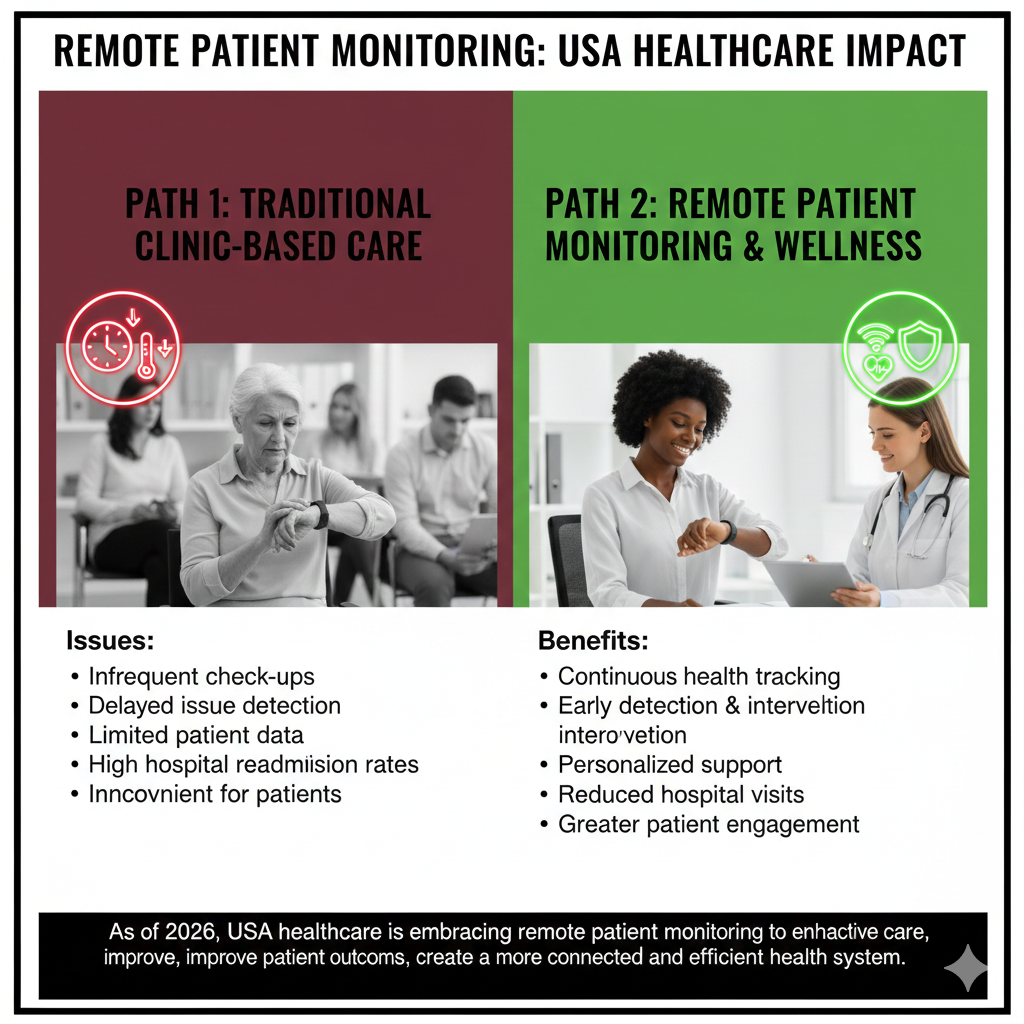
The landscape of American healthcare is shifting. For decades, the standard model of care involved a patient realizing they were sick, making an appointment, driving to a clinic, and sitting in a waiting room. This reactive approach often meant that doctors were seeing patients only when symptoms became severe enough to warrant a visit.
Today, technology is flipping the script. Remote patient monitoring (RPM) is transforming healthcare from reactive to proactive, allowing providers to keep tabs on patient health from miles away. By leveraging connected devices and real-time data, the U.S. healthcare system is moving toward a future where care happens continuously—not just during a 15-minute office slot.
This shift isn’t just about convenience; it’s about saving lives and improving outcomes. From managing chronic conditions like diabetes to preventing unnecessary hospital trips, remote monitoring is proving to be a critical tool in modern medicine. Here is how this technology works and why it is rapidly becoming a cornerstone of patient care across the country.
What Is Remote Patient Monitoring?
At its core, remote patient monitoring (RPM) is the use of digital technologies to collect medical and other forms of health data from individuals in one location and electronically transmit that information securely to healthcare providers in a different location.
Simple Definition
Think of RPM as a digital bridge between you and your doctor. Instead of waiting for an annual check-up to measure your blood pressure or weight, devices in your home measure these vitals and send the data directly to your healthcare team. It extends the reach of the physician into the patient’s daily life.
How Remote Monitoring Works
The process is generally straightforward. A patient is given a device—such as a blood pressure cuff, a glucometer, or a specialized scale—that connects to the internet via Wi-Fi or cellular data. When the patient uses the device, the reading is instantly uploaded to a secure cloud platform. Software algorithms analyze the data, and if a reading falls outside of a safe range, an alert is sent to a nurse or doctor, who can then reach out to the patient to adjust medication or schedule a visit.
Why Remote Monitoring Matters in U.S. Healthcare
The United States faces specific challenges that make RPM not just a luxury, but a necessity.
Rising Chronic Disease Burden
According to the CDC, six in ten Americans live with at least one chronic disease, like heart disease, cancer, or diabetes. These conditions require ongoing management rather than a one-time cure. The sheer volume of patients needing regular monitoring is straining the traditional healthcare infrastructure. RPM offers a scalable way to manage these populations without overwhelming clinics.
Healthcare Access and Staffing Challenges
Many Americans live in “medical deserts”—rural or underserved urban areas where access to primary care is limited. Furthermore, the U.S. is facing a significant shortage of healthcare professionals. RPM allows a single nurse or care coordinator to monitor hundreds of patients efficiently, bridging the gap between limited staff and the growing number of patients who need care.
How Remote Monitoring Improves Patient Care
The primary goal of any healthcare innovation is to make patients healthier. RPM achieves this through several mechanisms.
Early Detection of Health Issues
In traditional care, a patient might notice a symptom and wait a few days before calling a doctor. By then, the condition could have worsened.
Real-time Data Alerts: With RPM, a spike in blood pressure or a sudden drop in oxygen levels triggers an immediate alert. This allows providers to catch subtle changes before the patient even feels different.
Preventing Complications: By catching these warning signs early, doctors can intervene—perhaps by adjusting a dosage or advising dietary changes—preventing a minor issue from escalating into a medical emergency.
Better Chronic Disease Management
Chronic diseases are the most common and costly of all health problems, but they are also the most preventable.
Diabetes, Heart Disease, Hypertension: For a diabetic patient, knowing their blood sugar trends over a month is far more valuable than a single reading in a clinic. For heart failure patients, a sudden weight gain (indicating fluid retention) can be detected immediately by a smart scale.
Continuous Monitoring Benefits: This continuous stream of data gives doctors a “movie” of the patient’s health rather than a “snapshot,” leading to more precise and personalized treatment plans.
Reduced Hospital Readmissions
One of the biggest expenses and risks in U.S. healthcare is the “revolving door” of hospital readmissions. Patients are treated, discharged, and then return weeks later because their condition destabilized at home.
Post-discharge Monitoring: RPM is extensively used for patients recently released from the hospital. By monitoring vitals during the critical 30-day post-discharge window, care teams can ensure recovery is on track.
Faster Intervention: If a recovering patient shows signs of infection or relapse, the care team can intervene immediately, often treating the issue at home or in an outpatient setting rather than requiring another hospital stay.
Improved Patient Engagement
When patients can see their own data, they become active participants in their health journey.
Self-Awareness and Accountability: Seeing the direct correlation between a salty meal and a blood pressure spike helps patients understand the consequences of their lifestyle choices.
Treatment Adherence: Patients who know they are being monitored are often more likely to stick to their medication schedules and follow doctor’s orders, leading to better overall outcomes.
Types of Remote Monitoring Technologies
The hardware used in RPM ranges from familiar consumer gadgets to medical-grade equipment.
- Wearable Devices: Smartwatches and fitness trackers (like Apple Watch or Fitbit) are increasingly capable of monitoring heart rate, rhythm (ECG), and blood oxygen levels.
- Home Medical Monitoring Tools: These include Bluetooth-enabled blood pressure cuffs, glucometers for blood sugar, pulse oximeters, and smart scales.
- Mobile Health Apps: Apps that track diet, symptoms, or medication intake and sync that data with electronic health records.
Role of Remote Monitoring in Telehealth
While telehealth (video visits) and RPM are distinct, they work best together.
Complementing Virtual Visits
A video call with a doctor is helpful, but without physical data, the doctor relies heavily on what the patient says. RPM fills this gap. During a telehealth visit, the doctor can pull up the patient’s real-time vitals from the past week, making the virtual consultation as clinically robust as an in-person exam.
Continuous Care Between Appointments
Telehealth provides the “face-to-face” interaction, while RPM provides the surveillance. Together, they create a continuous loop of care that keeps the patient connected to the health system without requiring physical travel.
Benefits for Healthcare Providers
It’s not just patients who win; providers benefit significantly from adopting RPM.
Data-Driven Decision Making
Doctors no longer have to guess what happened between visits. They have concrete data trends that allow for evidence-based decisions regarding medication adjustments and care plans.
Efficient Resource Allocation
By keeping stable patients at home and catching issues early, clinics can prioritize their in-person time for patients with acute needs or complex conditions that require hands-on examination.
Benefits for Patients and Caregivers
For the average American family, RPM offers practical advantages beyond clinical outcomes.
Convenience and Comfort
Healing happens best at home. RPM allows patients, particularly the elderly or those with mobility issues, to stay in the comfort of their own living rooms while still receiving high-quality oversight.
Reduced Travel and Time Costs
Eliminating the need to drive to a clinic, pay for parking, and wait in a lobby for a routine blood pressure check saves patients money and time. For rural patients who may drive hours for care, this is a massive financial relief.
Remote Monitoring in Preventive Care
While historically used for sick patients, RPM is moving into the preventative space.
Risk Identification
By establishing a baseline for healthy patients, RPM can identify when an individual begins to drift into “at-risk” territory, such as pre-hypertension, long before a diagnosis is needed.
Lifestyle and Behavior Tracking
Data on sleep patterns, activity levels, and heart rate variability can help providers guide patients toward healthier lifestyle choices that prevent disease from taking hold in the first place.
Data Security and Privacy Considerations
As with any technology involving sensitive personal information, security is paramount.
Patient Data Protection
All RPM data transmission must be encrypted and secure. Cybersecurity measures are critical to prevent unauthorized access to health data.
Regulatory Compliance
In the USA, RPM platforms must be HIPAA compliant. This ensures that patient health information is handled with the strictest privacy standards, giving users peace of mind that their medical details remain confidential.
Challenges and Limitations of Remote Monitoring
Despite its promise, RPM faces hurdles in widespread adoption.
Technology Adoption Barriers
Not every patient is tech-savvy. Setting up devices and ensuring they stay connected to Wi-Fi can be difficult for some, particularly older populations who stand to benefit the most.
Data Overload and Accuracy Concerns
Doctors can be overwhelmed by the sheer volume of data. Filtering “noise” (false alarms or irrelevant data) from actionable signals is a challenge. Additionally, consumer-grade devices may not always match the accuracy of hospital-grade equipment.
Remote Monitoring Across Different Care Settings
RPM is versatile and applies to various healthcare environments.
- Hospitals and Clinics: Used to extend the reach of specialists and manage post-op recovery.
- Home-Based Care: The primary setting for RPM, allowing for “hospital-at-home” models where acute care is delivered in the bedroom.
- Elderly and Long-Term Care: Nursing homes and assisted living facilities use RPM to monitor residents closely without intrusive round-the-clock physical checks.
Future of Remote Monitoring in the USA
The trajectory of RPM points toward integration and intelligence.
AI-Driven Insights
Artificial Intelligence will play a massive role. Instead of a human nurse reviewing every data point, AI will analyze trends to predict health events (like a heart attack or stroke) days before they happen, alerting providers only when intervention is truly necessary.
Integration with Electronic Health Records (EHR)
The future will see seamless integration where data from a patient’s smartwatch flows directly into their permanent medical record, giving every doctor they see a complete picture of their health history.
Creating a Healthier Tomorrow
Remote patient monitoring represents a fundamental shift in the American healthcare paradigm. It empowers patients, informs doctors, and ultimately creates a safety net that spans the distance between the clinic and the home. As technology improves and becomes more accessible, RPM will likely become the standard of care, ensuring that help is always available—even when the doctor is miles away.
FAQs – Remote Monitoring and Patient Care
What is remote patient monitoring?
Remote patient monitoring (RPM) uses digital devices to collect health data (like blood pressure or heart rate) from patients in one location and electronically transmit it to healthcare providers in another location for assessment.
How does remote monitoring improve healthcare outcomes?
It improves outcomes by enabling early detection of health deterioration, allowing for quicker medical intervention, reducing hospital readmissions, and helping patients better manage chronic conditions through continuous oversight.
Is remote monitoring safe and accurate?
Yes, when using FDA-cleared medical devices. Data transmission is encrypted to ensure privacy. While consumer wearables are improving, medical-grade RPM devices provided by doctors are generally considered highly accurate.
Who benefits most from remote patient monitoring?
Patients with chronic conditions (such as heart failure, COPD, diabetes, and hypertension), elderly patients who have difficulty traveling, and patients recovering from surgery benefit the most.
Is remote monitoring covered by insurance in the USA?
Medicare and many private insurance providers now cover remote patient monitoring services for patients with chronic or acute conditions, recognizing it as a vital component of modern healthcare.