




How Inflation Impacts Small and Medium Businesses

Introduction to Inflation
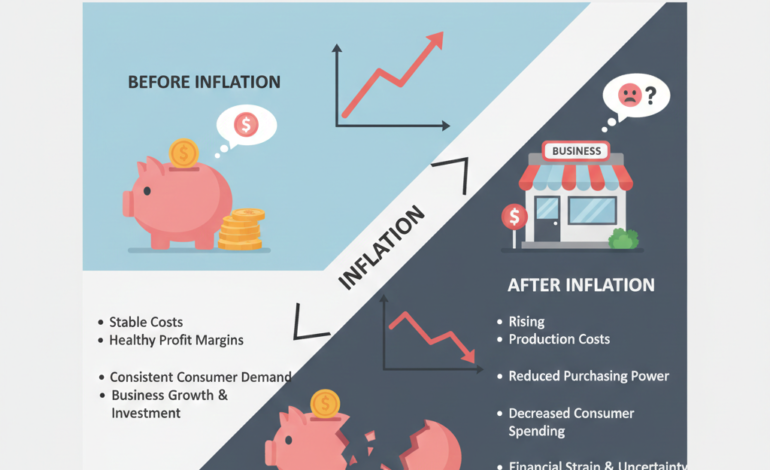
Inflation is defined as the rate at which the general level of prices for goods and services rises, resulting in a decrease in purchasing power. This economic phenomenon can be caused by various factors, including increased production costs, demand for higher wages, or significant changes in consumer spending patterns. Additionally, inflation can arise from expansive monetary policies where central banks inject more money into the economy, leading to an increase in available currency and, consequently, a rise in prices.
The implications of inflation extend beyond consumer behavior; they represent significant challenges for small and medium-sized businesses (SMBs). As inflation drives up the cost of raw materials, rent, and labor, the overall operating expenses for these enterprises can escalate swiftly. Additionally, if businesses are unable to pass on these increased costs to consumers through higher prices, it may compromise their profit margins. Understanding inflation is therefore critical for SMBs, as it not only affects their pricing strategies but also their long-term planning and sustainability.
Moreover, inflation influences interest rates as central banks react to rising prices; thus, borrowing costs for SMBs can also increase, further complicating financial management. Businesses must remain vigilant and adaptable in the face of inflationary pressures. By being informed about inflation trends and their potential impacts, SMBs can devise strategies to maintain operational efficiency and safeguard their financial health.
Understanding Small and Medium Businesses (SMBs)
Small and medium businesses (SMBs) play a crucial role in the global economy, acting as the backbone of many countries. Typically, SMBs are defined based on the number of employees and annual revenue. In the United States, the Small Business Administration (SBA) categorizes businesses with fewer than 500 employees as small, while medium-sized businesses usually have employees ranging from 500 to 1,000.
Statistics reveal that SMBs significantly contribute to employment and economic growth. According to recent data from the U.S. Census Bureau, small businesses alone account for approximately 44% of U.S. economic activity. In terms of job creation, SMBs are responsible for about 61% of new private-sector jobs, highlighting their pivotal role in fostering employment opportunities and nurturing local economies.
Furthermore, SMBs are often seen as key drivers of innovation. The Kauffman Foundation found that start-ups and small enterprises introduce a significant portion of innovations, especially in technology and service sectors. The dynamic nature of SMBs allows them to adapt quickly to changing market conditions, thereby introducing new products, services, or processes that challenge conventional practices.
Globally, the impact of SMBs is equally notable. The World Bank outlines that businesses categorized as small or medium account for over 90% of all firms and provide around 60% of total employment in emerging economies. These numbers underscore the essential role SMBs play not just in economic output but also in creating job opportunities and driving community development.
The multifaceted contributions of SMBs to the economy, workforce, and innovation render them indispensable to overall economic health. Understanding their significance is essential, especially within the context of external factors such as inflation, which can have pronounced effects on these vital economic entities.
Direct Effects of Inflation on Operating Costs
Inflation has significant and direct repercussions on the operational costs faced by small and medium businesses (SMBs). As inflation escalates, the prices of goods and services inevitably rise, compounding the financial pressures on these enterprises. SMBs, which often operate with tighter margins compared to larger corporations, find themselves in a precarious position as they strive to sustain profitability amidst increasing costs.
The procurement of raw materials is one of the most visible areas affected by inflation. When the costs of essential goods escalate, SMBs must either absorb these costs, which can erode profitability, or transfer them to consumers through higher prices. This adjustment can diminish consumer demand, particularly if competitors are able to sustain lower prices, leading to a potential loss in market share. Furthermore, inflation can disrupt supply chains, causing delays and unpredictability in the availability of necessary materials.
Labor costs are another critical avenue impacted by inflation. With the rising cost of living, employees often seek higher wages to maintain their purchasing power. Consequently, SMBs may face increased salary demands, which can further strain their financial resources. Additionally, the challenge of maintaining competitive salaries is compounded by the need to attract and retain talent in an increasingly competitive labor market. If SMBs are unable to meet these demands, they risk high turnover rates, which can result in additional hiring and training costs.
Moreover, as operational expenses continue to rise due to inflation, SMBs may find it increasingly difficult to budget and plan for future expenditures. The overall unpredictability of inflation can impact long-term strategies, forcing companies to adjust their operational models, potentially stifling growth and innovation.
Impact on Pricing Strategies
Inflation significantly influences small and medium businesses (SMBs) as they navigate the complexities of adjusting their pricing strategies in response to rising costs. As inflation increases, the prices of essential goods and services escalate, compelling businesses to review and modify their pricing models to maintain profitability. However, these adjustments are often fraught with challenges, as leaders must strike a delicate balance between covering increased costs and remaining appealing to price-sensitive consumers.
The consumer sentiment during periods of inflation can be unpredictable. Customers may become more discerning, prioritizing value over brand loyalty when their disposable income is affected. This creates a dilemma for SMBs: raising prices may alienate a customer base that is already feeling the pinch, yet failing to adjust pricing could lead to reduced profitability, risking the sustainability of the business. In some scenarios, businesses may resort to incremental price increases, hoping to keep customer dissatisfaction at bay while gradually adjusting to the realities of their operating costs.
Furthermore, the loss of market competitiveness can be a significant concern in an inflationary economy. As larger corporations often possess greater financial resources, they can absorb price increases more effectively than smaller firms. This disparity can lead to SMBs losing market share if they cannot provide competitive pricing alongside quality products and services. To address these challenges, many businesses are adopting more flexible pricing strategies, such as value-based pricing models, which focus on customer perception of value rather than cost-plus pricing, to better align their offerings with consumer expectations.
In summary, adapting pricing strategies in an inflationary environment requires careful consideration of not only internal cost structures but also external market dynamics, consumer behavior, and competitive positioning. SMBs must be agile and strategic, ensuring that their pricing adequately reflects the economic landscape while still appealing to their valued customer base.
Cash Flow Strains and Financial Management
Inflation introduces significant challenges for small and medium businesses (SMBs), primarily affecting cash flow dynamics and financial sustainability. As inflation rises, businesses often experience unpredictable revenue streams. This unpredictability can stem from fluctuations in consumer demand, as purchasing power diminishes. Consequently, SMBs may notice reduced sales volume or delayed payments from customers, straining their cash flow.
Furthermore, increased costs of raw materials and services pressure SMBs to adjust their pricing strategies. However, in a competitive market, hiking prices may risk losing customers. Therefore, maintaining revenue predictability becomes a daunting task. This scenario is compounded by the fact that many SMBs operate with tight margins, where any increase in costs directly impacts their bottom line.
Additionally, businesses facing cash flow issues often turn to borrowing as a temporary solution. However, the rising interest rates associated with inflation can make borrowing less appealing and more expensive. The resultant increased cost of capital can burden SMBs further, creating a cycle of debt that exacerbates financial strains.
To navigate these challenges, SMBs must adopt effective financial management strategies. Firstly, developing thorough cash flow forecasts can provide invaluable insights into future financial needs and potential shortfalls. This planning allows businesses to prepare for lean periods and manage their expenses more effectively.
Moreover, enhancing invoicing processes—such as offering upfront payment discounts—can help improve cash flow. Diversifying revenue streams can also mitigate risks associated with fluctuating demands in a single market. In essence, proactive financial management, combined with a nimble operational strategy, is critical for SMBs in overcoming the adverse effects of inflation on their cash flow and maintaining resilience in a volatile economic landscape.
Supply Chain Challenges
Inflation has a profound impact on supply chains, particularly for small and medium businesses (SMBs) that often operate with tighter margins and limited resources. As inflation rises, the costs associated with sourcing materials, production, and distribution frequently increase, disrupting the delicate balance that SMBs face in their operations. One of the primary challenges lies in the reliance on suppliers, which becomes particularly pronounced during inflationary periods.
When inflation affects the prices of raw materials, SMBs may find themselves contending with substantially higher costs at every stage of their supply chain. Suppliers may increase their prices to compensate for their own rising costs, leading to a cascading effect where each link in the supply chain raises its rates. For SMBs, this can lead to increased expenditures that are difficult to pass on to consumers without risking a decline in sales or market competitiveness.
Additionally, inflation can create volatility in the availability of goods, as suppliers struggle to keep up with fluctuating prices. This creates uncertainty in inventory management and can cause delays that disrupt production timelines. The inability to secure necessary materials in a timely manner can further escalate costs, as SMBs may need to source from different suppliers or opt for expedited shipping options, both of which add to operational expenses.
The challenges posed by inflation require SMBs to adopt strategic approaches to supply chain management. This might include building closer relationships with suppliers, exploring alternative sources, and implementing more robust inventory management systems. By enhancing their adaptability and resilience in the face of rising costs, SMBs can better navigate the complexities introduced by inflation within their supply chains.
Consumer Spending Behavior during Inflationary Periods
Inflation has profound effects on consumer spending behavior, significantly altering shopping patterns and diminishing purchasing power. When inflation rises, consumers often find their disposable income eroding due to increased costs of essentials such as food, housing, and transportation. This prompts a shift in consumer priorities, as individuals focus on meeting their basic needs rather than indulging in discretionary spending.
As the cost of living escalates, shoppers become more cautious, often opting for value-oriented purchases and seeking discounts or alternatives. This trend leads to a noticeable change in shopping habits; consumers may substitute premium brands for budget-friendly options, impacting the sales of small and medium businesses (SMBs) that rely on brand loyalty or higher-priced products. Additionally, they may reduce overall spending, frequenting sales or seeking out second-hand options, further stressing SMB margins.
Moreover, inflation drives consumers to rethink their purchasing timelines. Instead of making spontaneous or luxury purchases, they tend to delay non-essential buys, leading to a decline in sales for companies that thrive on discretionary spending. As SMBs navigate these changing behaviors, they may need to adapt their marketing strategies and product offerings to align more closely with the evolving preferences of consumers. For instance, companies might consider emphasizing value, quality, and utility in their messaging to attract budget-conscious shoppers.
The implications of changing consumer spending dynamics are substantial for SMBs striving to retain their customer base. By being attuned to the economic climate and consumer attitudes, businesses can tailor their strategies to mitigate the adverse effects of inflation. Fostering customer loyalty becomes pivotal, as businesses that successfully navigate these challenges stand a better chance of weathering the economic storm and sustaining their operations in tough times.
Adaptive Strategies for SMBs in Inflationary Times
In an era marked by rising inflation, small and medium businesses (SMBs) face an array of challenges that can threaten their viability. To navigate through these turbulent times, it is crucial for SMBs to adopt practical and multifaceted strategies that focus on cost management, product innovation, and enhanced customer engagement.
One effective approach is implementing strict cost-cutting measures. This involves analyzing operational expenses and identifying areas where reductions can be made without compromising service quality. Businesses can look at renegotiating contracts with suppliers, optimizing inventory management, and leveraging technology to streamline processes. Minimizing waste and improving efficiency can lead to substantial savings, which can be redirected toward critical areas that require investment.
Furthermore, product innovation is essential for maintaining competitiveness in an inflationary market. SMBs should consider introducing new or improved products that meet the evolving needs and preferences of consumers. By staying attuned to market trends and leveraging customer feedback, businesses can develop offerings that carry added value. This not only helps in attracting new customers but also in retaining existing ones who may be price-sensitive during economic uncertainty.
Engaging with customers is vital in an inflationary environment. SMBs should focus on building strong relationships through transparent communication and personalized experiences. Loyalty programs, targeted promotions, and regular surveys can aid in maintaining customer satisfaction. By fostering a sense of community and trust, businesses can encourage repeat purchases and shield themselves from the effects of inflation. Additionally, using social media and digital platforms for outreach can enhance customer engagement, allowing for better interaction and feedback loops that guide business decisions.
Conclusion and Future Outlook
In the face of rising inflation rates, small and medium-sized businesses (SMBs) have encountered a myriad of challenges that impact their day-to-day operations and long-term sustainability. The inflationary environment leads to increased costs of raw materials and labor, which can squeeze profit margins and complicate financial planning. As illustrated throughout this discussion, the effects of inflation on SMBs are multifaceted, requiring these entities to adapt strategically to remain competitive.
Moreover, the ripple effect of inflation extends beyond direct costs, influencing consumer purchasing behavior and overall market demand. As consumers face rising prices themselves, their spending patterns may shift, leading SMBs to reconsider inventory management and pricing strategies. This necessity for agility emphasizes the importance of being proactive rather than reactive in an inflationary economy.
Looking ahead, the future landscape for small and medium businesses may appear uncertain, yet it also presents opportunities for innovation and growth. Adaptability will be crucial for SMBs as they navigate these turbulent economic conditions. Leveraging technology, optimizing operational efficiencies, and fostering strong customer relationships can serve as effective strategies to mitigate the adverse effects of inflation.
Ultimately, while inflation poses significant hurdles, SMBs that embrace flexibility and resilience can position themselves to thrive. By understanding the implications of inflation and being willing to adjust their business models accordingly, these enterprises can not only survive in challenging times but also seize new opportunities as the marketplace evolves. Maintaining acumen in economic trends and consumer behavior will be vital as SMBs chart their course in an ever-changing economic landscape.