




How Fitness Trends Are Influencing Sports Training in the USA
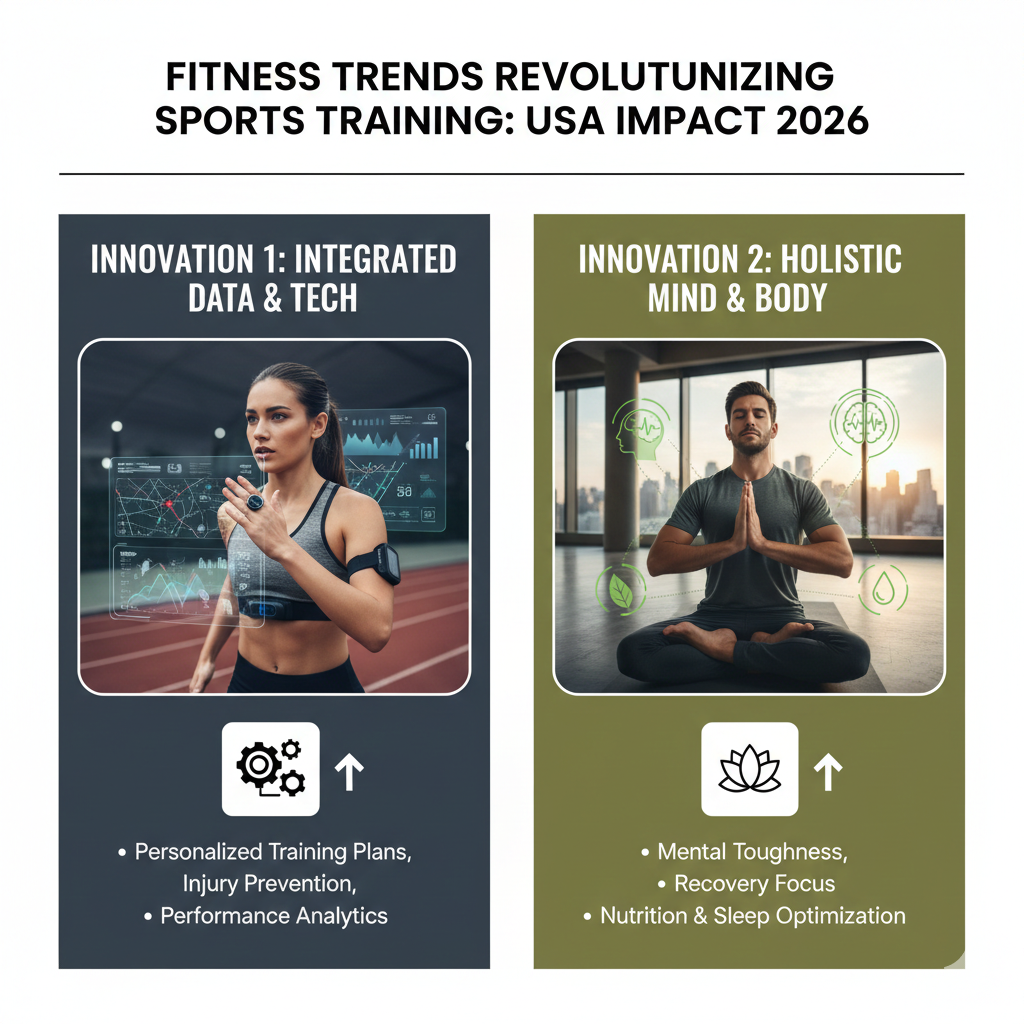

For decades, the image of an athlete in training was static: heavy bench presses, long jogs around a track, and a “no pain, no gain” mentality that often prioritized grit over science. If a player wasn’t exhausted, they weren’t working hard enough. Today, that picture looks radically different. American sports training has undergone a massive paradigm shift, moving away from archaic endurance drills and isolated bodybuilding techniques toward a holistic, data-driven approach.
This evolution didn’t happen in a vacuum. It mirrors the broader fitness trends sweeping the United States. As general fitness culture embraced functional movement, technology, and recovery, professional and collegiate sports programs took notice. The result is a hybrid methodology where the lines between a boutique fitness studio and an NFL weight room are increasingly blurred. This article examines how mainstream fitness trends are reshaping the way American athletes prepare, perform, and recover.
Why Fitness Trends Matter in Sports Training
The integration of commercial fitness trends into professional sports represents a move toward efficiency and longevity. Historically, athletic preparation was segmented. A basketball player played basketball; a runner ran. Weight rooms were often the domain of football players looking to add sheer mass.
However, as sports science advanced, coaches realized that general physical preparedness (GPP) was just as vital as sport-specific skill. The goal shifted from simply building bigger muscles to building better movers. By blending general fitness principles—such as mobility, metabolic conditioning, and varied movement patterns—with elite performance metrics, trainers can create more resilient athletes. This convergence means that a trend popular in a local gym, like high-intensity interval training (HIIT) or yoga, often finds its refined, high-performance counterpart in the training regimens of Olympic hopefuls.
Major Fitness Trends Influencing Sports Training
Several key pillars of the modern fitness industry have migrated into athletic performance centers. These trends prioritize how the body functions as a complete unit rather than a collection of separate parts.
Functional Training
Perhaps the most significant shift in American sports training is the adoption of functional training. In the past, athletes often relied on machines that isolated specific muscle groups, such as leg extensions or bicep curls. While this built muscle size, it rarely translated to the chaotic, multi-planar movements required in sports.
Functional training focuses on movement-based strength. It prioritizes compound movements—squats, lunges, pushes, pulls, and rotations—that mimic the demands of the game. For a baseball pitcher, this might mean rotational medicine ball throws rather than bench pressing. This approach improves neuromuscular coordination and helps prevent injuries by ensuring that stabilizing muscles are as strong as the prime movers.
Strength Training for All Athletes
There was a time when endurance athletes, such as distance runners or cyclists, avoided the weight room for fear of becoming “too bulky.” That myth has largely been dispelled. The modern trend emphasizes strength training for every athlete, regardless of their sport.
The focus has shifted away from bodybuilding-style hypertrophy (getting big) toward developing power, stability, and durability. Golfers now deadlift to generate torque. Swimmers perform weighted pull-ups to increase stroke power. This universal acceptance of resistance training helps athletes maintain posture under fatigue and generates the explosive force necessary for high-level competition.
Recovery and Regeneration Focus
The adage “you can only train as hard as you can recover” has become the mantra of modern sports performance. Recovery is no longer seen as a lack of activity; it is an active component of the training cycle. Influenced by the wellness boom, sports teams have invested millions into regeneration facilities.
Mobility work and stretching are now standard practice, often utilizing yoga or Pilates principles to maintain range of motion. Beyond active movement, protocols involving sleep hygiene, cryotherapy, infrared saunas, and pneumatic compression boots are commonplace. The cultural shift toward valuing rest ensures that athletes can handle high training loads without succumbing to burnout or fatigue-related injuries.
Wearable Fitness Technology
The explosion of the consumer wearables market (think Apple Watch, WHOOP, and Oura Ring) paved the way for elite biometric tracking. In the USA, data is now a non-negotiable aspect of training.
Performance tracking goes far beyond counting steps. Teams use GPS vests to track a player’s speed, distance, and acceleration during practice. Heart rate variability (HRV) is monitored to assess nervous system fatigue. This data allows coaches to implement “load management,” adjusting a practice session’s intensity based on an athlete’s physiological readiness. If the data shows a player is on the verge of overtraining, the coaching staff backs off, preventing injury before it happens.
High-Intensity Interval Training (HIIT)
Traditional conditioning often involved long, slow distance running, even for athletes in explosive sports like basketball or tennis. The rise of HIIT in the commercial fitness sector helped revolutionize athletic conditioning.
HIIT focuses on short bursts of near-maximum effort followed by brief rest periods. This mirrors the metabolic demands of most team sports much more accurately than steady-state cardio. By utilizing HIIT protocols, trainers can improve an athlete’s VO2 max and recovery speed between plays, ensuring they maintain game-speed endurance in the fourth quarter. It offers a higher return on investment for conditioning time.
Influence of Group Fitness and Cross-Training
The rise of CrossFit and similar group fitness modalities has reintroduced the concept of cross-training to the athletic mainstream. While professional athletes rarely perform random “workouts of the day,” the philosophy of varied, high-intensity functional movement has taken hold.
Athletes are increasingly exposing themselves to stimuli outside their primary sport to develop well-rounded athleticism. A football lineman might take boxing classes to improve hand-eye coordination and footwork. A soccer player might use gymnastics tumbling to learn how to fall safely. This cross-pollination of disciplines prevents overuse injuries caused by repetitive motion and builds a broader athletic foundation.
Role of Mental Fitness in Sports Training
Physical training is only half the battle. The wellness industry’s focus on mindfulness and mental health has heavily influenced sports training. Mental fitness is no longer a reactive measure for players in a slump; it is proactive training.
Sports psychologists and mindset coaches teach mindfulness, visualization, and focus techniques. Athletes learn to regulate their breathing to lower their heart rate during high-pressure moments, such as a free throw or a penalty kick. Stress management and resilience training help athletes cope with the rigorous travel schedules and public scrutiny inherent in American professional sports.
Data-Driven Training Programs
The era of the “notebook and pencil” workout log is fading. Inspired by fitness apps that track every rep and set, sports organizations utilize sophisticated athlete management systems.
These platforms allow for hyper-personalized workouts. Instead of the entire team following the exact same program, data analytics enable coaches to tailor regimens to individual needs. If a linebacker has a hamstring imbalance, their program automatically adjusts to address it. Feedback loops are immediate; athletes can see their velocity, power output, and fatigue levels in real-time, allowing for instant adjustments during the training session.
Youth and Amateur Sports Training Shifts
The trickle-down effect of these trends is evident in youth sports. There is a growing emphasis on Long-Term Athletic Development (LTAD), a model that encourages general fitness and fun over early specialization.
Parents and coaches are becoming more aware of the dangers of burnout and overuse injuries. As a result, youth training programs are incorporating more functional play, agility work, and bodyweight strength training. The goal is to build physical literacy—the ability to move competently and confidently—before focusing heavily on sport-specific tactics.
Professional Sports Adopting Fitness Trends
The major US leagues—NFL, NBA, MLB, and NHL—are the testing grounds for these evolutions. The NBA has been a leader in load management, prioritizing player availability for the playoffs over grinding through an 82-game regular season.
In the NFL, off-season conditioning has moved away from purely aesthetic goals. You see quarterbacks focusing on yoga for longevity and pliability, a trend popularized by Tom Brady. These organizations are essentially large-scale testing labs for fitness trends, validating what works and discarding what doesn’t.
Benefits of Fitness-Influenced Training
The integration of these diverse fitness trends offers tangible benefits to athletes and organizations:
- Improved Performance Consistency: Data-driven training ensures athletes peak at the right time rather than leaving performance to chance.
- Lower Injury Risk: Functional training and load management significantly reduce the likelihood of non-contact injuries.
- Longer Athletic Careers: By prioritizing recovery and joint health, athletes are playing at elite levels well into their 30s and even 40s.
Potential Downsides and Misuse of Fitness Trends
Despite the benefits, the influx of trends brings risks. The “shiny object syndrome” can lead to coaches adopting tools or methods that lack scientific backing.
- Overtraining Risks: High-intensity methodologies like HIIT must be carefully programmed. If applied incorrectly, they can lead to excessive fatigue and injury.
- One-Size-Fits-All: While group fitness works for the general population, elite athletes require specificity. Applying a generic CrossFit workout to a professional pitcher could be detrimental to their shoulder health.
What the Future of Sports Training Looks Like
The future of American sports training lies in the seamless integration of biology and technology. We are moving toward hybrid fitness-sports models where the distinction between “practice” and “training” disappears.
Tech-integrated coaching will likely advance further, with AI analyzing biomechanics in real-time to correct form and predict injury risk with high accuracy. As fitness trends continue to evolve, sports training will remain a fluid, adaptive discipline, constantly seeking the slightest edge in human performance.
FAQs – Fitness Trends and Sports Training
How do fitness trends affect sports performance?
Fitness trends introduce new methodologies that prioritize efficiency, recovery, and data. This leads to athletes who are more resilient, better conditioned, and capable of sustaining high performance for longer durations.
Are fitness trends suitable for all athletes?
Most trends, like functional training and recovery protocols, are universally beneficial. However, the intensity and volume must be scaled. A trend suitable for a 25-year-old linebacker might need significant modification for a youth golfer.
Does functional training improve athletic performance?
Yes. By training movements rather than individual muscles, functional training improves coordination, balance, and the transfer of power, which has a direct carryover to on-field performance.
How important is recovery in modern sports training?
It is critical. Recovery allows the body to adapt to the stress of training. Without adequate sleep, nutrition, and active regeneration, performance stalls and injury risk skyrockets.
Will technology replace traditional coaching?
Unlikely. Technology provides the data, but coaching requires the human element of interpretation, motivation, and strategy. Tech enhances the coach’s ability to make informed decisions but cannot replace the art of coaching.
The Next Step in Your Athletic Journey
The landscape of sports training is moving faster than ever. Whether you are a coach, an athlete, or a fitness enthusiast, staying educated on these trends is essential for safe and effective development. Don’t just follow the crowd—analyze the data, prioritize recovery, and train with purpose.