


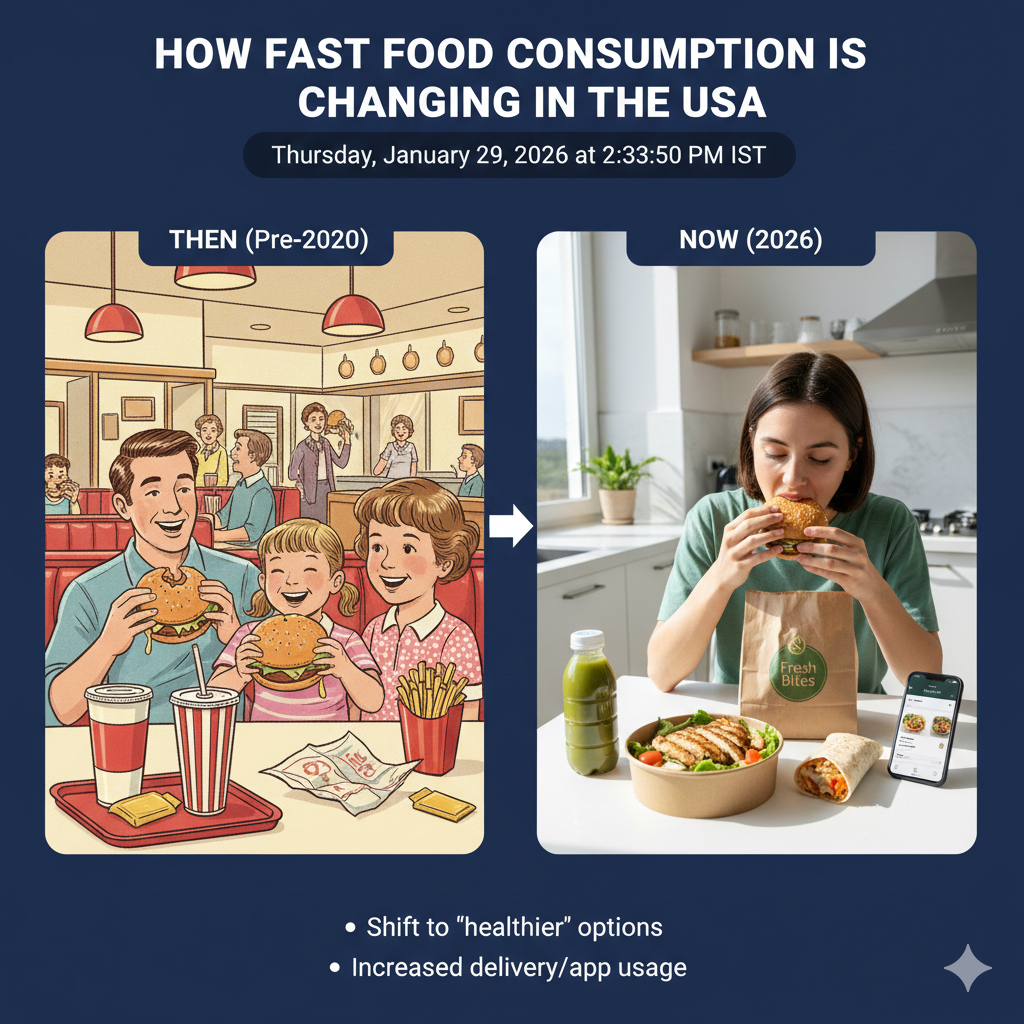
For decades, the image of American dining was inseparable from the golden arches, paper-wrapped cheeseburgers, and the convenience of the drive-thru. Fast food wasn’t just a meal; it was a cultural export and a dietary staple that promised consistency, speed, and affordability. From road trips to quick lunch breaks, the industry built its empire on the promise that you knew exactly what you were getting, no matter which state you were in.
However, the landscape of the American diet is shifting beneath the feet of these quick-service giants. While convenience remains king, the definition of what Americans want from their fast food is undergoing a radical transformation. We are seeing a departure from the “supersize me” era toward an age defined by digital customization, health consciousness, and ethical consumption.
This shift isn’t just about salads replacing fries. It involves a complex interplay of economics, generational preferences, and technological disruption. Understanding these changes offers a fascinating glimpse into the collective American appetite. This post explores the current state of the industry and analyzes the factors driving the evolution of how we eat on the go.
What Defines Fast Food Consumption
To understand where the industry is going, we first need to look at the baseline of fast food consumption USA. Historically, this sector has been dominated by Quick-Service Restaurants (QSRs). These establishments prioritize speed of service and standardized ingredients. The model was simple: limited menus, pre-cooked or quickly prepared items, and a heavy reliance on high-calorie, low-cost ingredients.
For the average consumer, fast food consumption was driven by the “value meal”—a bundled offering of a main item, a side, and a drink at a discounted price. The drive-thru window became the ultimate symbol of this efficiency, allowing customers to purchase dinner without ever stepping out of their vehicles. Mobile orders are now adding a new layer to this definition, turning the pickup lane into a pit stop for pre-paid meals.
Despite the changes, the core appeal remains the same: immediate gratification. But the “what” and the “how” are becoming increasingly sophisticated.
How Fast Food Consumption Is Changing in the USA
The narrative of how fast food consumption is changing USA is largely a story of fragmentation. In the past, the market was monolithic; you went to a burger joint for a burger. Today, consumers are fragmenting based on lifestyle needs, and the industry is scrambling to catch up.
The most significant change is the move away from “fuel” toward “experience.” Consumers are no longer satisfied with food that merely fills a void. They want meals that align with their personal brand, dietary goals, and ethical standards. This has forced legacy brands to rethink their strategies. We are seeing a pivot where major chains are renovating their dining rooms to look more like cafés and less like cafeterias.
Furthermore, the demand for customization has skyrocketed. The “have it your way” slogan was once a marketing gimmick; now, it is an operational requirement. Digital kiosks and apps allow customers to modify every aspect of their order, removing pickles, adding extra sauce, or swapping buns for lettuce wraps without the social friction of asking a cashier to do it.
Health Awareness & Nutrition Trends
Perhaps the most visible shift is the impact of fast food nutrition trends USA. The era of hidden calories is largely over, thanks to legislation requiring calorie counts on menu boards. This transparency has altered consumer psychology. When faced with the reality that a single combo meal might contain a day’s worth of sodium, many customers pause.
Health awareness has pushed chains to clean up their labels. “Clean eating” in the fast food space means removing artificial preservatives, colors, and flavors. Brands now proudly advertise “fresh, never frozen” beef or antibiotic-free chicken.
We are also seeing a rise in “functional” fast food. This includes menu items designed to provide specific health benefits, such as high-protein bowls for gym-goers or fiber-rich salads for digestion. While the bacon cheeseburger isn’t going extinct, it now shares menu space with grilled chicken wraps, apple slices, and quinoa bowls. The definition of a “cheat meal” is evolving; for many, even fast food needs to offer some nutritional redemption.
Rise of Plant-Based & Alternative Options
A few years ago, a vegetarian at a fast food restaurant was resigned to ordering french fries or a side salad. Today, plant based fast food USA is a booming sub-sector. The introduction of the Impossible Burger and Beyond Meat to mass-market chains signaled a turning point. These weren’t veggie patties made of black beans; they were engineered to bleed, sizzle, and taste like beef.
This trend is driven not just by vegans, but by “flexitarians”—people who eat meat but are trying to reduce their intake for health or environmental reasons. Major chains have tested everything from plant-based nuggets to dairy-free milkshakes.
However, the road hasn’t been entirely smooth. Some brands have scaled back these options after initial hype faded, suggesting that while the interest is real, the execution needs to match the flavor profile of the original items. The challenge for QSRs is to make plant-based options not just an alternative, but a craving in their own right.
Delivery, Technology & On-Demand Ordering
Technology has fundamentally rewired fast food delivery trends USA. The rise of third-party delivery platforms like UberEats, DoorDash, and Grubhub has turned every home into a dining room. For fast food operators, this is a double-edged sword. It opens up a massive new revenue stream but eats into margins through commission fees.
To combat this, chains are pushing their proprietary mobile apps. These apps are powerful tools for loyalty. By offering exclusive deals and “freemium” rewards, brands can bypass third-party fees and harvest valuable data on customer preferences.
We are also seeing the rise of “ghost kitchens”—facilities that exist solely to cook food for delivery with no storefront. This allows fast food concepts to expand into new neighborhoods with minimal overhead. Additionally, contactless pickup shelves and designated parking spots for app orders have streamlined the experience, making the interaction almost entirely human-free.
Fast Casual & Premium Fast Food Growth
The battle lines in the industry are being drawn around fast casual vs fast food USA. Fast casual restaurants—think Chipotle, Panera, or Sweetgreen—bridge the gap between QSR and casual dining. They offer the speed of fast food but with the perceived quality of a sit-down meal.
This sector has forced traditional fast food to level up. To compete, burger chains are launching “signature” lines with brioche buns, aged cheddar, and thick-cut bacon. They are trying to capture the customer who is willing to pay $12 for a meal but doesn’t have an hour to spend at a table.
The distinction is blurring. Fast casual chains are adding drive-thrus (often called “Chipotlanes”), while fast food chains are upgrading their ingredients. The winner in this crossover is the consumer, who now has access to higher quality food at compelling speeds.
Regional & Cultural Shifts in Fast Food Choices
The American palate is becoming more adventurous, driving fast food regional trends USA. While national chains offer uniformity, regional powerhouses are expanding by leaning into local identity. Brands like In-N-Out (West Coast), Whataburger (Texas), and Culver’s (Midwest) command cult-like loyalty that national giants envy.
Culturally, the influence of diverse populations is reshaping menus. We are seeing a surge in ethnic fast food, particularly in Asian and Latin American cuisines. Korean fried chicken, bubble tea shops, and authentic taco spots are scaling rapidly, challenging the dominance of the traditional hamburger stand.
National chains are responding by introducing “fusion” items for limited times—sriracha burgers, street corn sides, and spicy chicken sandwiches that utilize peppers like ghost pepper or Nashville hot seasoning. The American taste bud is seeking heat and complexity, and the industry is obliging.
Economic Factors Influencing Consumption
We cannot discuss dining habits without addressing fast food economics USA. Historically, fast food performs well during economic downturns because it is cheap. However, inflation has complicated this dynamic. Rising costs for labor and ingredients have forced menu prices up, leading to “sticker shock” at the drive-thru.
When a fast food combo meal approaches the price of a sit-down lunch special, the value proposition erodes. This has led to high price sensitivity among lower-income consumers. In response, brands are re-introducing aggressive value menus and bundle deals to get traffic back in the door.
Conversely, there is a segment of the population engaging in the “lipstick effect”—spending on small affordable luxuries (like a premium milkshake or a specialized coffee drink) because larger purchases like vacations or cars feel out of reach. Fast food chains are learning to cater to both the budget-conscious survivalist and the treat-seeking spender.
Youth & Generation Z Influence
The future of the industry lies in the hands of the youth, and Gen Z fast food trends USA are distinct from their predecessors. This generation is digitally native and socially conscious. They discover food on TikTok, where a viral video can cause a specific menu item to sell out nationwide in days.
Gen Z prefers ordering via kiosks or apps to avoid social anxiety or miscommunication. They are also the demographic most likely to support brands that align with their values regarding sustainability and labor rights.
Marketing to this group requires authenticity. Celebrity collaborations, like the famous “meals” launched by McDonald’s featuring pop culture icons, have been wildly successful. These campaigns turn a standard order into a cultural event, proving that for Gen Z, fast food is as much about the content as it is about the calories.
Frequently Asked Questions (FAQ)
Q1. How is fast food consumption changing in the USA?
Consumption is shifting from purely convenience-based eating to experience-based dining. Consumers are prioritizing customization, digital ordering, and higher-quality ingredients, blurring the lines between traditional fast food and fast-casual dining.
Q2. Are Americans eating less fast food today?
Not necessarily less, but they are eating it differently. While frequency remains high, the type of fast food is changing, with more visits to fast-casual outlets and a higher reliance on delivery and takeout rather than dining in.
Q3. What trends are driving healthier fast food options?
Calorie transparency laws, consumer demand for “clean labels” (no artificial ingredients), and the popularity of high-protein, low-carb diets are pushing chains to offer salads, grilled options, and functional bowls.
Q4. How has delivery changed fast food habits?
Delivery has expanded the occasion for fast food. It is no longer just for lunch on the go; it is now a viable option for family dinner. It has also increased the average check size, as people tend to order more when browsing an app at home.
Q5. Are plant-based options popular in fast food?
They have established a permanent niche. While the initial explosive growth has stabilized, there is a consistent demand from flexitarians who want to reduce meat consumption without giving up the fast food experience.
Q6. How do economic factors affect fast food choices?
Inflation creates price sensitivity. When fast food prices rise, lower-income consumers may pull back, while middle-income consumers might “trade down” from expensive restaurants to fast food, creating a complex push-pull dynamic in sales.
Q7. What’s next for fast food consumption in the USA?
The future will likely see increased automation (AI drive-thrus and robotics), a continued focus on sustainability (packaging and sourcing), and hyper-personalization where apps suggest orders based on past behavior and health goals.
The Future Outlook: The Evolution of Fast Food
The fast food industry stands at a crossroads. The model that worked for the last fifty years—standardization and speed above all else—is being retrofitted for a new reality. The evolution of fast food will be defined by how well these massive corporations can act like nimble startups.
We can expect technology to become even more invisible and seamless. Imagine drive-thrus that recognize your license plate and pull up your usual order before you even roll down the window. Sustainability will also move from a buzzword to a business imperative, as consumers demand eco-friendly packaging and ethical sourcing.
Ultimately, the desire for quick, tasty food is human nature. It isn’t going away. But the definition of “fast food” in America is expanding to include nutritious, customized, and culturally diverse options. The future of the drive-thru is diverse, digital, and delicious.