






How Daily Routines Impact Mental Health in the USA

We often think of freedom as the absence of rules. We dream of days with zero obligations, waking up whenever we want, and letting the day take us where it may. However, for the human brain, too much unpredictability can actually feel less like freedom and more like chaos.
Mental health challenges are a significant concern across the United States. According to the National Institute of Mental Health, nearly one in five U.S. adults live with a mental illness. While professional treatment is vital, the role of lifestyle—specifically how we spend our days—is increasingly recognized as a pillar of emotional stability.
Consistency offers a safety net for the mind. When we know what to expect from our day, our nervous system can relax. This guide explores the deep connection between structure and well-being, offering actionable advice on building routines that support, rather than stifle, your mental health.
What Are Daily Routines?
When we talk about daily routines mental health USA, we aren’t describing a rigid military schedule where every minute is accounted for. Instead, a healthy routine is a flow of habits that anchors your day. It is a sequence of actions that you do repeatedly, which eventually requires little to no conscious effort.
Definition and Examples
A routine might look like waking up at 7:00 AM, drinking a glass of water, and stretching for ten minutes. It could be a designated lunch break away from your desk at noon, or a “wind-down” ritual before bed that involves reading instead of scrolling through your phone. These are small, repeatable behaviors that create a framework for your life.
Routine vs. Rigidity
There is a distinct difference between a supportive routine and a rigid schedule. Rigidity demands perfection; if you miss your 6:00 AM workout, the whole day is “ruined.” This mindset leads to stress. A healthy routine is resilient. It provides structure but bends when life happens.
Healthy Structure vs. Burnout
For many Americans, the concept of “routine” is synonymous with “productivity grind.” We often fill our schedules to the brim to maximize output. However, a routine designed solely for productivity often leads to burnout. A mental-health-focused routine prioritizes balance, ensuring that rest and self-care are scheduled with the same importance as work meetings.
How Daily Routines Impact Mental Health
Understanding how daily routines impact mental health USA requires looking at how the brain processes information. Our brains are prediction machines. They constantly try to guess what will happen next to keep us safe.
Stress Reduction Through Predictability
When your day is unstructured, your brain has to make hundreds of small decisions. When should I eat? What should I wear? When will I work out? This leads to decision fatigue, a state of mental exhaustion that spikes cortisol levels. A routine automates these decisions. When you know you exercise at 5:00 PM, you don’t waste energy deciding if you will exercise. This predictability lowers baseline stress levels.
Emotional Regulation and Stability
Routines act as an anchor during turbulent times. If you are dealing with grief, anxiety, or depression, the world can feel overwhelming. Having a simple, predictable set of actions—making the bed, brewing coffee, walking the dog—can provide a sense of control and normalcy. It reminds the brain that life is continuing, which aids in emotional regulation.
Cognitive Focus and Productivity
Chaos is the enemy of focus. When you have a routine, your brain knows when it is time to focus and when it is time to relax. This conditioning allows you to enter “flow states” more easily during work or study sessions, reducing the anxiety that often comes with procrastination or feeling overwhelmed by a to-do list.
Morning Routines and Mental Well-Being
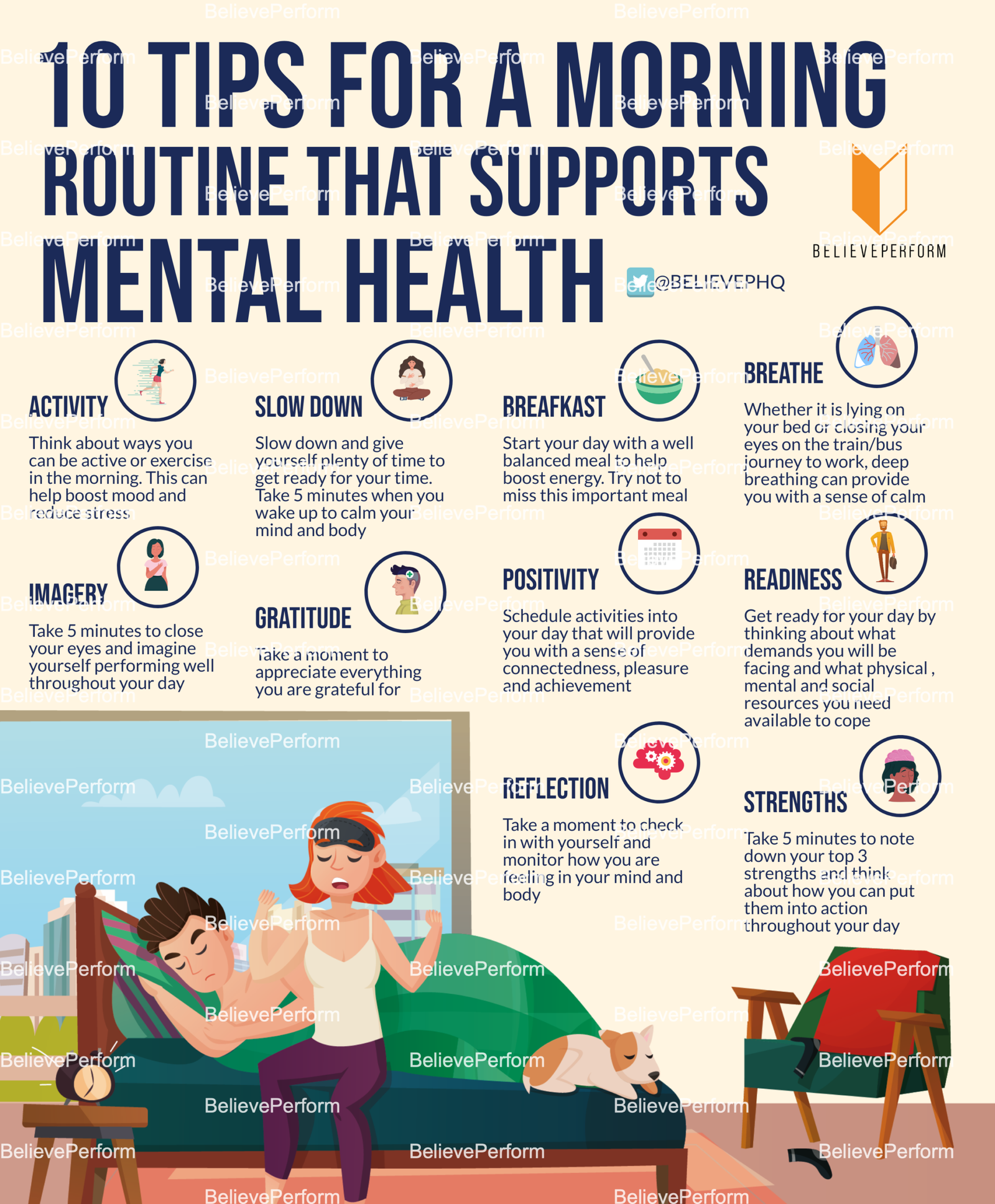
The way you start your morning often dictates the emotional tone for the rest of the day. A chaotic, rushed morning can trigger a “fight or flight” response before you’ve even left the house. Conversely, a thoughtful morning routine mental health practice can create a buffer against stress.
Setting the Tone for the Day
Starting the day with intention allows you to be proactive rather than reactive. Instead of immediately reacting to emails or news, you take a moment for yourself. This might include meditation, journaling, or simply enjoying a cup of coffee in silence. This establishes a sense of agency—you are in charge of your day, not the other way around.
Benefits of Consistent Wake Times
Our bodies operate on circadian rhythms—internal clocks that regulate sleep, hormone release, and body temperature. Waking up at the same time every day reinforces this rhythm. When your circadian rhythm is synchronized, you feel more alert during the day and sleepy at night, which significantly boosts mood and cognitive function.
Mindful Mornings vs. Rushed Starts
Rushing spikes adrenaline. If your alarm goes off and you immediately jump into a panic about being late, your body is flooded with stress hormones. Creating a routine that allows enough time to get ready without urgency can drastically reduce morning anxiety. Even waking up 15 minutes earlier to avoid the rush can have a profound impact on your mood.
Work, Study & Productivity Routines
For many, work is the primary source of stress. Establishing a daily work routine mental health strategy is essential for separating professional obligations from personal peace, especially in an era of remote and hybrid work.
Structure for Focus and Reduced Anxiety
Structuring your workday with clear “blocks” helps manage anxiety. The Pomodoro technique (working for 25 minutes, resting for 5) or time-blocking (dedicating specific hours to specific tasks) breaks large, intimidating projects into manageable chunks. This reduces the paralysis that often accompanies a heavy workload.
Breaks, Boundaries, and Burnout Prevention
A critical part of a work routine is the stop time. In the US, there is a culture of working through lunch or answering emails late at night. A mental health routine requires boundaries. It means stepping away from the screen for lunch to reset your eyes and brain. It means having a hard “log off” time to transition from “worker” to “person.”
Remote and Hybrid Work Routines
Without the physical commute to signal the start and end of the day, remote workers often find their work life bleeding into their home life. Creating artificial commutes—like a walk around the block before sitting at your desk—or changing clothes when the workday ends helps the brain mentally transition, protecting your downtime.
Sleep Routines and Emotional Health
Sleep is perhaps the single most important factor in mental health. Poor sleep exacerbates almost every mental health condition, from anxiety to bipolar disorder. A consistent sleep routine mental health protocol is non-negotiable for emotional resilience.
Consistent Sleep Schedules
Just as wake times matter, so do bedtimes. Going to sleep at roughly the same time every night trains your body to release melatonin (the sleep hormone) at the right time. Irregular sleep patterns confuse the biological clock, leading to insomnia and daytime grogginess that makes emotional regulation difficult.
Screen Habits and Sleep Quality
The blue light emitted by phones and laptops suppresses melatonin production. Furthermore, consuming stimulating content (like news or social media) keeps the brain alert. A healthy sleep routine involves a “digital sunset”—turning off screens at least an hour before bed to allow the brain to wind down.
Impact of Poor Sleep on Mood
Sleep deprivation makes the brain’s emotional centers more reactive. Minor annoyances feel like major catastrophes when you are tired. Chronic lack of sleep is strongly linked to the development of depression and anxiety disorders. Prioritizing sleep is prioritizing mental defense.
Exercise, Nutrition & Self-Care Habits
Physical health and mental health are inextricably linked. Incorporating daily habits for mental health that focus on the body will invariably help the mind.
Physical Activity and Mood Regulation
Exercise is a potent antidepressant. Physical activity releases endorphins, dopamine, and serotonin—neurotransmitters that improve mood. You don’t need to run a marathon; a daily 20-minute walk can significantly lower stress levels and improve self-esteem.
Eating Patterns and Mental Clarity
Irregular eating causes blood sugar spikes and crashes, which can mimic the symptoms of anxiety (shaking, irritability, brain fog). A routine that includes regular, balanced meals keeps blood glucose stable, providing a steady supply of fuel to the brain for better emotional control and focus.
Self-Care as Part of Routine
Self-care is often misunderstood as luxury pampering. In the context of routine, self-care is basic maintenance: brushing your teeth, showering, taking medication, and wearing clean clothes. When depression hits, these tasks often fall by the wayside. Keeping them as non-negotiable parts of the routine helps maintain a baseline of dignity and well-being.
Digital Routines & Mental Health
In the modern digital landscape, screen time mental health USA is a critical topic. Our devices are designed to be addictive, and without boundaries, they can consume hours of our day and drain our mental energy.
Social Media Consumption Habits
Mindless scrolling often leads to the “comparison trap,” where we compare our behind-the-scenes reality with everyone else’s highlight reels. This is a known driver of anxiety and inadequacy. A digital routine might involve limiting social media use to specific times of the day or curating your feed to unfollow accounts that make you feel bad about yourself.
Digital Detox Routines
Incorporating small “detoxes” into your day helps reset your attention span. This could be a “no phone at the dinner table” rule or leaving your phone in another room while you read or watch a movie. These breaks reduce overstimulation.
Healthy Tech Boundaries
Turning off non-essential notifications creates a quieter mental environment. Being constantly pinged by apps keeps the brain in a state of hyper-alertness. By choosing when you look at your phone rather than letting the phone summon you, you regain control over your attention.
How Disrupted Routines Affect Mental Health
Life is unpredictable. Illness, travel, job changes, or family emergencies can shatter our schedules. Understanding disrupted routines mental health effects helps us navigate these changes with self-compassion.
Irregular Schedules and Anxiety
When a routine breaks, the brain loses its predictability anchor. This often manifests as a spike in anxiety or a feeling of being “unmoored.” You might feel irritable, foggy, or exhausted because your brain is working overtime to process the new, unstructured environment.
Life Transitions and Routine Loss
Major life events—even positive ones like a new baby or a promotion—disrupt established patterns. This loss of routine is a major reason why transitions are stressful. The “new normal” hasn’t settled yet, and the brain is scrambling to find a new rhythm.
Coping Strategies for Change
When your routine is disrupted, focus on “anchor habits.” You might not be able to do your full morning ritual, but can you still drink your glass of water? Can you still make your bed? Keeping one or two small habits alive provides a thread of continuity that helps you weather the chaos until a new routine can be formed.
Building Healthy Daily Routines
If you want to establish healthy daily routines for mental health, the key is sustainability. Many people fail because they try to overhaul their entire life overnight.
Starting Small and Staying Flexible
Start with one habit. Master it until it becomes automatic, then add another. If you want to start exercising, don’t commit to an hour a day. Commit to five minutes. Small wins build confidence.
Personalizing Routines
There is no “perfect” routine. The 5:00 AM CEO routine might be disastrous for a night owl or a parent of a newborn. Listen to your body and your life’s demands. Your routine should serve you, not the other way around.
Consistency Without Pressure
Aim for consistency, not perfection. If you miss a day, it doesn’t mean you failed. It just means you missed a day. Pick it up again tomorrow. The goal is to improve your quality of life, not to add another source of stress.
Frequently Asked Questions (FAQ)
Q1. How do daily routines affect mental health in the USA?
Daily routines reduce decision fatigue, lower stress levels, and provide a sense of stability. In a fast-moving culture like the USA, routines act as an anchor, helping individuals manage anxiety and improve emotional regulation.
Q2. Can routines reduce anxiety and stress?
Yes. Routines make life predictable. When the brain knows what to expect, it perceives less threat, which lowers cortisol (stress hormone) levels and reduces the physical and mental symptoms of anxiety.
Q3. What are the best daily habits for mental health?
The most effective habits include consistent sleep and wake times, some form of physical movement, spending time outdoors, limiting screen time before bed, and regular meals to stabilize blood sugar.
Q4. Are strict routines bad for mental well-being?
They can be. Overly rigid routines can cause anxiety if things don’t go exactly to plan. A healthy routine should be flexible enough to accommodate life’s unexpected changes without causing distress.
Q5. How do sleep routines impact mental health?
Sleep routines regulate the circadian rhythm, ensuring better quality sleep. Since sleep is essential for emotional processing and cognitive function, a good sleep routine is one of the most powerful tools for mental health.
Q6. Can changing routines improve mood and focus?
Absolutely. Replacing negative habits (like doom-scrolling in the morning) with positive ones (like stretching or reading) sets a different tone for the day, leading to improved focus, higher energy, and a more positive outlook.
Q7. How long does it take for routines to impact mental health?
While some benefits, like a better night’s sleep, can be felt immediately, deep psychological changes typically take a few weeks of consistency. It generally takes anywhere from 18 to 254 days to fully form a new habit, but mental relief can be felt much sooner.
Final Thoughts: Small Habits, Big Mental Health Benefits
Building a routine isn’t about transforming into a productivity robot; it’s about being kind to your future self. It is about setting up your day so that you are supported, rested, and capable of handling whatever comes your way.
Long-term mental wellness isn’t usually the result of one grand gesture or an expensive vacation. It is built in the quiet moments of the day: the glass of water in the morning, the walk at lunch, the book before bed. By curating these moments, we create a life that feels manageable and safe.
Remember, the goal is balance, not perfection. Start small, be patient with yourself, and let the power of routine work for you.