






How Cross-Border Trade Impacts Growth

Introduction to Cross-Border Trade
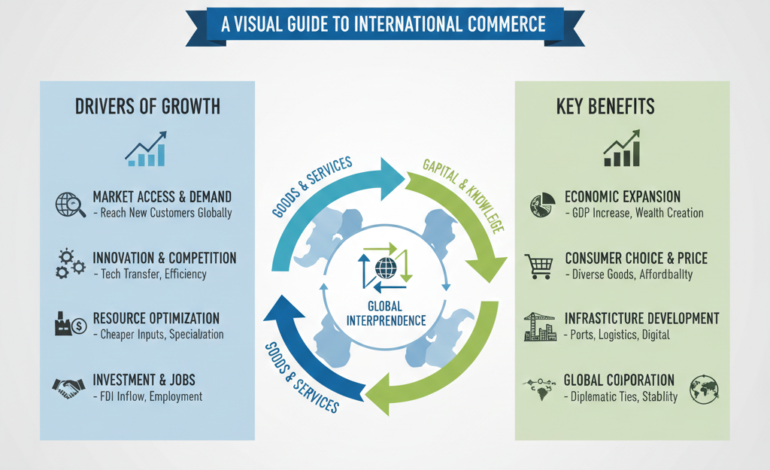
Cross-border trade refers to the exchange of goods and services that occurs between firms and individuals of different countries. This form of trade has become a critical component of global commerce and economic engagement in contemporary society. In a world that is increasingly interconnected, cross-border trade serves not only as a conduit for economic activity but also as a platform for fostering international relationships. Through cross-border transactions, countries can leverage their comparative advantages, access new markets, and diversify their economies, thus contributing to overall economic growth.
The significance of cross-border trade in the modern economy cannot be overstated. It allows countries to engage in the global market, encouraging the flow of capital, labor, and resources across borders. This movement creates opportunities for innovation, enhances competitiveness, and stimulates economic growth. Regions that embrace cross-border trade often experience not just an increase in revenue but also a boost in employment as local businesses expand to meet international demand. This interconnectedness is vital as it showcases how economic activities in one nation can impact outcomes in another, promoting an environment of economic interdependence.
In addition to its economic implications, cross-border trade plays a crucial role in international diplomacy. Trade agreements and partnerships can help to strengthen political relationships, foster stability, and promote peace among nations. As countries engage in trade, they often find themselves working collaboratively on common issues, which can lead to more fruitful diplomatic ties. Therefore, the role of cross-border trade extends beyond mere transactions; it encapsulates the essence of shared economic destinies and the pursuit of mutual prosperity.
Historical Context of Cross-Border Trade
Cross-border trade has a rich history that dates back to ancient civilizations, where merchants traversed regions and continents, exchanging goods that were unique to their localities. Early trade dynamics were primarily influenced by geographical factors and the availability of resources. For instance, the Silk Road, operational from approximately 130 BCE to the 1450s CE, exemplifies the importance of trade routes that connected Asia with the Mediterranean, facilitating the exchange of silk, spices, and other commodities. This early framework laid crucial foundations for modern cross-border trade.
As history progressed, significant milestones emerged, shaping international commerce as we recognize it today. The establishment of trade agreements can be traced back to the 19th century, particularly with the advent of free trade principles. The Cobden-Chevalier Treaty between Britain and France in 1860 is considered one of the first modern trade agreements, promoting tariffs reduction and fostering bilateral trade relationships. Such agreements heralded an era of globalization, gradually dismantling trade barriers and illustrating the profound impact of political decisions on economic interactions.
The post-World War II period saw a dramatic increase in international trade due to the formation of entities like the General Agreement on Tariffs and Trade (GATT) in 1947, which aimed to promote smooth trade relations through the reduction of tariffs. The evolution of the World Trade Organization (WTO) in 1995 further amplified these efforts, establishing a global platform for negotiating trade agreements and resolving disputes. This historical context demonstrates that the principles and practices of cross-border trade have evolved through centuries, continuously adapting to the political, economic, and technological developments that have influenced trade dynamics.
Economic Benefits of Cross-Border Trade
Cross-border trade serves as a critical engine for economic growth and development. One of the most significant benefits is job creation. When businesses engage in international trade, they open new markets, which often necessitates increased employment. According to the World Trade Organization, it is estimated that trade-related jobs can contribute to a net gain of approximately 1.5 million jobs in developed nations and up to 2 million in emerging economies annually. This not only mitigates unemployment rates but also fosters skill development among the workforce.
Moreover, cross-border trade enhances market access for local producers. By breaking down trade barriers and tariffs, businesses can expand their reach beyond domestic consumers. For instance, companies that export their products have reported a 20% increase in sales on average, as evidenced by research from the International Trade Centre. This greater market access not only increases sales for businesses but also propels economic growth by increasing overall production and consumption levels.
Additionally, engaging in cross-border trade promotes economic diversification. Countries that rely solely on domestic markets or a limited number of sectors are often more vulnerable to economic shocks. However, diversification through trade allows nations to tap into different industries, minimizing risks associated with market fluctuations. The African Development Bank reported that countries integrating into international markets saw GDP growth rates increase by 2% on average compared to those that remained isolated.
In summary, the economic benefits of cross-border trade extend beyond mere financial gains. By fostering job creation, improving market access, and enabling economic diversification, nations can strengthen their economies and build resilient structures capable of withstanding global challenges. This not only enhances the growth potential of individual countries but also contributes to global economic stability.
Challenges Faced in Cross-Border Trade
Cross-border trade refers to the exchange of goods and services between entities in different countries. While it can significantly contribute to economic growth, several inherent challenges can impede its progress. Understanding these challenges is essential for businesses aiming to expand internationally and capitalize on global markets.
Regulatory barriers represent a significant obstacle in cross-border trade. Different countries have disparate regulations concerning customs, product standards, and import/export documentation. Compliance with these regulations can be complex and time-consuming, leading to delays in shipments and increased administrative costs. Businesses must navigate these intricate legislative environments to ensure they meet all legal requirements, which can slow down market entry and diminish competitiveness.
Tariffs are another critical challenge affecting cross-border trade. Governments impose tariffs to protect local industries, which can raise the cost of exported goods. As a result, the price competitiveness of imported products can be compromised, deterring consumers from purchasing foreign goods. Such tariffs may also lead to trade disputes, further complicating international business relationships.
Logistics is another fundamental area of concern in cross-border trade. Transporting goods from one country to another involves various logistical challenges, including transportation costs, timely delivery, and the need for efficient supply chain management. Delays at ports of entry, inadequate infrastructure, and unforeseen shipping issues can disrupt the flow of goods, leading to lost sales and dissatisfied customers.
Cultural differences also pose obstacles to effective cross-border trade. Variations in language, business practices, and consumer preferences can lead to misunderstandings and hinder negotiation processes. Businesses must invest time and resources into understanding cultural dynamics to ensure that their marketing strategies and product offerings resonate with foreign consumers.
Impact on Local Economies
Cross-border trade plays a significant role in shaping the economic landscape of local communities, especially in areas adjacent to national borders. The inflow of goods and services from neighboring countries brings about numerous changes, affecting both local businesses and consumers. For instance, when goods from abroad enter a local market, they often provide consumers with a wider range of products at different price points. This not only increases consumer choice but can also drive down prices as local businesses adjust to the competitive landscape.
In regions where cross-border trade is prevalent, one can observe a notable increase in investment opportunities. Investors are more likely to channel resources into border towns due to the heightened demand spurred by convenient access to external markets. As a result, businesses in these areas may thrive, supported by an influx of resources and talent. Local industries often expand their operations, fostering job creation and contributing to overall economic growth. The interconnectedness of these border economies leads to a multiplier effect, wherein increased economic activity generates further transactions and increases the overall wealth of the region.
However, the influence of cross-border trade is not entirely beneficial. Local businesses may face challenges in competing with larger international corporations or lower-priced goods from abroad, which can undermine profitability. Small enterprises might struggle to maintain their market share, leading to business closures and job losses. Additionally, an imbalance in trade could result in local dependence on foreign products, which may jeopardize the growth potential of domestic industries.
In summary, cross-border trade significantly impacts local economies. While it can drive growth and expansion for businesses in border regions, it also poses substantial challenges. The balance between these effects determines the overall health of local economies, highlighting the need for policies that support both local enterprises and fair competition.
Cross-border trade plays a significant role in shaping economic growth, yet it also presents a range of environmental considerations. The movement of goods across national boundaries can engender both benefits and detriments to the environment. One of the positive aspects is the potential for technology transfer. This process allows countries to share sustainable practices, methods, and innovations that can bolster environmental preservation. For instance, developed nations can provide developing countries with access to cleaner technologies and sustainable agricultural practices, thereby fostering a more environmentally friendly trade environment.
However, a major negative consequence of cross-border trade is the increase in carbon emissions due to transportation. The logistics involved in moving products from one country to another often rely on fossil fuel-based transportation methods, contributing significantly to greenhouse gas emissions. This aspect raises concerns about the carbon footprint associated with such trade, as longer distances traveled usually equate to higher emissions. Furthermore, increased trade can lead to overconsumption and excessive waste, ultimately straining local ecosystems and contributing to biodiversity loss.
Thus, it is crucial that the growth associated with cross-border trade is balanced with environmental sustainability. Policymakers and businesses must consider the ecological implications of their trade practices and strive to implement strategies that reduce negative impacts. Sustainable logistics practices, such as utilizing electric vehicles or optimizing shipping routes, can mitigate the carbon footprint associated with transportation. Additionally, fostering collaborative partnerships between countries focused on environmental sustainability can enhance positive outcomes from shared trade relationships.
In conclusion, while cross-border trade is often a catalyst for economic growth, it is imperative that its environmental effects are thoroughly assessed and managed. The adoption of sustainable practices and technologies can enable growth to coexist harmoniously with the preservation of our planet’s resources.
Case Studies: Successful Cross-Border Trade Initiatives
Cross-border trade plays a crucial role in the economic development of nations and regions around the world. Several successful initiatives serve as exemplary case studies in this area. One prominent example is the North American Free Trade Agreement (NAFTA), which came into effect in 1994. This trilateral agreement between the United States, Canada, and Mexico facilitated increased trade by eliminating tariffs on goods and services. As a result, trade among these countries surged, leading to enhanced economic growth and job creation in various sectors, particularly in manufacturing and agriculture. The lessons learned from NAFTA emphasize the importance of clear trade regulations, cooperation among countries, and the need for periodic evaluations to adapt to changing economic landscapes.
Another noteworthy case is the African Continental Free Trade Area (AfCFTA), which was launched in 2021. This agreement aims to create a single market for goods and services across 54 African countries. By reducing trade barriers and tariffs, AfCFTA seeks to boost intra-African trade, which is expected to increase by 52% by 2022. The success of AfCFTA can be attributed to its comprehensive framework that incorporates various sectors, promoting not only trade but also investment and economic diversification. The importance of including diverse stakeholder perspectives in the design and implementation phases of trade agreements has emerged as a significant lesson from this initiative.
Additionally, the trade relationship between Germany and countries in Eastern Europe highlights how cross-border collaborations can foster economic integration. Since the fall of the Berlin Wall, Germany has invested significantly in Eastern European countries, leading to a surge in trade volume. This scenario illustrates that historical ties and shared cultural factors can positively influence trade relationships. Future trade efforts can benefit from understanding the socio-political context and leveraging local knowledge to strengthen cross-border initiatives.
The Future of Cross-Border Trade
As we look to the future, cross-border trade is expected to undergo significant transformations largely influenced by advancements in technology, the ongoing process of globalization, and evolving consumer behavior. These factors are anticipated to shape a new landscape for international trade, enhancing efficiency, accessibility, and diversity in the marketplace.
Technology is set to play a pivotal role in the changing dynamics of cross-border trade. The rise of e-commerce platforms has already revolutionized traditional trade practices, allowing businesses to reach international customers with unprecedented ease. With platforms such as Amazon and Alibaba leading the charge, it is anticipated that more companies will embrace online marketplaces to facilitate their international sales, thereby streamlining the cross-border transaction process. Additionally, innovations in fintech are drastically simplifying payment systems, promoting faster and more secure financial exchanges across borders.
Globalization will continue to be a double-edged sword, broadening market access while intensifying competition. Trends indicate that countries may pursue more trade agreements, further diminishing trade barriers. This will likely encourage smaller businesses to penetrate international markets, as they gain better access to logistics and distribution networks. Moreover, regional cooperation among nations could lead to the establishment of trade clusters that capitalize on shared resources, thereby enhancing efficiencies in supply chains.
Shift in consumer behavior, driven by demographic changes and increasing awareness regarding sustainability, also signifies an impending evolution in cross-border trade. Consumers are becoming increasingly inclined towards ethical consumption, searching for products that are sustainably sourced and environmentally friendly. Consequently, businesses may need to adapt their sourcing strategies and marketing approaches to align with these new consumer preferences, ensuring compliance with emerging regulations concerning sustainability.
Conclusion: The Holistic View of Cross-Border Trade Impact
In this comprehensive analysis, we have explored the multiple dimensions of cross-border trade and its substantial influence on economic growth. The discussions highlighted not only the benefits such as expanded market access and increased competitiveness but also the challenges that accompany such economic engagements. Countries participating in cross-border trade often experience an augmented economic landscape which encourages innovation and diversifies the marketplace.
Trade liberalization has emerged as a pivotal factor enabling nations to leverage their comparative advantages. By engaging in cross-border exchanges, nations reach new customers and tap into resources that may not be abundantly available domestically. This interconnectedness fosters cooperation, enhances technological transfer, and stimulates job creation, thus serving as a catalyst for overall economic development.
However, the intricate nature of cross-border trade also presents several complexities, including regulatory compliance, trade agreements, and geopolitical factors that can profoundly affect outcomes. Additionally, the impact of trade on local economies and smaller businesses must not be overlooked, as these entities often face daunting challenges in competing with larger international corporations. The balance between leveraging global markets and ensuring sustainable local growth remains a critical consideration.
Ultimately, the influence of cross-border trade on growth is a multifaceted phenomenon, encapsulating both opportunities and obstacles. Recognizing the holistic implications of cross-border trade is essential for policymakers and business leaders alike. By fostering a more profound understanding of these elements, stakeholders can better navigate the challenges of globalization, maximizing the benefits while minimizing potential downsides. For readers, appreciating the complexities of this economic mechanism can pave the way for informed decisions that recognize the significance of cross-border trade in fostering sustainable growth.