





How Cloud Gaming Is Changing Gameplay USA


For decades, the video game industry relied on a simple, immutable rule: if you wanted to play the best games, you needed the best hardware. Whether it was the latest console sitting under your TV or a high-end PC tower humming on your desk, the quality of your experience was strictly tethered to the power of your local device.
That rule is breaking. We are currently witnessing a massive infrastructure shift that rivals the transition from physical DVDs to streaming video. Cloud gaming is decoupling the game from the box, moving the heavy lifting from your living room to massive server farms miles away.
But this shift isn’t just about convenience or saving money on graphics cards. It is fundamentally altering how games are played, designed, and experienced. From instant access to persistent worlds that never sleep, the very nature of interactive entertainment is evolving. This article explores how cloud gaming is changing gameplay in the USA, reshaping the industry for developers and players alike.
What Is Cloud Gaming?
To understand the future, we have to look at the underlying technology. At its core, cloud gaming allows you to play video games via remote servers rather than relying on your device’s internal processor. When you press a button on your controller, that input signal travels over the internet to a powerful computer in a data center. That computer processes the game logic, renders the graphics, and streams the video and audio back to your screen in real-time.
In the context of cloud gaming USA markets, this technology is being spearheaded by major tech giants who have the infrastructure to support such massive data transfer. Services like Xbox Cloud Gaming, NVIDIA GeForce Now, and Amazon Luna are leading the charge, turning the user’s device into little more than a high-tech television set.
Cloud Gaming vs. Traditional Gaming
In traditional gaming, your console or PC downloads the entire game file—often 100GB or more—and runs it locally. If your hardware is outdated, the game runs poorly or not at all. Cloud gaming removes this barrier. The “console” is effectively a supercomputer in the cloud that you rent by the minute or month. This distinction is crucial because it standardizes the experience; a player on a budget laptop sees the same high-fidelity graphics as someone on a premium desktop, provided their internet connection is stable.
How Cloud Gaming Is Changing Gameplay
The most immediate impact isn’t just visual fidelity; it is the removal of friction. When we look at how cloud gaming is changing gameplay USA, the primary shift is the elimination of “waiting.”
Instant Game Access
In the traditional model, buying a new game is often followed by hours of downloading and installing updates. Cloud gaming offers instant gratification. Because the game lives on the server, it is always updated, patched, and ready to launch. This immediacy changes player behavior. When the barrier to entry drops from “buy, download, wait” to “click and play,” players are more likely to jump into a game for short bursts—15 minutes during a lunch break—rather than blocking out huge chunks of time.
Play-Anywhere Experiences
The concept of a “gaming station” is dissolving. Cloud technology creates a seamless continuity of gameplay. You might start a quest on your TV, continue it on your phone during a commute, and finish it on a laptop in a hotel room. The save data travels with you, not the hardware. This fluidity encourages a more pervasive style of gameplay where the game is always accessible, weaving into the fabric of daily life rather than requiring a dedicated time and place.
Hardware-Free Gaming & Accessibility
Perhaps the most democratic aspect of this technology is the ability to play games without console requirements. This is drastically lowering the entry barrier for millions of Americans who cannot justify spending $500 on a console or $1,500 on a gaming PC.
Gaming on Phones, Tablets, and Low-End PCs
Cloud gaming turns virtually any screen with an internet connection into a gaming interface. A five-year-old Android phone or a basic Chromebook for schoolwork can suddenly run Cyberpunk 2077 with ray tracing enabled. This decoupling of software from hardware is expanding the market.
Expanding Gamer Demographics
This accessibility shift is changing who identifies as a “gamer.” Historically, high-end gaming was gated by financial investment and technical know-how. Now, casual audiences who play mobile games can effortlessly transition to “core” AAA titles without buying new gear. This influx of new players is influencing developers to create experiences that bridge the gap between hardcore complexity and casual accessibility, altering the difficulty curves and tutorials in modern game design.
Faster Game Discovery & Experimentation
The subscription model prevalent in cloud ecosystems is creating a “Netflix effect” for video games. With instant play cloud gaming, the risk of trying something new disappears.
Try-Before-You-Buy Gameplay
In the past, spending $70 on a game was a commitment. Players stuck to genres they knew they liked. With cloud libraries, players can test a game for ten minutes to see if it clicks. If it doesn’t, they simply close the window and try another. This reduces commitment friction and encourages massive experimentation.
Impact on Player Behavior
This freedom leads to a more diverse gaming diet. Players are exploring niche indie titles, complex strategy games, or narrative adventures they would never have purchased outright. Consequently, developers are finding audiences for experimental genres that might have struggled in the traditional retail market. It pushes gameplay toward variety, forcing studios to hook players quickly rather than relying on sunk-cost fallacy to keep them playing.
Cloud Gaming and Multiplayer Experiences
The US market thrives on social gaming, and cloud gaming multiplayer USA trends show a move toward tighter, more integrated communities.
Seamless Cross-Platform Play
Because cloud instances are essentially running on similar server architecture, the technical hurdles of cross-platform play (letting Xbox players play with PC players, for example) are easier to manage. The cloud acts as a neutral ground.
Shared Cloud-Based Game Worlds
Beyond matchmaking, the cloud enables “single-shard” worlds—massive multiplayer environments where everyone occupies the same digital space simultaneously. In traditional MMOs, players are split into different servers to prevent crashing. Cloud architecture scales dynamically, potentially allowing thousands of players to interact in a single battle or city without performance degradation. This creates a sense of scale and community density that local hardware simply cannot replicate.
Latency, Performance & Gameplay Feel
The biggest hurdle—and the most discussed topic—is responsiveness. When discussing cloud gaming latency USA, we are talking about the delay between pressing a button and seeing the character move.
How Latency Affects Responsiveness
In fast-paced shooters or fighting games, a delay of milliseconds can mean the difference between victory and defeat. Cloud gaming inherently adds latency because the signal must travel to a data center and back. For single-player RPGs, this is often imperceptible. For competitive esports, it remains a point of contention.
Improvements in 5G and Broadband
Infrastructure improvements are actively mitigating these issues. The widespread rollout of 5G across the United States is providing the low-latency mobile connections necessary for cloud gaming on the go. Similarly, fiber optic adoption in residential areas is making home connections stable enough to support 4K streaming at 60 frames per second.
Edge Computing
Tech companies are also deploying “edge computing”—placing smaller server nodes closer to population centers. Instead of your signal traveling from Chicago to a server in Virginia, it might hit a local node in the Chicago suburbs. This physical proximity drastically reduces the time of flight for data, making the gameplay feel crisp and responsive.
Game Design Changes Driven by Cloud Gaming
We are just beginning to see cloud-native game design. This refers to games built specifically for the cloud, utilizing capabilities that would be impossible on a home console.
Server-Side Physics and AI
When a game runs locally, your console must calculate every explosion, every physics interaction, and every NPC’s decision. It has a limit. In the cloud, developers can offload these calculations to other servers in the cluster. This allows for complex physics simulations—like fully destructible cities or thousands of intelligent AI units—that would melt a consumer-grade graphics card.
Persistent Worlds
Cloud-native games can exist in a persistent state. Even when no one is playing, the world can continue to evolve. Forests could grow, economies could fluctuate, and weather systems could shift, simulated by the server 24/7. When the player logs back in, the world has changed, creating a living, breathing environment that feels independent of the player’s presence.
Impact on Competitive & Casual Gaming
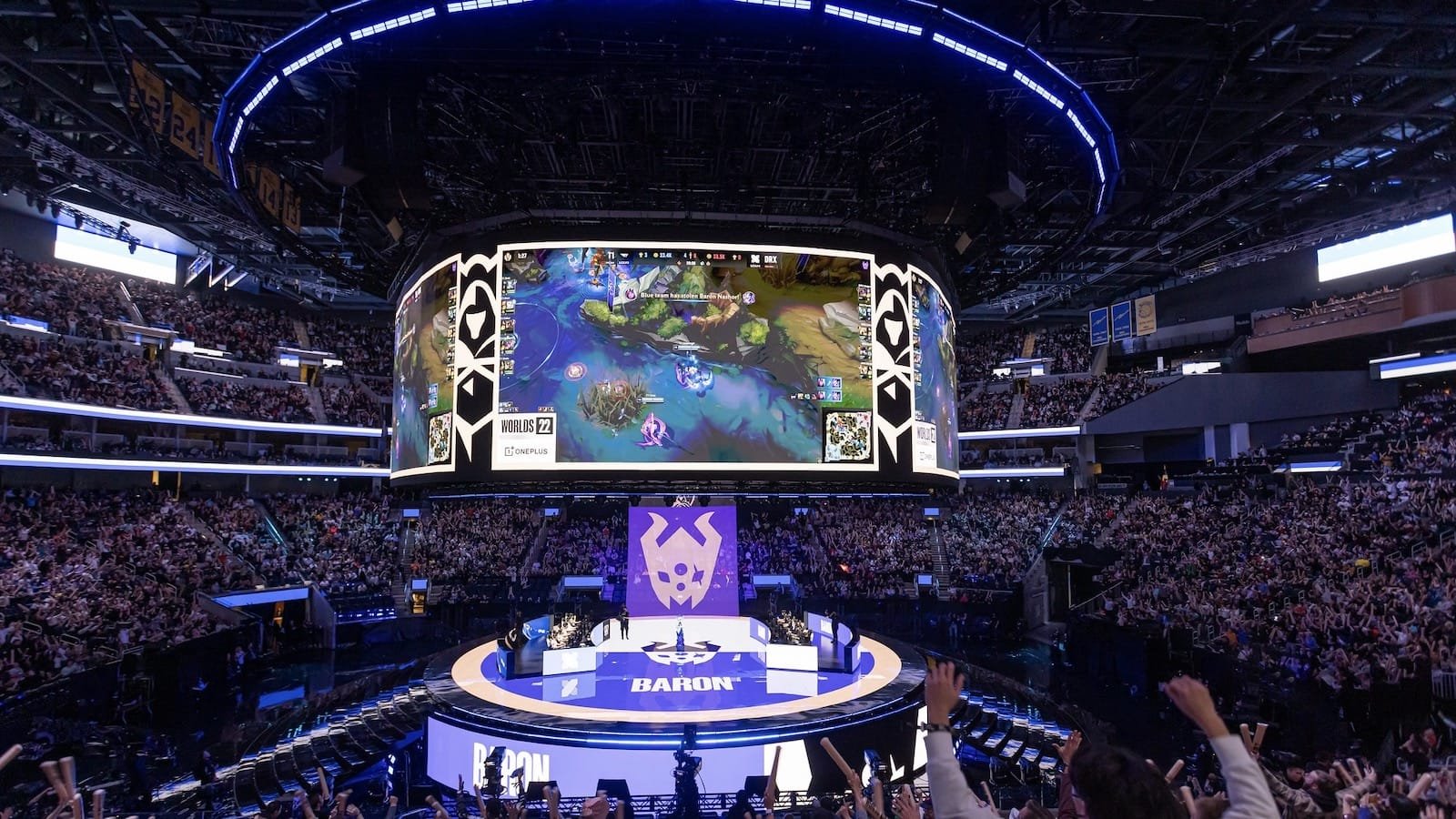
The rise of cloud gaming esports USA presents a fascinating duality. On one hand, the latency issues mentioned earlier currently keep the highest tier of professional play on local hardware. However, cloud gaming is democratizing the path to pro.
Accessibility for Competitive Players
Aspiring competitors no longer need a $2,000 rig to practice. They can learn mechanics, map layouts, and strategies on a cloud stream. This widens the talent pool significantly.
New Competitive Formats
We are also seeing the potential for “cloud-native esports” where the spectator experience is interactive. Because the game is streaming, viewers could potentially jump into a match, influence the environment, or view the game from any camera angle in real-time, blurring the line between player and spectator.
Challenges Limiting Cloud Gaming Gameplay
Despite the optimism, significant cloud gaming challenges USA remain. The digital divide is the most pressing issue.
Internet Dependency
Cloud gaming requires a robust, stable internet connection. In rural areas of the US where broadband is scarce or unreliable, cloud gaming is simply not an option. This geographic disparity limits the technology’s reach and creates a tiered system of access based on location.
Data Usage Concerns
Streaming high-definition video consumes massive amounts of data—potentially upwards of 10GB per hour for 4K streams. For Americans with strict data caps on their home internet or mobile plans, cloud gaming can become an expensive hobby, limiting session times and hindering the “play anywhere” promise.
Regional Infrastructure Gaps
Even with edge computing, there are dead zones. If you live hundreds of miles from the nearest data center, physics dictates that your latency will be higher. Until infrastructure becomes more uniform across the country, the gameplay experience will vary wildly from state to state.
Frequently Asked Questions (FAQ)
How is cloud gaming changing gameplay in the USA?
Cloud gaming is shifting gameplay from a hardware-dependent activity to an accessible, service-based experience. It allows for instant access to libraries of games, enables high-end gaming on mobile devices, and promotes “try-before-you-buy” experimentation with new genres.
Does cloud gaming reduce the need for consoles?
For casual and mid-core gamers, yes. As streaming quality improves, the need for a dedicated box diminishes. However, enthusiasts and competitive players may still prefer local hardware for the best possible fidelity and zero latency.
Is cloud gaming good for competitive play?
Currently, it is ideal for practice and casual competition. For professional esports where every millisecond counts, local hardware is still superior due to latency issues. However, this gap is closing with edge computing advancements.
How does latency affect cloud gaming?
Latency creates a delay between input and action. In cloud gaming, high latency can make controls feel “mushy” or unresponsive. Fast internet and proximity to servers are required to minimize this effect.
Can cloud gaming work on slow internet?
Most services require a minimum of 10-15 Mbps for 720p streaming. Below that, players will experience lag, pixelation, and connection drops. A stable connection is more important than raw speed.
Are cloud-based games designed differently?
They can be. Cloud-native games utilize server-side processing to handle complex physics, massive player counts, and persistent worlds that local consoles cannot process alone.
Will cloud gaming replace traditional gaming?
It is unlikely to fully replace it in the near future. Instead, it will likely coexist as a parallel option, much like how streaming music coexists with vinyl records and digital downloads.
Final Thoughts: Gameplay Beyond the Console
We are standing at the precipice of a new era. The shift to the cloud is about more than just convenience; it is about freeing creativity from the constraints of plastic boxes. As infrastructure improves and developers begin to lean into cloud-native design, we will see games that were previously impossible to build.
Flexibility now defines the American gaming experience. The ability to jump into a game instantly, on any screen, with anyone, is breaking down the walls that once separated platforms and communities. While challenges regarding infrastructure and data limits persist, the trajectory is clear. The future of play is not sitting under your TV—it is floating in the cloud, ready to be accessed whenever and wherever you are.