

How Clothing Reflects Culture and Social Identity

Every time you get dressed, you’re making a statement—whether you realize it or not. The choices you make about what to wear communicate volumes about who you are, where you come from, and which groups you align yourself with. Clothing operates as a universal language, one that transcends words and speaks directly to our sense of belonging and individuality.
Throughout history, garments have served as powerful markers of cultural heritage and social position. From the vibrant patterns of traditional African textiles to the sharp lines of a corporate business suit, what we wear tells stories about our values, beliefs, and place in society. Understanding what clothing says about identity in modern society helps us recognize the deeper meanings behind our everyday fashion choices.
This relationship between fabric and identity isn’t just cultural—it’s psychological too. Research shows that how clothing affects confidence and human psychology influences everything from our mood to our performance at work. The clothes we choose can actually change how we think and behave, a phenomenon psychologists call “enclothed cognition.”
In this post, we’ll explore how clothing functions as a mirror of cultural values and personal identity. We’ll trace its roots from ancient tribal symbols to modern digital fashion, examining how garments shape—and are shaped by—the societies that create them. For a broader understanding of these concepts, you can explore our [clothing meaning and psychology hub](Meaning Hub).
Cultural Roots of Clothing Identity
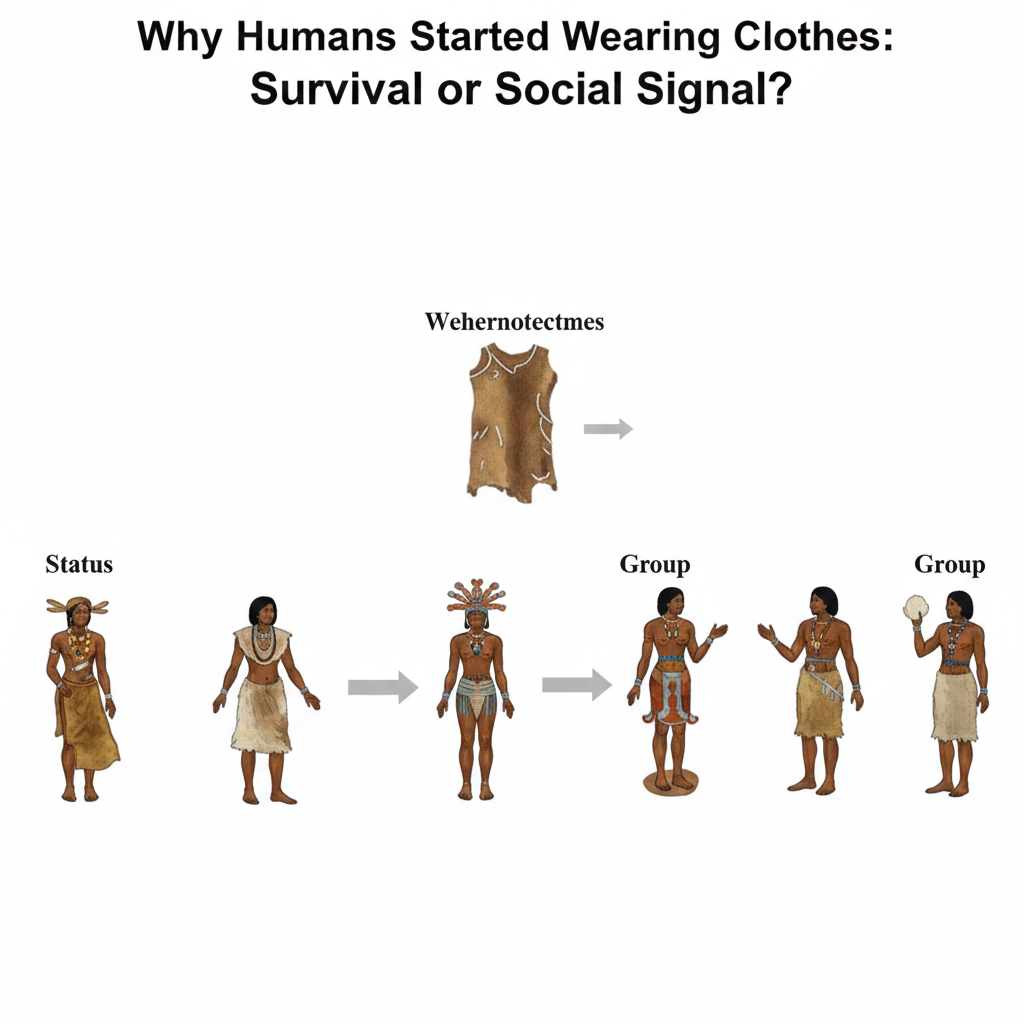
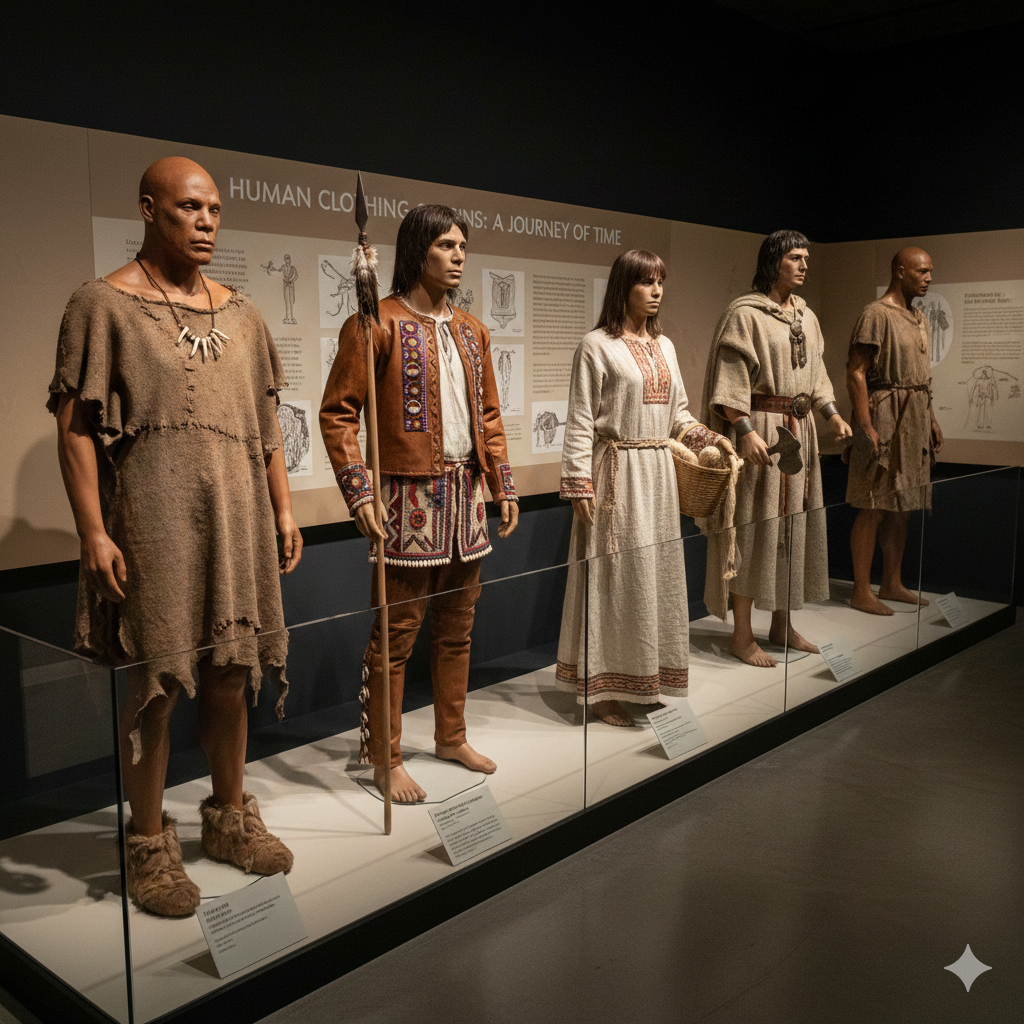
Long before fashion became an industry, clothing served essential cultural functions. Early human societies used garments not just for protection, but as visual indicators of tribal affiliation, social role, and spiritual beliefs.
Tribal Symbols and Traditional Dress
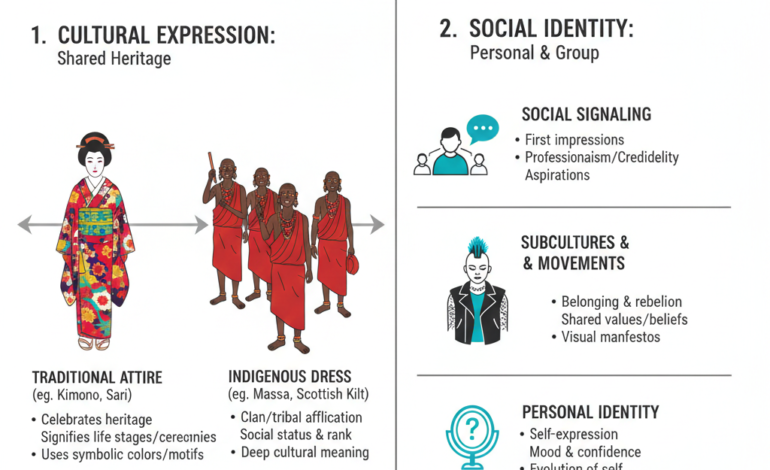
Indigenous cultures worldwide developed distinctive clothing styles that communicated complex social information at a glance. The Maasai people of East Africa, for example, use specific colors and beadwork patterns to indicate age, marital status, and warrior status. Scottish tartans historically identified clan membership, while Native American headdresses signified earned honors and tribal position.
These weren’t merely decorative choices. They represented deeply embedded cultural values and social structures. A person’s clothing could reveal their life stage, achievements, and responsibilities within the community. The distinction between functional vs symbolic clothing in early tribes shows how garments evolved beyond basic protection to become carriers of cultural meaning.
Traditional dress also reinforced cultural continuity. When elders passed down specific weaving techniques or embroidery patterns, they transmitted cultural knowledge and maintained connections between generations. These practices created tangible links to ancestral heritage, helping communities preserve their identity even as external pressures threatened their way of life.
Historical Influence on Cultural Fashion
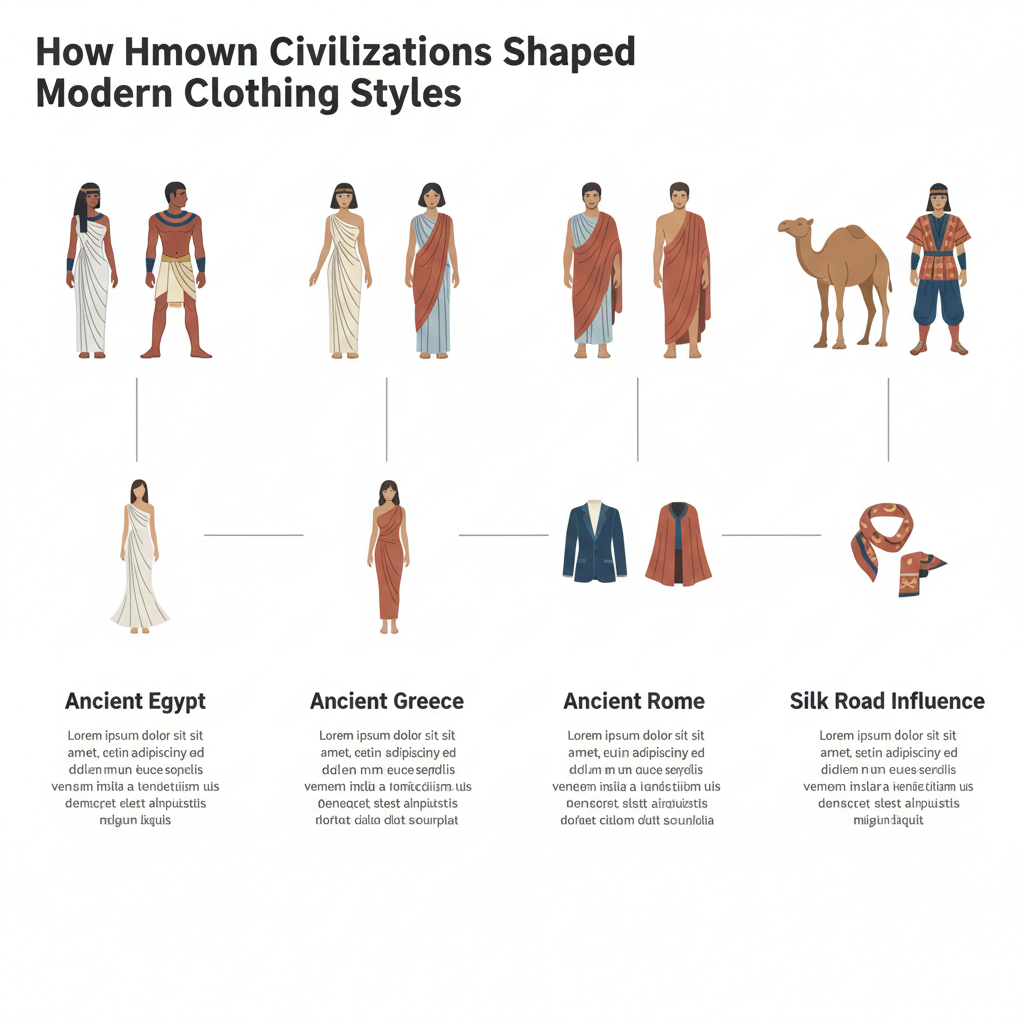
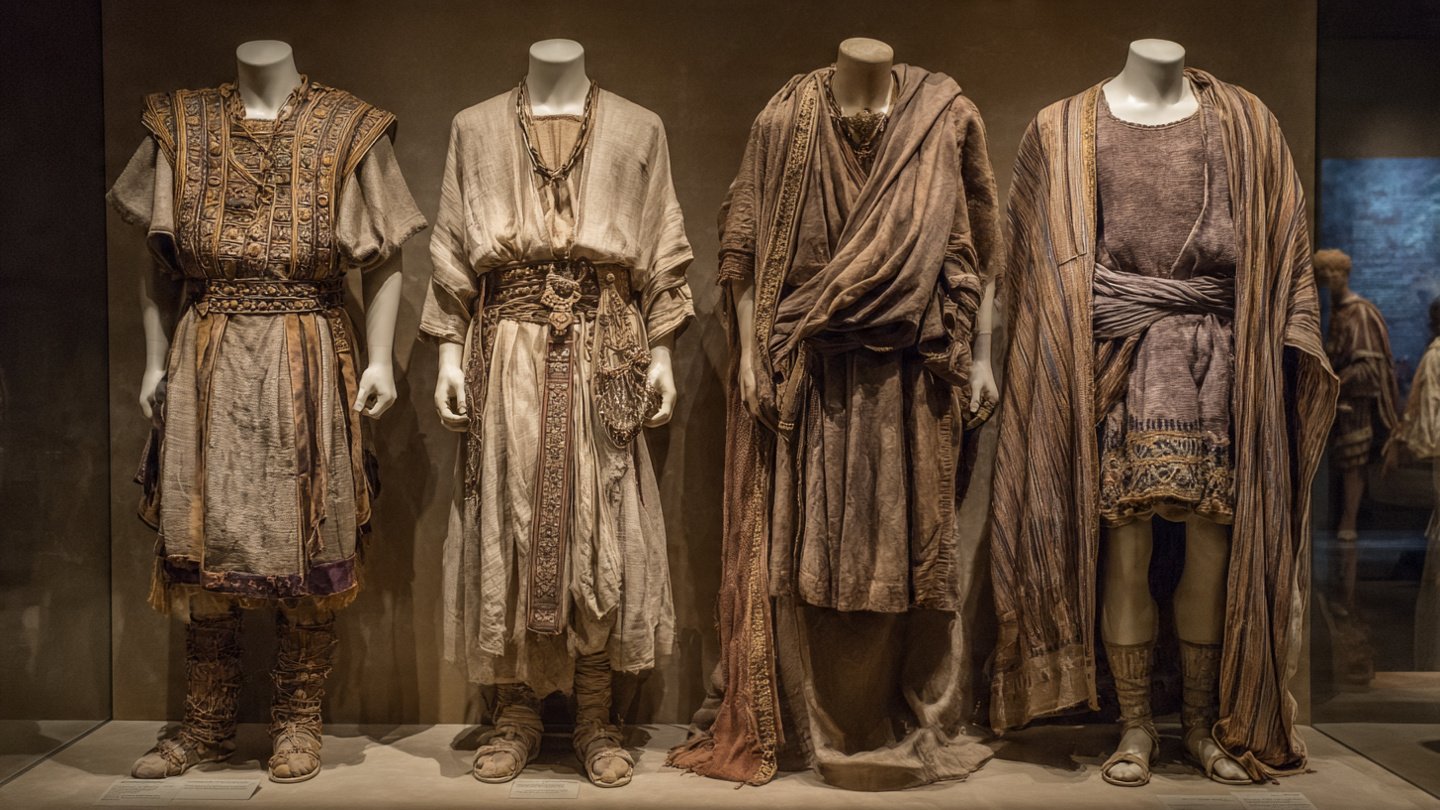
As civilizations developed, clothing systems became increasingly sophisticated. Ancient Egypt’s linen garments signaled social hierarchy through quality and complexity. Roman togas indicated citizenship status. Medieval European sumptuary laws explicitly restricted certain fabrics and colors to specific social classes, legally codifying the connection between clothing and social identity.
The ways that how ancient civilizations shaped clothing styles continues to influence contemporary fashion. Many modern garment types—from the kimono to the sari to the caftan—carry forward cultural traditions established thousands of years ago. These items persist not just as historical artifacts, but as living expressions of cultural identity that people continue to wear with pride.
Religious and philosophical movements also shaped clothing norms. Modesty requirements in various faiths influenced silhouettes and coverage levels. Buddhist monks’ robes signified renunciation of material concerns. Quaker plain dress rejected ostentation. Each of these traditions used clothing to make visible statements about spiritual values and community membership.
Social Identity and Clothing in Modern Society
Contemporary clothing choices remain deeply intertwined with social identity, though the systems have grown more complex and fluid. Rather than fixed dress codes determined by birth, modern societies offer greater personal agency in how we present ourselves through clothing.
Professional identity represents one of the clearest examples of clothing’s social function. Uniforms, business attire, and industry-specific dress codes signal competence and belonging within occupational groups. A doctor’s white coat, a lawyer’s tailored suit, or a tech worker’s hoodie each communicate professional identity and establish credibility within their respective fields.
Economic status continues to manifest through clothing choices, though sometimes in counterintuitive ways. Luxury brands use visible logos and distinctive designs to signal wealth and taste. Yet in some affluent circles, understated minimalism serves as a status marker, suggesting confidence and refinement that doesn’t require obvious displays.
Subcultural affiliation shapes clothing choices across countless communities. Punk fashion’s torn fabrics and safety pins communicated rebellion against mainstream values. Hip-hop culture elevated streetwear to high fashion. Goth aesthetics created visual solidarity around specific musical and philosophical interests. Each subculture develops its own sartorial language that members use to identify each other and express shared values.
The rise of fast fashion fundamentally altered how modern clothing relates to identity. The ways that how fast fashion changed modern human clothing include making trend participation more accessible across economic classes, but also potentially weakening the depth of meaning attached to garments. When clothing becomes disposable, it may lose some of its power as a carrier of cultural significance.
Conversely, minimalist movements have emerged partly in reaction to overconsumption. Understanding how minimalism influenced modern clothing styles reveals how some individuals use intentionally limited wardrobes to signal values around sustainability, mindfulness, and rejection of status-driven consumption.
Clothing, Body Image, and Self-Expression
Beyond cultural and social markers, clothing serves as a primary tool for individual self-expression. The garments we choose allow us to craft and communicate our personal narrative, highlighting aspects of ourselves we want others to see.
Body image significantly influences clothing choices. People select garments that make them feel attractive, comfortable, and confident in their physical form. This isn’t purely about conforming to beauty standards—it’s also about understanding and celebrating individual body characteristics. Learning how body shapes influence clothing silhouettes empowers people to make choices that enhance their natural proportions and express their aesthetic preferences.
The principles of how proportion and balance shape clothing silhouettes extend beyond fit to encompass visual harmony and personal style. When clothing proportions align with someone’s body and aesthetic goals, it can genuinely boost confidence and self-assurance. This demonstrates the psychological power of clothing to influence not just how others perceive us, but how we perceive ourselves.
Fashion allows experimentation with different aspects of identity. A person might dress differently for various contexts—professional settings, creative pursuits, athletic activities, or social gatherings. This flexibility reflects the multifaceted nature of modern identity, where individuals contain and express multiple selves rather than adhering to a single fixed persona.
Gender expression through clothing has become increasingly fluid and varied. While historical periods enforced strict gender-based dress codes, contemporary fashion increasingly recognizes that clothing preferences don’t necessarily align with biological sex or binary gender categories. People use clothing to express their gender identity in ways that feel authentic, whether that means embracing traditional gendered styles, mixing elements, or rejecting gender associations entirely.
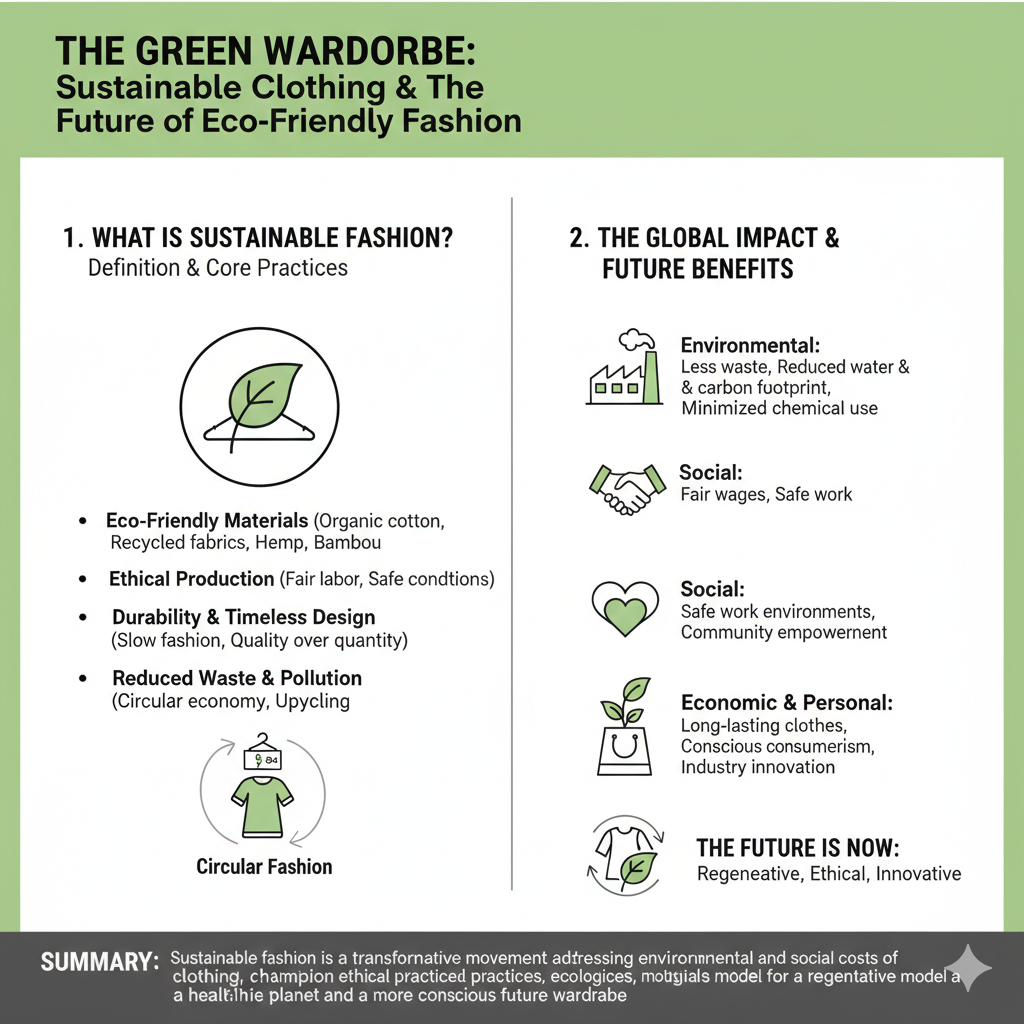
Personal values often manifest through clothing choices. Environmentally conscious consumers seek sustainable fabrics and ethical production. Animal rights advocates avoid leather and fur. Political beliefs might be expressed through message t-shirts or symbolic accessories. Each of these choices communicates something important about the wearer’s worldview and priorities.
Globalization and Cultural Exchange Through Fashion
The modern fashion landscape reflects unprecedented cultural mixing and exchange. Traditional boundaries between regional clothing styles have become increasingly porous as global communication and commerce accelerate.
Historical trade routes first enabled clothing styles to travel between cultures. The Silk Road carried fabrics, techniques, and aesthetic ideas across Asia, the Middle East, and Europe. Colonial trade networks spread clothing practices worldwide, though often through coercive and exploitative means. Examining how trade routes spread clothing styles reveals both the richness of cross-cultural exchange and the complex power dynamics embedded in fashion history.
Contemporary globalization intensifies these exchanges. Fashion designers regularly draw inspiration from diverse cultural traditions, incorporating elements into new designs. When done thoughtfully and respectfully, this creates opportunities for cultural appreciation and innovation. However, it also raises important questions about cultural appropriation—when dominant cultures extract aesthetic elements from marginalized communities without proper credit, compensation, or understanding.
Digital connectivity has created new pathways for fashion influence. Social media platforms allow clothing trends to spread globally within hours. A street style photographed in Tokyo morning can influence outfit choices in New York that same evening. This rapid circulation creates increasingly globalized fashion trends while simultaneously enabling niche communities to find and strengthen their distinctive aesthetic identities.
The democratization of fashion information empowers individuals to explore diverse cultural styles and construct hybrid identities. Someone might combine Scandinavian minimalism with Japanese streetwear and vintage American workwear, creating a personal style that reflects their unique influences and preferences rather than adhering to any single cultural tradition.
Looking ahead, the future of human clothing in a digital world promises even more dramatic transformations in how clothing relates to cultural identity. Virtual environments may enable people to express cultural affiliations and personal style in entirely new ways, unconstrained by physical fabric or production limitations.
Future Identity — Digital Fashion and Cultural Evolution
Emerging technologies are creating unprecedented possibilities for clothing as cultural and personal expression. Digital fashion—garments that exist only in virtual environments—challenges fundamental assumptions about what clothing is and how it functions.
Virtual clothing allows people to express identity in online spaces like social media, gaming platforms, and emerging metaverse environments. Digital garments require no physical materials, produce no environmental impact from production or disposal, and can achieve impossible designs that defy physics. Someone might wear elaborate fantasy costumes, historically inspired garments, or avant-garde designs that would be impractical in physical form.
Smart clothing and wearable technology explained demonstrates how garments increasingly integrate with digital devices and data systems. Fitness trackers, LED-embedded garments, and fabrics that change color or pattern create new possibilities for clothing that responds dynamically to context or wearer preferences. These innovations blur boundaries between fashion, technology, and identity expression.
The evolution of modern human clothing styles explained shows how contemporary fashion already incorporates these technological elements while maintaining connections to cultural traditions. Designers experiment with 3D-printed accessories, bioluminescent fabrics, and garments that interact with smartphones, creating clothing that functions as an interface between physical and digital identity.
Cultural identity in virtual spaces raises intriguing questions. If someone creates an avatar wearing traditional garments from a culture they don’t physically belong to, what does that mean? Digital environments may enable new forms of cultural exploration and expression while also potentially facilitating appropriation without real-world consequences or accountability.
Despite technological advances, traditional clothing continues to hold profound cultural significance. Indigenous communities worldwide actively maintain traditional dress as an assertion of cultural survival and identity. Fashion designers from diverse backgrounds increasingly celebrate and modernize traditional garments, claiming space for non-Western aesthetic values in global fashion conversations.
The future likely involves increasing plurality rather than homogenization. Technology enables both greater cultural mixing and stronger maintenance of distinctive traditions. People will have more tools to express complex, hybrid identities that honor multiple cultural influences while crafting something uniquely personal.
Clothing as a Mirror of Human Society
From ancient tribal markings to digital avatars, clothing has consistently served as a visual language through which humans express cultural belonging and individual identity. The garments we choose—whether physical or virtual—tell stories about our values, communities, and sense of self.
Understanding this relationship enriches how we approach our own clothing choices. When we recognize that getting dressed involves more than covering our bodies, we can make more intentional decisions about what we wear and why. Our wardrobes become opportunities for authentic self-expression and meaningful cultural connection.
The evolution continues. As societies change, so does the clothing that reflects them. New technologies create fresh possibilities for self-expression. Cultural exchange generates innovative hybrid styles. Traditional practices persist and adapt, maintaining their relevance across generations.
Ultimately, the question of why humans started wearing clothes extends far beyond practical protection. Clothing emerged as a fundamental human technology for creating and communicating identity. Throughout the history of clothing evolution, garments have helped us signal who we are, which groups we belong to, and what we value.
As you consider your own relationship with clothing, ask yourself: What story does your wardrobe tell? Which aspects of your identity do you express through fashion? How might you use clothing more intentionally to honor your cultural heritage, communicate your values, or explore new dimensions of self-expression?
The clothes we wear matter—not because fashion is superficial, but because it represents one of humanity’s most visible and accessible forms of cultural expression and identity creation.