


We all want to add life to our years, not just years to our life. The desire to remain active, sharp, and independent as we grow older is universal, yet the path to achieving it can often feel cluttered with conflicting advice. With the population of Americans aged 65 and older projected to nearly double by 2060, the conversation around longevity has shifted from simply treating illness to proactively fostering vitality.
But what does science actually say about aging well? Fortunately, researchers across the United States have spent decades studying the physiological, psychological, and social factors that contribute to a long, healthy life. The findings are empowering: while we cannot stop the clock, we have significantly more control over how we age than we might think. From the food on our plates to the strength of our social circles, the choices we make daily compound over time to determine our health trajectory.
This guide explores the comprehensive, research-backed practices that define healthy aging in the USA. By understanding the mechanisms behind aging and adopting a holistic approach to wellness, you can build a foundation for a future defined by energy, purpose, and resilience.
What Is Healthy Aging?
To pursue healthy aging, we first need to define what it means. The healthy aging definition goes beyond the absence of disease. The World Health Organization and the Centers for Disease Control and Prevention (CDC) view it as the process of developing and maintaining the functional ability that enables well-being in older age. It is about preserving the physical and mental capacity to do what you value for as long as possible.
Aging vs disease-related decline
There is a distinct difference between natural biological aging and disease-related decline. Natural aging involves subtle changes, such as a gradual decrease in maximum heart rate or a slight reduction in processing speed. However, severe frailty, memory loss, and chronic pain are often symptoms of specific conditions rather than inevitable consequences of getting older. Distinguishing between the two is crucial because it helps us identify what we can prevent or manage.
Why lifestyle choices matter with age
As the body ages, it becomes less forgiving of poor lifestyle habits. A diet high in processed foods or a sedentary routine that a 20-year-old might tolerate can have rapid, inflammatory consequences for a 70-year-old. Conversely, positive choices yield high returns. Adopting healthy aging meaning, identifying the right habits, and sticking to them can significantly slow biological aging and compress the “window of morbidity”—the time spent in poor health at the end of life.
Why Healthy Aging Matters in the USA
The urgency of this topic is underscored by the demographics of the aging population USA. We are living in a unique era where life expectancy has risen historically, yet healthspan—the number of years spent in good health—has not always kept pace.
Rising life expectancy
Advances in medicine and public health have granted us more time. However, living to 85 is less desirable if the last decade is spent managing debilitating conditions. The goal of healthy aging initiatives in the USA is to bridge the gap between lifespan and healthspan, ensuring that those bonus years are vibrant and fulfilling.
Chronic disease prevention
Chronic diseases such as heart disease, type 2 diabetes, and hypertension are the leading drivers of death and disability in the US. The importance of healthy aging lies in its preventative power. Research suggests that a significant percentage of these conditions are preventable or manageable through lifestyle interventions, reducing the burden on the healthcare system and the individual.
Quality of life and independence
Perhaps the most personal reason healthy aging matters is autonomy. Most adults want to “age in place,” remaining in their own homes and communities rather than moving to assisted living facilities. Maintaining physical strength and cognitive function is the ticket to this independence, allowing you to drive, cook, and care for yourself well into your later years.
Nutrition Practices That Support Healthy Aging
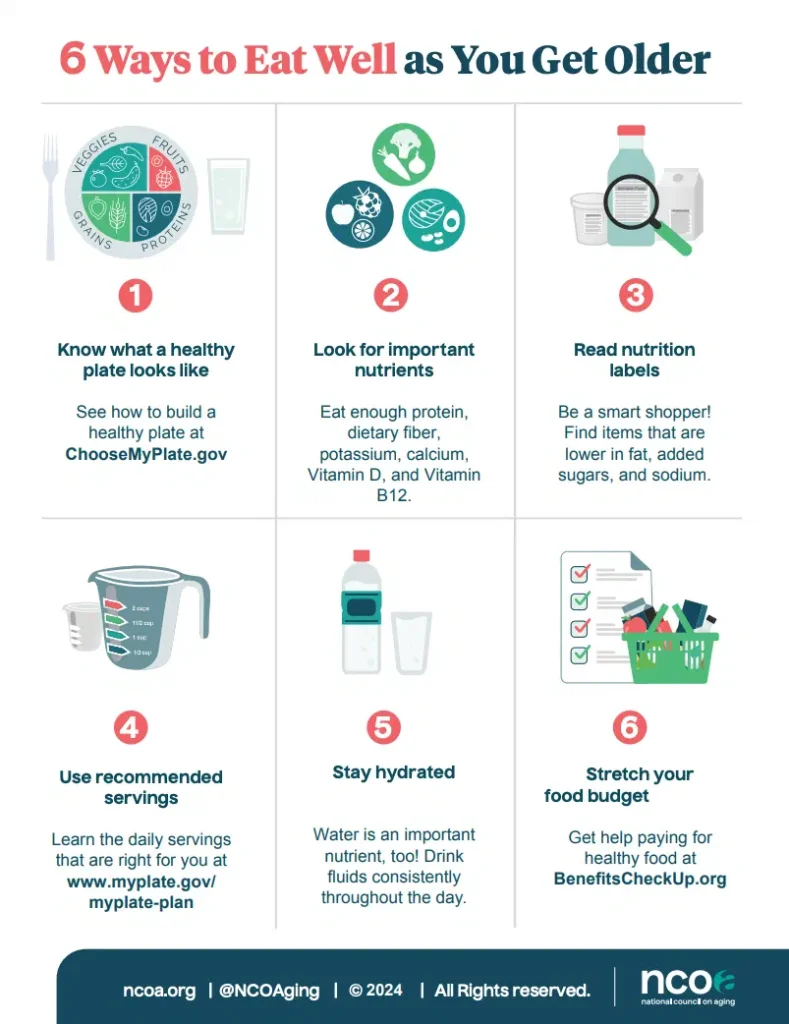
Fueling your body correctly is arguably the most impactful intervention for longevity. The ideal healthy aging diet isn’t about restriction; it’s about providing the aging body with the specific nutrients it needs to repair and sustain itself.
Balanced, nutrient-dense diets
As metabolism naturally slows, caloric needs decrease, but nutrient needs remain high or even increase. This means every calorie needs to pack a nutritional punch. Nutrition for aging adults USA guidelines often point to the Mediterranean diet or the DASH diet as gold standards. These eating patterns emphasize healthy fats (like olive oil and nuts), lean proteins, and complex carbohydrates, which support heart health and reduce systemic inflammation.
Protein intake and muscle preservation
Sarcopenia, the age-related loss of muscle mass, is a major threat to mobility. Research increasingly shows that the Recommended Dietary Allowance (RDA) for protein may be too low for older adults. To combat muscle loss, experts recommend spreading protein intake throughout the day—consuming high-quality sources like lean meats, fish, eggs, beans, or Greek yogurt at every meal to stimulate muscle protein synthesis.
Role of fruits, vegetables, and whole foods
Oxidative stress damages cells over time, contributing to aging. Fruits and vegetables are loaded with antioxidants that combat this stress. A diet rich in colorful produce, whole grains, and fiber not only protects cellular health but also supports digestion and gut health, which can become compromised with age.
Physical Activity and Exercise for Longevity
If exercise could be bottled, it would be the most prescribed medicine in the world. Exercise for healthy aging is not just about weight management; it is the primary signal to your body to keep bones strong, arteries flexible, and neurons firing.
Strength training and bone health
Osteoporosis and frailty are significant risks for older adults, particularly women. Resistance training is the most effective way to counteract this. You don’t need to become a bodybuilder; lifting moderate weights, using resistance bands, or even performing bodyweight exercises like squats and push-ups can increase bone density and muscle mass. This “physical armor” creates a buffer against falls and injuries.
Cardiovascular exercise benefits
Aerobic activity—whether it’s brisk walking, swimming, cycling, or dancing—keeps the heart muscle strong and improves circulation. Regular cardiovascular exercise helps lower blood pressure, improve cholesterol profiles, and boost endurance, making daily tasks less tiring. Physical activity longevity studies consistently show that those who move more live longer.
Flexibility and balance training
Often overlooked, balance and flexibility are critical for preventing falls, which are the leading cause of injury-related death among older adults in the US. Practices like Tai Chi and yoga are backed by research for their ability to improve proprioception (the body’s ability to sense its position in space) and joint mobility.
Sleep and Recovery in the Aging Process
Sleep often gets harder to come by as we age, but the need for it does not diminish. Understanding the relationship between sleep and healthy aging is vital for cognitive maintenance and physical repair.
Sleep quality vs sleep quantity
While aiming for 7-9 hours is standard, the quality of that sleep matters more. Older adults often experience fragmented sleep or wake up too early. Focusing on “sleep hygiene”—a cool room, darkness, and a consistent schedule—can improve the depth of sleep, which is when the body performs its most critical restorative work.
Age-related sleep changes
Circadian rhythms often shift forward with age, leading to earlier bedtimes and wake times. Furthermore, the production of melatonin decreases. Recognizing these biological shifts helps in adjusting routines rather than fighting them. Sleep health older adults issues, such as sleep apnea, become more common and should be addressed by a physician rather than dismissed as “just getting old.”
Sleep’s role in cognitive and physical health
During deep sleep, the brain clears out beta-amyloid, a protein associated with Alzheimer’s disease. Chronic sleep deprivation disrupts this “cleaning” process. Additionally, sleep is when muscle tissue repairs and the immune system recharges. Prioritizing rest is a non-negotiable pillar of longevity.
Mental Health and Cognitive Aging
The brain is capable of growth and adaptation throughout life, a concept known as neuroplasticity. Maintaining cognitive health aging requires active engagement and emotional regulation.
Brain health and neuroplasticity
The “use it or lose it” principle applies to the brain. Mental stimulation—learning a new language, playing a musical instrument, or engaging in complex puzzles—builds cognitive reserve. This reserve acts as a buffer, allowing the brain to function well even if some physical deterioration occurs.
Managing stress and emotional well-being
Chronic stress releases cortisol, which can be toxic to the brain’s memory center (the hippocampus). Mental health aging USA statistics show that anxiety and depression are not normal parts of aging but are treatable conditions. Mindfulness, meditation, and therapy are powerful tools for managing stress and protecting the brain from inflammatory damage.
Lifelong learning and mental stimulation
Curiosity is a key trait of “super-agers” (people in their 80s with the cognitive function of those decades younger). Lifelong learning keeps the mind agile. Whether it’s taking a local college course or learning digital skills, novelty challenges the brain to form new neural connections.
Preventive Healthcare and Screenings
In the USA, our healthcare system is often reactive, but healthy aging requires a proactive approach. Preventive care aging USA guidelines are designed to catch issues before they become life-altering diagnoses.
Routine health checkups
Annual wellness visits are an opportunity to track biomarkers like blood pressure, blood sugar, and cholesterol. Tracking these trends over time gives a clearer picture of health than a single snapshot, allowing for earlier lifestyle interventions.
Age-appropriate screenings
Screenings save lives. Mammograms, colonoscopies, bone density scans, and prostate exams are essential tools for health screenings older adults. Detecting cancer or osteoporosis in the early stages significantly improves outcomes and survival rates.
Vaccinations and preventive care
As the immune system naturally weakens, vaccinations become a critical line of defense. Keeping up with flu shots, the shingles vaccine, and pneumonia vaccines prevents severe illness that can lead to hospitalization and a cascade of health decline.
Social Connections and Emotional Well-Being
Humans are hardwired for connection. Isolation is a silent killer, with some studies suggesting its health risks are comparable to smoking 15 cigarettes a day. Social health aging is as vital as physical fitness.
Importance of social engagement
Regular interaction with friends, family, and neighbors provides emotional support and reduces stress. However, it also provides cognitive stimulation; conversation requires quick thinking, memory, and empathy, all of which exercise the brain.
Loneliness and health risks
Loneliness and aging USA data reveals a correlation between isolation and higher rates of heart disease, depression, and dementia. Loneliness triggers a stress response in the body, leading to chronic inflammation.
Community and purpose in later life
Having a reason to get up in the morning extends life. This sense of purpose can come from volunteering, mentoring, caregiving, or participating in faith-based or interest-based groups. Contributing to a community fosters a sense of belonging and worth that protects against emotional decline.
Lifestyle Habits That Promote Healthy Aging
Beyond diet and exercise, small daily choices accumulate to define our health. Habits for longevity USA research points to a few non-negotiables.
Avoiding smoking and excess alcohol
It is never too late to quit smoking. The body begins to repair itself almost immediately after cessation, reducing the risk of heart disease and stroke. Similarly, moderating alcohol intake is crucial, as the aging body metabolizes alcohol less efficiently, increasing the risk of falls, liver issues, and medication interactions.
Maintaining healthy weight
Metabolism slows with age, making weight gain easier and weight loss harder. However, maintaining a healthy weight reduces the strain on joints and lowers the risk of diabetes and cardiovascular disease. The focus should be on body composition (muscle vs. fat) rather than just the number on the scale.
Staying physically and socially active
A healthy lifestyle aging approach integrates activity into daily life. It’s taking the stairs, gardening, walking the dog, and meeting friends for coffee. These low-friction habits ensure you stay moving and connected without requiring immense willpower.
Role of Genetics vs Lifestyle in Aging
A common question is: “Do my genes determine my fate?” Understanding genetics vs lifestyle aging empowers us to take action.
How much genetics influence aging
While scientists are still mapping the human genome, current estimates suggest that genetics account for only about 20% to 25% of the variation in human lifespan. Your DNA loads the gun, but lifestyle pulls the trigger.
Power of lifestyle choices
This means the vast majority of aging outcomes—roughly 75%—are influenced by environmental factors and lifestyle choices. Epigenetics, the study of how behaviors and environment affect the way your genes work, shows that healthy behaviors can actually “turn off” bad genes and “turn on” good ones.
Research-backed lifestyle impact
Studies on twins have been instrumental in aging research USA. They consistently show that even identical twins age differently based on their habits. One may develop chronic disease while the other runs marathons, solely based on diet, stress management, and activity levels.
Common Myths About Aging
Misconceptions about getting older can become self-fulfilling prophecies. To age well, we must challenge these aging myths USA narratives.
“Aging means inevitable decline”
While slowing down is natural, frailty and senility are not given. Many older adults maintain high levels of physical and cognitive function well into their 90s. Viewing decline as inevitable stops people from taking the steps necessary to prevent it.
“It’s too late to start healthy habits”
Research shows that adopting healthy habits at age 50, 60, or even 70 yields immediate benefits. A 70-year-old who starts walking daily improves their heart health and mood within weeks. The body remains responsive to positive change until the very end.
“Aging equals illness”
This myth conflates age with disease. Healthy aging facts remind us that one can be old and free of disease, or manage a chronic condition so well that it does not impact daily quality of life.
How to Start Healthy Aging Practices at Any Age
The prospect of overhauling your lifestyle can be overwhelming. The key to start healthy aging is simplicity and consistency.
Small habit changes
Don’t try to change everything at once. Pick one area—perhaps drinking more water or adding a 10-minute walk after dinner. Once that becomes automatic, layer on another habit. Aging well tips USA experts agree that micro-habits are more sustainable than radical transformations.
Consistency over perfection
You don’t need a perfect diet or a rigorous gym schedule. You need to show up for yourself most days. Missing a workout or eating a heavy meal doesn’t ruin your health; giving up entirely does.
Long-term mindset
Healthy aging is a marathon, not a sprint. The benefits of eating well today might not be felt tomorrow, but they will be felt in ten years. adopting a long-term mindset helps you stick with habits even when progress feels slow.
Frequently Asked Questions (FAQ)
At what age should people start focusing on healthy aging?
Ideally, healthy habits should start in childhood, but focused efforts on healthy aging often begin in the 30s and 40s when metabolism and muscle mass naturally begin to shift. However, interventions in the 60s, 70s, and beyond are still highly effective at extending healthspan.
Can lifestyle changes really slow aging?
Yes. Research indicates that lifestyle changes can slow biological aging. By reducing inflammation, managing stress, and maintaining physical fitness, you can slow the cellular damage that characterizes the aging process.
What exercise is best for healthy aging?
A combination is best. The CDC recommends 150 minutes of moderate-intensity aerobic activity per week, plus two days of muscle-strengthening activities. Adding balance exercises reduces fall risk.
How important is diet compared to exercise for aging?
They are two sides of the same coin. You cannot out-exercise a poor diet, and a perfect diet cannot replicate the mechanical benefits of exercise on bone density and heart strength. Both are essential.
Is healthy aging possible with chronic conditions?
Absolutely. Healthy aging with a chronic condition means managing symptoms, adhering to treatments, and making lifestyle choices that prevent the condition from worsening. Many people live vibrant lives while managing diabetes or hypertension.
Final Thoughts on Healthy Aging Practices
Aging well is a lifelong process of adaptation and growth. It is not about chasing the fountain of youth, but about optimizing the body and mind to enjoy the passage of time. The research is clear: the United States may face challenges with an aging population, but individuals have immense power to shape their own journey.
By prioritizing nutrient-dense food, consistent movement, restorative sleep, and deep connection, you are investing in a future where you can continue to participate fully in life. Start with one small change today. Your future self will thank you.