


From Fiber to Fabric: The Full Journey of Human Clothing
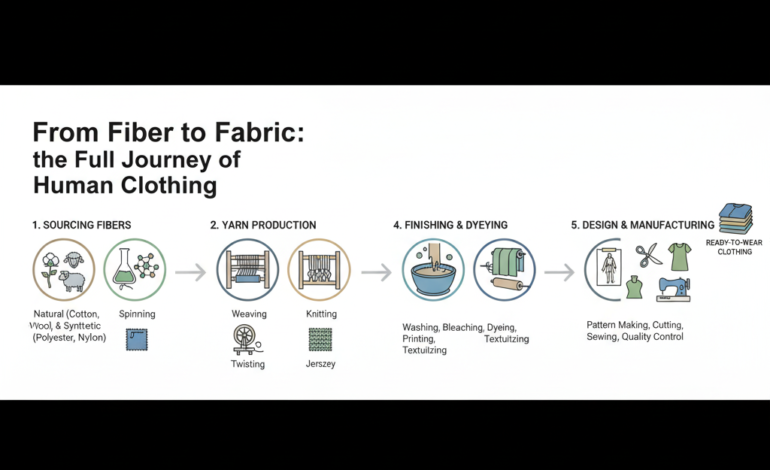

Clothing is more than what you see hanging in a closet or draped over a mannequin. Before a garment becomes a statement of style, it begins as raw fiber, transforms through intricate processes, and takes shape through skilled construction. Understanding how clothing is made reveals a deeper appreciation for the craft that has evolved alongside humanity itself.
This journey—from fiber to fabric to finished garment—is central to the history of human clothing development. The way we source materials, spin yarn, weave fabric, and cut patterns has shaped not only what we wear, but how societies function, economies grow, and cultures express identity. Construction is the backbone of fashion, and it has been refined over millennia.
In this post, we’ll explore the full lifecycle of clothing creation. You’ll learn about the natural fibers that started it all, the techniques that turned those fibers into fabric, and the evolution of garment construction that gave rise to the clothing we recognize today.
Understanding Natural Fibers and Early Materials
Long before synthetic fabrics existed, humans relied on what nature provided. The first materials used in human clothing came from animals and plants, each offering unique properties that influenced how garments were made and worn.
Animal-Based Fibers
Wool, silk, and leather were among the earliest animal-derived materials used for clothing. Wool, harvested from sheep and other animals, provided warmth and durability. Its natural crimp made it ideal for spinning into yarn, and its insulating properties made it essential in colder climates.
Silk, on the other hand, was a luxury fiber. Produced by silkworms, it required careful cultivation and processing. Ancient China mastered silk production, and for centuries, the techniques remained closely guarded secrets. Silk’s smooth texture and lustrous appearance made it a symbol of wealth and status.
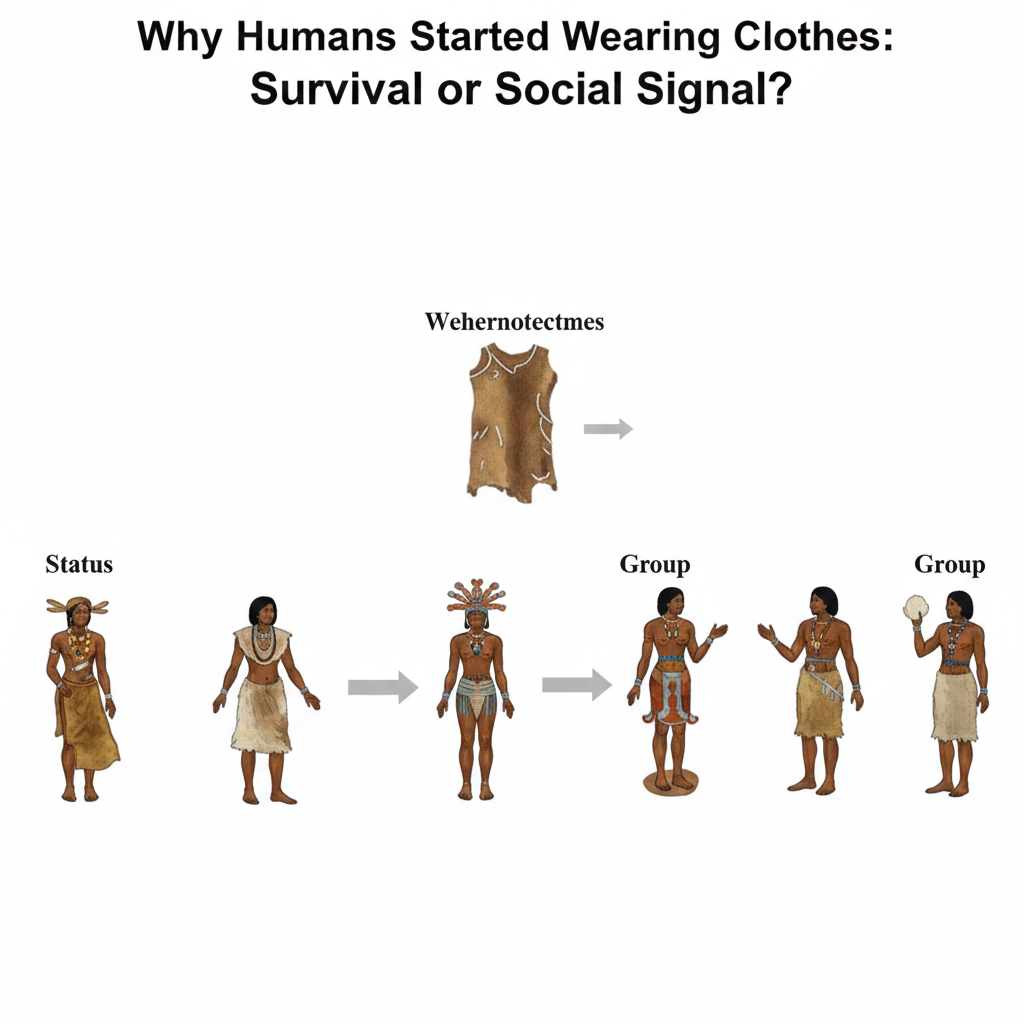
Leather offered protection and durability. Early humans used animal hides for clothing, footwear, and shelter. Tanning processes evolved to make leather more flexible and long-lasting, transforming it from a rudimentary material into a versatile textile.
Plant-Based Textiles
Plant fibers like cotton, flax, and hemp became staples in clothing production. Cotton, native to regions in India, Africa, and the Americas, was valued for its softness and breathability. It could be spun into fine threads and woven into lightweight fabrics suitable for warm climates.
Flax, used to make linen, was one of the oldest cultivated plants. Ancient Egyptians prized linen for its coolness and strength, often using it in both everyday clothing and ceremonial garments. The process of turning flax into linen was labor-intensive, involving harvesting, retting, and spinning, but the result was a durable and highly valued fabric.
Hemp, another plant-based fiber, was known for its strength and versatility. It was used for everything from rope to clothing, and its cultivation required minimal resources, making it a practical choice for many early societies.
These natural fibers laid the foundation for textile production. The methods used to process them evolved over time, but the core principles remained the same: take raw material, transform it into thread, and weave or knit it into fabric.
The Process from Yarn to Fabric
Once fibers were harvested, they had to be spun into yarn. Spinning is the process of twisting fibers together to create a continuous thread. Early spinning was done by hand, using tools like spindles and distaffs. The invention of the spinning wheel in the Middle Ages revolutionized this process, making yarn production faster and more consistent.
Yarn quality depended on fiber type, twist, and tension. A tightly spun yarn was strong and durable, while a loosely spun yarn was softer and more flexible. These characteristics influenced the final fabric’s texture, strength, and appearance.
Weaving Techniques
Weaving is one of the oldest methods of fabric production. It involves interlacing two sets of threads—warp (vertical) and weft (horizontal)—at right angles to create a stable textile. The earliest looms were simple frames, but as technology advanced, looms became more complex, allowing for intricate patterns and designs.
Different weaving techniques produced different fabric structures. Plain weave, the simplest form, created a balanced, sturdy fabric. Twill weave introduced diagonal patterns, adding strength and texture. Satin weave resulted in a smooth, lustrous surface, often used for finer garments.
Weaving wasn’t just functional—it was also artistic. Cultures developed distinctive weaving patterns that reflected their identities. From Scottish tartans to Peruvian textiles, woven fabrics became a form of cultural expression.
Knitting and Fabric Formation
Knitting, unlike weaving, creates fabric by interlocking loops of yarn. This technique produces a more flexible, stretchy textile, making it ideal for garments that need to conform to the body. While weaving has ancient roots, knitting as we know it emerged later, gaining popularity in Europe during the medieval period.
Knitting allowed for seamless garment construction, reducing waste and improving fit. It also made clothing more comfortable, as knitted fabrics could stretch and move with the wearer. The difference between woven and knitted garments lies in their structure—woven fabrics are stable and crisp, while knitted fabrics are elastic and soft.
Both weaving and knitting played crucial roles in clothing evolution. The choice between the two depended on the garment’s purpose, the available materials, and the desired aesthetic.
Pattern Making and Garment Construction
Having fabric was only part of the equation. To create clothing, fabric had to be cut and assembled into shapes that fit the human body. This is where pattern making and garment construction became essential.
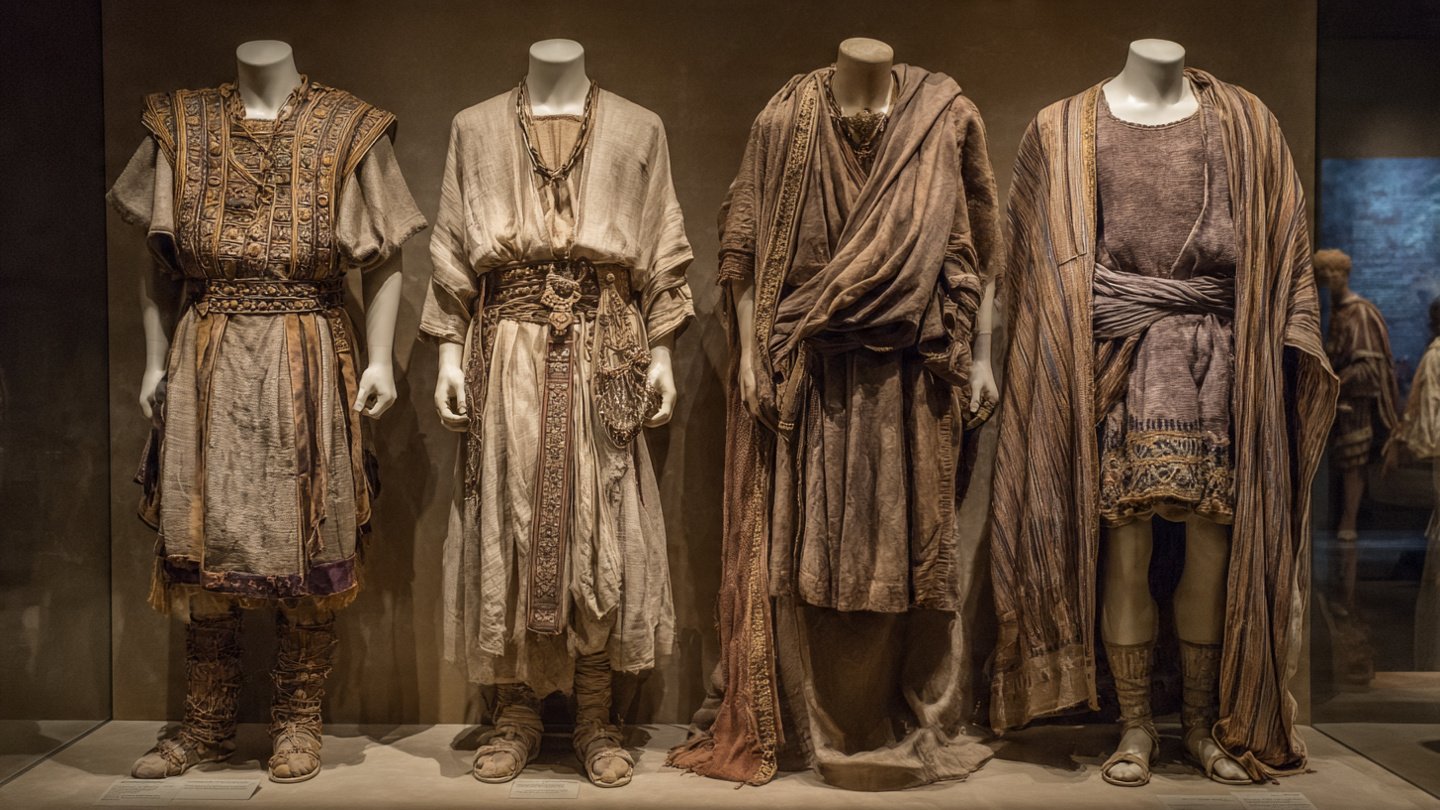
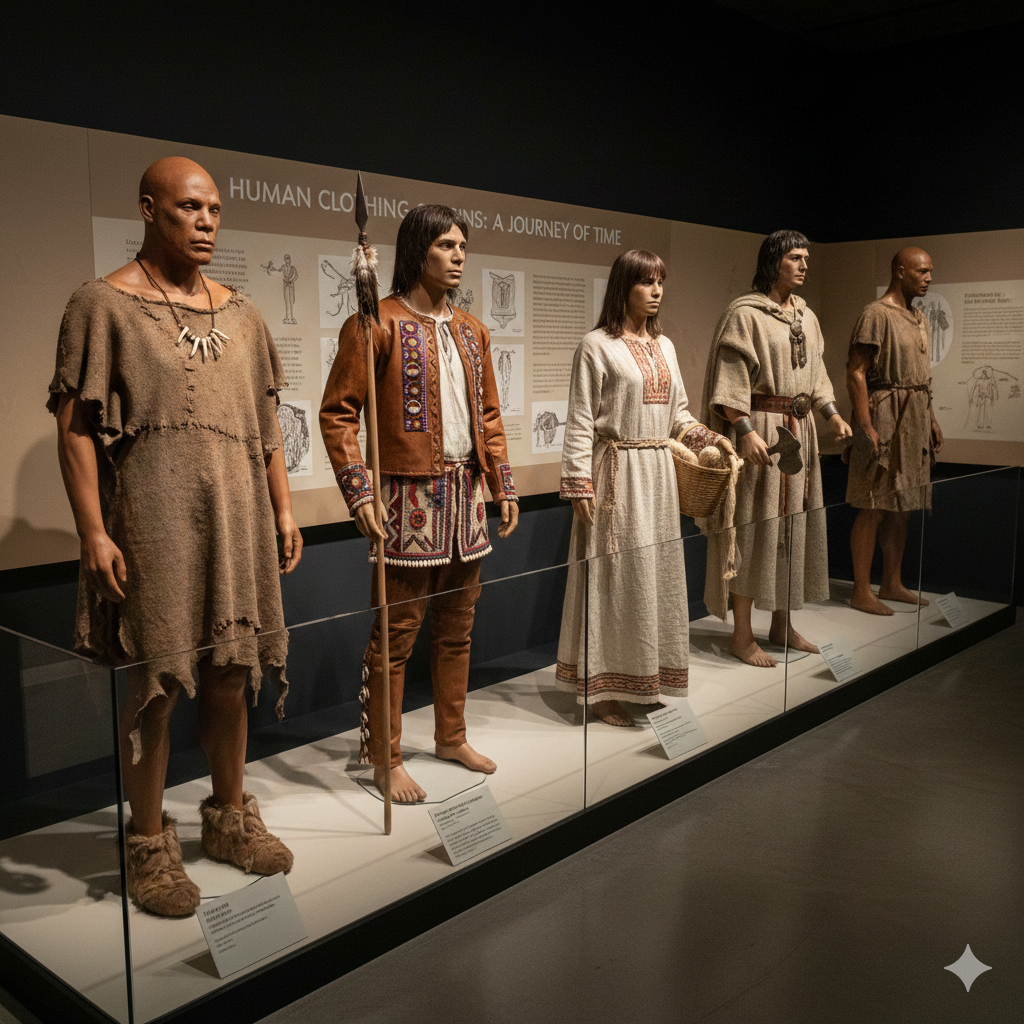
Early garments were simple. Rectangular pieces of fabric were draped, wrapped, or pinned to form tunics, robes, and cloaks. These styles required minimal cutting and sewing, making them accessible to most people. However, as societies grew more complex, so did clothing.
Tailoring emerged as a specialized craft. Tailors learned to cut fabric in ways that followed the body’s contours, creating garments that fit more precisely. This required an understanding of geometry, proportion, and human anatomy. Patterns were developed to ensure consistency, allowing tailors to replicate successful designs.
The introduction of fitted garments marked a turning point. Instead of loose, draped clothing, people began wearing structured pieces with darts, seams, and shaping. This shift reflected changing cultural attitudes toward the body, social status, and personal identity.
Sewing techniques also evolved. Hand stitching was the standard for centuries, with different stitches serving different purposes. Running stitches held seams together, while backstitches provided strength. Decorative stitches, like embroidery, added visual interest and signaled craftsmanship.
The early tailoring evolution set the stage for modern garment construction. Tailors became architects of clothing, transforming flat fabric into three-dimensional forms that enhanced and expressed the human figure.
Industrialization and Modern Clothing Production
The Industrial Revolution transformed clothing production in ways that were previously unimaginable. What had been a slow, labor-intensive process became mechanized, efficient, and scalable.
The invention of the sewing machine in the mid-19th century was a game-changer. Suddenly, garments that took hours to sew by hand could be completed in minutes. Factories replaced home workshops, and clothing production shifted from individual craftsmanship to mass manufacturing.
This shift had profound effects. Clothing became more affordable and accessible. Ready-to-wear garments, once a rarity, became the norm. People no longer needed to commission custom-made clothing or sew their own—they could simply buy what they needed off the rack.
However, industrialization also brought challenges. The focus on speed and cost often came at the expense of quality. Standardized sizing meant that not all garments fit well, and the decline of bespoke tailoring meant that personalized craftsmanship became a luxury.
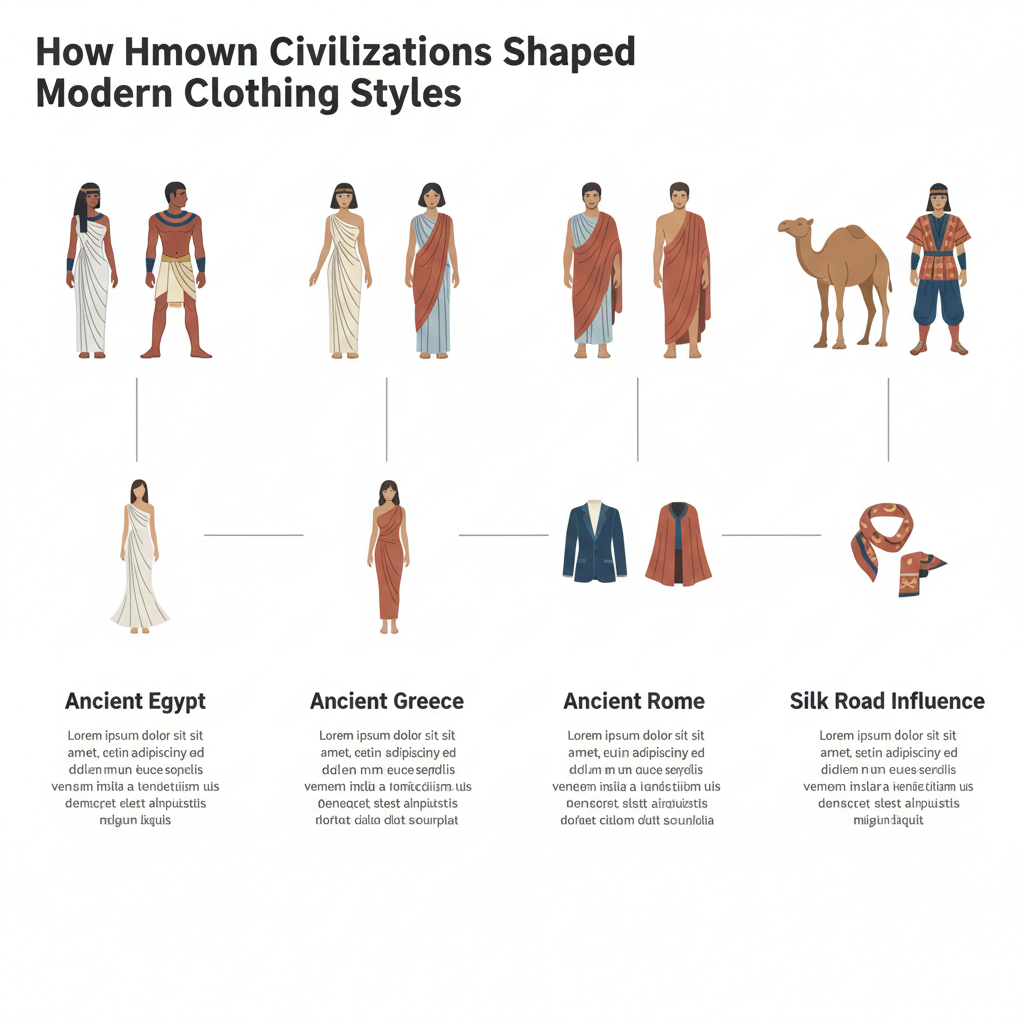
Despite these trade-offs, industrialization enabled global fashion systems to emerge. The way how ancient civilizations shaped clothing styles influenced early designs, but modern production methods allowed those styles to be reproduced and distributed on an unprecedented scale.
Today’s clothing industry is a blend of tradition and innovation. While machines handle much of the work, skilled artisans still practice traditional techniques. High fashion relies on hand-sewing and intricate detailing, while mass-market brands prioritize efficiency and volume.
The construction methods we use today are the result of thousands of years of experimentation, adaptation, and refinement. From the first hand-spun fibers to the automated factories of the 21st century, the journey from fiber to fabric to finished garment reflects humanity’s ingenuity and creativity.
Construction as the Backbone of Human Clothing Evolution
Clothing construction is not just a technical process—it’s a cultural one. The way we make clothes reveals what we value, how we see ourselves, and how we want to be seen by others.
Every stage of construction, from fiber selection to final stitching, contributes to the garment’s identity. The choice of material affects texture, durability, and comfort. The weaving or knitting technique determines structure and flexibility. The pattern and cut define fit and silhouette. And the finishing touches—buttons, hems, embellishments—add personality and meaning.
Understanding construction also helps us appreciate the labor behind our clothing. In a world where fast fashion dominates, it’s easy to forget that every garment represents hours of work, skill, and creativity. Recognizing that process fosters a deeper connection to what we wear and encourages more thoughtful consumption.
As fashion continues to evolve, so too will construction methods. Advances in technology are introducing new materials, sustainable practices, and innovative techniques. But no matter how much changes, the fundamentals remain the same: clothing begins with fiber, transforms through fabric, and takes shape through construction.
If you’re curious about how these construction methods influenced the shapes and styles we recognize today, explore understanding clothing silhouettes to see how garment structure evolved into the diverse fashion landscape we know now.