


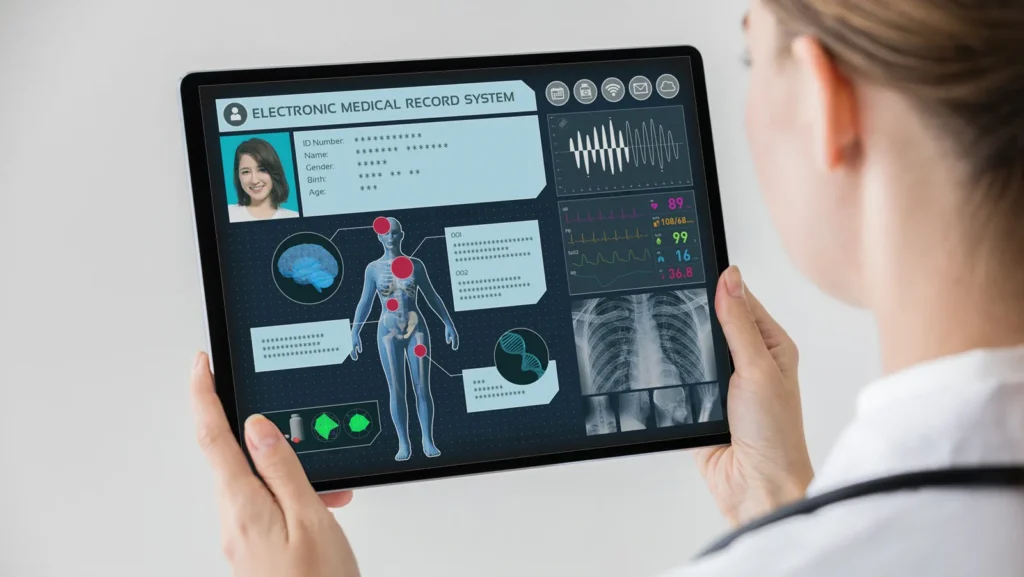
For decades, a visit to the doctor meant sitting in a waiting room, clipboard in hand, filling out page after page of medical history. You would list your allergies, your past surgeries, and your current medications, hoping you remembered everything correctly. Then, that paperwork would disappear into a massive wall of color-coded manila folders, potentially never to be seen by another specialist.
That system is rapidly fading. The US healthcare landscape has undergone a massive transformation over the last fifteen years, shifting from physical paper trails to digital data highways. This transition isn’t just about saving trees; it is about creating a unified, accessible, and accurate picture of a patient’s health.
However, the shift to digital systems can be confusing. Patients often wonder who can see their data, how safe it is, and what the difference is between the various acronyms thrown around by hospital staff. Understanding the backbone of modern medical information is crucial for navigating the healthcare system effectively. This guide breaks down everything you need to know about the digital health records meaning, how they function within the USA, and what the future holds for your medical data.
What Are Digital Health Records?
At its core, a digital health record is an electronic version of a patient’s medical history. It includes everything you would find in a traditional paper chart—treatment history, diagnoses, medications, immunization dates, allergies, radiology images, and lab and test results. But unlike paper, these records are designed to be dynamic and searchable.
The push for digital health records in the USA gained significant momentum with the Health Information Technology for Economic and Clinical Health (HITECH) Act of 2009. This legislation provided financial incentives for healthcare providers to adopt electronic systems, aiming to improve the quality of care and reduce costs.
Digital Health Records Meaning
When we discuss the electronic health records meaning, we are talking about real-time, patient-centered records that make information available instantly and securely to authorized users. These systems are built to go beyond standard clinical data collected in a provider’s office and can include a broader view of a patient’s care.
Difference Between EHR and EMR
While often used interchangeably, there is a technical distinction. An Electronic Medical Record (EMR) is usually a digital version of the paper chart in a single practice. An Electronic Health Record (EHR) is designed to be shared between practices, following the patient from their primary care doctor to a specialist, and then to the hospital.
Why Healthcare is Moving Digital
The primary driver isn’t just technology for technology’s sake. The move is about continuity of care. In a paper-based system, if you were unconscious in an emergency room, the attending physicians would have no way of knowing your allergies or medical history unless a family member told them. Digital systems aim to close that dangerous information gap.
How Digital Health Records Work in the USA
The mechanics of an EHR system USA providers use are complex, involving sophisticated software, cloud computing, and strict security protocols.
Data Collection and Storage
Data collection happens at every point of care. When you check in at a front desk, your demographic and insurance data is updated. During your exam, the nurse enters your vitals directly into a tablet or computer. The doctor types in notes regarding your symptoms and diagnosis. This data is then stored on secure servers, which are often cloud-based to allow for redundancy and remote access.
Access by Doctors, Hospitals, and Patients
Access is governed by role-based permissions. A billing specialist might only see your insurance information, while your surgeon sees your MRI scans. In the USA, patients also have direct access through “patient portals.” These secure websites or apps allow you to view your own lab results, schedule appointments, and sometimes message your provider directly.
Interoperability Between Healthcare Systems
The holy grail of how electronic health records work is “interoperability.” This refers to the ability of different computer systems and software applications to communicate, exchange data, and use the information that has been exchanged. If you visit a clinic in New York and then an ER in California, true interoperability ensures your records are available in both places. While the US system has improved significantly, perfect interoperability remains a work in progress due to the hundreds of different software vendors in the market.
Types of Digital Health Records
To better understand your own medical data, it helps to distinguish between the three main categories of records used today. This distinction clarifies EHR vs EMR and where you fit into the equation.
Electronic Medical Records (EMRs)
As mentioned earlier, EMRs are the digital equivalent of the paper charts at a specific clinician’s office. They contain the standard medical and clinical data gathered in that one provider’s office. They are excellent for diagnosis and treatment within that specific practice but don’t easily travel out of the practice.
Electronic Health Records (EHRs)
EHRs focus on the total health of the patient—going beyond standard clinical data collected in the provider’s office and inclusive of a broader view on a patient’s care. EHRs are designed to reach out beyond the health organization that originally collects and compiles the information. They are built to share information with other health care providers, such as laboratories and specialists, so they contain information from all the clinicians involved in the patient’s care.
Personal Health Records (PHRs)
Personal health records USA trends show a rise in patient-managed data. PHRs contain the same types of information as EHRs—diagnoses, medications, immunizations, and family medical histories—but are designed to be set up, accessed, and managed by patients. Patients can use PHRs to maintain and manage their health information in a private, secure, and confidential environment. Examples include apps on your smartphone where you manually input your data or sync it from your doctor’s portal.
Benefits of Digital Health Records for Patients
The transition to digital isn’t just administrative; it offers tangible advantages to the person receiving care. The benefits of electronic health records for patients center around safety and convenience.
Easy Access to Medical History
Gone are the days of calling a doctor’s office and waiting days for them to fax a copy of your immunization records for school or work. With patient health records USA portals, you can often download these documents instantly. This empowers patients to be more active participants in their own healthcare.
Better Coordination of Care
When your records are digital and shareable, every member of your healthcare team is on the same page. Your cardiologist knows exactly what your primary care physician prescribed, preventing conflicting treatments.
Reduced Medical Errors
Legibility was a notorious issue with paper charts. Misreading a doctor’s handwriting could lead to serious medication errors. Digital prescribing (e-prescribing) eliminates the guesswork, ensuring the pharmacist receives the exact dosage and medication name intended by the doctor. Furthermore, these systems often have built-in alerts that warn doctors about potential drug interactions based on the patient’s history.
Benefits of Digital Health Records for Healthcare Providers
For hospitals and clinics, healthcare data management USA is about efficiency and improving the standard of care.
Faster Decision-Making
In critical situations, seconds count. EHR benefits for doctors include instant access to a patient’s blood type, allergies, and current conditions. This allows emergency responders and ER doctors to make life-saving decisions without waiting for paper files to be located.
Improved Efficiency and Accuracy
Administrative tasks are streamlined with digital records. Coding for insurance claims becomes more automated, and appointment scheduling is integrated with clinical workflows. This reduces operational costs and frees up staff to focus on patient interaction rather than paperwork.
Better Patient Outcomes
By aggregating data, providers can track patient progress more effectively over time. They can easily visualize trends, such as rising blood pressure or fluctuating glucose levels, allowing for earlier interventions and better long-term health management.
Privacy and Security Concerns with Digital Health Records
Despite the benefits, the digitization of sensitive data introduces new risks. Understanding digital health records privacy is essential for maintaining trust in the system.
Data Breaches and Cyber Risks
Healthcare data is incredibly valuable on the black market—often more so than credit card numbers—because it contains unchangeable personal identifiers like Social Security numbers. Ransomware attacks, where hackers lock a hospital’s system and demand payment, are a significant threat to EHR security USA.
HIPAA Compliance Basics
The Health Insurance Portability and Accountability Act (HIPAA) is the primary federal law protecting health information. It sets national standards for the security of electronic protected health information. Providers must implement physical, network, and process security measures to ensure HIPAA compliance.
How Patient Data is Protected
To combat cyber threats, healthcare systems employ robust defense mechanisms. This includes “encryption at rest” (protecting data sitting on a server) and “encryption in transit” (protecting data moving between computers). Additionally, strict access logs track exactly who opened a patient’s file and when, ensuring accountability for hospital staff.
Challenges of Digital Health Records in the USA
The implementation of these systems hasn’t been without headaches. There are significant electronic health record challenges that the industry is still working to resolve.
System Compatibility Issues
EHR problems USA often stem from the fragmented market. There are dozens of major EHR vendors (like Epic, Cerner, and MEDITECH), and they don’t always speak the same language. While standards are improving, moving data from one vendor’s system to another can still result in formatting errors or missing information.
High Implementation Costs
For small private practices, the cost of installing and maintaining a robust EHR system can be prohibitive. It involves expensive software licenses, hardware upgrades, and ongoing IT support.
Training and Usability Problems
Many doctors report “EHR burnout.” Some systems are clunky, requiring too many clicks to perform simple tasks. This can distract physicians during exams, as they spend more time looking at the screen than at the patient. Usability remains a major area for improvement.
Role of Digital Health Records in Modern Healthcare
Digital health technology USA is the foundation upon which modern medicine is built.
Telemedicine Integration
During the COVID-19 pandemic, telemedicine exploded in popularity. EHRs were vital to this success. They allowed doctors to treat patients remotely while having full access to their medical history, and to document the virtual visit just as they would an in-person one.
Preventive Care and Analytics
EHR healthcare trends are moving toward population health. By analyzing the records of thousands of patients, healthcare systems can identify at-risk groups. For example, they can easily generate a list of all patients over 50 who haven’t had a colonoscopy and send automated reminders, shifting the focus from treating sickness to preventing it.
Chronic Disease Management
For conditions like diabetes or heart disease, continuous monitoring is key. Digital records allow for the integration of data from wearable devices (like glucose monitors), giving doctors a comprehensive view of the patient’s health between visits.
Future of Digital Health Records in the USA
What does the future of digital health records look like? The next decade will likely focus on making the data smarter and more accessible.
AI and Automation in Healthcare Data
Artificial Intelligence (AI) is beginning to integrate with EHRs. AI could help summarize lengthy patient notes, predict which patients are at high risk for readmission, or suggest potential diagnoses based on complex data patterns. Healthcare technology trends USA suggest AI will reduce the administrative burden on doctors, letting them focus on care.
Patient-Controlled Records
There is a growing movement toward giving patients true ownership of their data—potentially using blockchain technology—allowing them to grant or revoke access to providers as they see fit, rather than the data living primarily in the hospital’s database.
Nationwide Data Sharing Initiatives
Efforts like the Trusted Exchange Framework and Common Agreement (TEFCA) aim to create a simplified, nationwide network for data sharing. The goal is a seamless “network of networks” where your health data follows you to any provider in the country, regardless of what software they use.
Frequently Asked Questions (FAQ)
Are digital health records mandatory in the USA?
While not strictly “mandatory” for every single doctor to practice medicine, federal regulations and financial penalties/incentives make it financially difficult for providers to avoid them. Most hospitals and clinics must demonstrate “meaningful use” of certified EHR technology to receive full reimbursement from Medicare and Medicaid.
Can patients access their digital health records?
Yes. The 21st Century Cures Act prohibits “information blocking.” This means healthcare providers are generally required to give patients free, easy access to all the health information in their electronic medical records, usually via a secure online portal.
Are electronic health records safe from hacking?
No digital system is 100% immune to hacking, but EHRs are subject to higher security standards than most industries. Measures like multi-factor authentication, data encryption, and strict access controls make them very secure, though the human element (phishing scams) remains a risk.
What is the difference between EHR and EMR?
An EMR is a digital chart used within one practice (like your dentist’s office). An EHR is a comprehensive record designed to be shared across different healthcare providers (specialists, hospitals, labs) to provide a total picture of your health.
How long are digital health records stored?
Record retention laws vary by state. generally, providers must keep records for 5 to 10 years after the last patient visit or after the patient reaches the age of majority (18 or 21). However, many digital systems allow for indefinite storage, creating a lifetime health record.
Final Thoughts on Digital Health Records in the USA
The digitization of American healthcare is a complex, ongoing process, but it is undoubtedly a step forward. Digital health records provide the infrastructure necessary for safer, more efficient, and more coordinated care. They eliminate the guesswork of missing files and empower patients to take ownership of their medical history.
However, as we embrace this technology, awareness regarding privacy is essential. Patients should utilize portals to check their records for accuracy and remain vigilant about who has access to their data. As technology is reshaping the future of healthcare, the partnership between patient, provider, and digital system will define the next generation of medicine in the United States.