


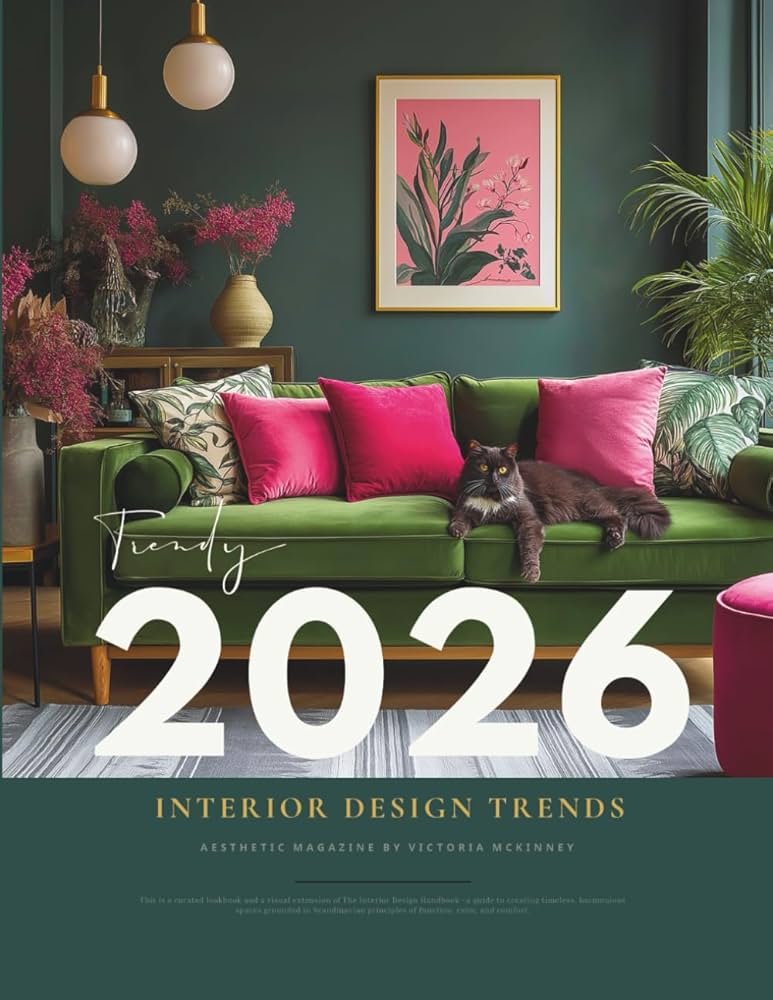
As we move closer to 2026, the landscape of American design is undergoing a significant transformation. We are moving past the era where design was solely about making things look good. Today, it is about how we live, work, and interact with our environment. The upcoming year represents a tipping point where lifestyle shifts and technological advancements are finally syncing up, creating a new standard for how we build our homes, brand our businesses, and navigate digital spaces.
Functionality is no longer a secondary consideration to aesthetics; the two are now inextricably linked. We are seeing a demand for spaces and products that perform as beautifully as they look. This shift is driven by a collective desire for efficiency without sacrificing comfort. Americans are seeking environments that support their mental well-being, facilitate their workflows, and respect the planet.
Design is extending far beyond visual appeal. It is becoming a holistic discipline that considers sound, touch, and even the emotional response a user has to a space or interface. Whether it is the layout of a smart home or the user experience of a mobile app, the focus is shifting toward creating meaningful interactions. 2026 is shaping up to be a year where design becomes an essential tool for solving complex problems rather than just a way to decorate the surface.
The Current State of Design in the USA
To understand where we are going, we have to look at where we stand right now. The current state of design trends in the USA is defined by a highly educated and discerning consumer base. People are more aware of the impact of their surroundings than ever before. After years of rapid digital acceleration and hybrid living models, Americans have developed specific expectations for their physical and digital environments.
Consumer expectations have evolved rapidly. There is little tolerance for friction. If a website is slow, a chair is uncomfortable, or a room feels cluttered, it is immediately rejected. This drive for seamlessness is pushing designers to create solutions that feel intuitive. We are seeing a strong push toward “digital-first” thinking, but not at the expense of human connection. The goal is to use digital tools to enhance real-world experiences, not replace them.
Perhaps the most significant influence on the current state of design is the dual focus on sustainability and wellness. These are no longer buzzwords or niche interests; they are baseline requirements. From the materials used in construction to the color palettes chosen for branding, every decision is weighed against its environmental impact and its ability to promote health. This consciousness is setting the stage for the major trends we will see dominate in 2026.
Top Design Trends Defining 2026
The design trends defining 2026 USA are characterized by a search for meaning and balance. We are moving away from the stark, cold futurism that was predicted a decade ago and toward a future that feels warm, human, and grounded. The overarching theme is purpose-driven design. Every element, whether it is a piece of furniture or a line of code, must serve a clear function.
Simplicity remains a core tenant, but it is evolving. We are seeing “simplicity with personality.” The era of the sterile, all-white “Apple store” aesthetic is fading. In its place, we are seeing clean lines paired with personal touches, unique textures, and artisanal details. It is minimalism, but with a heartbeat. This approach allows for clutter-free living without the feeling of living in a museum.
Another defining aspect of 2026 is the seamless blending of digital and physical spaces. This goes beyond just having smart devices. It is about how our digital lives inform our physical reality and vice versa. Think of retail stores that integrate augmented reality to help you visualize products in your home before you buy, or workspaces that adapt their lighting and temperature based on the data from your wearable health tech. The boundaries are blurring, creating a unified experience that flows naturally between the screen and the room.
Sustainable & Eco-Conscious Design
Sustainability has graduated from a “nice-to-have” feature to the very foundation of modern American aesthetics. Sustainable design trends USA are driving innovation in materials and construction methods. We are seeing a massive surge in the use of natural and recycled materials. Cork, bamboo, mushroom leather, and reclaimed ocean plastics are moving from experimental prototypes to mass-market staples.
Energy efficiency is also dictating layout and form. Architects and interior designers are prioritizing natural light and airflow more than ever to reduce reliance on artificial climate control. Homes are being oriented to maximize solar gain in the winter and shade in the summer. This isn’t just about saving money on utility bills; it’s about creating a harmonious relationship with the local climate.
The most profound shift, however, is the move toward a long-lasting, low-waste design philosophy. The “fast furniture” culture is losing its appeal. Consumers are increasingly willing to invest in pieces that are built to last a lifetime rather than a season. Repairability is becoming a key selling point. Designers are creating modular systems that can be updated or fixed, ensuring that products stay in our homes and out of landfills.
Minimalist but Warm Design Aesthetics
The minimalist design USA movement is undergoing a significant “softening.” For years, minimalism was synonymous with sharp edges, chrome, and monochromatic scales. In 2026, we are embracing “soft minimalism.” This trend retains the clutter-free, organized ethos of traditional minimalism but introduces curves, warmth, and organic forms.
Neutral tones are still the backbone of this aesthetic, but they are far from boring. We are seeing complex neutrals—creams, terracottas, sage greens, and warm grays—that add depth to a room. The key here is texture. When the color palette is restrained, the materials must do the heavy lifting. Bouclé fabrics, unvarnished woods, honed stone, and textured plasters provide tactile interest that invites touch and creates a sense of coziness.
This trend prioritizes functional beauty over excess. It asks the question: “Does this object bring value?” If the answer is no, it doesn’t belong. However, “value” can also mean emotional value. A single, beautiful sculpture or a hand-woven rug is valued over shelves full of mass-produced decor. It is about curating a space that feels calm, breathable, and deeply personal.
Bold Colors, Typography & Visual Identity
While interior spaces may be leaning toward soft minimalism, graphic and brand design is heading in a bolder direction. Graphic design trends 2026 are all about expression and breaking the mold. We are seeing a resurgence of expressive typography. Fonts are no longer just vessels for information; they are becoming the visual centerpiece. Designers are stretching, twisting, and animating type to create dynamic visual languages that grab attention instantly.
High-contrast color palettes are also making a comeback. Brands are moving away from the safe, pastel “millennial” aesthetic and embracing deep, saturated hues. Electric blues, neon greens, and vivid purples are being paired with stark blacks and whites to create visuals that pop on high-definition screens. This boldness reflects a desire for optimism and energy.
Brand storytelling is becoming more immersive. It is not enough to just have a logo and a slogan. Companies are using design to build comprehensive worlds for their customers. This involves consistent visual threads that run through social media, packaging, web design, and physical advertising. The goal is to create a memorable identity that stands out in an increasingly crowded digital marketplace.
Smart Spaces & Technology-Integrated Design
The concept of the “smart home” is maturing. Smart design trends USA are moving away from gadgetry and toward true integration. We are seeing the rise of adaptive and modular spaces that change based on the needs of the user. Imagine a home office that transforms into a guest room with the touch of a button, or a living room wall that adjusts its opacity to manage privacy and light.
Human-centered tech integration is the priority. Technology is becoming invisible. Instead of screens and control panels cluttering our walls, we are seeing voice-activated systems and sensors embedded directly into materials. Surfaces can charge devices, mirrors can display health metrics, and windows can act as solar panels.
In the workplace, smart design is focused on collaboration and flexibility. Offices are being equipped with intelligent booking systems for hot-desking, advanced video conferencing suites that make remote workers feel present, and environmental sensors that optimize air quality for cognitive performance. The technology is there to support the human, not the other way around.
Digital-First & Immersive Design Experiences
As our time spent online continues to increase, digital design trends USA are evolving to make those hours more engaging and less draining. Motion design is becoming standard. Static images are being replaced by micro-animations and video backgrounds that guide the user’s eye and provide instant feedback. These subtle movements make digital interfaces feel alive and responsive.
UX-focused layouts are prioritizing accessibility and ease of use above all else. Designers are stripping away unnecessary clicks and simplifying navigation structures. The goal is to help the user achieve their goal as quickly as possible. This includes “dark mode” defaults and customizable interfaces that allow users to tailor their digital environment to their visual preferences.
AI-assisted design tools are also changing the game. Designers are using artificial intelligence to generate layouts, test color combinations, and even write code. This isn’t replacing the designer; it’s supercharging them. It allows for rapid prototyping and personalization at a scale that was previously impossible. We are entering an era of hyper-personalized web experiences where the interface adapts to the individual user’s behavior in real-time.
Wellness-Centered Design
Perhaps the most human-centric trend of all is the rise of wellness design trends USA. Following years of global health concerns, Americans are prioritizing their physical and mental well-being in the spaces they inhabit. Biophilic design elements are everywhere. We are bringing the outdoors in through living walls, indoor trees, and water features. This connection to nature has been proven to lower blood pressure and reduce stress.
Mental health–friendly spaces are being designed with intention. This includes acoustic dampening to reduce noise pollution, dedicated “quiet zones” in offices and homes, and lighting systems that mimic the natural circadian rhythm to improve sleep quality.
Priorities have shifted to light, air, and comfort. High-quality air filtration systems are becoming standard in new construction. Furniture is being designed with ergonomics as a top priority, acknowledging that we spend much of our lives sitting. The goal is to create environments that actively contribute to our health, rather than detracting from it.
How Brands & Individuals Can Apply 2026 Design Trends
Adopting these trends doesn’t mean tearing down your house or rebranding your company overnight. Learning how to follow design trends 2026 is about strategic, gradual evolution. For individuals, this means updating spaces gradually. Start by decluttering and introducing a few high-quality, sustainable pieces. Swap out harsh lighting for warm, adjustable options. Introduce plants and natural textures to soften your environment.
For brands, it means investing in timeless elements. Focus on building a strong, flexible visual identity that can adapt to different platforms. Prioritize user experience on your digital channels. Ensure that your physical products or packaging reflect the growing demand for sustainability.
The key is balancing trends with usability. Don’t chase a trend if it makes your life harder or your product more difficult to use. Use these trends as a guide to improve functionality and aesthetics, but always filter them through the lens of your specific needs and values.
Frequently Asked Questions (FAQ)
Q1. What are the biggest design trends in the USA for 2026?
The biggest trends include purpose-driven design, soft minimalism, sustainable and recycled materials, immersive digital experiences, and wellness-centered architecture that prioritizes mental and physical health.
Q2. Is minimalist design still popular in 2026?
Yes, but it has evolved into “soft minimalism.” It is less about stark, cold emptiness and more about warm, textured simplicity. It focuses on functional beauty and clutter-free living without sacrificing comfort.
Q3. How important is sustainability in modern design?
Sustainability is critical. It has moved from a niche preference to a core expectation. Consumers demand eco-friendly materials, energy-efficient layouts, and products that are built to last rather than be thrown away.
Q4. What role does technology play in design trends?
Technology is becoming integrated and invisible. Smart homes and offices are using adaptive tech to improve comfort and efficiency without dominating the visual aesthetic. AI is also assisting in creating hyper-personalized digital experiences.
Q5. Are bold colors replacing neutral palettes?
In graphic design and branding, yes—bold, high-contrast colors are surging. However, in interior design, complex neutrals and warm earth tones remain the dominant foundation, often accented by texture rather than bright color.
Q6. How does design influence lifestyle and productivity?
Design directly impacts mood and efficiency. Wellness-centered design (like better lighting and ergonomics) improves health, while clutter-free, organized spaces (both physical and digital) reduce cognitive load and boost productivity.
Q7. Will these design trends last beyond 2026?
Many of these trends, particularly sustainability, wellness, and smart integration, are long-term shifts rather than passing fads. They represent a fundamental change in how we view our environment and will likely define the next decade of design.
Final Thoughts: The Future of Design in the USA
As we look toward 2026, it is clear that design has become a lifestyle choice. It is no longer just about what we buy, but how we choose to live. The convergence of sustainability, technology, and wellness is creating a new framework for American life—one that values quality over quantity and experience over accumulation.
The future lies in the balance of form, function, and responsibility. We are building a world where our spaces care for us and the planet simultaneously. Thoughtful design defines the future because it creates the backdrop for our lives. By embracing these trends, we aren’t just decorating; we are engineering a better, healthier, and more connected way of living.