



Body Decoration Before Clothing: Paint, Tattoos, and Wraps


Long before humans draped themselves in woven fabric or stitched garments, they adorned their bodies with paint, permanent markings, and natural wraps. Archaeological evidence and anthropological research suggest that body decoration may have predated structured clothing by thousands of years. While the question of why humans started wearing clothes involves complex factors like climate adaptation and survival, the impulse to modify and embellish the human body appears to be even more ancient.
Understanding this timeline reshapes how we think about the origins of fashion and identity. Body decoration wasn’t merely aesthetic—it communicated social roles, spiritual beliefs, tribal affiliation, and individual status. These early forms of expression laid the groundwork for what would eventually become the symbolic systems embedded in garments themselves. Exploring the role of modesty in early clothing reveals that covering the body wasn’t always the primary concern; expression often came first.
This blog examines the evidence for body decoration as a precursor to clothing, the cultural and environmental influences that shaped these practices, and how early adornment evolved into the complex clothing traditions we recognize today. For a broader view of this evolution, visit our [human clothing origins hub](Origins Hub).
Body Paint as Early Identity Expression
Body paint represents one of the earliest and most universal forms of human adornment. Red ochre, a naturally occurring iron oxide, has been found at archaeological sites dating back over 100,000 years. While its exact use remains debated, many researchers believe it was applied to the skin for ritualistic, symbolic, or decorative purposes. Unlike clothing, which requires tools and materials to construct, body paint could be applied quickly using fingers, sticks, or rudimentary brushes.
The prevalence of ochre across ancient sites in Africa, Europe, and Asia suggests that body painting was not an isolated practice but a widespread cultural behavior. Communities used pigments to mark important life events, distinguish between social groups, or honor spiritual beliefs. The body became a canvas for storytelling and identity long before textiles offered the same opportunity.
Natural Pigments and Tribal Symbolism
Early humans had access to a limited but effective palette of natural pigments. Red and yellow ochres, white clay, charcoal, and plant-based dyes allowed for a range of colors and patterns. These pigments were often mixed with animal fat or plant oils to create durable, adherent paints that could withstand daily activity and environmental exposure.
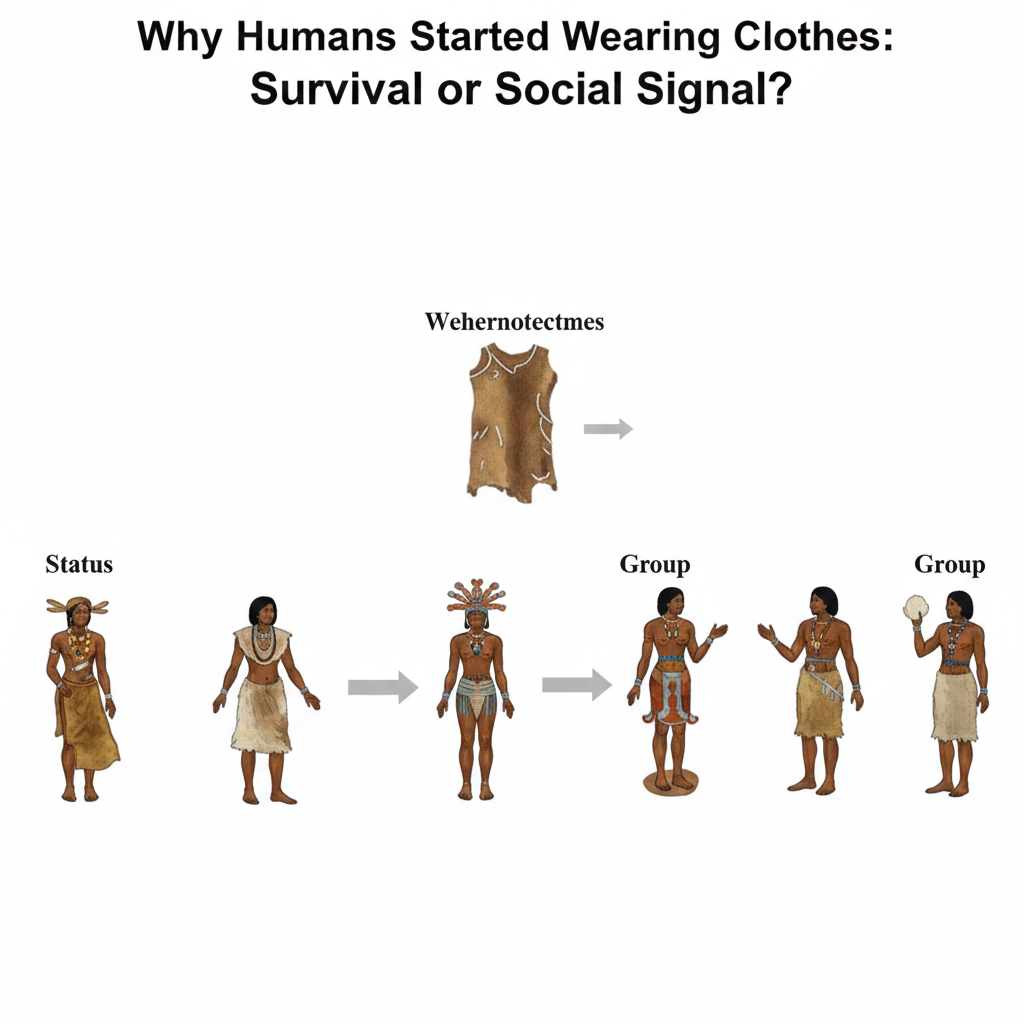
Tribal symbolism played a central role in how these colors were applied. Specific patterns might indicate a person’s age, marital status, or role within the community. Hunters might paint themselves differently than healers or spiritual leaders. In some cultures, body paint served as a form of camouflage or intimidation during conflict, blurring the line between decoration and tactical advantage.
Because body paint was temporary, it also allowed for flexibility in self-presentation. A person could change their appearance based on context, season, or personal transformation. This adaptability contrasts with the more permanent nature of clothing and hints at why paint may have been favored in warm climates where coverage wasn’t necessary for survival.
Climate and Cultural Influence
Geography and environment heavily influenced the prevalence and purpose of body decoration. In tropical and subtropical regions, minimal clothing was often sufficient for comfort, leaving the skin exposed and available for adornment. Paint served both decorative and functional purposes—it could protect against insects, sunburn, or skin irritation while simultaneously communicating cultural identity.
Conversely, in colder climates, the need for thermal protection likely accelerated the development of garments made from animal skins and furs. However, even in these regions, body decoration persisted. Some Indigenous Arctic groups applied tattoos and facial paint despite wearing extensive clothing, suggesting that decoration retained cultural significance regardless of environmental demands. For more on how environment shaped early attire, explore climate vs culture in early clothing.
The interplay between climate and culture complicates any linear narrative of clothing evolution. Body decoration and garments didn’t simply replace one another—they coexisted and influenced each other. Understanding what clothing says about identity requires recognizing that adornment, whether painted or worn, has always been about more than function.
Tattoos and Permanent Body Markings
While body paint offered temporary expression, tattoos provided a permanent record of identity, status, and belief. Evidence of tattooing dates back at least 5,000 years, with well-preserved examples found on mummies such as Ötzi the Iceman, whose body bore over 60 tattoos. These markings weren’t random—they appeared to follow specific patterns and were likely tied to cultural or medicinal practices.
Tattooing required skill, tools, and pain tolerance, making it a more deliberate act than applying paint. The permanence of tattoos meant they carried lasting social weight. Once marked, an individual’s body told a story that couldn’t be easily erased or altered. This permanence made tattoos ideal for signaling long-term commitments, achievements, or spiritual transformations.
Social Status and Ritual Meaning
In many ancient societies, tattoos functioned as markers of social hierarchy and accomplishment. Warriors might receive tattoos to commemorate victories or demonstrate courage. Spiritual leaders or shamans might bear symbols indicating their connection to the divine or their role as intermediaries between worlds.
Tattoos also played a role in rites of passage. Adolescents transitioning into adulthood might undergo tattooing as part of initiation ceremonies, marking their new status within the community. These rituals reinforced social cohesion and provided a visible, shared language of belonging and identity.
The visibility of tattoos also meant they could serve as a form of social control or exclusion. Those without certain markings might be recognized as outsiders or lower in status. This dynamic parallels later developments in clothing, where garments became symbols of wealth, rank, or occupation. For insights into how gender influenced early adornment and attire, see prehistoric clothing differences between men and women.
Cultural Communication Through Skin
Beyond status and ritual, tattoos functioned as a form of non-verbal communication. Symbols etched into skin could convey clan affiliation, spiritual beliefs, or personal history without words. In societies without written language, the body became a living archive of cultural knowledge.
Different cultures developed distinct tattooing styles and techniques. Polynesian societies, for example, created intricate geometric patterns that conveyed genealogy and social standing. Japanese and Southeast Asian traditions used tattoos to depict protective deities or mythological narratives. Each style reflected the values and worldview of its people.
This communication wasn’t limited to the living. In some cultures, tattoos were believed to accompany the deceased into the afterlife, serving as identification or protection in the spiritual realm. The body, whether alive or dead, carried meaning that transcended the physical.
Primitive Wraps and Early Coverings
As humans migrated into cooler climates and developed new tools, the use of natural materials to wrap or cover the body became more common. These early coverings—made from animal skins, plant fibers, or woven grasses—represented a transition from pure decoration to functional protection. However, they didn’t entirely replace body decoration; instead, they coexisted and complemented it.
Wraps were likely among the first forms of clothing because they required minimal processing. A large leaf, animal hide, or piece of bark could be draped over the shoulders or around the waist without cutting, sewing, or significant alteration. This simplicity made wraps accessible and versatile, suitable for temporary use or specific activities.
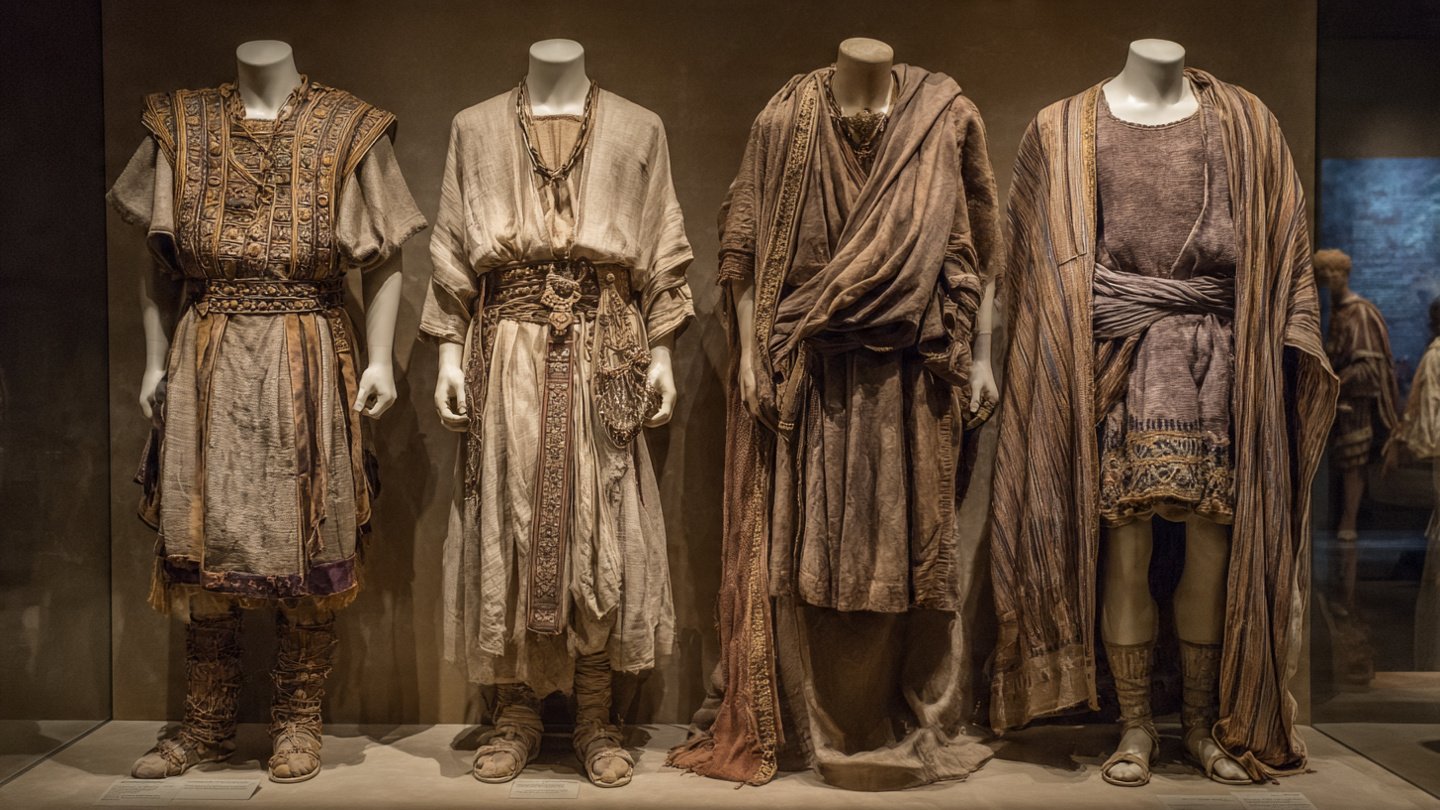
Over time, wraps became more sophisticated. Early humans learned to secure them with natural cords, pins made from bone or wood, or by tucking and folding the material in specific ways. These innovations laid the groundwork for more complex garment construction. To learn more about the materials that shaped early attire, visit first materials used in human clothing and animal skins used in early garments.
Wraps also served as a bridge between decoration and clothing. They could be painted, dyed, or embellished with shells, feathers, or beads, transforming functional items into expressions of identity. This blend of utility and adornment hints at the interconnected nature of early human creativity.
How Decoration Influenced Future Clothing Design
The transition from body decoration to structured garments didn’t erase the symbolic importance of adornment—it transformed it. Early clothing absorbed the cultural meanings once conveyed through paint and tattoos, becoming a new medium for identity expression. Garments could be dyed, embroidered, or shaped to reflect social roles, spiritual beliefs, or aesthetic preferences.
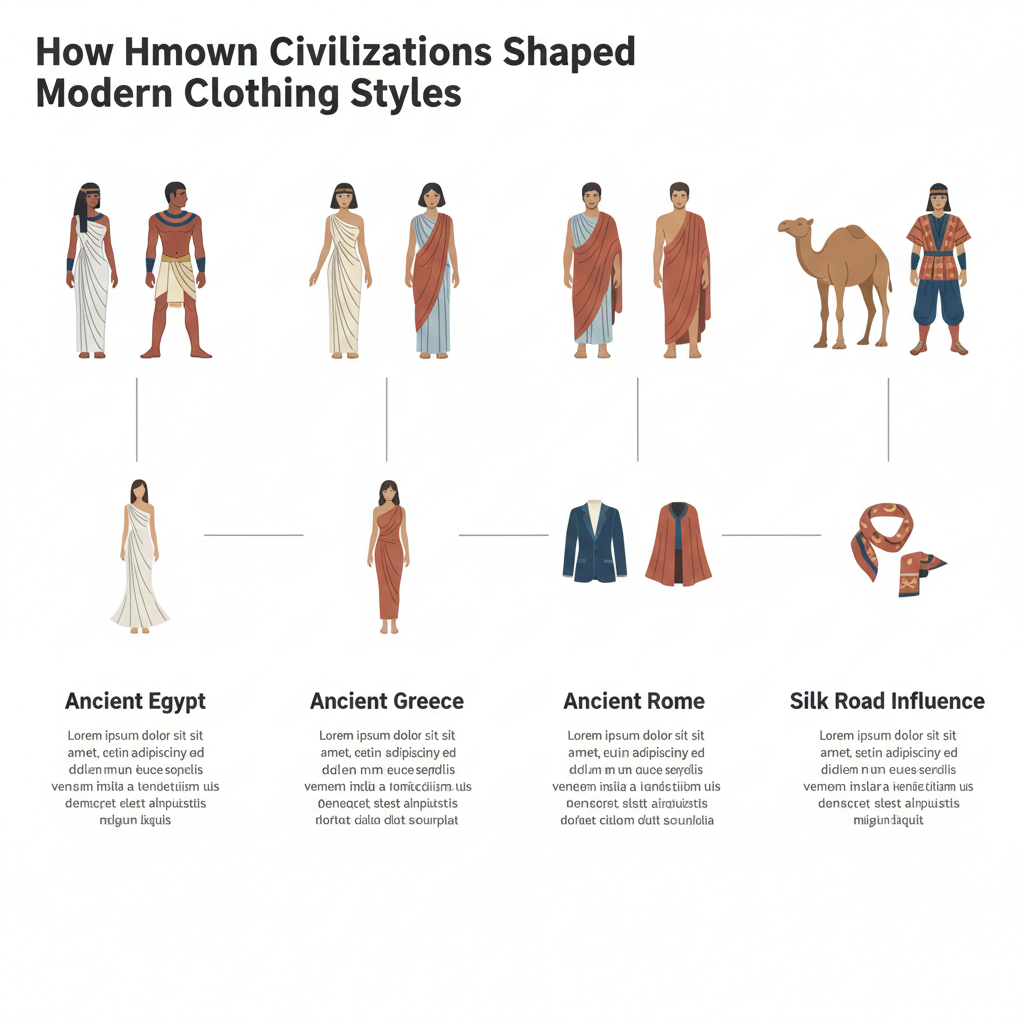
Symbolic garments emerged across ancient civilizations, often borrowing motifs and meanings from earlier body decoration practices. For example, the use of specific colors in clothing might echo the pigments used in ritual body painting. Patterns woven into fabric could mirror tattooed designs, preserving cultural continuity even as technology evolved. Explore how ancient civilizations shaping clothing styles built upon these early traditions.
Clothing also introduced new dimensions of symbolism unavailable through body decoration alone. The cut, drape, and structure of garments allowed for the creation of distinct silhouettes, which could signal gender, occupation, or regional identity. A person’s outline became as communicative as their skin.
As societies grew more complex, clothing became a marker of wealth and power. Access to rare dyes, fine fabrics, or skilled tailors indicated social standing in ways that body decoration alone couldn’t achieve. Yet the impulse to adorn and differentiate remained constant, rooted in the same human need for expression and belonging that drove our ancestors to paint their skin thousands of years ago.
From Body Decoration to Cultural Clothing
The story of body decoration before clothing challenges the assumption that garments were humanity’s first form of self-expression. Paint, tattoos, and wraps reveal a rich history of adornment that predates—and ultimately influenced—the development of structured clothing. These early practices weren’t primitive or simplistic; they were sophisticated systems of communication, identity, and culture.
Understanding this progression enriches our perspective on fashion and identity. The desire to modify and embellish the body is deeply human, transcending time, geography, and technology. Whether through pigment on skin or fabric on the body, we continue to use adornment to tell our stories, signal our values, and connect with others.
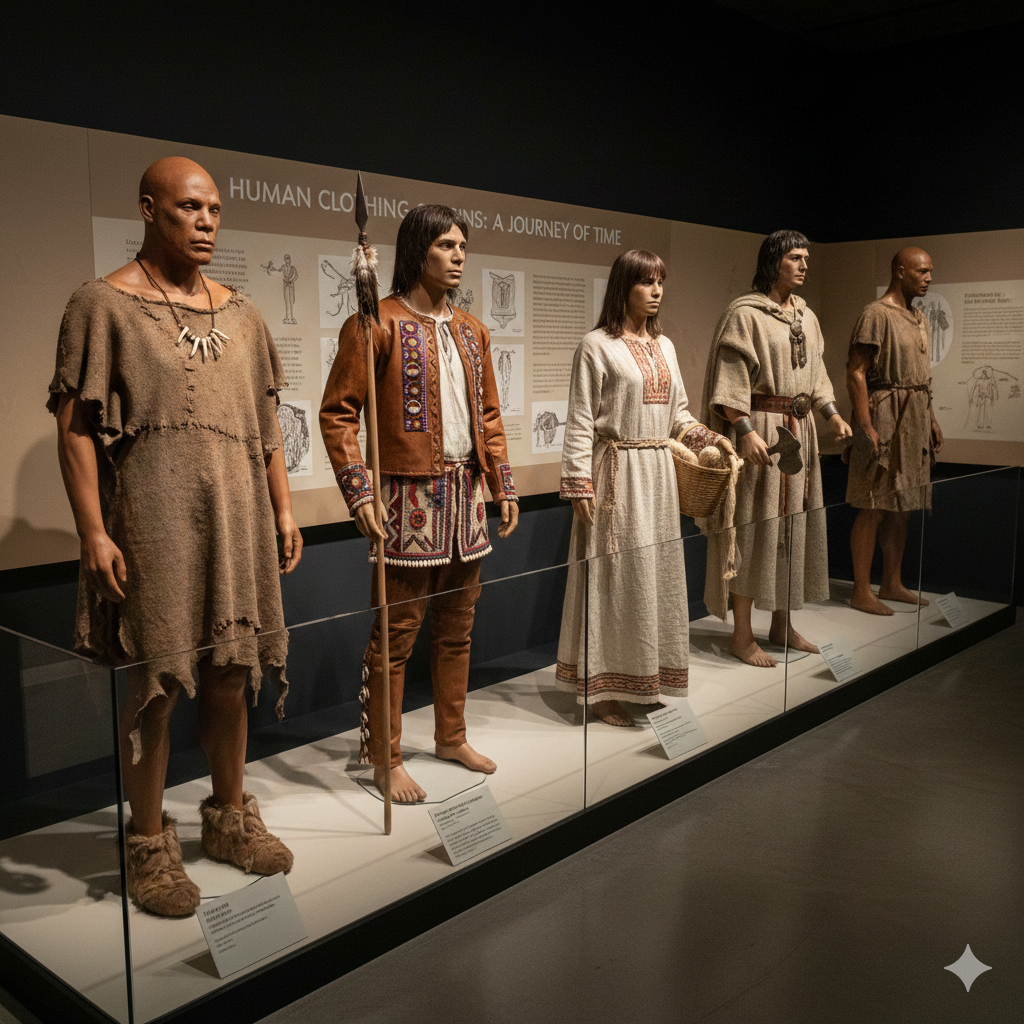
The shift from body-based expression to wearable garments wasn’t a clean break but an evolution. Decoration and clothing coexisted, influenced each other, and ultimately merged into the complex traditions we see today. To explore the broader journey of how humans developed clothing, read about the human clothing evolution journey and the history of clothing evolution.
Body decoration reminds us that clothing is about more than protection or modesty—it’s about meaning. From the first stroke of ochre on ancient skin to the garments we wear now, adornment has always been a way of saying, “This is who I am.”