


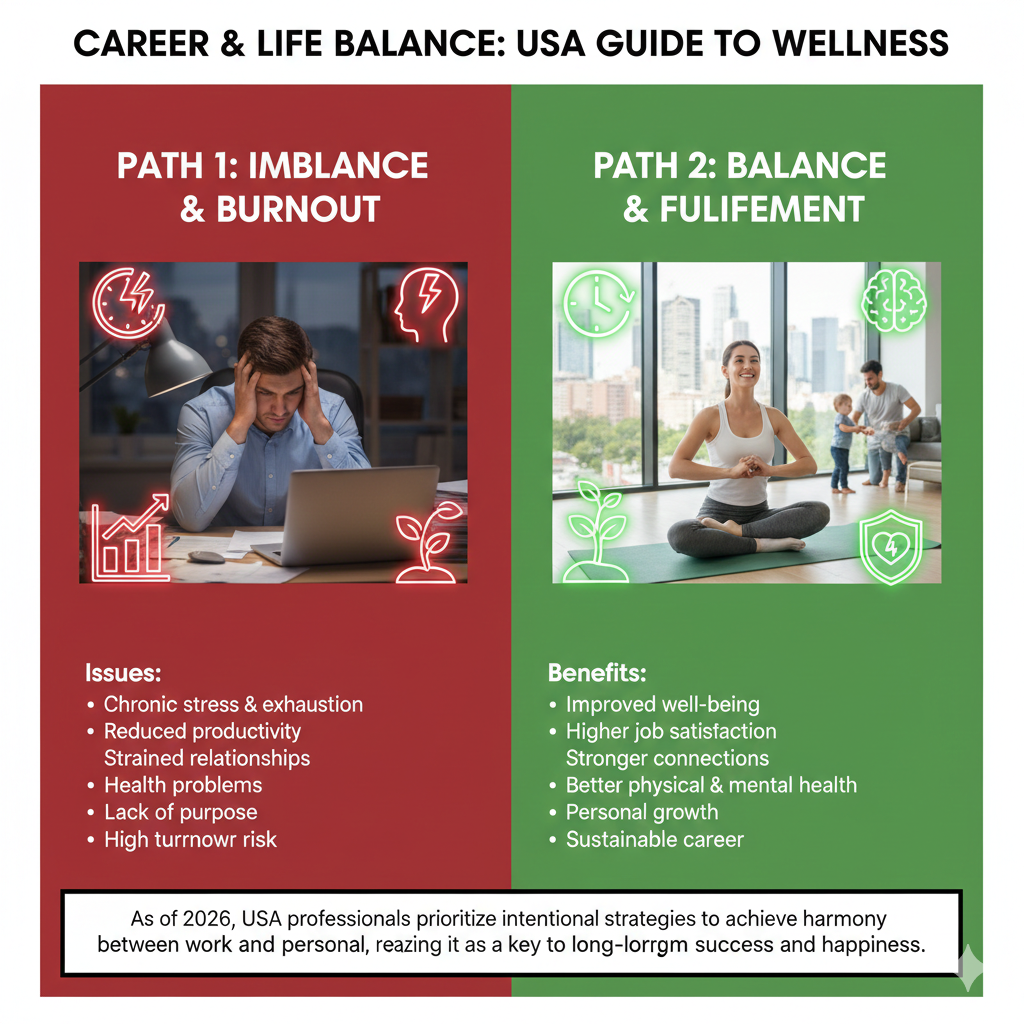
The “American Dream” has traditionally been defined by upward mobility—climbing the corporate ladder, earning more money, and achieving professional prestige. But for many professionals across the United States, the cost of that climb has become too steep. The relentless pursuit of career growth often comes at the expense of personal well-being, relationships, and health.
It is a common scenario: You finally land that promotion you’ve been chasing for two years, only to realize you’re too exhausted to celebrate. You check emails during dinner, miss your child’s soccer game for a conference call, or skip the gym for weeks because of “crunch time.”
Balancing career ambition with a fulfilling personal life is not just about time management; it is about sustainability. It requires making deliberate choices about where to invest your energy. This guide explores why this balance is so difficult to achieve in modern American culture and offers practical strategies to pursue professional success without sacrificing your life outside the office.
Why Work-Life Balance Matters More Than Ever
The conversation around work-life balance has shifted from a “nice-to-have” perk to a critical necessity. In the wake of the pandemic and the Great Resignation, American workers are reevaluating what success actually looks like.
Burnout and Stress Trends in the USA
Burnout is no longer an occasional symptom of a busy week; it has become a chronic condition for the American workforce. According to recent surveys, over half of U.S. workers report feeling burned out. This isn’t just about feeling tired. True burnout leads to cynicism, detachment, and a sense of inefficacy. When you push career growth without guardrails, you risk hitting a wall that can derail both your professional trajectory and your personal health.
Changing Definitions of Career Success
For decades, success meant the corner office and a high salary. Today, the definition is broadening. For many, success now includes flexibility, autonomy, and the ability to disconnect. Professionals are increasingly prioritizing mental health and meaningful work over titles. This cultural shift acknowledges that a high-powered career is hollow if you don’t have the time or health to enjoy the rewards.
What Does Balancing Career and Personal Life Mean?
Before you can achieve balance, you have to define it. The term “work-life balance” often implies a perfect 50/50 split, but that is rarely realistic.
Balance vs. Integration Explained
Many experts now prefer the term “work-life integration.” Balance suggests a scale where work and life are opposing forces. Integration suggests that these two aspects of your life coexist and sometimes overlap. It means you might leave the office early to pick up kids but answer a few emails after they go to bed. The goal isn’t a rigid schedule, but a fluid arrangement that allows you to meet your responsibilities in both areas without feeling constantly overwhelmed.
Individual Priorities and Life Stages
What works for a 22-year-old analyst will likely not work for a 40-year-old executive with a family. Balance is subjective. For some, it means strictly no work on weekends. For others, it means the freedom to work remotely for a month from a different city. Understanding that your definition of balance will evolve as you age is key to maintaining it.
Challenges Americans Face in Balancing Career Growth
Why is this so hard? The American workplace culture presents specific structural and cultural hurdles that make balance difficult.
Long Work Hours and Hustle Culture
The U.S. puts a premium on visibility and “hustle.” There is often a silent expectation that the most dedicated employees are the ones who arrive first and leave last. This culture glorifies busy-ness as a badge of honor, equating long hours with high performance.
Always-On Digital Communication
Smartphones and communication platforms like Slack and Teams have dissolved the physical boundary between work and home. When your pocket buzzes with a work notification at 9 PM, your brain shifts back into work mode, preventing true relaxation. The expectation of immediate responsiveness creates a state of hyper-vigilance that is exhausting.
Financial and Career Pressure
With the rising cost of living, housing, and healthcare in the U.S., many professionals feel they cannot afford to slow down. The fear that stepping back—even slightly—will result in missed promotions or financial instability keeps many people on the hamster wheel, regardless of the toll it takes.
How Career Growth Impacts Personal Life
Ambition is healthy, but unchecked ambition has consequences.
Time and Energy Trade-Offs
Every hour you spend late at the office is an hour not spent with family, on hobbies, or resting. But it isn’t just about time; it is about energy. You might physically be at the dinner table, but if your mind is solving a crisis at work, you aren’t truly present. Career growth often demands the “best” of your cognitive energy, leaving only scraps for your personal life.
Stress Spillover into Home Life
Stress is contagious. When you carry workplace frustration home, it impacts your partner, children, or roommates. Short tempers, lack of patience, and emotional withdrawal are common symptoms of work stress bleeding into personal domains, straining relationships that are supposed to be your support system.
Strategies to Balance Career Growth and Personal Life
So, how do you move forward? You don’t have to quit your job to find peace. Here are actionable strategies to regain control.
Setting Clear Boundaries
Work Hours and Availability
Be explicit about when you are working and when you are not. If your workday ends at 6 PM, communicate that. Turn off notifications on your phone. If you consistently reply to emails at midnight, you train your colleagues to expect replies at midnight.
Learning to Say No
“No” is a complete sentence. You cannot say yes to every project, committee, or favor if you want to grow effectively. Focus on the tasks that actually move the needle for your career and politely decline the low-impact busy work that clogs your schedule.
Prioritizing High-Impact Work
Productivity Over Busyness
Stop confusing activity with achievement. Career growth comes from delivering value, not just clocking hours. Identify the 20% of your tasks that produce 80% of your results and focus relentlessly on those.
Career Leverage Activities
Focus on activities that provide leverage—mentoring, strategic planning, or skill acquisition. These high-value tasks often take less time than administrative clutter but offer greater career rewards.
Time Management and Scheduling
Time Blocking and Planning
Don’t let your inbox dictate your day. Use time blocking to dedicate specific chunks of time to deep work. Schedule your personal life with the same respect you give your work meetings. If “Gym” is on the calendar, treat it as a non-negotiable appointment.
Protecting Personal Time
Guard your downtime fiercely. If Sunday is family day, do not let work creep in. You need periods of complete disconnection to recharge your creative and cognitive batteries.
Leveraging Flexibility and Remote Work
Hybrid Schedules
If your employer offers hybrid work, use it strategically. Use office days for collaboration and meetings, and remote days for deep focus work and managing household logistics (like throwing in a load of laundry between calls).
Outcome-Based Work Models
Shift the conversation with your manager from hours worked to outcomes delivered. If you can meet your targets in fewer hours, you should have the autonomy to manage your schedule.
Role of Employers in Work-Life Balance
Individuals can only do so much; organizations must also step up.
Flexible Policies and Benefits
Progressive companies are offering unlimited PTO (that people are actually encouraged to take), four-day workweeks, and asynchronous work schedules. These policies signal that the company values the employee as a human being, not just a resource.
Mental Health and Wellness Support
Benefits packages now frequently include access to therapy apps, wellness stipends, and “mental health days.” Creating a culture where it is safe to discuss stress without fear of judgment is crucial for long-term retention.
Career Growth Without Burnout
It is possible to climb the ladder without falling off it.
Sustainable Ambition
Think of your career as a marathon, not a sprint. Sustainable ambition means setting goals that are challenging but achievable within the context of a healthy life. It means accepting that you might grow slower than someone who works 80 hours a week, and being okay with that trade-off.
Continuous Learning Without Overload
Growth requires learning, but you don’t need to learn everything at once. Focus on “just-in-time” learning—acquiring skills as you need them—rather than trying to master every new trend immediately.
Balancing Career Growth at Different Life Stages
Your strategy will need to adapt as your life changes.
Early Career Professionals
In your 20s, you might have more energy and fewer dependents. This is often the time to hustle, build a network, and acquire skills. However, establishing healthy habits now prevents burnout later.
Mid-Career and Family Life
In your 30s and 40s, responsibilities often peak. You might be managing teams while raising children or caring for aging parents. Ruthless prioritization and delegation become your best friends during this stage.
Late Career Priorities
In your 50s and beyond, the focus often shifts to mentorship, legacy, and preparing for retirement. You might choose to step back from management roles to focus on high-level strategy or consulting, freeing up time for personal interests.
Personal Habits That Support Balance
Your physical state dictates your professional performance.
Sleep, Exercise, and Recovery
You cannot perform at a high level if you are sleep-deprived. Prioritize 7-8 hours of sleep. Exercise isn’t just for your body; it metabolizes stress hormones. Treat recovery as part of your job description.
Social Connections and Hobbies
Cultivate an identity outside of work. Whether it’s a hiking group, a book club, or volunteering, having interests unrelated to your career gives you perspective and a necessary mental break.
Signs You’re Out of Balance
How do you know when you’ve crossed the line?
Chronic Fatigue and Disengagement
If you wake up dreading the day, or if tasks that used to be easy now feel impossible, you are likely out of balance.
Declining Performance or Motivation
Ironically, working too much often leads to working poorly. If you find yourself making mistakes, missing deadlines, or feeling apathetic about your goals, it is a sign you need to pull back to move forward.
How to Rebalance When Things Tip Too Far
If you realize you are drowning, take immediate action.
Resetting Priorities
Take a weekend to audit your life. What can you drop? What can you delegate? Realign your daily actions with your core values.
Adjusting Goals and Expectations
Maybe this isn’t the year to gun for the VP title. Maybe this is the year to maintain the status quo at work while you focus on your health. Adjusting your timeline isn’t failure; it’s strategy.
Is Work-Life Balance Realistic in the USA?
Cultural Shifts and Evolving Norms
The tide is turning. Younger generations (Gen Z and Millennials) are demanding better boundaries. As they ascend into leadership, we can expect workplace norms to shift further toward flexibility and well-being.
Long-Term Outlook
While systemic issues remain, the future of work in the U.S. looks more human-centric. Technology offers flexibility, and cultural conversations are destigmatizing rest. Achieving balance is difficult, but it is becoming increasingly possible for those who are intentional about it.
FAQs – Career Growth and Personal Life Balance
Can you grow your career without burnout?
Yes. Growth comes from consistent, high-quality effort over time, not frantic bursts of overwork. By prioritizing recovery and high-impact tasks, you can advance sustainably.
How many hours should you work to stay balanced?
There is no magic number. For some, 50 hours is fine; for others, 40 feels like too much. Monitor your energy levels and output rather than the clock.
Is work-life balance different for remote workers?
Yes. Remote workers save commute time but face the challenge of blurred boundaries. They must be more disciplined about “logging off” and creating physical separation between workspace and living space.
How do high performers maintain balance?
High performers are often ruthless about elimination. They delegate, they say no, and they protect their deep work time. They view rest as a performance enhancer, not a weakness.
Should career growth slow down at certain life stages?
Absolutely. It is natural to “lean out” when you have a newborn, a health crisis, or simply want to enjoy life. Your career is long; you can accelerate and decelerate as needed.
Building a Career That Supports Your Life
Ultimately, your job should fund and support your life, not consume it. By setting boundaries, prioritizing your health, and redefining what success means to you, you can build a thriving career that leaves room for everything else that matters.