





The Federalization of Main Street: Why 60% of Americans are Saying “Enough”

Introduction: The Current Climate in America
The concept of federalization of Main Street has emerged as a critical topic of discussion among Americans, particularly local businesses and communities. This phenomenon entails a growing federal involvement in local economies, which aims to standardize regulations, streamline processes, and promote a cohesive national economic strategy. While these initiatives may be well-intentioned, they have inadvertently triggered a wave of pushback from various segments of the population.
As federal policies increasingly encroach upon the autonomy of local establishments, many business owners and community members find themselves grappling with the implications of such actions. The federalization process often entails a shift in decision-making authority from local entities to centralized governmental bodies. This shift raises pertinent concerns regarding the suitability of a one-size-fits-all approach to diverse local ecosystems, which often require tailored solutions reflective of their unique environments.
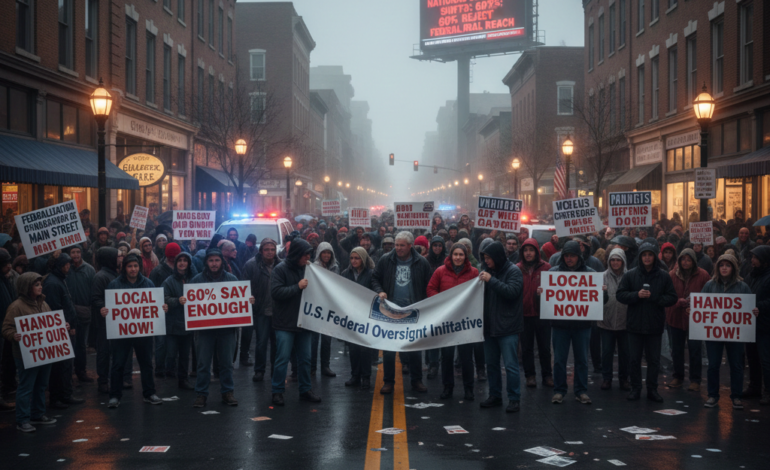
In addition, recent surveys indicate that around 60% of Americans are expressing feelings of being overwhelmed by these changes. Many individuals voice their frustrations regarding the dilution of local identities and economies as federal programs override time-tested local practices. This sentiment of ‘enough’ suggests a yearning for a return to localized governance, allowing communities to play an active role in shaping their economic futures.
The following discussions will delve into the reasons behind the increasing discontent towards federal interventions and the resulting impact on local businesses. By exploring various perspectives, this blog seeks to shed light on the complexities surrounding the federalization of Main Street and its ramifications for American society in general.
Defining Federalization: What Does it Mean for Local Economies?
The term ‘federalization’ broadly refers to the process by which national policies and regulations are implemented at the local level, significantly impacting local economies. As federal regulations evolve, they often cascade down to smaller enterprises, especially those on Main Street, entailing both opportunities and challenges for local businesses.
Federal policies can affect local economies in various ways, including the introduction of new regulations, funding opportunities, and shifts in economic control. For instance, federal interventions in industries such as healthcare or transportation can mandate compliance with national standards, which local businesses must then adapt to. Such compliance might require significant changes in operational practices, sometimes straining the limited resources that small businesses typically have.
Moreover, funding from federal programs can have a dual impact on local economies. While financial support can stimulate growth and investment in local businesses, it can also lead to increased competition among local firms, particularly if funding is only accessible to larger corporate entities. The intricate balance between receiving federal funds and maintaining local autonomy often poses a challenge for Main Street businesses. They may find themselves at a crossroads—benefiting from federal support while also facing stringent compliance requirements that could hinder flexibility.
Economic control exercised by federal policies can also shift the dynamics of local markets. When federal standards dictate market conditions, local businesses may struggle to maintain their unique selling propositions, as they must conform to broader regulations that may not consider specific local contexts and needs. This situation can lead to a homogenization of local economies, jeopardizing the diversity and individuality typically found in Main Street commerce.
Ultimately, understanding the implications of federalization is crucial for local economies. By recognizing how federal policies influence local operational practices, resource allocation, and market competition, stakeholders can develop strategies that balance the benefits of federal support with the need to preserve local economic integrity.
The Rise of Federal Influence on Local Businesses
Over the past several decades, the influence of federal policies on local businesses has significantly increased, leading to a growing concern among American entrepreneurs and stakeholders. This evolution can be traced back to key legislative measures initiated in the early 20th century, with the establishment of regulatory frameworks designed to stabilize various sectors of the economy.
The inception of the New Deal during the Great Depression marked a pivotal moment in the relationship between federal and local authority. Programs aimed at employment relief and economic recovery inherently altered the dynamics within local markets, foreshadowing a more intricate involvement of federal policies in local economies. Additionally, the rise of federal regulations concerning labor standards, environmental protections, and consumer rights further solidified this influence.
In more recent years, various policies linked to federal intervention in local business operations have intensified. The economic crisis of 2008 led to a considerable expansion of federal authority through initiatives such as the Troubled Asset Relief Program (TARP) and the Affordable Care Act, which imposed compliance pressures on small to medium-sized enterprises. Furthermore, the COVID-19 pandemic generated unprecedented federal responses, including the Paycheck Protection Program (PPP) and various stimulus packages aimed at local businesses, resulting in increased scrutiny over how local economies operate.
This expanding federal influence is often justified by the need for a cohesive national strategy to address issues such as economic disparity and public health. However, such measures have sparked considerable apprehension among business owners regarding the encroachment of federal policies on local autonomy. As a result, many local leaders and entrepreneurs are advocating for a reassessment of this growing control to ensure that local economic landscapes maintain their unique character and resilience in the face of federal policies.
The Consequences of Federalization: How it Affects Local Ownership and Control
The federalization of local economies has become a prominent topic in discussions surrounding the role of government in business management. As federal policies increasingly influence local commerce, the implications for local ownership and control are profound. Federalization can lead to a diminished sense of local autonomy, negatively impacting small business owners striving to maintain their independence amidst broader regulatory frameworks.
One significant consequence of federalization is the potential erosion of local control. With federal mandates sweeping across various sectors, local business owners may find themselves compelled to comply with regulations that do not account for regional specifics or community needs. This shift can create disparities in how businesses operate; for instance, federal policies may favor larger corporations that can easily adapt to new rules over smaller, localized enterprises that struggle with the associated costs and complexities.
Furthermore, the centralization of decision-making often results in inequities that hinder small businesses from competing on a level playing field. Local businesses typically thrive on their unique understanding of community dynamics—something that federal policies may overlook. When regulations favor efficiency or standardization, they may undermine the personalized services and innovations that local entrepreneurs offer, ultimately affecting their livelihood.
Moreover, the reliance on federal intervention can create a dependency that stifles local initiative. Business owners may feel less motivated to innovate or adapt when they perceive that their operational landscape is dictated by distant policymakers. This can lead to a homogenized market where creativity and adaptability take a back seat to compliance and conformity.
In summary, while federal policies aim to provide structure and stability, they can inadvertently threaten the essence of local economies. The federalization trend poses challenges not only to ownership and control but also to the very character and vitality of community-driven business ecosystems.
The Impact on Community Identity: Main Street as a Reflection of Local Culture
Main Street has historically served as the heartbeat of communities across the United States, acting as a vital space for social interaction, local commerce, and cultural exchange. Each Main Street is unique, showcasing the distinct character and identity of its community through various elements such as architecture, local businesses, and community events. These features encapsulate the shared values and traditions of the residents, reinforcing a sense of belonging and pride.
The federalization of Main Street often threatens this cherished identity. As larger chain stores proliferate and local businesses struggle to compete, there is a tangible risk of diluting the local character that defines these neighborhoods. Chain establishments can overshadow small, family-run shops that often offer unique products and personalized service, which not only support the local economy but also contribute to the community’s cultural fabric. As such businesses vanish, the narrative of the community is weakened, erasing significant cultural markers and shared experiences that have historically connected residents.
Moreover, the homogenization of Main Street through federal policies can lead to a one-size-fits-all approach that disregards the unique needs and desires of individual communities. Local traditions, art, and cuisine that make each Main Street special may struggle to survive amid a flood of standardized options that cater to mass consumption rather than localized culture. This loss can result in a less vibrant community identity, negatively impacting residents’ emotional ties to their surroundings.
It is imperative for community leaders and policymakers to recognize the critical importance of safeguarding local economies and cultural heritage. Protecting the essence of Main Street is not merely an economic issue; it is a matter of preserving the rich tapestry of American identity that thrives in our neighborhoods. By fostering an environment that values local businesses and encourages cultural diversity, communities can resist the forces of federalization and maintain their unique identities.
Public Sentiment on Federal Involvement
In recent months, growing public discontent regarding federal intervention in local economies has come to the forefront of political discourse. Various surveys indicate that approximately 60% of Americans express significant concern over governmental control in their communities, primarily driven by a desire for more autonomy and regional decision-making capabilities. This sentiment highlights a broader aspiration for economic independence, where local governments and businesses can operate with minimal federal oversight.
One of the key reasons for this dissatisfaction is the perception that federal policies are often disconnected from the realities faced in local markets. Many residents feel that centralized decisions fail to consider the unique needs of their communities, leading to economic stagnation rather than growth. A survey conducted by a prominent research firm reflects this thinking, with respondents indicating that they believe local leaders are better positioned to understand the economic landscape than distant federal authorities.
Moreover, the pushback is not just limited to complaints about federal overreach; it encompasses a broader vision for empowering local economies. Americans are advocating for policies that would enable more entrepreneurial freedom and lessen dependency on federal funding. This desire for independence is echoed in town hall meetings and community forums where citizens are voicing their aspirations for self-sufficiency. The feedback from these gatherings suggests that many individuals seek to create innovative solutions tailored to their specific circumstances, rather than relying on a one-size-fits-all federal approach.
Overall, the call for reduced federal involvement in local economies resonates strongly across demographics. The growing consensus emphasizes the importance of restoring power to local jurisdictions, thereby enhancing responsiveness and accountability in governance. As this movement gains momentum, it reflects a significant shift in how many Americans envision their economic futures and the role of federal authority in shaping them.
Alternative Perspectives: Arguments in Favor of Federal Support for Local Economies
The ongoing debate surrounding the federalization of local economies has given rise to numerous arguments in favor of increased federal support. Proponents of federal involvement argue that such measures can significantly contribute to economic stability and growth at the local level. One of the key advantages of federal intervention is the provision of financial resources that many local municipalities may lack. Access to federal funding can empower local governments to undertake crucial infrastructure projects, expand public services, and stimulate job creation initiatives, ultimately benefiting their communities.
Additionally, it is broadly recognized that certain systemic issues, such as poverty and unemployment, can be daunting challenges for local entities to tackle independently. Federal support can play a pivotal role in addressing these issues by enabling targeted programs that promote equity and opportunity for all citizens. For instance, by implementing programs specifically aimed at enhancing workforce development and educational access, the federal government can help level the playing field, giving underserved communities a better chance to succeed.
Moreover, federal involvement can foster collaborative partnerships between local entities and federal agencies, encouraging knowledge sharing and best practices that may enhance operational efficiencies. These partnerships can lead to innovative solutions tailored to the specific needs of various local economies. The sharing of information and resources can essentially bridge the gap in expertise and capabilities between the local and federal levels.
While recognizing the concerns about potential overreach and loss of local autonomy, it is essential to consider that federal support does not necessarily eliminate local control. Rather, it can complement and enhance local initiatives, creating a robust framework for economic resilience. Ultimately, the discussion surrounding federal involvement in local economies warrants careful examination of both its potential advantages and the apprehensions it raises among communities across the nation.
Exploring Solutions: Finding a Middle Ground Between Federal Support and Local Autonomy
The challenge of balancing federal support with local autonomy has become increasingly relevant as discussions surrounding the federalization of Main Street evolve. While federal resources can bolster local economies, there is a pressing need to ensure that local businesses maintain autonomy and the ability to cater to their communities’ specific needs. One possible solution lies in developing tailored federal programs that prioritize local input in decision-making processes.
To achieve a harmonious relationship between federal support and local businesses, policy frameworks can be designed that empower local governments to dictate how federal funds are utilized. For instance, federal grants could be allocated based on local economic assessments conducted by municipalities, which would allow local leaders to identify their community’s most pressing needs. Moreover, implementing a bottom-up approach in federal initiatives can foster innovation and adaptability, as local organizations are often more attuned to the unique challenges they face.
Another approach is to establish partnerships between federal agencies and local chambers of commerce. By collaborating with these organizations, federal programs can be better aligned with local objectives, ensuring that resources are directed towards initiatives that genuinely benefit the community. Such partnerships can also facilitate knowledge sharing, equipping local businesses with the necessary skills and tools to thrive.
Furthermore, promoting local enterprise zones with some federal backing can incentivize businesses to flourish within specific regions. These zones can attract investment while still allowing local governments to impose regulations and develop policies that reflect community values. Combining federal resources and local governance presents a promising pathway to reconcile federal assistance with local autonomy.
Ultimately, the aim should be to forge a supportive relationship wherein federal involvement enhances local strengths rather than undermines them. Striking this balance is essential for fostering resilient communities capable of sustaining their economies in the long term.
Conclusion: Rethinking the Relationship Between Federal and Local Economies
The ongoing dialogue surrounding the federalization of Main Street encapsulates a pivotal moment for American society. As we reflect upon the complexities of this movement, it becomes evident that a one-size-fits-all approach to economic governance often neglects the diverse needs and distinctive identities of local communities. The pushback from Americans is not merely a reaction against federal interference; rather, it signifies a deeper yearning for autonomy and self-determination.
Federal initiatives aimed at standardizing economic frameworks may hold promise in addressing national challenges; however, they can inadvertently undermine local economies and the familial ties that are woven into the fabric of Main Street. It is essential for policymakers to engage with community members actively and recognize the historical context that shapes the economic landscape. By fostering a collaborative relationship between federal and local authorities, we can create a model that encourages resilience while respecting the idiosyncrasies that make each community unique.
Furthermore, a re-evaluation of fiscal policies and their application at the local level is critical. Tailored solutions that consider the specific circumstances of towns and cities can help mitigate the effects of economic centralization. It is within these localized approaches that we may find innovative solutions that not only drive economic growth but also reinforce communal values and heritage.
In closing, the push for federalization should serve as an impetus for a broader discussion on the nature and future of our economic systems. By prioritizing an equilibrium that honors both national standards and local autonomy, we can lay the groundwork for thriving communities that are both resilient and responsive to the needs of their citizens. The path forward demands thoughtful engagement and sincere collaboration, ensuring that all voices are heard and respected in the conversation about our collective economic future.