


How Fabric Weight and Texture Affect Clothing Design

When you slip on a linen shirt on a hot summer day or wrap yourself in a wool coat during winter, you’re experiencing firsthand how fabric choices influence clothing design. The materials that form our garments do more than cover our bodies—they dictate how clothes move, feel, and function.
Fabric weight and texture are fundamental elements in clothing design. They determine whether a garment drapes elegantly or holds its shape, whether it keeps you cool or warm, and whether it suits casual wear or formal occasions. Understanding these properties reveals why certain fabrics work for specific garments and how designers make strategic choices when creating clothing.
The journey from fiber to fabric clothing process involves careful selection of materials based on their characteristics. This selection process connects directly to the difference between woven and knitted garments, as each construction method interacts differently with fabric weight and texture. By exploring how these elements work together, we can better appreciate the complexity behind every piece of clothing we wear and understand the technical decisions outlined in any comprehensive [how clothes are made hub](Construction Hub).
Understanding Fabric Weight — Light, Medium, and Heavy Materials
Fabric weight refers to how much a material weighs per unit of measurement, typically expressed in grams per square meter (GSM) or ounces per square yard. This seemingly simple measurement has profound implications for garment design and functionality.
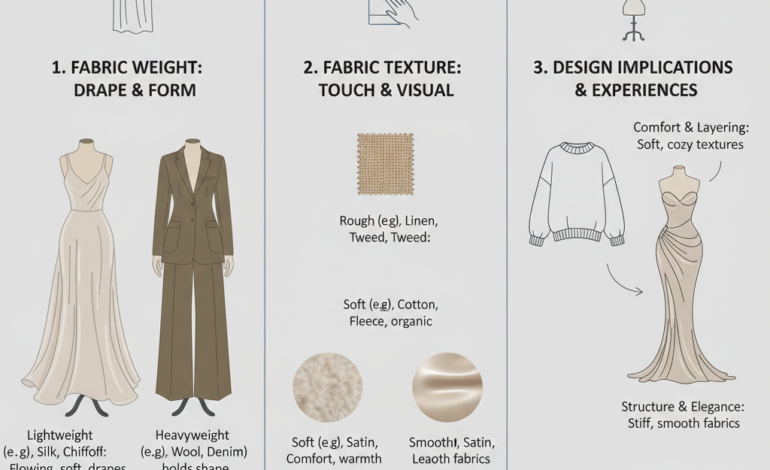
Lightweight fabrics generally range from 30 to 150 GSM and include materials like chiffon, organza, and fine cotton. Medium-weight fabrics fall between 150 and 350 GSM, encompassing denim, canvas, and most everyday clothing materials. Heavy-weight fabrics exceed 350 GSM and include wool coatings, upholstery fabrics, and thick denim.
The weight of a fabric directly affects how a garment performs. Designers must consider the intended use of a piece when selecting materials. A flowing summer dress requires lightweight fabric that moves freely, while a structured blazer needs medium to heavy-weight material to maintain its shape throughout the day.
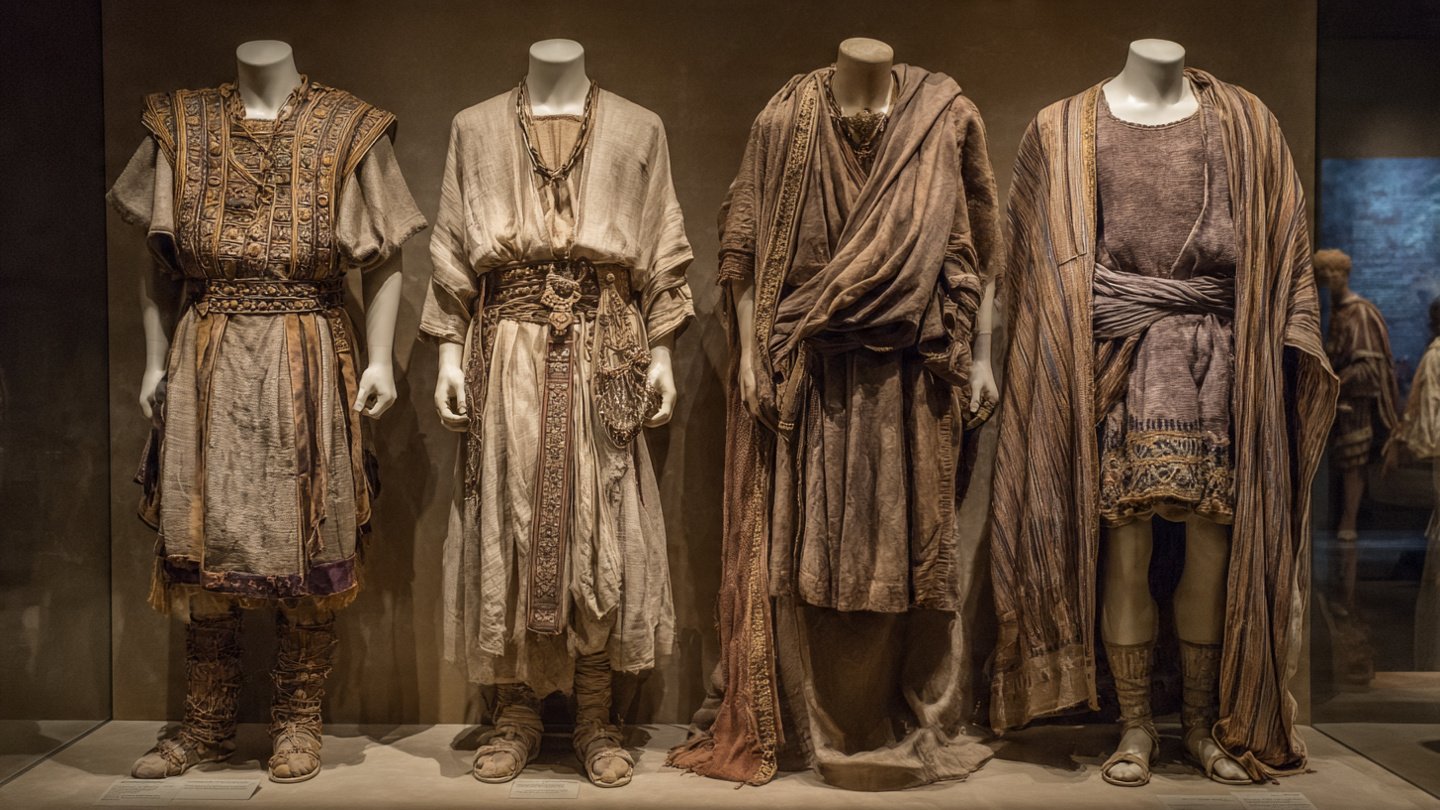
Climate considerations play a significant role in fabric weight selection. The evolution of clothing in ice age vs tropical regions demonstrates how humans have historically adapted their material choices to environmental conditions. Even in the earliest textile creation in human history, our ancestors recognized that different weights of animal hides and plant fibers served different purposes.
Breathability and Comfort
Breathability describes how well air can pass through fabric, and it’s closely tied to fabric weight. Lighter fabrics typically allow more airflow, making them ideal for warm weather and active wear. When air circulates freely through clothing, it helps regulate body temperature by allowing heat and moisture to escape.
Cotton jersey, linen, and lightweight wool are examples of breathable fabrics that remain comfortable across various conditions. These materials wick moisture away from the skin while permitting air circulation. Designers favor these fabrics for base layers, summer clothing, and athletic wear where temperature regulation matters most.
However, breathability isn’t solely determined by weight. The fiber content and weave structure also contribute significantly. A lightweight synthetic fabric might trap heat despite its low weight, while a heavier cotton weave could remain surprisingly breathable due to its natural fiber composition and construction.
Structure and Durability
Heavier fabrics generally provide more structure and durability than their lighter counterparts. This structural integrity allows garments to maintain specific silhouettes without additional support. A heavy wool coat holds its shape on a hanger and on the body, creating clean lines and a polished appearance.
Durability increases with fabric weight because there’s simply more material to withstand wear and tear. Work wear and outdoor clothing often use heavy-weight fabrics like canvas and thick twill specifically for their longevity. These materials resist abrasion, punctures, and repeated washing better than delicate lightweight fabrics.
Designers balance structure and durability against comfort and mobility. A heavy fabric might create an impressive silhouette but could restrict movement or feel burdensome during extended wear. This tension between form and function drives many design decisions in clothing construction.
Fabric Texture and Its Role in Clothing Aesthetics
Texture refers to the surface quality of fabric—how it looks and feels to the touch. This characteristic encompasses smoothness, roughness, grain direction, and surface interest. Texture emerges from fiber type, yarn construction, weaving or knitting technique, and finishing treatments applied to the fabric.
The visual impact of texture cannot be overstated. A smooth satin catches and reflects light differently than rough burlap, creating entirely different aesthetic effects. Designers manipulate texture to add visual interest, create focal points, and establish the overall mood of a garment.
Texture also affects how we perceive color. Smooth fabrics appear more vibrant and saturated because light bounces off their surfaces uniformly. Rough or matte textures absorb more light, making colors appear softer and more subdued. A red velvet dress and a red cotton dress, while technically the same color, present vastly different visual experiences due to their textural differences.
Smooth vs Rough Surfaces
Smooth fabrics like silk, satin, and fine cotton poplin slide easily over skin and other surfaces. These materials work well for linings, undergarments, and garments that layer beneath other clothing. Their slick surface reduces friction, making clothes easier to put on and take off.
Smooth textures convey elegance, refinement, and formality. Evening wear and dress shirts typically feature smooth fabrics because of their sophisticated appearance. The reflective quality of smooth surfaces catches light beautifully, creating visual interest through sheen rather than surface variation.
Rough textures, including tweed, bouclé, and raw linen, offer tactile richness and visual depth. These fabrics have more surface variation, which creates shadows and highlights across the garment. Rough textures often appear more casual and approachable than smooth ones, though this isn’t a strict rule—textured fabrics can certainly appear in formal contexts.
The choice between smooth and rough surfaces affects garment care and longevity. Rough textures may pill or snag more easily but can hide minor wear better than smooth fabrics. Smooth surfaces show every wrinkle and imperfection but often launder more easily.
Visual and Tactile Appeal
The visual dimension of texture relates closely to what is a clothing silhouette because texture influences how we perceive shape and volume. A garment in rough tweed appears bulkier than the same design in smooth wool crepe, even if their actual dimensions are identical. This optical effect gives designers another tool for manipulating how garments appear on the body.
Texture also plays a psychological role in clothing appeal. We’re drawn to certain textures based on personal preferences and cultural associations. Soft, plush textures evoke comfort and luxury, while crisp, structured textures suggest professionalism and authority. Designers tap into these associations when selecting fabrics for specific garment types.
The relationship between texture and body shape is explored in depth when considering how body shapes influence clothing silhouettes. Certain textures can emphasize or minimize body contours. Clingy, smooth fabrics reveal body shape clearly, while textured, matte fabrics provide more visual camouflage. Understanding this interaction helps both designers and wearers make informed choices about fabric selection.
How Designers Use Weight and Texture to Shape Silhouettes
Silhouette creation represents one of the most important applications of fabric weight and texture in clothing design. The same pattern cut in different fabrics produces dramatically different results. A dress pattern in stiff taffeta creates a full, structured shape, while the identical pattern in fluid jersey produces a soft, body-skimming effect.
Drape describes how fabric falls and moves on the body. Lightweight fabrics with soft textures drape fluidly, creating flowing lines and movement. These materials work beautifully for garments designed to move with the wearer—flowing skirts, soft blouses, and draped evening wear. The fabric almost becomes liquid, responding to gravity and body movement in graceful ways.
Heavy fabrics with firm textures hold their shape against gravity. They create volume and structure without additional support. A heavy wool coat maintains its intended silhouette whether worn or hanging empty. This structural quality makes heavy fabrics ideal for tailored garments where precise shape matters.
The distinction between structured vs flowing silhouettes often comes down to fabric choice. Structured silhouettes require fabrics with body and stability—medium to heavy-weight materials with firm hand. Flowing silhouettes need lightweight, drapey fabrics that move freely. Designers select fabrics strategically to achieve their intended silhouette without fighting against the material’s natural properties.
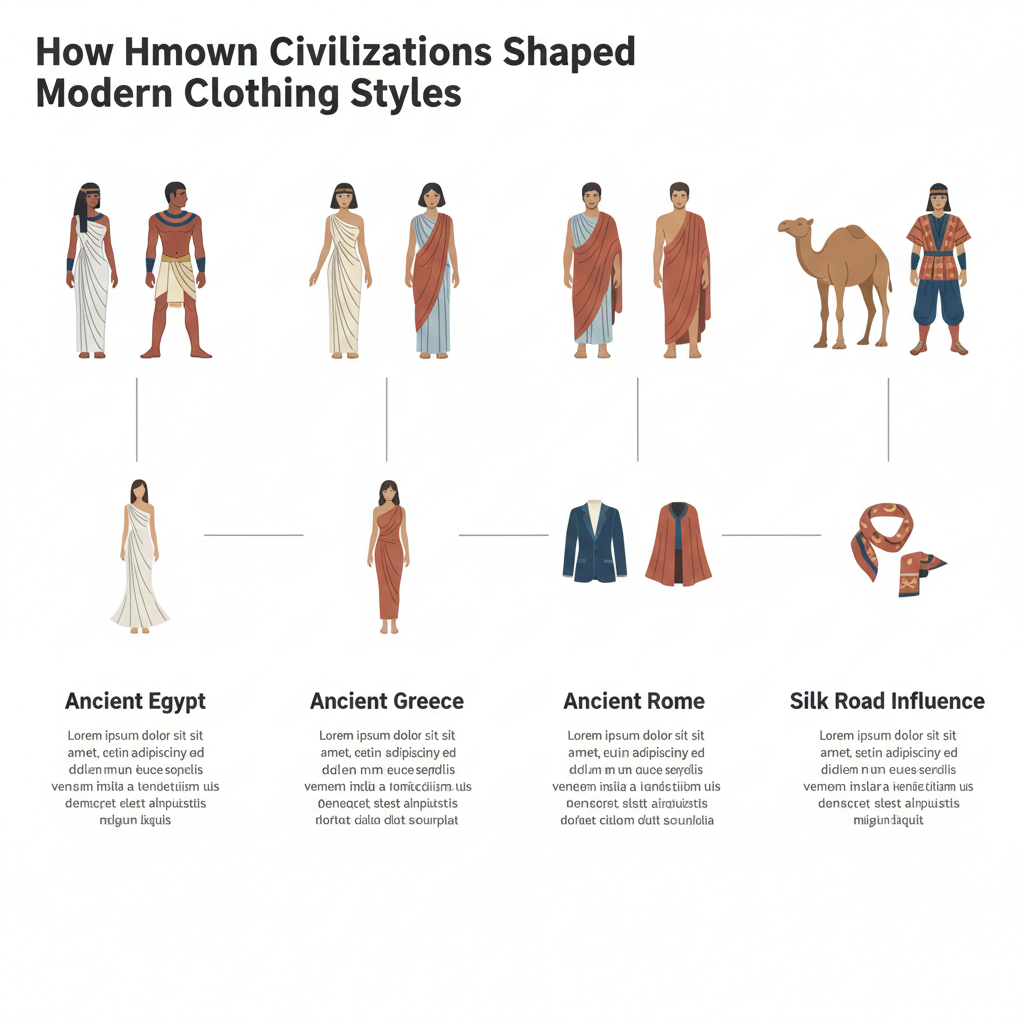
Historical clothing evolution demonstrates these principles across time. The transition from tribal dress to structured fashion involved not just changing styles but also developing new fabric weights and textures. As tailoring techniques advanced, fabrics evolved to support increasingly complex garment construction. Heavy woolens enabled the structured coats of the 19th century, while the development of synthetic fibers introduced new possibilities for drape and movement in the 20th century.
Volume creation through fabric choice allows designers to add visual interest without complex pattern manipulation. A gathered skirt in lightweight cotton creates soft, romantic volume. The same gathering in heavy canvas produces a stiff, sculptural effect. Neither is inherently better—they simply serve different design visions.
Modern Fashion Trends Influenced by Fabric Choice
Contemporary fashion increasingly prioritizes comfort alongside style, and this shift has profoundly influenced fabric selection. The fabrics we see on runways and in stores today reflect changing lifestyle demands and evolving aesthetic preferences.
Streetwear’s dominance in modern fashion connects directly to fabric choices. The movement embraced comfortable, casual materials—jersey knits, fleece, and technical fabrics originally designed for athletic wear. Understanding how streetwear changed modern dressing habits requires recognizing how fabric priorities shifted from formal, structured materials to soft, flexible ones that prioritize ease and movement.
The rise of athleisure clothing trends exemplifies how fabric innovation drives fashion evolution. Athleisure relies on technical fabrics that blend performance features with everyday wearability. These materials offer stretch, moisture-wicking, and durability while maintaining an attractive appearance suitable for non-athletic contexts. The fabrics literally made the trend possible—without them, athletic clothing wouldn’t translate to everyday wear.
Sustainability concerns are reshaping fabric weight and texture preferences. Consumers increasingly seek natural fibers and eco-friendly synthetics, which influences available textures and weights. Organic cotton, hemp, and bamboo fabrics offer different tactile experiences than conventional materials. Recycled polyester and innovative plant-based fibers introduce new textures while addressing environmental concerns.
Minimalist aesthetics favor clean lines and simple silhouettes, which depend heavily on fabric quality. When garments lack decorative details, the fabric itself must carry visual interest. This emphasis has elevated appreciation for subtle texture variations, interesting weaves, and luxurious hand-feel. Medium-weight fabrics with slight texture have become particularly popular in minimalist wardrobes.
Oversized silhouettes, a major trend in recent years, work only with specific fabric weights. Too heavy, and oversized garments become burdensome. Too light, and they lack the structure to maintain their intended shape. Designers carefully select medium-weight fabrics with moderate drape to achieve the relaxed-but-intentional look that defines contemporary oversized styling.
Fabric Innovation and the Future of Clothing Materials
Technological advancement is transforming fabric weight and texture in unprecedented ways. New materials combine properties that were previously incompatible—fabrics that are simultaneously lightweight and warm, soft and durable, natural-feeling and performance-enhancing.
Smart textiles represent perhaps the most dramatic innovation in fabric technology. These materials integrate electronic components or responsive properties directly into fibers. The explanation of smart clothing and wearable technology explained reveals how fabrics are evolving beyond passive materials into active systems that sense, respond, and adapt to conditions.
Phase-change materials can regulate temperature by storing and releasing heat based on environmental conditions. These fabrics feel lightweight but provide thermal regulation previously requiring heavy insulation. Athletes and outdoor enthusiasts benefit most currently, but these technologies are gradually entering everyday clothing.
Three-dimensional knitting technology allows creation of garments with varying weight and texture within a single piece. A shirt might feature lightweight, breathable panels under the arms and heavier, more structured fabric across the shoulders—all seamlessly integrated without cutting and sewing. This capability opens new possibilities for customization and performance optimization.
Bio-fabricated materials grown from microorganisms or engineered from plant proteins introduce entirely new textures and properties. These materials might eventually surpass both natural and synthetic fabrics in versatility and sustainability. Early examples already demonstrate unique characteristics—leather-like appearance without animal products, strength comparable to synthetics with full biodegradability.
Considering the future of human clothing in a digital world requires imagining how fabric weight and texture might evolve. Virtual clothing in digital spaces faces no physical constraints, but physical clothing may incorporate augmented reality components. Fabrics might change appearance or texture through electronic manipulation while maintaining comfortable wear properties.
Nano-technology applications are creating fabrics with self-cleaning, water-repelling, and antimicrobial properties built into the fiber level. These treatments don’t add weight or change texture significantly, yet they dramatically enhance garment functionality. The distinction between technical gear and everyday clothing continues to blur as these innovations become more accessible.
Fabric as the Foundation of Clothing Design
Fabric weight and texture form the foundation upon which all clothing design builds. These fundamental properties influence every aspect of how garments look, feel, and function. Designers who understand these elements can manipulate them strategically to achieve specific aesthetic and functional goals.
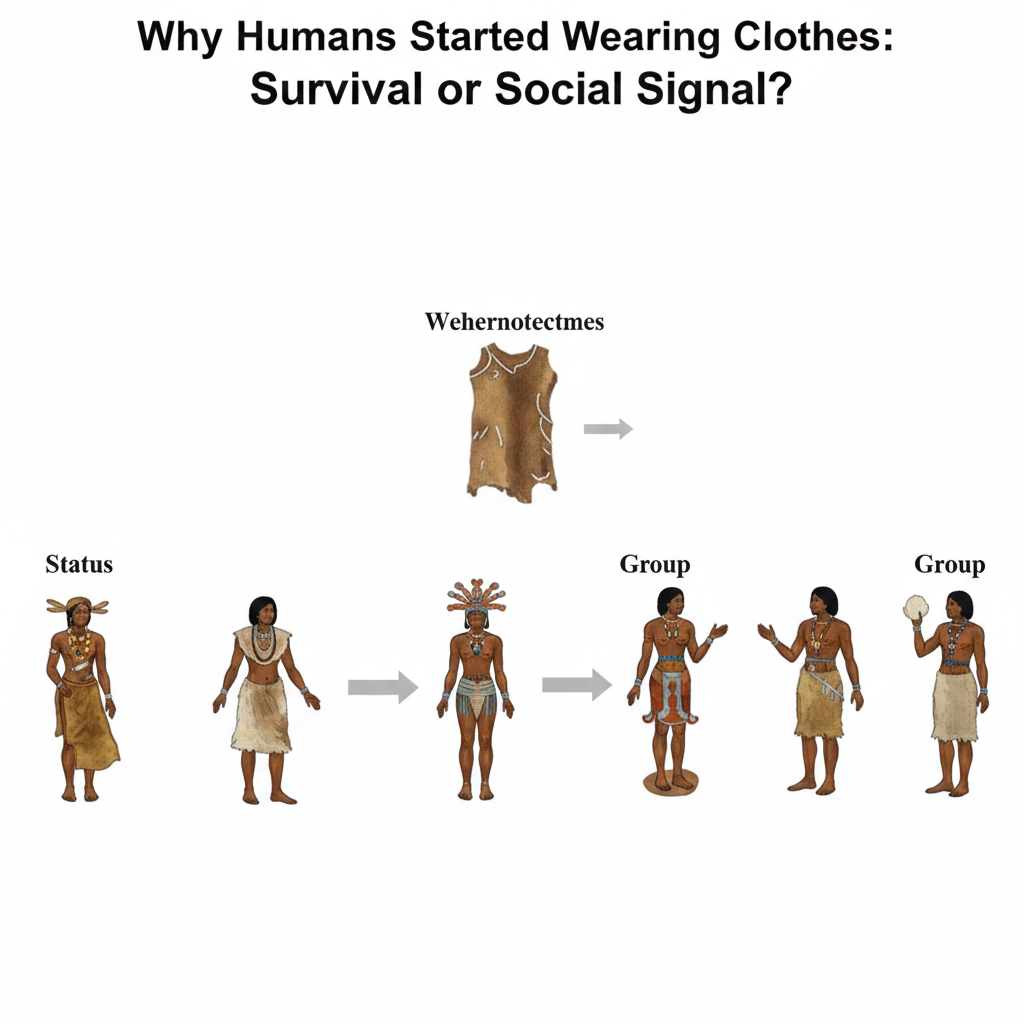
The connection between fabric properties and garment performance traces back to the very beginning of human clothing. The reason why humans started wearing clothes involved protection and functionality—goals still served by thoughtful fabric selection today. As we examine the history of clothing evolution, we see continuous refinement in how humans select and manipulate materials to serve our needs.
Modern clothing benefits from thousands of years of fabric knowledge combined with cutting-edge technological innovation. We have more fabric options than ever before, each with distinct weight and texture characteristics. This abundance creates opportunities and challenges—more freedom in design paired with more complex decision-making.
For anyone interested in clothing—whether as a designer, maker, or informed consumer—understanding fabric weight and texture provides crucial insight. These properties explain why certain garments work in specific contexts, why some clothes feel better than others, and how designers achieve their creative visions. The next time you choose what to wear, consider not just the style or color, but the fabric itself—its weight, its texture, and how these properties make the garment what it is.