


The Earliest Evidence of Textile Creation in Human History

Long before factory floors and fashion runways, humans discovered something transformative: the ability to create fabric. This shift from animal hides and plant wraps to woven textiles didn’t just keep people warm—it changed the course of civilization. Structured fabric enabled more complex clothing designs, supported trade networks, and laid the groundwork for cultural identity through dress.
Understanding when and how humans began making textiles reveals much about our ancestors’ ingenuity and resourcefulness. Archaeological discoveries continue to push back the timeline of textile creation, showing that our relationship with fabric is far older than once thought. The first materials used in human clothing were primarily animal skins and plant fibers, but the transition to woven textiles marked a pivotal moment in human development.
This post explores the origins of textile creation, examining the archaeological evidence, the techniques our ancestors employed, and how these early innovations shaped the clothing we wear today.
When Humans Began Creating Textiles
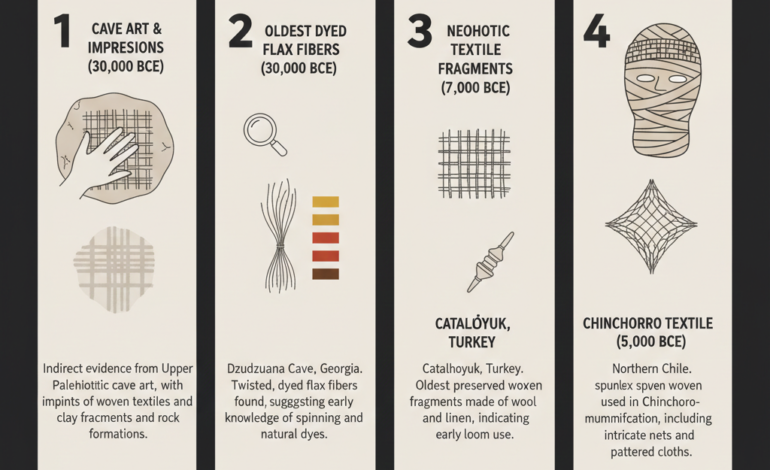
The exact timeline of textile creation remains somewhat mysterious due to the perishable nature of organic materials. Unlike stone tools or pottery, fabric rarely survives millennia of environmental exposure. However, indirect evidence—such as spindle whorls, loom weights, and impressions on pottery—suggests that textile production emerged during the Upper Paleolithic period, roughly 27,000 years ago.
Some of the earliest direct evidence comes from fibers found at Dzudzuana Cave in Georgia, dated to approximately 30,000 years ago. These twisted and dyed flax fibers indicate that prehistoric communities possessed both the skill and desire to create decorative textiles. This discovery suggests that textile creation wasn’t purely functional—aesthetic considerations played a role from the very beginning.
The development of textile production closely followed the evolution of early sewing tools, which enabled humans to join pieces of fabric and create more sophisticated garments. Bone needles with eyes, dating back 25,000 years, demonstrate that our ancestors were already thinking beyond simple draping and wrapping.
As communities developed more advanced methods for creating fabric, they could design clothing suited to specific climates and activities. The human clothing origins hub provides a comprehensive overview of how these innovations spread across different regions and cultures.
Early Weaving Techniques and Primitive Looms
Creating structured textiles requires transforming individual fibers into continuous fabric—a process that demands both patience and technical knowledge. Early humans developed several methods to achieve this, starting with the most basic techniques and gradually advancing to more complex systems.
Hand Twisting Fibers
Before looms existed, humans created cordage and simple fabrics by hand-twisting plant fibers or animal hair. This process, known as spinning, involves drawing out fibers and twisting them together to create yarn or thread. Archaeological evidence suggests that spindle whorls—weighted objects that help maintain spinning momentum—were used as early as 20,000 years ago.
Hand-spinning remained labor-intensive, but it allowed people to create strong, flexible threads from materials readily available in their environment. Nettle, flax, hemp, and wool all served as fiber sources depending on geographic location and climate. The journey from fiber to fabric clothing process demonstrates the remarkable transformation from raw material to finished garment.
Simple Weaving Structures
Once humans could produce thread, they needed a method to interlace these threads into fabric. The earliest weaving likely occurred on simple frames or by stretching fibers between two fixed points. Warp-weighted looms, which used stones or clay weights to tension vertical threads, emerged around 7,000 years ago and remained common throughout Europe and the Middle East for thousands of years.
These primitive looms enabled the creation of rectangular pieces of fabric that could be draped, wrapped, or sewn into garments. The width and length of the loom determined the size of the finished textile, influencing clothing design in fundamental ways.
Different environments demanded different solutions. Communities living in ice age climates developed thick, warm fabrics, while those in tropical regions created lighter, more breathable materials. The contrast in clothing in ice age vs tropical regions highlights how textile innovation responded to environmental challenges.
Archaeological Evidence of Ancient Textiles
Because textiles decompose rapidly, archaeologists must often rely on indirect evidence to understand early fabric production. Fortunately, several remarkable discoveries have preserved actual textile fragments, offering glimpses into the sophisticated techniques our ancestors employed.
Preserved Fibers and Tools
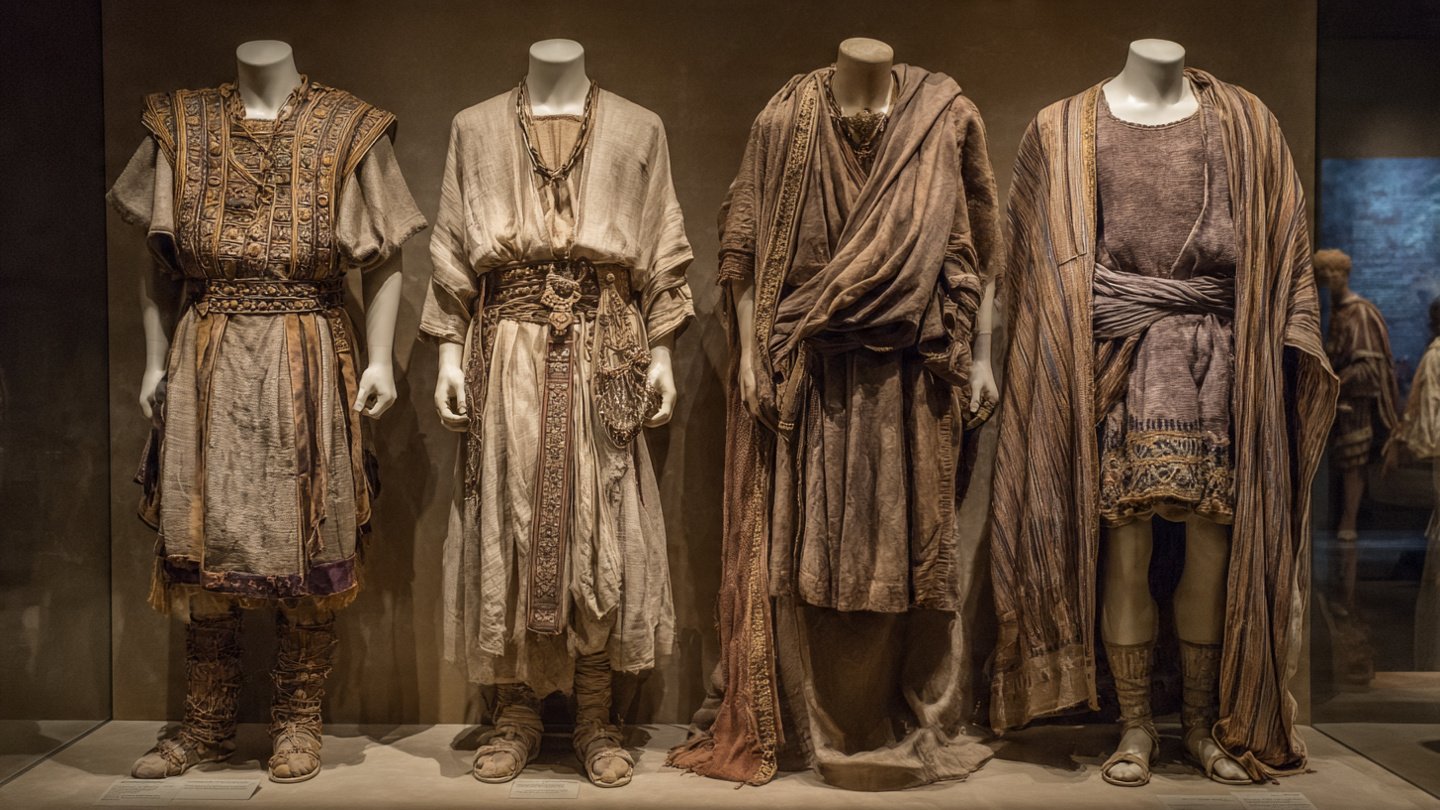
Exceptional preservation conditions—such as waterlogged sites, dry caves, or frozen environments—occasionally protect organic materials from decay. The Ötzi mummy, discovered in the Alps and dated to approximately 3,300 BCE, wore garments made from woven grass and animal hide, demonstrating the combination of materials used in clothing construction.
Cave sites throughout Europe have yielded impressions of textiles on fired clay, showing weave patterns and fiber types. These impressions reveal that Neolithic communities produced various fabric types, from coarse utility cloths to finer textiles suitable for clothing.
Spindle whorls, loom weights, and bone needles appear frequently in archaeological contexts, providing tangible evidence of textile production even when the fabrics themselves haven’t survived. The distribution of these tools across different sites shows that textile creation wasn’t confined to specific regions—it spread rapidly as communities exchanged knowledge and techniques.
Cultural Implications of Fabric Creation
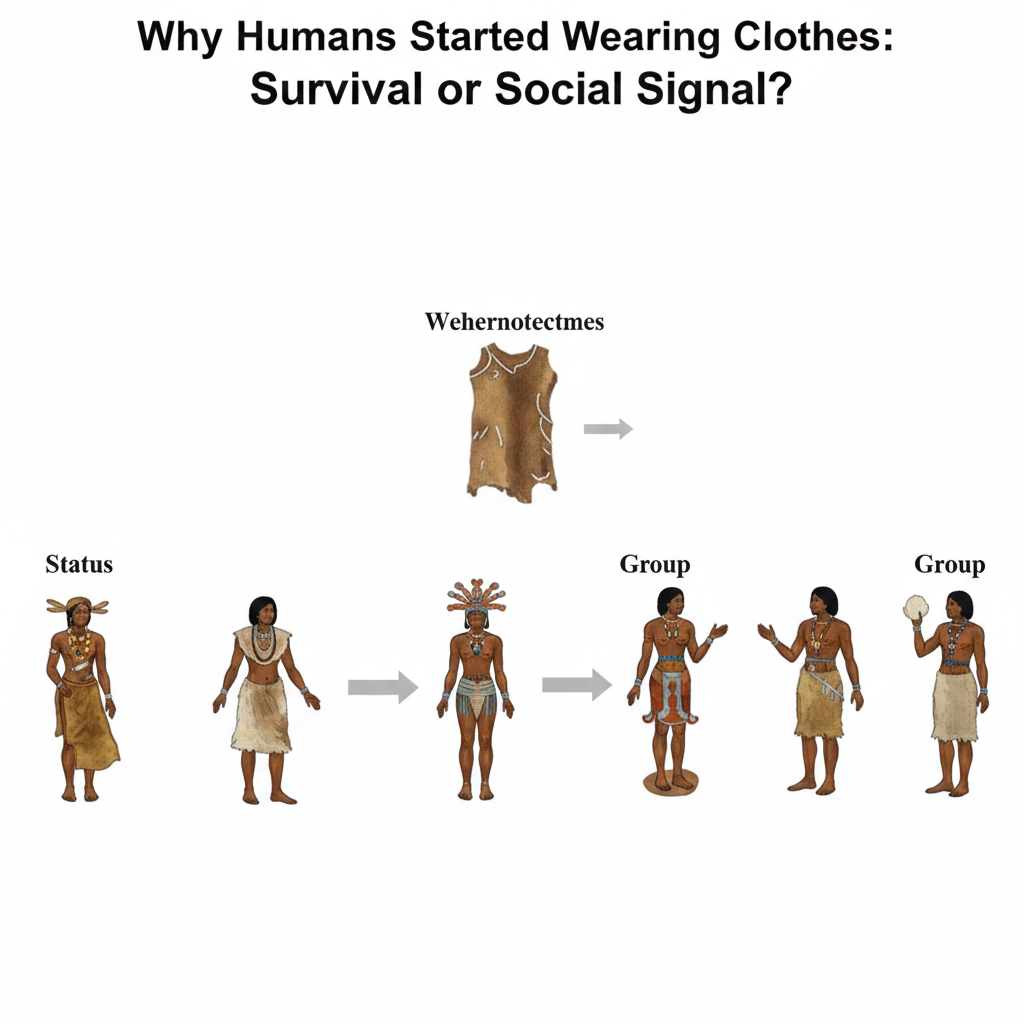
The ability to create textiles had profound cultural implications beyond mere practicality. Woven fabric could display patterns, colors, and textures that communicated social status, group affiliation, or ceremonial purpose. The investment of time and skill required to produce fine textiles made them valuable trade goods and markers of wealth.
Migration patterns significantly influenced textile techniques and clothing styles. As groups moved to new territories, they adapted their fabric-making methods to available materials and environmental conditions. This process of adaptation and innovation is explored in depth in the discussion of how migration influenced early clothing design.
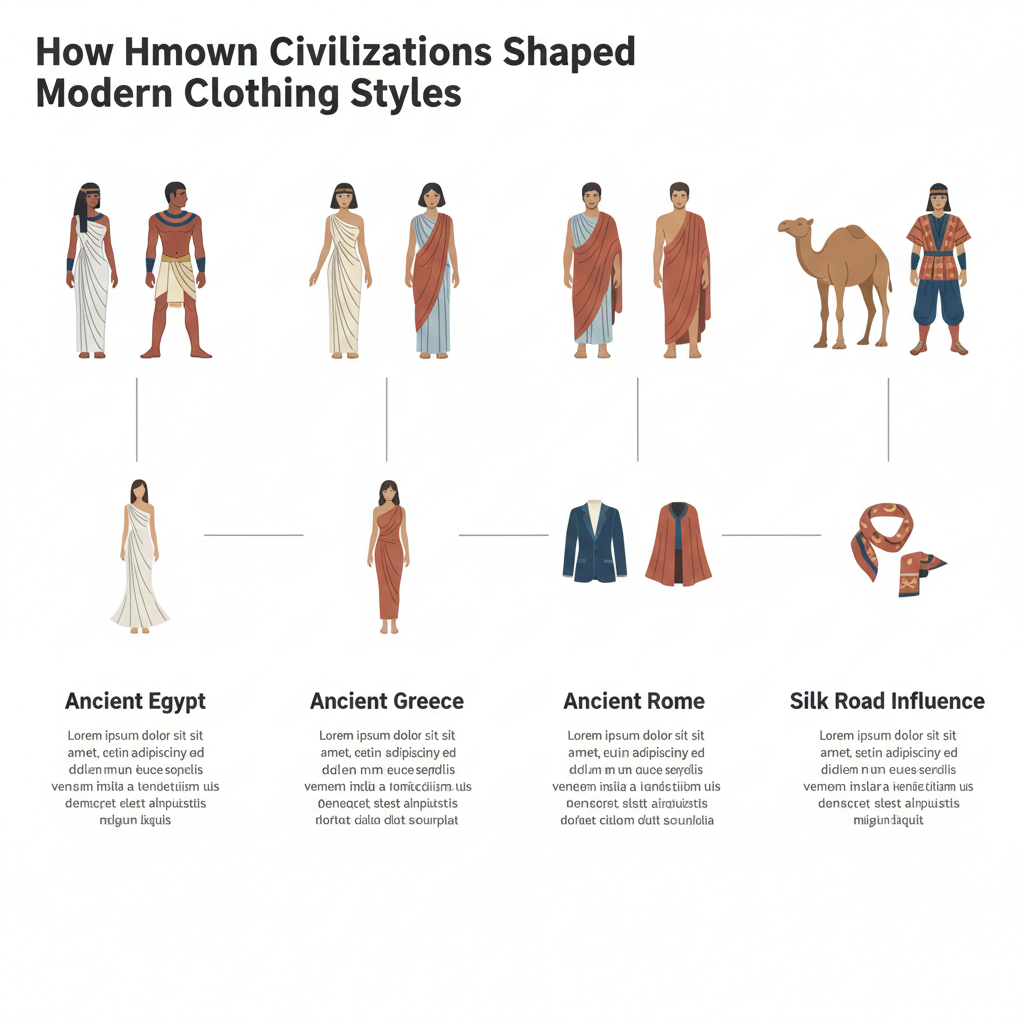
Different cultures developed distinctive weaving traditions that reflected their unique environmental conditions, available materials, and aesthetic preferences. The emergence of ancient civilizations shaping clothing styles demonstrates how textile technology became intertwined with cultural identity and social organization.
How Textile Innovation Changed Clothing Design
The development of woven textiles fundamentally transformed what clothing could be and do. Unlike animal skins, which come in fixed shapes and sizes, woven fabric could be produced in virtually any dimension and then cut and sewn into complex garments.
This flexibility enabled several important advances in clothing design. First, it allowed for better-fitting garments. Rather than draping hides over the body, tailors could create pieces that conformed to human anatomy, improving both comfort and mobility. Understanding what is a clothing silhouette helps explain how fabric construction influences the final shape of garments.
Second, woven textiles could be produced in lighter weights than most animal skins, making them more comfortable in warm climates or for extended wear. The ability to adjust fabric thickness through weaving technique meant that communities could create specialized clothing for different seasons and activities.
Third, textiles opened new possibilities for decoration and symbolic communication. Weaving patterns, dyes, and embroidery transformed clothing from purely functional items into vehicles for artistic expression and social messaging.
While animal skins used in early garments remained important for their durability and weather resistance, textiles gradually became the dominant material for everyday clothing in most settled communities. The combination of both materials—textile for the base garment and leather for reinforcement or protection—proved particularly effective and remained common for millennia.
Textile Creation as the Foundation of Modern Fashion
Every garment in your closet owes its existence to the innovations developed by prehistoric weavers. The fundamental principles they established—spinning fibers into thread, interlacing threads into fabric, cutting and sewing fabric into garments—remain at the core of clothing production.
Modern textile manufacturing has become vastly more efficient through mechanization and synthetic fibers, but the basic process follows the same logic as ancient techniques. Industrial looms still create fabric by interlacing warp and weft threads, just as primitive looms did thousands of years ago.
The history of clothing evolution shows how textile innovations drove changes in fashion, social structures, and global trade. The Silk Road, for instance, existed primarily to transport luxury textiles across continents, demonstrating the economic importance of fabric production.
Understanding textile creation also reveals the labor investment behind historical clothing. Before industrialization, creating enough fabric for a single garment required hundreds of hours of work—spinning, weaving, dyeing, and sewing. This reality shaped clothing practices, social hierarchies, and economic systems in ways that still influence us.
From Primitive Fiber to Modern Fabric
The story of textile creation is ultimately a story of human ingenuity overcoming material limitations. Our ancestors transformed fragile plant fibers and animal hair into durable, versatile fabrics that protected them from the elements and expressed their cultural identity.
Archaeological evidence continues to reveal earlier and more sophisticated examples of textile production, pushing back our understanding of when humans mastered this crucial technology. From simple hand-twisted cordage to complex woven patterns, each innovation built upon previous knowledge and expanded what clothing could achieve.
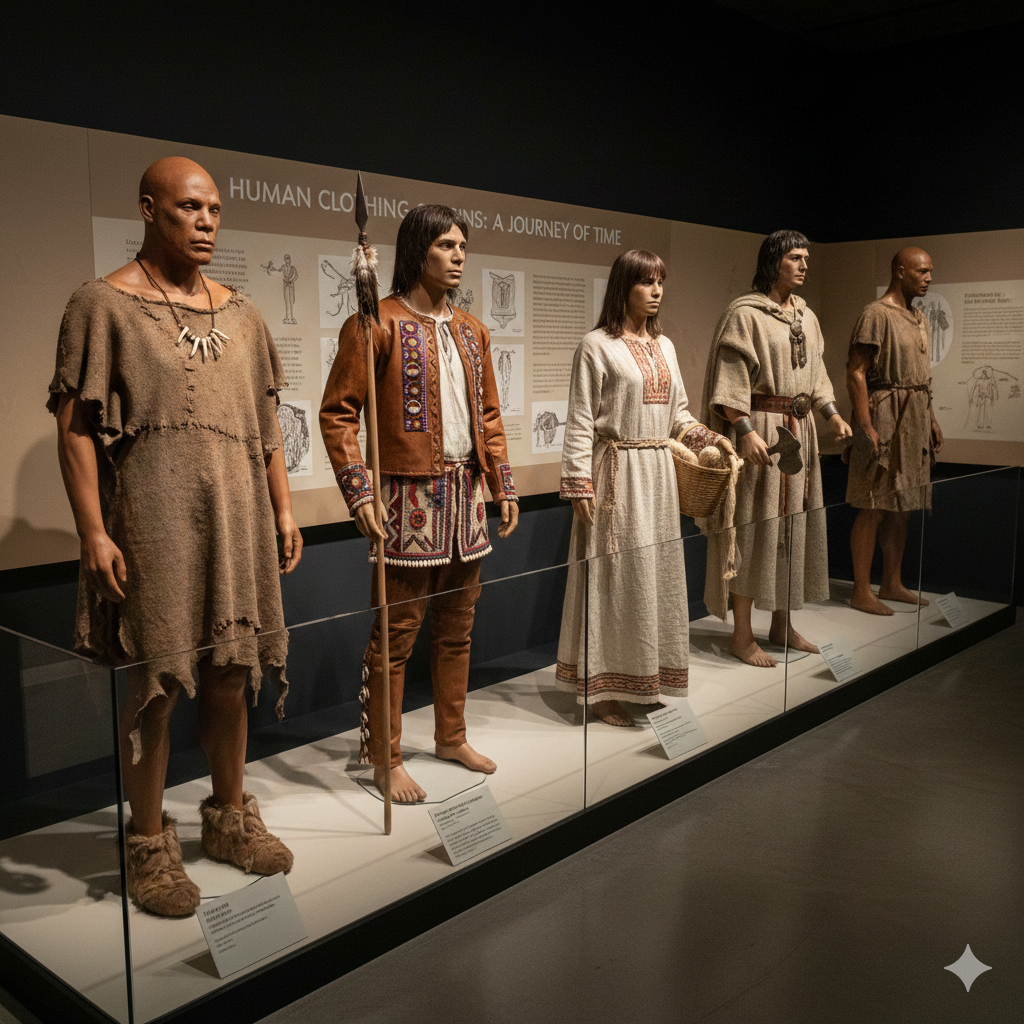
The human clothing evolution journey began with simple wraps and hides, but textile creation accelerated that evolution dramatically. By enabling better-fitting, more decorative, and more specialized garments, woven fabric changed not just what humans wore, but how they understood themselves and their communities.
Modern fashion may seem far removed from Paleolithic spindle whorls and primitive looms, but the connection remains direct and undeniable. Every time you put on a woven garment, you’re benefiting from innovations developed over tens of thousands of years. The process of how clothes are made from fiber to fabric maintains the same essential steps our distant ancestors pioneered.
Understanding this history enriches our appreciation for the clothing we often take for granted and highlights the remarkable creativity of early human communities. They didn’t just create fabric—they created the foundation for one of humanity’s most enduring and universal practices.