


The Evolution of Needles, Threads, and Early Sewing Tools

Before humans learned to stitch, clothing wasn’t really “clothing” as we know it. Garments were draped, wrapped, or tied—functional enough to provide warmth, but hardly tailored to the body. The breakthrough came when early humans figured out how to pierce materials and bind them together with thread. This wasn’t just a practical upgrade. It was a technological leap that changed how people dressed, moved, and adapted to their environments.
Sewing allowed for fitted garments, layered protection, and eventually, the concept of personal style. Understanding why humans started wearing clothes helps explain why stitching became so essential. Once people moved beyond simply covering themselves, they needed better methods to secure and shape what they wore. The first materials used in human clothing—like animal hides and plant fibers—demanded more sophisticated assembly techniques as clothing evolved from survival tool to cultural expression.
This post explores the tools and techniques that made clothing construction possible: bone needles, plant-based threads, sinew, and the stitching methods that turned raw materials into wearable garments. These innovations didn’t just improve clothing—they laid the groundwork for everything from armor to haute couture. For more context on how clothing developed across cultures and climates, explore our [human clothing origins hub](Origins Hub).
Before Sewing — Wrapping, Tying, and Primitive Garments
Early Non-Stitched Clothing Methods
Early humans didn’t start out sewing. They worked with what they had: large pieces of hide, bark, or woven plant material that could be wrapped around the body or fastened with simple knots. Think of it as wearable architecture—functional, but limited in form and movement.
Wrapping techniques were common in warmer climates, where a single piece of fabric could be draped over the shoulders or around the waist. Tying was another go-to method, often using strips of leather or plant fiber to secure garments at the waist or neck. These methods required minimal tools, making them accessible across different cultures and geographies.
But they came with trade-offs. Wrapped clothing could slip or unravel during physical activity. Tied garments offered limited coverage and left gaps that exposed skin to the elements. These weren’t minor inconveniences—they were barriers to survival in harsher climates.
Limitations of Untailored Garments
Without stitching, garments couldn’t conform to the body’s shape. This meant less insulation, poor mobility, and a constant need for adjustment. Animal skins used in early clothing were durable and warm, but only if they stayed in place. A loose hide might protect the torso, but it did little for the arms, legs, or extremities.
The lack of tailoring also made it difficult to layer clothing effectively. Layering is critical in cold environments, where trapped air between garments provides insulation. Wrapped or tied clothing couldn’t achieve this level of thermal efficiency. As humans migrated to colder regions, the need for more sophisticated garment construction became urgent.
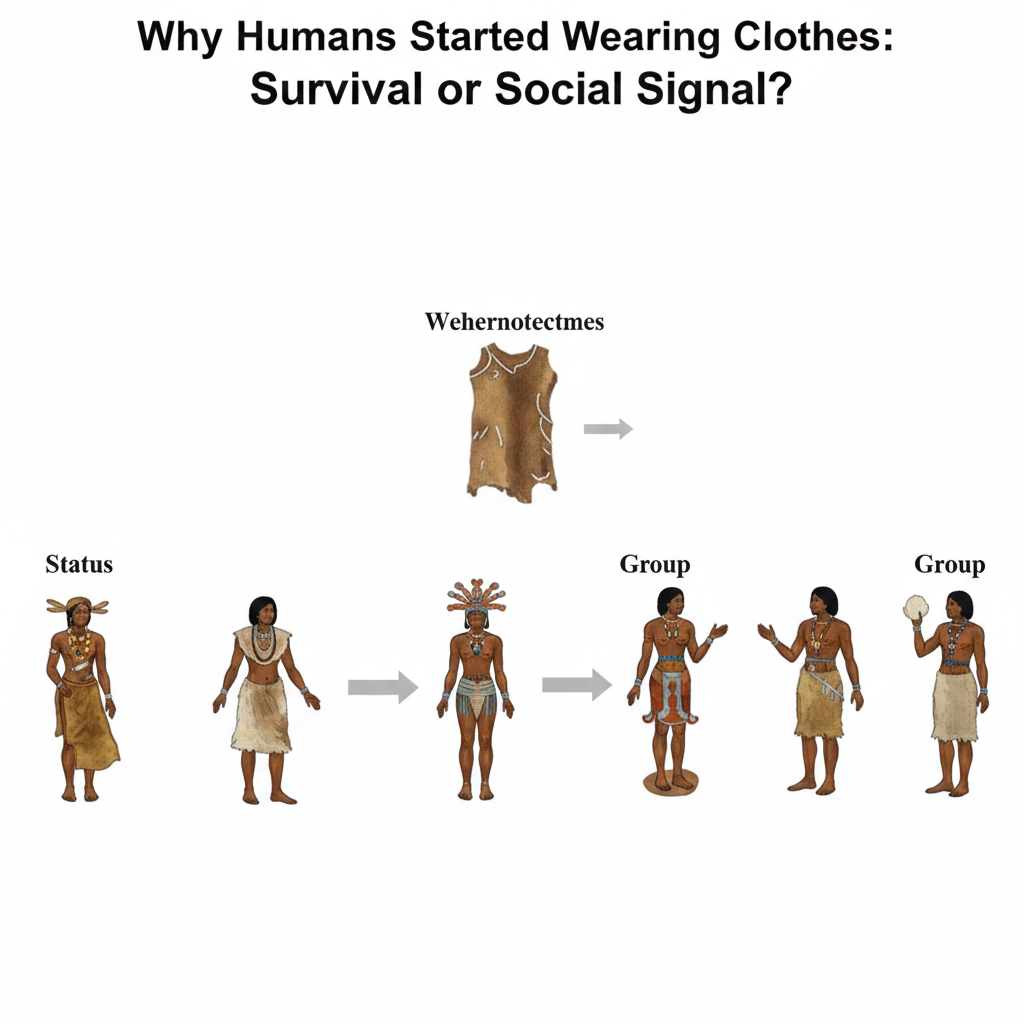
Cultural factors played a role too. As societies developed, clothing began to signal identity, status, and group affiliation. Untailored garments offered little room for variation or personalization. The interplay between climate vs culture shaping early dress highlights how both practical needs and social dynamics drove clothing innovation.
The First Needles in Human History
Bone and Ivory Needles
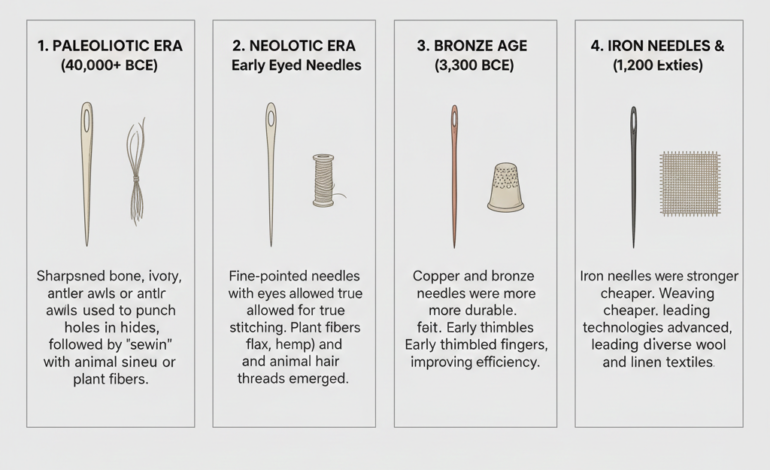
The earliest known sewing needles date back roughly 40,000 years and were crafted from bone and ivory. These needles were slender, polished, and featured an eye near the top—evidence that early humans understood how to thread sinew or plant fiber through a small opening.
Making a bone needle was no simple task. It required careful selection of material, precise shaping through grinding and polishing, and the ability to drill a tiny hole without cracking the bone. The fact that these tools survived means they were valuable, likely used repeatedly and maintained with care.
Ivory needles, often made from mammoth tusks, were particularly prized. Ivory is harder and more durable than bone, making it ideal for piercing tough hides. These needles suggest that sewing wasn’t just a survival skill—it was a craft that required expertise and tool-making knowledge.
Archaeological Evidence of Sewing
Needles have been found at archaeological sites across Europe, Asia, and Africa, indicating that sewing was a widespread practice among early human populations. Some of the oldest examples come from Siberia and Central Europe, regions where cold climates made fitted clothing essential.
The presence of needles also correlates with other developments in material culture, such as more complex shelters, tools, and art. This suggests that sewing was part of a broader pattern of technological and cognitive advancement. People who could sew were better equipped to survive, adapt, and thrive in diverse environments.
Interestingly, there’s evidence of gender-based tool use in some cultures. While the specifics varied, certain societies assigned sewing and garment-making roles based on social structures. For more on how clothing roles differed, see prehistoric clothing differences between men and women.
Early Threads and Stitching Techniques
Plant Fibers and Animal Sinew
Thread wasn’t always thread. Early humans used whatever materials they could extract, twist, and strengthen. Animal sinew—tendons from game animals—was one of the most common “threads.” When dried, sinew becomes tough and pliable, perfect for piercing and binding hides.
Plant fibers offered another option. Flax, hemp, and nettle could be processed into strong, flexible cords. Preparation involved soaking, beating, and twisting the fibers until they formed a usable strand. This process was labor-intensive, but the result was a durable material suitable for stitching lighter fabrics or reinforcing seams.
Different materials had different uses. Sinew was ideal for heavy-duty stitching—think winter coats made from thick hides. Plant-based threads worked better for lighter garments or decorative stitching. Understanding how to process and use these materials was a skill passed down through generations. To learn more about how raw materials became wearable fabric, explore from fiber to fabric clothing process.
Functional vs Decorative Stitching
Not all stitching served the same purpose. Functional stitching—tight, even seams designed to hold garments together—was critical for warmth and durability. This type of stitching kept out wind and moisture, extended the life of garments, and allowed for repairs.
Decorative stitching, on the other hand, had cultural significance. Embroidered patterns, colored threads, and ornamental seams conveyed identity, status, or group membership. Some societies used specific stitching patterns to distinguish between clans or mark important life events.
The coexistence of functional and decorative stitching shows that clothing was never just about survival. It was also a canvas for self-expression and social communication. This dual purpose would carry forward into every era of fashion history.
How Sewing Tools Allowed Fitted Clothing and Silhouettes
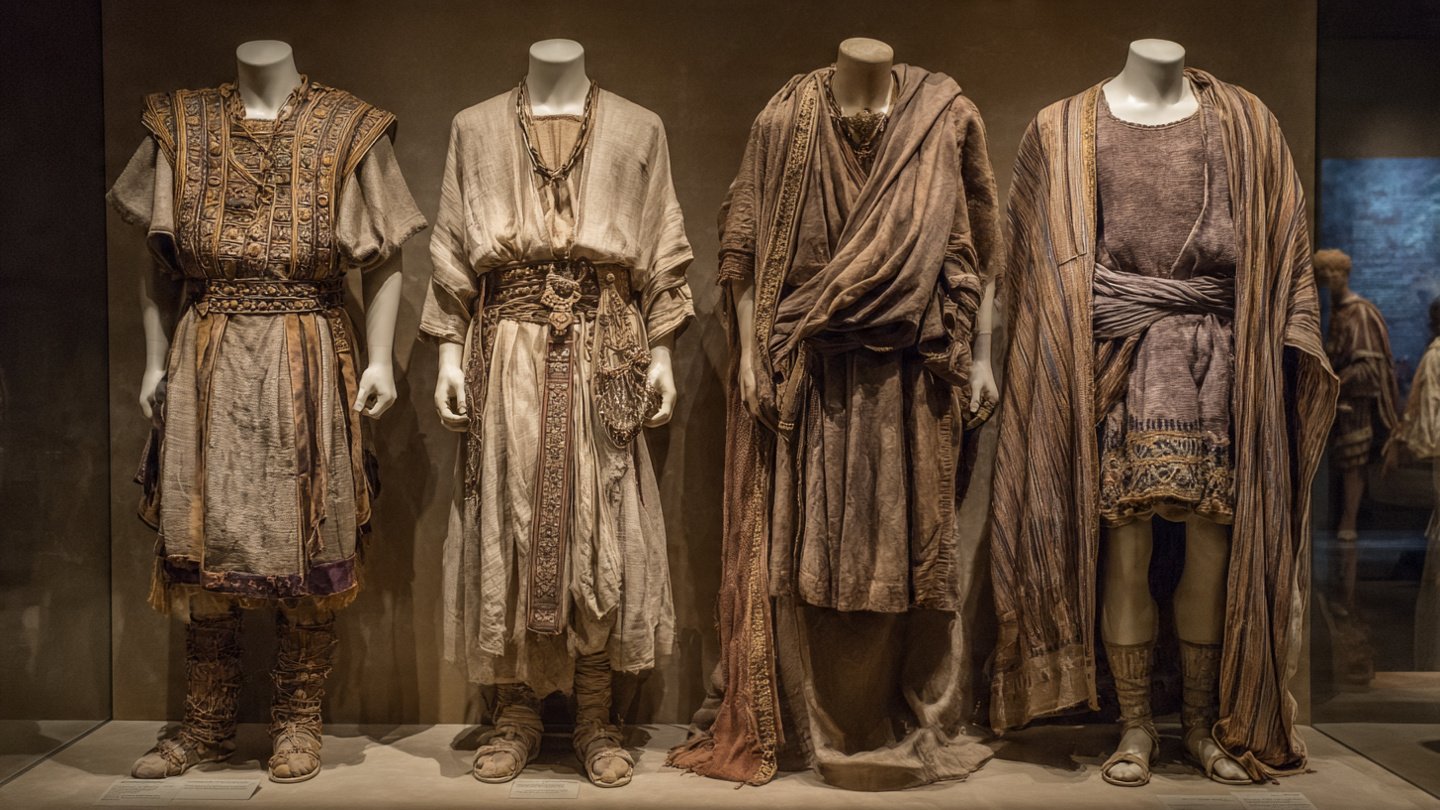
Once humans could stitch materials together, they could shape garments to fit the body. This was a game-changer. Fitted clothing provided better insulation, improved mobility, and offered protection in ways that draped garments couldn’t match.
Tailoring began simply—adding sleeves, closing seams along the sides, creating openings for the head and arms. Over time, these techniques became more refined. Garments could be adjusted to fit different body types, layered for warmth, or reinforced in areas that experienced wear.
The concept of what is a clothing silhouette emerged from these early tailoring efforts. A silhouette refers to the overall shape and outline of a garment on the body. Stitching made it possible to control this shape, whether through darts, seams, or strategic placement of fabric. This control over form laid the foundation for fashion as we understand it—clothing designed not just for function, but for aesthetic effect.
Sewing as the Foundation of Modern Garment Design
The tools and techniques developed thousands of years ago continue to influence how we make and wear clothes. Bone needles evolved into steel needles. Sinew and plant fibers became cotton, silk, and synthetic threads. But the core principle remains: stitching transforms raw material into something wearable, functional, and meaningful.
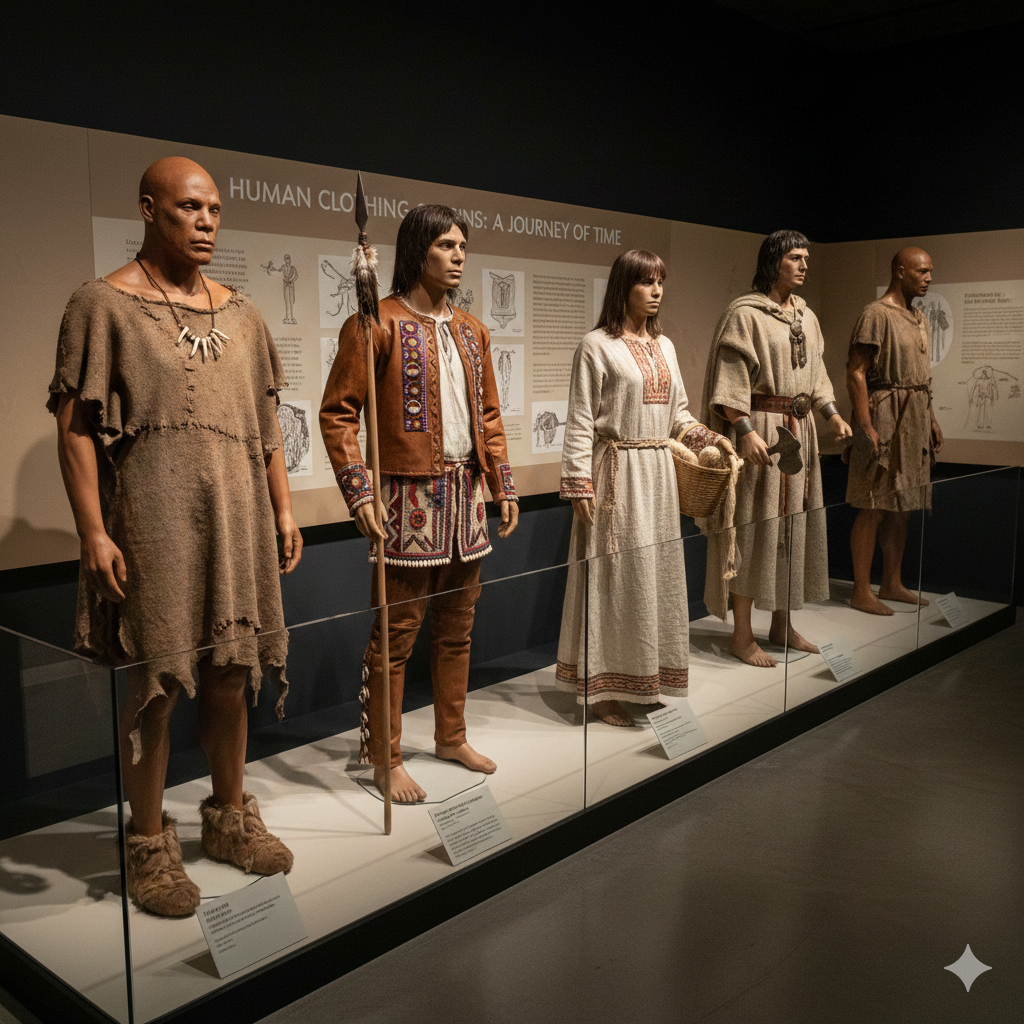
Sewing didn’t just solve practical problems. It enabled creativity, cultural expression, and technological progress. Without it, the human clothing evolution journey would have taken a very different path. From prehistoric hides to modern haute couture, every garment owes something to those early innovations.
For a deeper dive into how clothing continued to develop across time and culture, check out the history of clothing development. The story of human dress is long and complex, but it all begins with a needle, a thread, and the ingenuity to bring them together.