




How AI Is Transforming Medical Research in the USA (Breakthroughs Explained)

Medical research in the United States stands on the brink of a new era. For decades, the path from scientific hypothesis to life-saving treatment has been notoriously long, expensive, and fraught with dead ends. It takes years to screen drug candidates, analyze patient data, and recruit for clinical trials. However, a powerful catalyst is rewriting these rules: artificial intelligence (AI).
From Silicon Valley tech giants to Boston’s biotech hubs, AI is not just a buzzword; it is an active engine driving discoveries that were previously thought impossible. By crunching massive datasets and identifying patterns invisible to the human eye, algorithms are accelerating the pace of innovation. This shift is reshaping how we fight diseases like cancer, Alzheimer’s, and rare genetic disorders.
This article explores the profound impact of AI in medical research within the USA. We will uncover how machine learning speeds up drug discovery, sharpens diagnostics, and optimizes clinical trials, while also addressing the ethical hurdles that come with handing the microscope over to machines.
What Is AI in Medical Research?
At its core, AI in healthcare refers to the use of complex algorithms and software to emulate human cognition in the analysis of complicated medical data. While traditional computer programs simply follow instructions, AI—specifically machine learning—learns from data. It improves its accuracy over time without being explicitly programmed for every single outcome.
In the context of medical research, this means deploying data science to sift through millions of chemical compounds, genomic sequences, and electronic health records. The sheer volume of biological data generated today exceeds human processing capacity. Medical researchers need AI to bridge the gap between raw information and actionable insight.
High-intent keywords like AI in medical research USA and artificial intelligence healthcare are trending for a reason: the integration of these technologies is moving from experimental phases to standard practice in top US research institutions.
Why AI Is Important for Medical Research in the USA
The United States leads the world in medical innovation, but the industry faces significant bottlenecks. Developing a new drug can take over a decade and cost billions of dollars. AI offers a critical solution to these inefficiencies.
Faster Research Timelines
Time is the most valuable resource in medicine. AI dramatically compresses research timelines by automating repetitive tasks. What used to take researchers months—such as reviewing literature or screening initial compounds—can now be accomplished in days or even hours.
Managing Massive Healthcare Datasets
Modern medicine generates petabytes of data. AI healthcare innovation USA relies on the ability to manage this influx. Algorithms can process genomic data, imaging files, and real-time patient monitoring statistics simultaneously, creating a comprehensive picture that helps researchers spot correlations that human teams might miss.
Reducing Research Costs and Errors
High costs often stifle innovation. By simulating experiments digitally (in silico) before moving to physical labs (in vitro), AI reduces the waste of expensive reagents and resources. Furthermore, AI minimizes human error in data entry and analysis, ensuring that medical research technology yields reliable, reproducible results.
How AI Is Used in Drug Discovery
One of the most promising applications of artificial intelligence is in pharmaceuticals. AI drug discovery USA is a rapidly growing sector, with companies using algorithms to reinvent how medicines are found.
Identifying Drug Candidates Faster
Traditionally, finding a molecule that interacts with a specific biological target involves physically testing thousands of compounds. AI models can predict the binding affinity of molecules virtually. They scan vast libraries of chemical structures to shortlist the most promising candidates, allowing scientists to focus their physical testing on compounds with the highest probability of success.
Predicting Drug Interactions and Outcomes
Safety is paramount. Before a drug ever reaches a human volunteer, AI can predict potential toxicities and side effects based on chemical structures and biological pathways. This predictive capability helps researchers avoid dangerous or ineffective paths early in the process.
Reducing Trial-and-Error in Labs
The “throw it against the wall and see what sticks” method is becoming obsolete. Artificial intelligence pharmaceuticals allow for precise targeting. By modeling how a drug will behave in the body, AI reduces the trial-and-error nature of wet-lab experiments, saving significant time and capital.
AI in Medical Imaging and Diagnostics
While drug discovery takes years, diagnostic improvements save lives immediately. AI medical imaging is revolutionizing radiology and pathology departments across the country.
Detecting Diseases Earlier
Early detection is often the difference between a cure and management. AI algorithms trained on thousands of medical images can detect anomalies—such as early-stage tumors or micro-fractures—that might be too subtle for the human eye. In fields like oncology, detecting a malignancy at Stage 1 versus Stage 3 changes everything.
Improving Accuracy in Radiology and Pathology
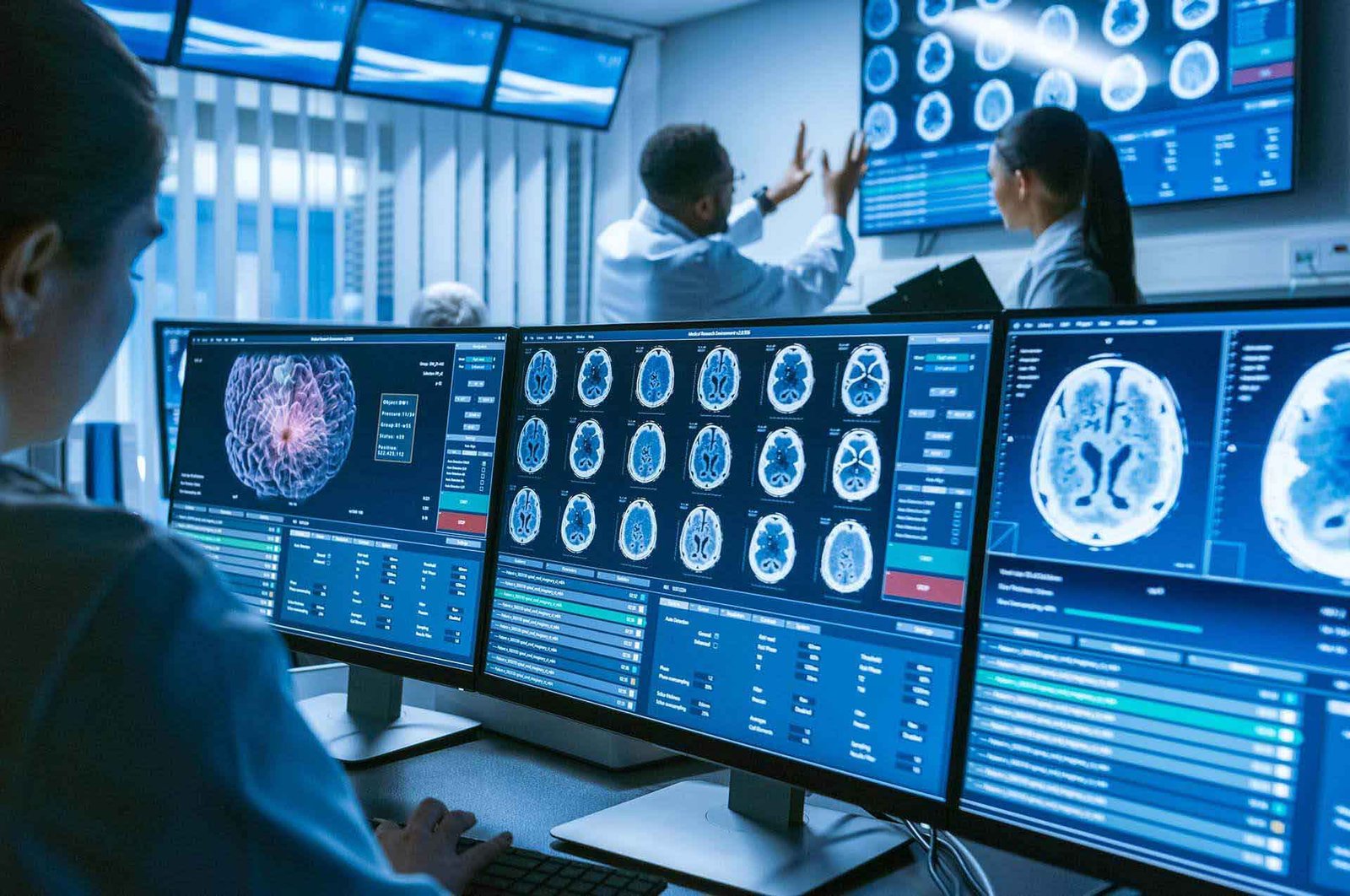
Radiologists and pathologists work under immense pressure. Fatigue can lead to missed diagnoses. AI acts as a second pair of tireless eyes. In AI diagnostics USA, software highlights suspicious areas on X-rays, MRIs, and CT scans, prompting the physician to take a closer look. This collaborative approach significantly improves diagnostic accuracy.
Supporting Doctors with Decision Tools
AI doesn’t just look at pictures; it synthesizes patient history. Clinical Decision Support (CDS) systems analyze imaging data alongside patient records to suggest potential diagnoses or treatment pathways, empowering physicians to make more informed decisions.
Role of AI in Clinical Trials
Clinical trials are the gateway to new treatments, yet they are notoriously difficult to manage. Many fail not because the science is bad, but because the trial design or recruitment was flawed. AI clinical trials USA helps solve these logistical nightmares.
Patient Recruitment and Matching
Finding the right patients is the biggest hurdle in clinical research. AI scans electronic health records to identify patients who meet specific inclusion criteria, matching them to relevant trials. This ensures that trials fill up faster and that the participant pool is appropriate for the study.
Predicting Trial Success Rates
By analyzing past trial data, AI can predict the likelihood of a current protocol succeeding. It can identify potential pitfalls in the trial design—such as unrealistic endpoints or overly restrictive eligibility criteria—allowing researchers to adjust before the trial begins.
Monitoring Trial Data in Real Time
Medical research automation allows for continuous monitoring. Instead of waiting until the end of a phase to analyze data, AI systems monitor patient safety and efficacy signals in real-time. This allows for adaptive trial designs, where protocols can be modified mid-study to protect patients or focus on the most effective dosages.
AI and Big Data in Medical Research
The phrase “Big Data” is ubiquitous, but its application in medicine is specific and powerful. AI big data healthcare involves turning information into intelligence.
Analyzing Electronic Health Records (EHRs)
EHRs contain a goldmine of longitudinal data. AI creates structured data from unstructured physician notes, lab results, and discharge summaries. This allows researchers to perform retrospective studies on millions of patients to understand disease progression and treatment real-world evidence.
Identifying Disease Patterns
Why do some people develop diabetes while others with similar lifestyles do not? Medical data analysis USA helps answer these questions. AI identifies subtle patterns across demographics, genetics, and environmental factors, shedding light on the etiology of complex diseases.
Population Health Research Improvements
Beyond the individual, AI helps researchers understand health at a macro level. It tracks outbreaks, monitors the spread of infectious diseases, and identifies health disparities in different communities, enabling more targeted public health interventions.
Benefits of AI for Researchers and Patients
The ultimate goal of all this technology is to help people. The benefits of AI in healthcare trickle down from the lab bench to the bedside.
Faster Breakthroughs
For patients with terminal illnesses, time is everything. AI accelerates the cycle of discovery, meaning life-saving therapies reach the market sooner. We saw a glimpse of this speed during the pandemic, and it is becoming the standard for other conditions.
Personalized Medicine Advancements
The “one-size-fits-all” approach to medicine is fading. Personalized medicine USA is driven by AI’s ability to analyze a patient’s unique genetic makeup and biomarkers. Researchers can now develop treatments tailored to specific genetic profiles, maximizing efficacy and minimizing side effects.
Improved Patient Outcomes
Better diagnostics, safer drugs, and personalized treatments lead to better health. When researchers have better tools, doctors have better options, and patients live longer, healthier lives.
Challenges and Ethical Concerns of AI in Medical Research
Despite the optimism, the road ahead is not without potholes. AI ethics healthcare is a critical field of study that must grow alongside the technology itself.
Data Privacy and Security
To work effectively, AI needs access to massive amounts of personal health information. Ensuring this data is anonymized and secure from cyberattacks is paramount. Patients must trust that their most sensitive data is being used for research, not exploitation.
Bias in AI Algorithms
AI is only as good as the data it is trained on. If an algorithm is trained primarily on data from one demographic group, it may fail to diagnose or treat other groups effectively. Addressing challenges of AI medical research requires a conscious effort to diversify training datasets to ensure health equity.
Regulatory and Approval Challenges
The FDA and other regulatory bodies are working hard to keep up with the pace of innovation. Determining how to regulate an algorithm that learns and changes over time (locked vs. adaptive algorithms) is a complex legal and safety challenge that the industry is still navigating.
Future of AI in Medical Research in the USA
What does the next decade look like? The future of AI in healthcare USA points toward a more proactive system.
Predictive and Preventive Medicine
Ideally, we won’t just treat disease; we will prevent it. AI models will predict an individual’s risk of developing conditions years in advance, allowing for lifestyle interventions or prophylactic treatments that stop the disease before it starts.
AI-Driven Genomics Research
Genomics is data-heavy. AI will continue to decode the human genome, helping us understand the function of non-coding regions and the complex interplay between multiple genes. This will unlock new targets for gene therapy.
Collaboration Between Humans and AI
The future is not machines replacing humans; it is “intelligence augmentation.” Medical research trends suggest a symbiotic relationship where AI handles the data crunching, freeing up human researchers to do what they do best: ask the creative, ethical, and complex questions that drive science forward.
Frequently Asked Questions (FAQ)
Is AI already used in medical research in the USA?
Yes, AI is currently used extensively across the USA. Major pharmaceutical companies use it for drug discovery, hospitals use it for analyzing patient data, and academic institutions use it for genomic sequencing. It is no longer theoretical; it is a practical tool in daily use.
Can AI replace medical researchers?
No, AI cannot replace medical researchers. AI is a tool that processes data and predicts outcomes, but it lacks human intuition, ethics, and creativity. It is best viewed as a powerful assistant that handles repetitive tasks and complex analysis, allowing humans to focus on high-level strategy and hypothesis generation.
How accurate is AI in medical research?
AI accuracy depends on the quality of the data it is fed. In specific tasks, such as image recognition in radiology, some AI models have demonstrated accuracy rates comparable to or exceeding human specialists. However, these models require rigorous validation and human oversight to ensure clinical relevance.
Does AI reduce the cost of medical research?
Yes, in the long run. While the initial investment in technology and talent is high, AI reduces the cost of failed drug trials and speeds up the discovery process. By failing faster and cheaper in the digital stage, companies save millions that would have been spent on unsuccessful physical trials.
What medical fields benefit most from AI research?
Currently, oncology (cancer research), neurology, cardiology, and genomics benefit most. These fields rely heavily on imaging and complex genetic data, areas where AI excels at finding patterns.
Final Thoughts on AI in Medical Research
The integration of AI into US medical research is not just an upgrade; it is a transformation. By leveraging machine learning and big data, we are entering an age where the impossible becomes plausible. AI accelerates innovation, turning decades of work into years and years into months.
However, as we embrace these tools, we must remain vigilant. Ethical and responsible use is critical to ensuring that these advancements benefit everyone, regardless of background. The future of medical research is data-driven and intelligent, promising a world where diseases are detected earlier, treated more effectively, and perhaps, one day, prevented entirely.