





Why Emergency Funds Matter More Than Ever in the USA

Financial headlines lately feel like a rollercoaster ride that no one signed up for. From fluctuating inflation rates to shifts in the labor market, the economic landscape in the United States has become increasingly unpredictable. For many Americans, the cost of living has risen sharply, making the margin for error in a monthly budget thinner than ever before.
In this environment, a financial safety net isn’t just a “nice-to-have” luxury; it is a necessity for survival. When the car breaks down, a medical bill arrives, or hours are cut at work, the difference between a minor inconvenience and a financial disaster often comes down to one thing: cash on hand.
This comprehensive guide explores why building a robust safety net is critical right now. We will break down exactly what an emergency fund is, why the current US economic climate demands one, and how you can build yours effectively—regardless of your income level.
What Is an Emergency Fund?
Before diving into the strategy, we need to define the asset. An emergency fund USA households rely on is a dedicated stash of money set aside specifically to cover unexpected expenses or financial emergencies.
Think of it as self-insurance. It is money you have accumulated to pay for life’s surprises so you don’t have to rely on high-interest debt.
What qualifies as an emergency?
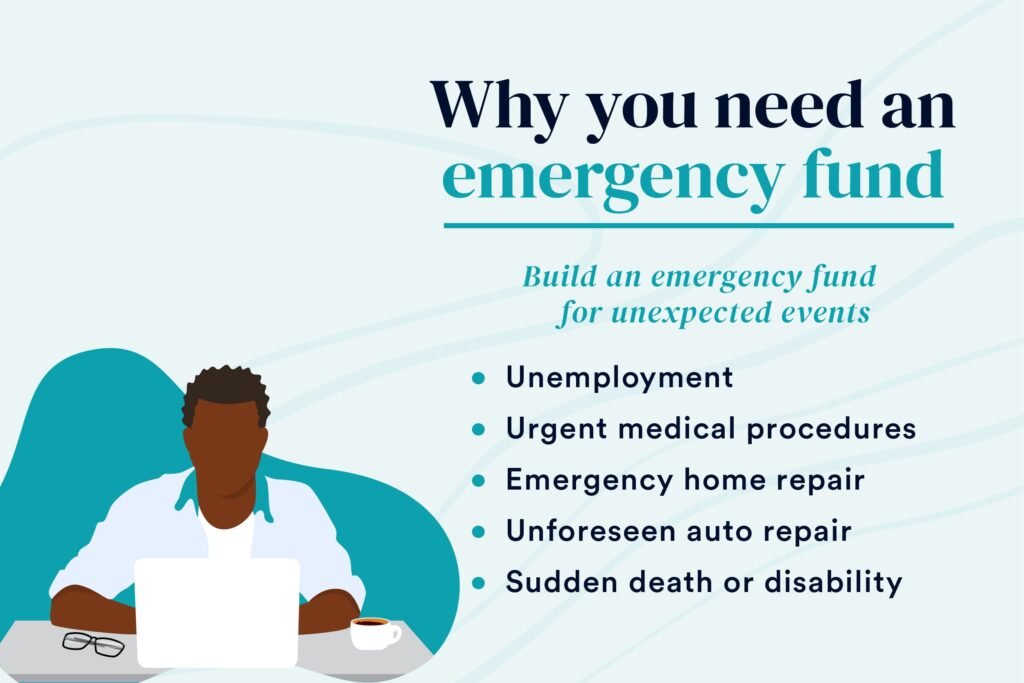
To make this fund effective, you must be strict about what constitutes an emergency. A true emergency is:
- Unexpected: You didn’t know it was coming (e.g., a car accident).
- Necessary: It impacts your health, ability to earn money, or safety (e.g., a broken furnace in winter).
- Urgent: It cannot wait until your next paycheck (e.g., a root canal).
Emergency fund vs. regular savings
It is crucial to distinguish this fund from your sinking funds or general savings. Your vacation fund, your down payment savings for a new car, or your holiday gift budget are planned expenses. You know they are coming. An emergency fund is for the unknown. Mixing these pools of money often leads to depleting your safety net for non-emergencies, leaving you vulnerable when a real crisis hits.
Why Emergency Funds Matter More Than Ever
The concept of saving for a rainy day is old, but the urgency is new. There are specific structural and economic reasons why emergency funds matter more than ever USA residents need to understand.
Job market volatility
While employment numbers fluctuate, the nature of work in the US has changed. Layoffs can happen suddenly in corporate sectors, and gig economy work can dry up without notice. Unlike in decades past, company loyalty rarely guarantees job security. If you lose your primary source of income, it takes an average of several months to find a comparable position. An emergency fund buys you the time to find the right job, rather than forcing you to take the first low-paying offer out of desperation.
Inflation and rising expenses
When inflation spikes, the purchasing power of your paycheck diminishes. Essentials like groceries, fuel, and housing become more expensive, leaving less room in the budget to absorb shocks. If your tire blows out today, it costs significantly more to replace than it did five years ago. Without a cash cushion, these inflated costs can immediately push a balanced budget into the red.
Healthcare and repair costs
The United States has some of the highest healthcare costs in the world. Even with insurance, high deductibles and copays can mean a single trip to the ER results in a bill for thousands of dollars. Similarly, the cost of skilled labor for home and auto repairs has risen. A leaky roof or a transmission failure are expensive problems that require immediate payment.
Natural disasters and unexpected events
From wildfires in the West to hurricanes in the South and East, natural disasters are becoming more frequent and severe. Insurance claims take time to process. An emergency fund provides the immediate liquidity you need to pay for a hotel, deductible, or evacuation supplies while you wait for insurance checks to arrive.
How Emergency Funds Protect Household Budgets
The primary role of this fund is protection. Understanding the emergency fund benefits can provide the motivation needed to start saving.
Preventing debt accumulation
This is the most tangible benefit. When you don’t have cash, you are forced to use credit. If you put a $2,000 emergency on a credit card and pay only the minimums, you will end up paying back double or triple that amount over time due to interest. Your emergency fund acts as a shield, stopping the cycle of debt before it starts.
Reducing financial stress
Financial anxiety is a leading cause of stress in America. Living paycheck to paycheck keeps your body in a constant state of “fight or flight.” Knowing you have $10,000 (or even $1,000) in the bank changes your psychology. A specialized medical bill becomes a nuisance to be paid, rather than a crisis that keeps you awake at night.
Improving long-term financial stability
You cannot build wealth effectively if you are constantly raiding your investment accounts to pay for flat tires. An emergency fund protects your long-term investments. It ensures that you don’t have to sell stocks during a market downturn just to pay the rent, allowing your retirement accounts to grow uninterrupted.
Emergency Funds vs. Credit Cards & Loans
A common misconception is that a credit card limit acts as a safety net. This is a dangerous financial fallacy. When comparing an emergency fund vs credit cards, cash is always the superior option.
Interest costs comparison
Emergency funds earn you money; credit cards cost you money. If you keep your fund in a high-yield savings account, you might earn 4% to 5% APY (Annual Percentage Yield). Conversely, the average credit card interest rate often hovers above 20%. Relying on credit for emergencies compounds the tragedy of the emergency with the tragedy of usurious debt.
Long-term financial impact
Personal loans are another common fallback, but they add a fixed monthly obligation to your budget at a time when you might be financially stressed. If the emergency is job loss, you certainly do not want to add a new monthly loan payment to your pile of bills.
Why cash reserves win
Cash is king because it offers liquidity without penalty. It gives you options. Credit lines can be slashed by banks during economic downturns—often exactly when you need them most. Your cash savings are yours, regardless of what the bank decides to do with credit limits.
How Much Emergency Savings Do You Really Need?
The magic number varies for everyone, but there are general benchmarks to guide you when determining how much emergency fund USA experts recommend.
The 3–6 months rule explained
Standard financial advice suggests saving enough to cover three to six months of essential living expenses. This doesn’t mean three to six months of your current income—it means the bare bones budget required to keep the lights on, food on the table, and the mortgage paid.
Adjustments by income and lifestyle
- Lean towards 3 months: If you are single, rent your home (no surprise roof repairs), and have a very stable job with high demand skills.
- Lean towards 6 months: If you own a home, have a family, or work in a distinct industry where finding a new job might take longer.
Single earners vs. families
Households with two income earners have a natural hedge; if one loses a job, the other is likely still bringing in money. A single-income household (or a single parent) carries higher risk and should aim for a more robust fund—potentially 9 to 12 months of expenses—to mitigate that lack of redundancy.
Where to Keep Your Emergency Fund
Once you have the money, you need a safe place to put it. The decision of where to keep emergency fund savings balances accessibility with growth.
High-yield savings accounts (HYSA)
For most Americans, a High-Yield Savings Account is the best home for these funds. These accounts are FDIC-insured (safe), liquid (accessible), and pay significantly higher interest rates than standard brick-and-mortar bank savings accounts. This allows your emergency fund to keep pace with inflation while sitting idle.
Liquidity and accessibility
You need this money to be liquid—meaning you can get it within 24 to 48 hours. However, you don’t want it too accessible. Keeping it in your checking account usually leads to accidental spending. An HYSA at a different bank from your checking account adds a 1-3 day transfer delay, which is perfect: fast enough for a crisis, but slow enough to prevent impulse purchases.
Safety vs. returns
Never invest your emergency fund in the stock market or cryptocurrency. The market can drop 20% in a week. If that drop coincides with your job loss, your safety net has shrunk right when you need it. Safety and preservation of principal are the goals here, not aggressive growth.
How to Build an Emergency Fund Faster
Starting from zero can feel daunting. However, knowing how to build an emergency fund is about momentum, not magic.
Budgeting strategies
You cannot save what you don’t track. Use a zero-based budget to assign every dollar a job. Identify “leaks” in your spending—unused subscriptions, frequent dining out—and redirect those dollars to your fund. Even $50 a month is a start.
Automating savings
Willpower is a finite resource; automation is forever. Set up a direct deposit split with your employer so a portion of your paycheck goes directly to your savings account before it ever hits your checking. If you don’t see it, you won’t spend it.
Cutting expenses temporarily
To jumpstart the fund, consider a “no-spend month” or a temporary slash of non-essential costs. Can you cancel cable for six months? Can you cook at home exclusively for 90 days? These are temporary sacrifices to build a permanent shield.
Common Mistakes People Make with Emergency Funds
Even well-intentioned savers fall into traps. Avoiding these emergency fund mistakes ensures your safety net holds up.
Investing emergency savings
As mentioned, putting this money in volatile markets violates the core principle of an emergency fund. Risk must be zero.
Using funds for non-emergencies
A sale on a new TV is not an emergency. Christmas is not an emergency (it happens on the same day every year). Keep the definition of “emergency” strict, or the account will be empty when a real disaster strikes.
Not replenishing after use
If you use $1,000 for a car repair, your top priority becomes refilling that bucket. Pause extra debt payments or investing until the fund is back to its target level.
Emergency Funds for Different Life Situations
One size does not fit all. Here is how different demographics should approach their safety nets.
Young professionals
If you are just starting out, you might have lower expenses but also lower income. Aim for $1,000 initially to cover insurance deductibles, then slowly build to 3 months. Your greatest asset is low liability (likely renting, no dependents).
Families with children
Kids are unpredictable. From broken arms to sudden needs for tutoring or braces, parents face higher variance in monthly costs. Families should target the 6-month mark aggressively to protect the household.
Freelancers and gig workers
If your income is variable, your “emergency fund” also doubles as an income smoothing fund. You need a larger buffer—6 to 9 months—to handle lean months where clients pay late or contracts end.
Retirees and fixed-income households
Retirees don’t need to replace a salary, but they do need to handle medical costs and home repairs without selling retirement assets at a loss. A cash buffer of 12 months or more is common to avoid “sequence of returns risk” (having to sell stocks when the market is down).
Frequently Asked Questions (FAQ)
Q1. Why are emergency funds more important now than before?
Economic factors like high inflation, rising interest rates on debt, and the increasing cost of healthcare and housing in the US make the financial margin for error much smaller than in previous decades.
Q2. How much emergency savings should I have in the USA?
Most experts recommend saving 3 to 6 months of essential living expenses. However, depending on your job stability and dependents, you may need up to 9 or 12 months.
Q3. Is a high-yield savings account best for emergency funds?
Yes. It offers the safety of FDIC insurance and easy accessibility while providing a much better interest rate than standard savings accounts, helping your money fight inflation.
Q4. Should I build an emergency fund before investing?
Generally, yes. You should have at least a basic starter fund (e.g., one month of expenses) before investing aggressively. Without it, you may be forced to liquidate investments at a loss to cover an emergency.
Q5. Can emergency funds help during job loss?
Absolutely. This is one of their primary functions. It covers your rent, food, and utilities while you search for a new job, preventing you from falling into debt or desperation.
Q6. What expenses should emergency funds cover?
They should cover strictly unexpected, urgent, and necessary costs: medical emergencies, urgent home or car repairs, job loss, or emergency travel for family matters.
Q7. How fast should I rebuild an emergency fund after using it?
Immediately. Rebuilding your fund should take priority over discretionary spending and extra investing until you are back to your baseline safety number.
Final Thoughts: Building Financial Security with an Emergency Fund
Building an emergency fund is rarely the most exciting part of personal finance. It doesn’t offer the thrill of watching a stock soar or the instant gratification of a new purchase. However, it is the foundation upon which all other financial success is built.
In an era of economic unpredictability, this fund provides something money usually can’t buy: peace of mind. It transforms a potential catastrophe into a manageable inconvenience. It gives you the power to say “no” to bad job offers and the freedom to sleep soundly knowing you can handle whatever tomorrow brings.
Don’t wait for the crisis to strike. Review your budget today, open a high-yield savings account, and take the first step toward securing your financial future.